
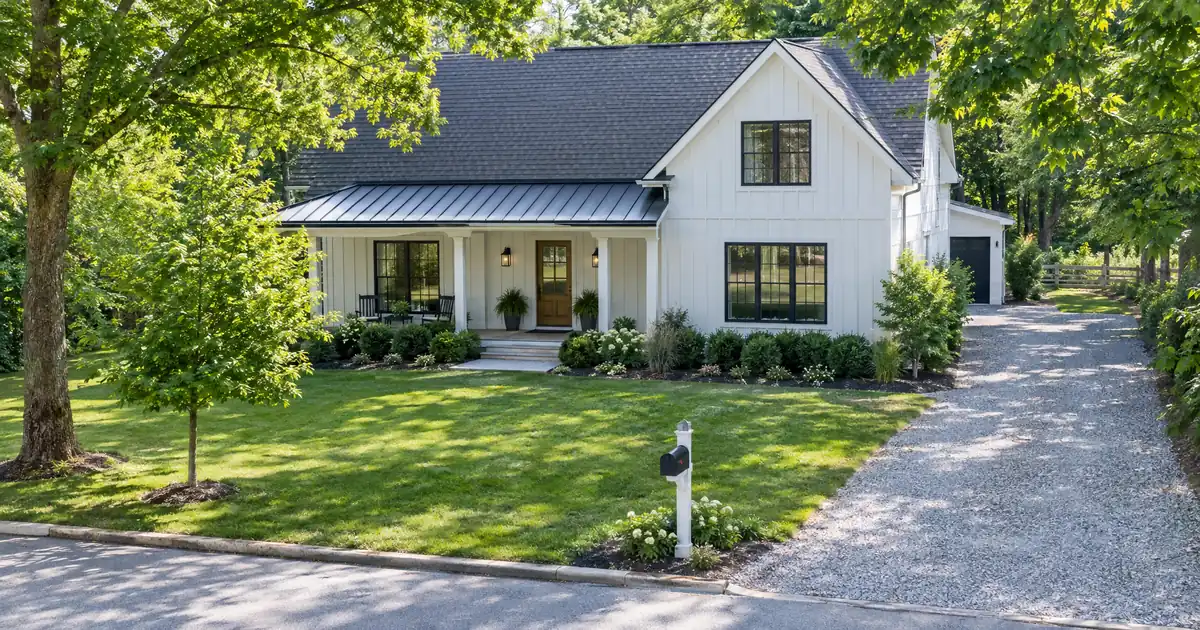
The Quick Read: A DSCR lender values a rental in one subdivision by ordering an appraisal that produces two separate opinions: a value for leverage and a market rent for coverage. The subdivision is where the appraiser usually starts looking for comparable rentals, but it is a starting pool, not a hard boundary.
- The appraiser’s market rent, not your pro forma, drives the coverage ratio on most programs.
- Recent same-subdivision leases are the natural first comp pool; thin supply pushes the search wider.
- Where a lease exists, the common convention counts the lower of the lease and the market rent.
- HOA dues belong in the payment, so a high-dues subdivision compresses coverage even when rents are strong.
- Clearing 1.00 on coverage is not the same as positive cash flow.
Picture an investor eyeing three-bedroom homes in a planned community where the builder used four floor plans. The streets look alike and the rents feel obvious. The lender’s number still has to come from documented evidence, and that evidence comes from an appraiser. This article walks through how that number gets built, where it bends, and what an investor can do about it before going under contract. For the full program picture, Lendmire’s complete DSCR loans guide covers the basics.
Key Terms Defined
Market rent: the monthly rent a property would likely command, as the appraiser opines it from comparable leases.
In-place rent: the rent a current tenant pays under an existing lease.
Comparable (comp): a similar property used as evidence for value or rent.
Adjustment: a dollar change to a comp’s figure to account for a meaningful difference from the subject.
Concession: a rent discount or perk, such as a free month, that changes the effective rent.
Rent schedule: the appraisal form that documents comparable rentals and the appraiser’s market rent conclusion.
PITIA: the full monthly housing obligation: principal, interest, taxes, insurance, and any HOA dues.
What Does the Lender Actually Value?
The lender runs two valuations from one appraisal visit. The value opinion sets leverage. The market-rent opinion sets the coverage ratio, which is rent divided by PITIA.
For a one-unit rental, the rent opinion usually sits on a single-family comparable rent schedule. Fannie Mae’s Form 1007 is that form, and it is a standard format for getting market rent on a single-family investment property from the appraiser. Two- to four-unit properties use the 1025, which builds the rent analysis into the report.
Here is the catch: DSCR loans are not agency products. The forms are borrowed because they are the industry’s familiar rent-schedule formats. The agency selling guide does not govern DSCR eligibility. Across Lendmire’s wholesale network, program rules come from each lender’s own guidelines, and most files qualify primarily on property-level rental income covering the payment, subject to lender guidelines.
How Underwriting Builds the Rent Number, Step by Step
The process runs in six steps. Each one can move the final figure.
1. Order. The lender orders an appraisal with a rent schedule attached. The instructions say the appraiser prepares it as an attachment to the appraisal, and it asks about physical structure, location, and lease terms.
2. Find rental comps. The form’s grid has three comparable-rent columns. Each carries lease dates, monthly rent, utilities, furniture, and a data source. In a subdivision with repeating models, recent same-subdivision leases are the natural first pool.
3. Adjust. The adjustment lines cover concessions, location and view, design and appeal, age and condition, room count, and living area. The form’s key instruction is to adjust only where a comp differs from the subject in a significant way.
4. Reconcile. The appraiser comments on the market rent range, vacancy, and the trend in rents and vacancy. Then the appraiser states one monthly market rent as of a date. It is a reconciled opinion, not a simple average.
5. Apply the rent to the ratio. Where a lease exists, the common program convention counts the lower of the lease and the appraiser’s market rent. A vacant property relies on the appraisal figure alone. That is a convention, not a federal rule, and treatment varies by program and by tenancy situation.
6. Divide by the full payment. The denominator includes taxes, insurance, and any HOA dues. Strong rents in a subdivision with heavy dues can still produce thin coverage.
Four things decide the outcome: how many true same-subdivision rentals leased recently, how close the subject is to them in size and condition, whether the appraiser had to widen the search, and what the lease says versus the market opinion.
Why the Subdivision Is the Starting Pool
Appraisers favor comps from the subject’s own market area. The Fannie Mae Selling Guide is written for sales comparables, not DSCR rent comps, but it states the logic clearly. It says comps from the same market area, including the subdivision or project, should be used when possible. It defines market area as the region where most demand comes from and most competition is located. Applying that logic to rent comps is a reasonable read, not a DSCR rule.
Why does a subdivision work as a pool? Shared builder, similar floor plans, the same HOA, and a common location mean tenants see these homes as substitutes. That is what makes a comp market-rate in the appraiser’s sense.
But the subdivision stops being the right universe when it gets too small, too new, or too mixed. Distance alone does not decide comparability either. A New York appraisal firm makes the point that a sale one mile away in a different market segment can be a worse comp than one three miles away in an identical neighborhood. The test is whether a comp reflects the same market influence as the subject.
What Happens When Same-Subdivision Leases Are Thin?
When the subdivision lacks recent leases, the appraiser widens the search in steps and has to explain each choice. McKissock, an appraisal education provider, describes the sequence: older sales in the same area with time adjustments, then competing neighborhoods, then adjusted dissimilar properties. It notes the guidance sets no fixed distance limits. One appraiser it surveyed starts with the subdivision, then moves to a radius or school district.
A related issue. An appraisal that used out-of-subdivision sales and called every recent subdivision sale unsuitable needed a detailed explanation. The lesson carries over: widening is allowed, but it has to be justified.
| Situation | How the appraiser typically responds | What the investor can do |
|---|---|---|
| New phase, few leases | Widens to competing areas | Gather signed nearby leases |
| Builder concessions | Adjusts to market, not subject | Document effective rents |
| Mixed floor plans | Narrows to matching models | Know which model you’re buying |
| One outlier comp | Weights it lightly | Flag it with better evidence |
| Stale comps | Uses older leases, notes trend | Provide recent lease proof |
A widened search is not bad on its face. It does mean more location adjustments, and more room for the number to move. That is where coverage surprises tend to come from.
A Labeled Example With Invented Numbers
These figures are illustrative only and are not market data. Say a subject home has three same-subdivision leases and one widened comp. The three in-subdivision leases sit within a tight band of each other, each needing only a small adjustment for condition or garage. The appraiser leans on them and concludes a market rent near the middle of that band.
Now rerun the file with only one recent same-subdivision lease. The appraiser pulls two comps from a neighboring community, each needing a location adjustment. The band widens, the reconciled rent moves toward the conservative end, and the coverage ratio softens even though the house is unchanged.
Suppose the investor’s lease sits well above both versions. Under the lower-of convention, the lease does not lift the ratio. The appraisal figure governs.
If the resulting coverage lands below 1.00, there are paths a lender would review. Coverage below 1.00 is available through select lenders in the network, with leverage and terms adjusted. Interest-only structures are available through select lenders as well. Qualification stays subject to lender guidelines, credit approval, and property review. That is also a signal worth heeding: if the only way a subdivision works is below 1.00, the submarket selection may deserve a second look.
Where the General Rule Breaks
The comp-pool logic bends in several named situations.
Many identical models. Planned developments with a few repeating floor plans make near-exact matches more likely, which helps the rent opinion as well as the value opinion.
New or recently converted subdivisions. Supporting a new development takes in-project evidence, and early phases often have little. Builder incentives can distort what looks like market rent.
Short-term rentals. The appraiser update notes the 1007 was not designed for short-term rentals. It calls for monthly market rent from competing properties leased monthly. Short-term-rental files lean on other income support. In Lendmire’s network, short-term-rental purchases reach up to 75% LTV, with a 640+ score and about 12 months of hosting history typically expected, and a 1.00 coverage floor on purchases.
Vacant, month-to-month, and expired leases. Treatment varies by program. A vacant home depends entirely on the appraiser’s figure.
HOA rental restrictions. Community fees and rental caps can reshape the comp pool and the payment at once.
Ineligible property types. Manufactured homes, log homes, and barndominiums are not offered through the network’s DSCR programs, so a subdivision of those homes is a non-starter.
What the Investor Decision Looks Like
Underwrite to the conservative number. Your pro forma does not set coverage. The appraiser’s rent does, and under a lower-of convention the lease only matters if it comes in below that figure, since a lower lease reduces the counted rent and hurts coverage while a higher one does not lift the ratio.
Check the pool before you offer. Pull closed rentals in the subdivision, not asking prices. Investor communities such as BiggerPockets suggest gathering many listings and dropping outliers, and note the method breaks down when listings are sparse. That is a pre-offer method, not the appraiser’s process.
Treat rent estimators as guides. Zillow-style tools are useful for a first look. They are not what the lender uses.
Hand the appraiser facts. A short packet works well: address, rent, bed and bath count, size, lease date, and key features for each verified nearby lease. Calling property managers and tracking days on market, as BiggerPockets’ rental-comp advice suggests, produces the kind of evidence worth bringing. Asking prices are not evidence.
Rank subdivisions by dues, not just rent. Because HOA dues sit in the payment, two subdivisions with identical rents can produce different coverage.
Expect a lag. Rent comps look backward, so a fast-rising subdivision can appraise below current asking rents.
In planned communities, the surprise is rarely the value. It is the rent opinion coming in below a lease that was signed with a concession or with a tenant who never negotiated. Files that arrive with signed, recent same-subdivision leases and a clean HOA dues figure tend to meet fewer rent-side questions.
Where the Number Goes After the Appraisal
Coverage is rent against PITIA. On most files in Lendmire’s network, 1.00 is where select programs start, and stronger ratios open better pricing and leverage. A separate select-lender path takes coverage below 1.00 with leverage and terms adjusted.
On leverage, purchases typically land at 75%-80% LTV on an investment property, with select high-leverage programs reaching 85% at roughly a 700+ score. A cash-out refinance on a standard rental tops out around 75% LTV. Credit tiers run from a 620 floor in parts of the network to roughly 660 for most programs and 700+ for the strongest tiers. Reserves commonly run about six months of PITIA, stepping up to about nine months on loans above $1,500,000. Everything here is subject to lender guidelines.
A larger down payment can lift coverage by shrinking the payment. It never erases leverage caps, credit floors, or reserve rules. And clearing 1.00 is not positive cash flow: repairs, vacancy, management, utilities, and capex sit outside the calculation.
Where an investor owns several homes in one subdivision, each is measured on its own rent and payment on a standard loan.
What to Do If You Think the Comps Are Wrong
Start with the report. The appraiser has to explain why chosen comps compete with the subject and how adjustments were derived. If a stronger same-subdivision lease was missed, a reconsideration request supported by signed leases is the usual route, handled through the lender. It must rely on verifiable facts. You cannot pressure the appraiser toward a number.
If the evidence is simply thin, no packet fixes it. At that point the structure, the leverage, or the subdivision is what needs adjusting.
If you are buying or refinancing a rental property and want to see how the numbers work, Lendmire can help you compare DSCR loan options based on the property income, credit profile, leverage, and investor goals. Reach the team at 828-256-2183 or request a quote.
Frequently Asked Questions
Does the lender use my lease or the appraiser’s market rent?
Usually the lower of the two counts when a lease exists. A vacant property uses the appraisal figure alone. This is a program convention, not a federal rule, and treatment varies by lender and tenancy situation.
Must the appraiser use comps from my own subdivision?
No. Same-market-area comps are preferred when available, but the agency guidance allows competing neighborhoods with an explanation, and it sets no fixed distance limit. Comps must be reasonably similar to the subject, not identical.
Is Form 1007 a DSCR form?
No. It is an agency appraisal form that DSCR files borrow because it is the standard rent-schedule format. It is also used across other programs, which shows it is not specific to DSCR lending.
Can a rent-estimator website substitute for the appraisal?
No. Estimators are guides, and some investors call them loose or dated. The lender uses the appraiser’s adjusted comparable rentals.
Do HOA dues affect the DSCR on a subdivision rental?
Yes. Dues are part of the PITIA, so a subdivision with high dues compresses coverage even when rents are strong. Compare dues across subdivisions when ranking deals.
About Lendmire
As a non-QM mortgage broker (NMLS# 2371349), Lendmire facilitates DSCR investor loans across 41 markets, including Washington, D.C. DSCR eligibility is generally reviewed around property-level rental income instead of personal income documentation, subject to lender guidelines, serving LLC-structured portfolios and self-employed borrowers who don’t fit conventional boxes. A two-time Scotsman Guide Top Mortgage Workplace (2025, 2026).
Get Started
Ready to find the right loan for you?
In about 30 seconds you can review financing options available for your investment property. No commitment required.
Informational only. Not a Loan Estimate, approval, or commitment to lend. Program availability and eligibility are subject to lender guidelines, credit approval, property review, and underwriting.
References
2. Freddie Mac Form 1000 / Fannie Mae 1007 instructions
4. McKissock: arriving at an accurate appraisal when comps are few
6. BiggerPockets’ rental-comp advice
This article is part of Lendmire’s DSCR loan program — full qualification details, guidelines, and scenarios live on the program page.
Related reading: How Much a Portfolio DSCR Loan Returns on Rentals Owned Under a Year · How a DSCR Lender Sizes a 30-Year Note Versus a Rental Term Loan · Can Vacant Rentals Be Included in a Portfolio DSCR Loan?
Brandon Miller
Founder & CEO, Mortgage Loan Originator, Lendmire LLC
- Mortgage Loan Originator · NMLS# 1129696 · Verify on NMLS Consumer Access
- North Carolina Real Estate Broker · License# 343312 · Verify on NCREC
- North Carolina Insurance Producer · License# 19053198 · Property, Casualty, Life, Health · Verify on NAIC SBS
- Lendmire LLC · Firm NMLS# 2371349 · Verify firm licensure
Important disclosures. Lendmire (NMLS# 2371349) is a licensed mortgage brokerage. Lendmire is not a direct lender, depository institution, or financial advisor. All loan inquiries are subject to lender underwriting; this article does not constitute a commitment to lend. Rates, terms, and program guidelines are subject to change without notice and vary by borrower profile, property type, and state. Information in this article is general in nature and is not financial, legal, or tax advice. Equal Housing Opportunity. NMLS Consumer Access: nmlsconsumeraccess.org.