
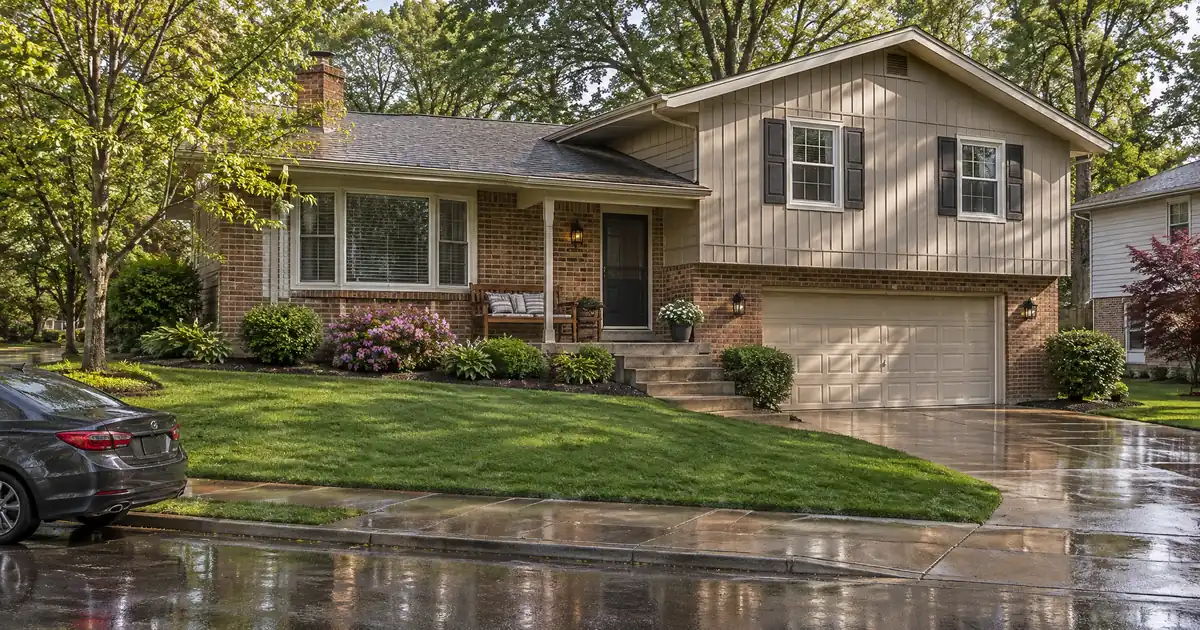
The Quick Read: A zoning ban does not automatically end a rental HELOC, but it removes nightly-rental income from the file, and the lender then looks at whether the property is lawfully used and what income can be documented. The line is underwritten mainly on the borrower’s personal file, so the main question becomes whether the property is legal as used and whether a long-term lease supports it.
- Zoning is a legal-use test. It sits outside the income math.
- A banned nightly-rental plan has no lawful income to document.
- A signed long-term lease is the usual fallback.
- On this network, an investment-property line caps at 70% CLTV, with a 700 minimum credit score and a $500,000 maximum line.
- Short-term rental rules vary by city, county, HOA, and property type, so confirm local rules before relying on projected rental income.
What does the lender check first?
The lender checks what the property is and how it is used. A rental HELOC is a standalone line secured by the investment property, and the lender wants to know the collateral is lawfully used. Zoning confirmation comes before any question about how much a host could earn.
How large a line the equity supports.
An equity line is sized by combined loan-to-value, occupancy, and credit — not by rental coverage. Switch the occupancy or the credit band and the ceiling moves with it.
Investment-property lines require a 700 minimum credit score; second-home lines start at a 640 minimum and primary-residence lines at 600, and the combined-LTV ceiling steps down as the credit band drops on primary-residence and second-home lines and holds on investment-property lines; the line cap steps down on primary-residence lines and holds at every tier on investment-property and second-home lines.
A debt-to-income ratio above 45% requires 680+ credit. Profiles under 640 are limited to single-family homes. At least 75% of the approved line is drawn at closing. Ceilings, floors, and caps update from Lendmire’s centralized guideline source.
Line estimate
Illustrative estimate only — not a quote, Loan Estimate, approval, or commitment to lend. The rate is an editable assumption; equity-line pricing is variable through both the draw and repayment periods and never converts to fixed. Occupancy and credit drive the ceiling together: an investment property tops out at 70% combined LTV (minimum credit 700, line cap $500,000); a second home tops out at 90% combined LTV (minimum credit 640, line cap $500,000), with the ceiling stepping down as the credit band drops (the cap holds at every tier); a primary residence tops out at 90% combined LTV (minimum credit 600), and its $750,000 maximum line is available only at 75% combined LTV or below with a 700-or-better credit profile (720 on the longer-runway program) and a full appraisal. Lines above $500,000 require a full appraisal. Credit, debt-to-income, property type, and full underwriting review all affect the final line.
NerdWallet notes that not every lender offers investment-property HELOCs, that proof of long-term tenants is a common request for rentals, and that some lenders restrict lines by location and by whether the home is rented all year. That is the market-wide picture. Across Lendmire’s wholesale network, the review follows a similar order: property type, legal use, then income and credit.
Why does zoning sit outside the income math?
Zoning decides whether a use is allowed. Income decides whether a use pays. A strong nightly-rate projection cannot make a banned use lawful, so the two are checked separately.
The appraisal report shows the same split. The standard agency form for two-to-four-unit income properties has a zoning compliance field with four outcomes: legal, legal nonconforming (grandfathered use), no zoning, and illegal. That form is agency paperwork, not a HELOC rule. It still shows how a collateral report records legality as its own line.
Appraisers also treat nightly income differently. Class Valuation explains that the standard rent schedule form cannot support short-term rental income, and appraisers use a narrative projected-income analysis instead. If zoning bans the use, that analysis rests on income that cannot be lawfully earned.
What does the lender look at, step by step?
The order below reflects how lenders in the network generally sequence a rental line. Details vary by lender and by file.
1. The property and title. Eligible types include single-family, two-to-four units, PUD, townhome, and condominium, including non-warrantable condos. Manufactured homes, co-ops, condotels, log homes, commercial, mixed-use, and agricultural zoning are not eligible.
2. Legal use at the address. This usually means a zoning verification, a permit or license, or the zoning-compliance entry in an appraisal. A planning-office confirmation in writing is the cleanest evidence.
3. Income that can be counted. If nightly stays are banned, there is no lawful short-term income to document. A signed long-term lease is the practical fallback, and lenders generally want leases or a rent roll.
4. Association rules. An HOA or covenant ban can matter as much as a zoning ban. BiggerPockets says an HOA may restrict short-term rentals or prohibit them altogether, and that licensing rules are usually found on a city’s planning and zoning pages.
5. The personal file. Credit, debt-to-income, equity, and vesting. These stay the same whatever the zoning answer is.
6. Valuation. A line at or below $500,000 ordinarily runs on an automated valuation with no traditional appraisal, though a higher CLTV may require a secondary valuation, and a borrower may request a full appraisal in any case.
How do the zoning situations sort out?
| Zoning situation | What the lender checks | What you provide | Likely direction |
|---|---|---|---|
| Allows STRs | Permit or license status | License, zoning letter | Reviewed on its merits |
| Bans STRs | Whether any lawful use remains | Long-term lease | Long-term basis only, or declined |
| Grandfathered | Proof of prior legal use | Registration, permit history | Depends on the ordinance |
| Change pending | Current rule, not the proposal | Planning-office letter | Current rule governs |
| Unclear | Written confirmation | Planning-office response | Held until clarified |
These outcomes are patterns, not rules. Each lender sets its own policy, and every file is reviewed individually. Final eligibility rests on lender guidelines, credit approval, and property review.
Is a zoning ban the end of the line?
Not always, because the line is a personal-credit product secured by the property. Lenders in the network underwrite the borrower first: DTI up to 50%, a 700 minimum score on an investment property, and the equity left after the first lien. A ban removes the short-term income premium. It does not by itself change the borrower’s credit or equity.
What it can change is how the property is described. Picture an owner with a duplex in a zone that prohibits nightly stays. The lender will not credit any nightly-rental history or projection. If the units are leased long-term, the file is read on that basis, and the line is sized on the equity and credit alone. If the units sit empty waiting for a rule change, there is no income to show, and the owner carries the payment from personal funds.
An owner in that spot is better off building the plan on long-term or mid-term numbers. BiggerPockets reports that hundreds of cities and towns are moving to ban or limit short-term rentals, and that stays over 30 days often face fewer hurdles. That is a strategy choice for the owner, not a lender rule.
What are the edge cases?
Grandfathered use. A use that was legal before the rules changed may continue, and the appraisal form has a dedicated box for it. Whether it survives a sale, a lapse, or a missed registration depends on the local ordinance. Bring proof, not a verbal assurance.
Conditional use permits and overlay districts. These are special approvals for a use the base zone does not allow outright. Verification is document-based. A permit on file is evidence. A pending application is not.
State law. Some states limit what cities can regulate. BiggerPockets points to Arizona’s 2016 law as an example. State law can override a local ban, but that is a legal question for the owner to confirm locally, not something a lender resolves.
Weak enforcement. A rule that is rarely enforced is still a rule. A lender checks what the ordinance says, not how often it is policed.
Business-income treatment. An agency treating a use as business income is agency context only. It does not make a banned use lawful.
What blocks approval?
- Zoning or HOA rules that prohibit the use, with no grandfathering proof.
- Income shown only from nightly stays that cannot lawfully occur.
- Title held in an LLC, corporation, partnership, or irrevocable, blind, or land trust. Title must sit with the individual borrower or a revocable living trust. A property already deeded to an LLC needs a vesting change or a DSCR cash-out instead.
- Credit below 700 on an investment property.
- A requested line above $500,000. Investment lines stop there. Larger lines are primary-residence only.
- Ineligible property types such as manufactured homes or log homes.
- A property outside Lendmire’s 16 full-service states (AL, CA, CO, FL, GA, IN, MI, MT, NM, NC, OH, PA, TN, TX, VA, WA). The HELOC channel is narrower than the DSCR footprint.
Which documents should you gather?
Get these before applying:
- A zoning verification letter from the planning office.
- Any short-term rental permit or license, if one exists.
- Proof of grandfathered status, if claimed.
- HOA or covenant documents showing the rental rules.
- Current long-term leases or a rent roll.
- Insurance showing the actual use of the property.
Clean evidence helps the lender close its own review. It does not guarantee an outcome.
When does a DSCR loan fit better?
A HELOC reads the personal file. A DSCR loan reads the property’s rent against its full monthly obligation. They are different products with different tests. If the property is leased long-term and the owner wants to pull equity based on rental coverage instead of personal income, a DSCR cash-out refinance may be the better tool. Cash-out tops out around 75% LTV across most of the network, with about 6 months of seasoning typical. Select programs start at 1.00 coverage, and a separate select-lender path takes coverage below 1.00 with leverage and terms adjusted. Lendmire’s complete DSCR loans guide walks through the structure.
DSCR coverage compares rent to the payment only. Clearing 1.00 does not mean positive cash flow, because repairs, vacancy, and management sit outside the calculation.
The HOA question has its own treatment. Lendmire’s piece Can You Get a Rental HELOC After Your HOA Bans Short-Term Rentals? covers that side.
Key Terms Defined
CLTV: Combined loan-to-value, the total of all liens divided by the property’s value.
Legal nonconforming use: A use that was lawful before the zoning changed and may continue under the ordinance.
Conditional use permit: A special approval for a use the zone does not allow outright.
Overlay district: An added set of local rules layered over the base zoning.
CC&Rs: Covenants, conditions, and restrictions set by an association, which can be stricter than local law.
Frequently Asked Questions
Can I still get a rental HELOC if my city bans short-term rentals?
Possibly, on a long-term-rental basis. The lender will not count nightly income, so the file rests on credit, equity, and a lease. Eligibility depends on lender guidelines and full file review.
How does a lender verify zoning?
Usually through a zoning letter, a permit, or the zoning entry in an appraisal. Lines at or below $500,000 often run on an automated valuation, so the evidence you supply matters more.
Does grandfathered status count?
It can, with documents showing the use was legal and continuous. The appraisal form has a legal nonconforming option. Rules on lapse and transfer vary by ordinance.
What is the leverage limit on an investment-property line?
The network ceiling for an investment line is 70% CLTV, and credit above the 700 floor does not raise it. Market surveys report a range of figures for equity lines, but those describe the wider market, not this network.
Can an LLC hold the property?
Not for a HELOC. Title must be held by the individual borrower or a revocable living trust. A DSCR loan can fit an entity-held property, subject to program terms.
Next Steps
Confirm the zoning in writing first. Then check the HOA documents, gather leases, and decide whether a HELOC or a DSCR cash-out fits the property. If you are considering a home equity line and want to see how the numbers work, Lendmire can help you compare HELOC options based on the property, the equity available, credit profile, combined leverage, and your goals. Reach the team at 828-256-2183 or request a quote.
About Lendmire
Lendmire (NMLS# 2371349) is a mortgage brokerage serving homeowners and real estate investors in its 16 full-service states. Home equity lines of credit are arranged through wholesale lending channels; Lendmire brokers the line and the lender underwrites each application under its occupancy-based guidelines. Scotsman Guide named Lendmire a Top Mortgage Workplace in both 2025 and 2026.
Get Started
Ready to find the right loan for you?
See your offer in seconds. No credit pull, no obligation.
Informational only. Not a Loan Estimate, approval, or commitment to lend. Program availability and eligibility are subject to lender guidelines, credit approval, property review, and underwriting.
References
1. NerdWallet – HELOC on Investment Property
3. BiggerPockets – Ultimate Guide to Short-Term Rental Properties
4. BiggerPockets – Mid-term rentals
This article is part of Lendmire’s investment property HELOC program — full qualification details, guidelines, and scenarios live on the program page.
Related reading: Can You Get a Rental HELOC After Your HOA Bans Short-Term Rentals? · What a Rental Property HELOC Lender Checks After New Short-Term Rental Rules · HELOC vs DSCR Cash-Out Rules for Short-Term Rentals · Can a Short-Term Rental Under a Year Old Get a Rental HELOC? · Does an Investment Property HELOC Make Sense for a Short-Term Need?
Brandon Miller
Founder & CEO, Mortgage Loan Originator, Lendmire LLC
- Mortgage Loan Originator · NMLS# 1129696 · Verify on NMLS Consumer Access
- North Carolina Real Estate Broker · License# 343312 · Verify on NCREC
- North Carolina Insurance Producer · License# 19053198 · Property, Casualty, Life, Health · Verify on NAIC SBS
- Lendmire LLC · Firm NMLS# 2371349 · Verify firm licensure
Disclosure information. Lendmire is a state-licensed mortgage brokerage under NMLS# 2371349. Lendmire is not a depository institution, direct lender, or financial advisor — all loans referenced are placed through wholesale lender partners and are subject to each lender's underwriting standards. This article is provided for general informational purposes and is not a commitment to lend, nor does it constitute financial, legal, or tax advice. Loan programs, terms, rates, and qualification standards change without notice and depend on borrower profile, property type, and the state in which the subject property is located. Equal Housing Opportunity provider. NMLS Consumer Access: nmlsconsumeraccess.org.