
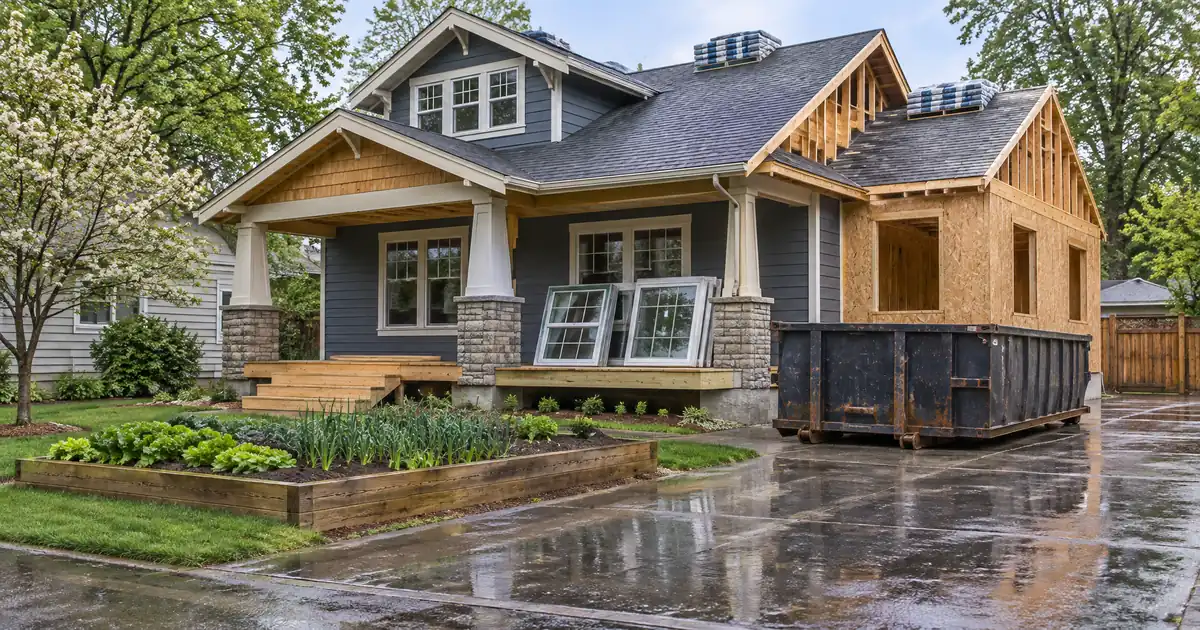
The Quick Read: Usually the lender values the property as it stands today, so unfinished work adds nothing to the line, and a half-gutted rental can end up with a smaller line, a condition on the file, or a pause until the work is done. The value that sets your limit is the “before” value, not the “after” picture in your head.
- Value is generally measured as-is, so you borrow against the property’s current condition.
- On Lendmire’s network, an investment-property line caps at 70% combined loan-to-value (CLTV), with a $500,000 maximum line and a 700 minimum credit score.
- Lines at or below $500,000 ordinarily use an automated valuation, which will not see a rehab, finished or not.
- A HELOC is reviewed on your credit, debt-to-income ratio and documented income. It does not qualify on rent coverage the way a DSCR loan does.
- The cleaner sequence is usually to finish the work, document the rent, and then compare a HELOC with a DSCR cash-out refinance.
How Does a Lender Size a Line on a Rental Mid-Rehab?
A lender takes the property’s value, applies a combined loan-to-value cap, and subtracts what you already owe. Whatever remains is your maximum line. Nothing in that math credits work you have not finished, because a lender lends against what exists, not what you plan to build.
How large a line the equity supports.
An equity line is sized by combined loan-to-value, occupancy, and credit — not by rental coverage. Switch the occupancy or the credit band and the ceiling moves with it.
Investment-property lines require a 700 minimum credit score; second-home lines start at a 640 minimum and primary-residence lines at 600, and the combined-LTV ceiling steps down as the credit band drops on primary-residence and second-home lines and holds on investment-property lines; the line cap steps down on primary-residence lines and holds at every tier on investment-property and second-home lines.
A debt-to-income ratio above 45% requires 680+ credit. Profiles under 640 are limited to single-family homes. At least 75% of the approved line is drawn at closing. Ceilings, floors, and caps update from Lendmire’s centralized guideline source.
Line estimate
Illustrative estimate only — not a quote, Loan Estimate, approval, or commitment to lend. The rate is an editable assumption; equity-line pricing is variable through both the draw and repayment periods and never converts to fixed. Occupancy and credit drive the ceiling together: an investment property tops out at 70% combined LTV (minimum credit 700, line cap $500,000); a second home tops out at 90% combined LTV (minimum credit 640, line cap $500,000), with the ceiling stepping down as the credit band drops (the cap holds at every tier); a primary residence tops out at 90% combined LTV (minimum credit 600), and its $750,000 maximum line is available only at 75% combined LTV or below with a 700-or-better credit profile (720 on the longer-runway program) and a full appraisal. Lines above $500,000 require a full appraisal. Credit, debt-to-income, property type, and full underwriting review all affect the final line.
CLTV means the first mortgage plus the new line, divided by the property’s value. On an investment property, Lendmire’s wholesale network of select lenders caps that figure at 70%, with a 700 minimum credit score. Credit above 700 does not raise the cap, because a 720 profile and a 700 profile both reach the same 70%.
Here is an illustrative example using index numbers, not real prices. Say the finished property would be worth 100, but today, with open walls and no working kitchen, it is worth 80. At 70% CLTV, the cap on the as-is value is 56. The cap on the finished value would have been 70. Your existing mortgage comes out of that 56. If the balance is already near 50, almost nothing is left. The rehab you were hoping to fund is the very thing the lender is not counting.
It is easy to assume the line will fund the work from future value. That is how some renovation-specific products are built, but a standard line of credit on a rental is not one of them. Those products tend to be aimed at primary residences, and investment-property options are more limited.
Why Does the Valuation Step Matter So Much?
The valuation decides everything downstream, and on a rental HELOC it usually comes from an automated model. Because an investment line on this network caps at $500,000, it falls in the automated lane and commonly closes with no traditional appraisal. You can request a full appraisal, but the default will not see your project.
An automated value works from public records and sales of nearby properties. It does not know your permits, your new roof, or the missing drywall. That cuts both ways. It will not mark you down for the mess, and it will not give you credit for the improvements either.
Appraisals are still common elsewhere in the market. Bankrate notes that investment-property HELOC lenders typically want an in-person appraisal, sometimes more than one. That describes lenders broadly, while on this network the automated lane is the usual path. Practices vary by lender, so ask which valuation your lender orders before you assume either outcome.
When an appraiser does visit an unfinished property, there are two ways to write the report. An “as is” report values the property as seen on inspection day, and open walls or unusable bathrooms pull the number down. A “subject to completion” report assumes the work gets finished. A practicing appraiser’s explanation walks through that distinction. Across our wholesale network, a report that is conditioned on unfinished items generally has to be resolved before the loan can proceed.
How the Application Moves, and Where an Unfinished Rehab Snags It
An unfinished rehab can cause trouble at three points: valuation, equity, and condition. Here is the sequence with those pressure points marked.
1. Eligibility screen. The lender reviews credit, debt-to-income ratio and documented income. On this network the credit floor for an investment line is 700, and DTI tops out at 50%. A rehab with no tenant does not fail this step on its own, but any new debt you took on to pay for it counts here.
2. Vesting check. Title must sit with you personally or in a revocable living trust. LLCs, corporations, partnerships and irrevocable, blind or land trusts cannot hold title on this product. If your rehab property sits in an LLC, the line is off the table until the vesting changes.
3. Valuation. This is the first big snag. An automated value ignores the rehab, and a full appraisal may mark the property as-is with a deduction or subject to completion.
4. Line sizing. Value times the CLTV cap, minus existing liens. This is the second snag, because thin equity leaves little room.
5. Title work and funding. Prior liens are paid off if they are being replaced, and the remaining equity is released. At least 75% of the line is drawn at closing. That surprises people who expect a pay-as-you-go account for phased rehab spending.
6. Property condition. Appraisal conditions on safety items, missing systems or open permits can pause a file. This is a mechanics point, not a statistic: a lender wants collateral that is livable and insurable.
Lines of credit on this network are first or second lien, standalone, with a five-year interest-only draw period followed by a 25-year amortizing repayment on investment properties. Everything is subject to lender guidelines and a full file review, and none of this is a commitment to lend.
What Does an Unfinished Rehab Mean for Your Next Move?
The table lays out the common situations and the usual best move.
| Rehab status | How a lender treats it | Best move |
|---|---|---|
| Cosmetic work underway, property livable | Automated value, no rehab credit | Apply on current equity only |
| Major work, systems or rooms unusable | As-is value cut, or a pause | Finish before applying |
| Work done, no new appraisal | Value still reflects the old state | Request a full appraisal |
| Thin equity after the first mortgage | Little or no line available | Borrow on another seasoned property |
| Property sits in an LLC | Not eligible for this product | Change vesting, or use a DSCR cash-out |
A corrected value only helps so far. A higher appraisal lifts your line only up to the program’s CLTV cap and the $500,000 line maximum, so even a perfect appraisal does not remove those ceilings.
Cost is not value, either. Spending a lot on the rehab does not mean the market will pay that much more for the result. An improvement may support a higher appraised value, depending on comps and underwriter review. If you request a full appraisal after finishing, document the work with permits, invoices and photos, because the appraiser’s job is to estimate what buyers will pay, not what you spent.
What If the File Stalls or Gets Declined?
Finish the work, get the property rent-ready, and reapply on the new facts. A declined or paused application is not a permanent mark on the property, but the reason matters. If the issue was equity, finishing the work may not change anything unless a new valuation captures it. If the issue was condition, the finished work solves it. If the issue was vesting, nothing about the rehab matters until the title moves.
Keep a clean paper trail while you wait: contractor invoices, permit sign-offs, photos before and after, and a copy of any appraisal comments. When the work is done, a fresh valuation is usually needed to capture the new value. Disclosing the rehab up front generally helps, because a surprise at inspection looks worse than a known project with a finish line.
Thin equity and an unfinished project often point to a different collateral choice. One option is to borrow against a different, seasoned property and plan to repay with a refinance after the rehab stabilizes.
What Can Happen After You Close, While the Work Drags On?
A line is not locked in once it funds. Federal consumer guidance says a lender can freeze or reduce a HELOC when the home’s value falls significantly or your finances change materially. The Consumer Financial Protection Bureau describes that risk, and its HELOC booklet adds that lenders size the limit as a percentage of appraised value less what is owed, and that they consider your ability to repay.
For an investor, the practical lesson is simple. A rehab that runs long, a vacant unit, or a rising debt load can all change the picture mid-draw. Do not count on a line you have not drawn.
Should You Wait for a DSCR Cash-Out Instead?
Often the better question is which product fits the property once it is finished. A HELOC is built on your credit and documented income. A DSCR loan is reviewed primarily on property-level rental income covering the payment, subject to lender guidelines. Our complete DSCR loans guide explains the mechanics.
DSCR lenders generally want the property rent-ready, since coverage is measured against documented or appraised rent. That is why sequencing matters. Finish the work, put a tenant on a lease, and then compare options. On a standard rental, cash-out refinance leverage tops out around 75% LTV across most of the network, with about six months of seasoning as a common expectation. Coverage of 1.00 is where many select programs start, and a separate select-lender path takes coverage below 1.00 with leverage and terms adjusted. A larger rent-to-payment ratio generally opens stronger pricing and leverage.
Clearing 1.00 is not the same as positive cash flow. DSCR compares rent to principal, interest, taxes, insurance and HOA dues. Repairs, vacancy, management and capital expenses sit outside the calculation.
If you are considering a home equity line and want to see how the numbers work, Lendmire can help you compare HELOC options based on the property, the equity available, credit profile, combined leverage, and your goals. Investment-property HELOCs on this network are offered in 16 full-service states, narrower than the DSCR footprint.
Key Terms Defined
- CLTV (combined loan-to-value): Your first mortgage plus the new line, divided by the property’s value.
- As-is value: What the property is worth on inspection day, in its current condition.
- Subject-to-completion value: What the property would be worth if the planned work were finished.
- Automated valuation: A computer estimate of value built from public records and nearby sales, with no one visiting the property.
- Vesting: How title to the property is held, such as personally or in a trust.
- DSCR (debt service coverage ratio): Monthly rent divided by the monthly payment, including principal, interest, taxes, insurance and HOA dues.
Frequently Asked Questions
Can a lender count my planned renovation in the HELOC limit?
Not on a standard line. Value is generally measured as the property stands today, so unfinished work does not raise the limit. Specialty renovation products that use after-repair value exist in the broader market, but they are mostly built for primary residences. Investment-property options under them are limited.
Will an automated valuation pick up a rehab I already finished?
Generally no. An automated model works from public data and nearby sales, so it will not see new work. On this network, investment lines cap at $500,000 and ordinarily use automated valuation, but you can request a full appraisal. Document the improvements so the appraiser can support the value.
Can I draw the line in stages as the rehab progresses?
Not the way many borrowers expect. On this network, at least 75% of the line is drawn at closing. After closing, the minimum subsequent draw is $1,000, and Texas runs higher. Many consumer sources describe more flexible draws, so this varies by lender.
Does my LLC matter for a rental HELOC?
Yes. On this network, title must be held by you personally or in a revocable living trust, and an LLC cannot hold title. If the property is already deeded to an LLC, you would need a vesting change or a DSCR cash-out instead.
What if my application is declined because the rehab is unfinished?
Finish the work, document it, and reapply with a fresh valuation. If equity was the problem, consider borrowing against a different, seasoned property or comparing a DSCR cash-out once the unit is rent-ready. Every file is reviewed individually, and none of this is a commitment to lend.
About Lendmire
Lendmire — NMLS# 2371349 — is a mortgage broker that arranges home equity lines of credit in its 16 full-service states through wholesale lenders, on primary residences, second homes and investment properties. Every line is subject to the lender’s guidelines and full underwriting. Scotsman Guide named Lendmire a Top Mortgage Workplace in both 2025 and 2026.
Get Started
Ready to find the right loan for you?
See your offer in seconds. No credit pull, no obligation.
Informational only. Not a Loan Estimate, approval, or commitment to lend. Program availability and eligibility are subject to lender guidelines, credit approval, property review, and underwriting.
References
1. Bankrate: HELOC on an investment property
3. Consumer Financial Protection Bureau
4. CFPB: What You Should Know About Home Equity Lines of Credit
This article is part of Lendmire’s investment property HELOC program — full qualification details, guidelines, and scenarios live on the program page.
Related reading: Can You Get a DSCR Cash-Out Refinance on a Rental You Already Own? · Where to Get a DSCR HELOC When the Rental Property Value Is Small · Short-Term Rental Cash-Out Refinance Requirements From Application to Closing Step by Step
Brandon Miller
Founder & CEO, Mortgage Loan Originator, Lendmire LLC
- Mortgage Loan Originator · NMLS# 1129696 · Verify on NMLS Consumer Access
- North Carolina Real Estate Broker · License# 343312 · Verify on NCREC
- North Carolina Insurance Producer · License# 19053198 · Property, Casualty, Life, Health · Verify on NAIC SBS
- Lendmire LLC · Firm NMLS# 2371349 · Verify firm licensure
Required disclosures. Lendmire (NMLS# 2371349) operates as a licensed mortgage broker, not a direct lender or depository. The discussion in this article is general in nature and should not be relied upon as financial, legal, or tax advice — every investment scenario is unique and should be reviewed by a qualified professional. Any loan inquiry is subject to lender underwriting, and this article is not a commitment to lend or a guarantee of approval. Mortgage rates, loan terms, and program guidelines vary by borrower, property, and state, and may change without notice. Equal Housing Opportunity. Verify licensure at NMLS Consumer Access.