
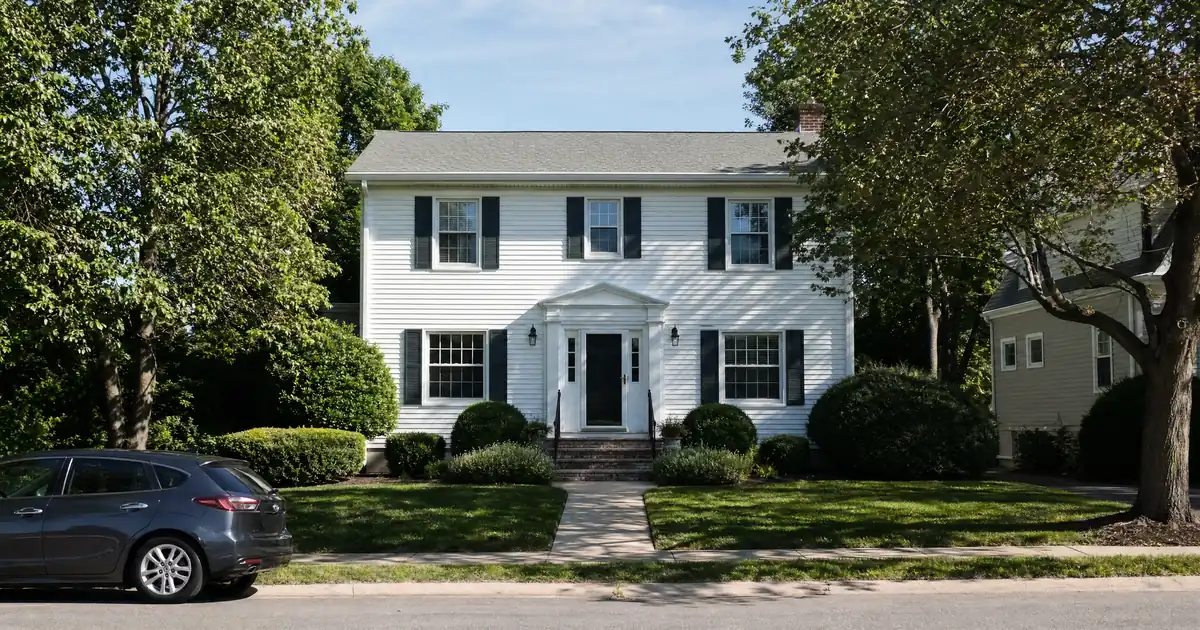
The Quick Read: A hard money home loan is a short-term loan secured by real property, where a private lender bases the decision almost entirely on the property’s value and the deal itself rather than your credit score or income. Terms typically run 6-18 months, payments are interest-only, and the loan comes due in one balloon payment when you sell or refinance. It’s a bridge tool, not a long-term rental mortgage — most investors who plan to hold a property eventually move it into permanent financing once it’s stabilized.
What’s the Core Rule Behind a Hard Money Loan?
The core rule is simple: the property is the borrower, not just the collateral for one. Scotsman Guide describes hard money lenders as private individuals or small groups who focus mostly on the asset’s value rather than the borrower’s creditworthiness — a real departure from how a bank underwrites a standard mortgage. That’s why hard money exists as a category in the first place: banks won’t lend against a distressed property or a fast-moving deal the way a private lender will.
What this loan actually costs to carry in your market.
Hard money is sized against the project and priced by time. Enter the deal and see how much the program will lend, the cash required at closing, the carry while you hold it, and what is left at the exit.
Leverage tiers on the current program: 85% with fewer than 2, 90% with 2 or more, 93% with 5 or more completed projects — every tier capped at 75% of after-repair value. Loan amounts up to $5,000,000, larger by exception; terms of 6 to 18 months, interest-only, no prepayment penalty. The rehab portion funds in draws against completed work, not at closing.
Program parameters shown update from Lendmire’s centralized guideline source. Rate, points, and months are editable assumptions, not quoted terms.
Cost cap sets the loan · positive spread
Illustrative estimate only — not a quote, Loan Estimate, approval, or commitment to lend. Rate, points, and months are editable assumptions. Hard money is business-purpose financing for real estate investors, not a consumer mortgage. Leverage on the current program tops out at 93% of project cost for investors with a documented track record, capped at 75% of after-repair value, with rehab funding up to 100% of the documented budget released in draws; actual terms vary by lender, borrower experience, property, and exit. Lendmire is a mortgage broker, not a lender.
This isn’t a formal legal category, either. The industry itself is drifting away from the term. Wikipedia’s summary of commercial hard money lending notes that a major private-lending trade association passed a resolution encouraging members to use “private lending” or “bridge lending” instead, and Scotsman Guide renamed its own lender listings from “hard money” to “private money.” Borrowers still search “hard money,” so that’s the term used here — but don’t be surprised if a lender’s paperwork calls it something else.
How Does Hard Money Underwriting Actually Work?
Two numbers matter more than your credit report: what the property is worth today, and what it’s worth after the work is done. Scotsman Guide’s underwriting tutorial explains that lenders decide leverage off the “as-is” value on a straight purchase, then apply a separate, more conservative ceiling based on after-repair value (ARV) when renovation is part of the deal.
Three terms drive every hard money quote. Loan-to-value (LTV) measures the loan against the property’s current appraised value. Loan-to-cost (LTC) measures it against total project cost, including renovation — and it’s usually the higher figure because it factors in more than the purchase price. ARV is the projected value once the work is finished, and it’s what sets the ceiling on rehab-heavy deals. Keeping the two families of numbers straight matters: a high percentage quoted “of project cost” is not the same thing as a high percentage of what the property is worth, and value-based ceilings on hard money sit well below the cost-based tiers.
Across the wholesale network of private lenders Lendmire brokers deals through, leverage typically tiers by track record, not just the property. Fix-and-flip files commonly run up to 93% of project cost for investors with five or more completed projects, 90% of project cost with two or more, and around 85% of project cost for newer investors with fewer than two — every tier capped at roughly 75% of ARV. A bridge purchase with no rehab attached usually reaches up to 80% of purchase price, while a cash-out or rate-term refinance on an already-owned property is a value-based file and typically tops out closer to 65% of value — the ceiling for hard money leverage measured against what the property is worth today. Ground-up construction can reach around 90% of cost, capped near 75% of completed value, generally reserved for investors with three or more finished builds. Many programs will also fund up to 100% of the rehab budget itself — a separate figure describing only the renovation line item, never the purchase price or the property’s value — released in draws as work is inspected and completed. All of these figures vary by lender, property, and investor experience, and none of them are a commitment to lend.
Loan amounts on most files land between roughly $100,000 and $5,000,000, with larger deals possible by exception. Credit still matters at the margins — a 620 floor is common, with additional conditions attached below 660, and first-time investors are typically steered toward the lower leverage tiers rather than turned away outright.
For investors buying at a courthouse-steps or online sale, hard money pairs naturally with an auction purchase because auction terms rarely leave room for a standard mortgage timeline. And for investors who already own the property free and clear or with substantial equity, a hard money home equity loan structure can pull cash out for a new deal faster than waiting on a full refinance underwrite, subject to that same 65%-of-value ceiling.
Key Terms Defined
Loan-to-value (LTV): the loan amount compared to the property’s appraised current value — a lower LTV means more borrower equity in the deal.
Loan-to-cost (LTC): the loan amount compared to total project cost, including purchase price plus renovation budget.
After-repair value (ARV): the projected value of the property once the renovation work is finished, used to cap rehab-heavy loans.
Balloon payment: the full remaining loan balance, due in one lump sum at the end of the term, because hard money is interest-only with no amortization.
Draw schedule: the process of releasing rehab funds in stages as work is completed and verified, rather than handing over the full renovation budget at closing.
What Happens When the Balloon Payment Comes Due?
You either sell the property or refinance before the balloon hits — there’s no built-in extension. Hard money has no amortization cushion, so the entire loan comes due at term’s end regardless of where the project stands. That’s the single biggest risk on a hard money file: a renovation running long, or a sale falling through, leaves you staring at a due date with no automatic fallback.
This is also why the loan terms themselves are short and fixed. Current hard money programs generally run 6 to 18 months, interest-only, with no prepayment penalty — there’s no multi-year version of this product. If a project needs more runway than that, the plan from day one should include a refinance exit, not an assumption that the lender will simply extend the note.
Why Rental-Property Investors Pivot to DSCR Financing
Once a property is renovated, rented, and generating income, it no longer fits a bridge product — that’s when most investors move it into a debt-service-coverage-ratio (DSCR) loan, a long-term rental mortgage qualified on the property’s own rent rather than personal income documentation. Instead of a balloon due in months, a DSCR loan is typically structured on a 30-year fixed spine, with extended 40-year and interest-only periods available through select lenders in the network for investors who want a lower monthly obligation.
DSCR lender review compares monthly rent to the full monthly obligation — principal, interest, taxes, insurance, and any HOA dues — expressed as a ratio, not a dollar figure. A ratio around 1.00 is where several programs in the network set their floor, meaning rent roughly covers the payment; stronger ratios above that generally open better pricing and higher leverage. Coverage below 1.00 isn’t automatically a dead end, either — it’s available through select lenders in the network, though leverage and terms adjust accordingly. Clearing 1.00 isn’t the same as positive cash flow, since repairs, vacancy, management fees, and capital expenses all sit outside that ratio.
On purchase, DSCR leverage on most files runs 75% to 80% loan-to-value, with select high-leverage programs reaching 85% for investors around a 700+ credit score. Once you’ve stabilized the property and want to pull cash back out, a DSCR cash-out refinance typically tops out around 75% LTV, with roughly six months of ownership seasoning expected on most files. That is a permanent-financing figure, not a hard money one — on the bridge side, leverage was either sized against project cost or, on a refinance, held to roughly 65% of value, so the DSCR takeout is often what lets an investor reach higher leverage against the finished property. Credit floors run lower on DSCR than most investors expect: 620 exists in parts of the network, most programs want around 660, and 700+ unlocks the strongest leverage tiers. Loan sizes on standard DSCR files run roughly up to $3,000,000 on standard programs (smaller balances available through select lenders), and above $2,500,000 the network generally holds to 30-year fixed structures. Reserve requirements vary by lender, leverage, and loan size — commonly around six months of the full monthly obligation, sometimes waived on conservative rate-term files under $1,500,000, and stepping up toward nine months above that threshold.
If the flip becomes a short-term rental instead of a long-term lease, that path exists too: purchase leverage on DSCR-for-STR files runs up to about 75% LTV, generally expecting a 640+ score, roughly 12 months of hosting history, and a coverage floor near 1.00 on the purchase itself; refinances carry their own separate coverage expectation, also near 1.00, at leverage closer to 70%. Short-term rental rules can vary by city, county, HOA, and property type, so confirm local rules before relying on projected rental income. Lendmire’s complete DSCR loans guide breaks down the qualification mechanics in more depth than this article covers.
DSCR loans are business-purpose investor loans made on non-owner-occupied property, which means they’re reviewed differently than a standard consumer mortgage — they generally fall outside the disclosure rules built for owner-occupied lending, per how Regulation Z defines a business-purpose exemption. That’s a structural difference from a personal mortgage, not a loophole — the underwriting still evaluates the property, the borrower, and the deal on its own terms.
Working files across a wholesale network long enough, a pattern shows up repeatedly: the investor who lines up the exit financing before the hard money term starts almost always closes cleaner than the one who starts shopping for a refinance in month ten of a twelve-month note. Lenders reviewing a DSCR refinance want to see the rehab finished and the unit rented — not mid-project.
Hard Money vs. DSCR vs. Traditional Mortgage
| Factor | Hard Money | DSCR Loan | Traditional Mortgage |
|---|---|---|---|
| Reviewed on | Property value/ARV, deal quality | Property’s rental income | Personal income, credit, DTI |
| Term | 6-18 months, interest-only | 30-year fixed (or 40-year option) | 15-30 year amortizing |
| Payoff structure | Balloon at term end | Standard amortization | Standard amortization |
| Typical use | Rehab, bridge, auction purchase | Long-term rental hold | Owner-occupied purchase |
Common Misconceptions About Hard Money Home Loans
“It’s non-recourse because it’s asset-based.” Not usually true. Most hard money loans are full recourse, meaning you’re personally liable for the balance even when the borrowing entity is an LLC — lenders typically still require a personal guaranty. Non-recourse hard money exists mainly on larger institutional bridge deals, not typical rehab loans.
“Rehab funds show up at closing.” They don’t. Renovation money is held back and released through a draw schedule tied to inspected, completed work — not disbursed as a lump sum.
“A 100% figure means 100% financing.” It doesn’t. Where a program funds up to 100%, that applies only to the rehab budget line item — the purchase side is still sized against project cost, and value-based hard money refinances stay near the 65%-of-value ceiling.
“One state’s licensing rule applies everywhere.” It doesn’t. Licensing for a business-purpose loan is generally determined by where the collateral property sits, not where the lender is based — a rule private lenders themselves frequently get wrong.
Tax treatment on a hard money loan can depend on how the funds are used and how the property is held, so keep clear records and talk to a qualified tax professional before assuming any deduction applies. Property taxes and insurance costs also vary widely by location and property type, so budget for them qualitatively until you have real quotes in hand.
Frequently Asked Questions
Is a hard money loan hard to qualify for?
It’s usually easier on credit than a bank mortgage but harder on equity — most programs want a meaningful down payment or existing equity position, and the deal itself (property condition, exit plan, experience level) matters more than your credit score alone.
Can a first-time investor get a hard money loan?
Generally yes, though newer investors typically land in the lower leverage tiers — around 85% of project cost on fix-and-flip files — until they’ve completed a track record of finished projects. Experience level is one of the biggest levers on how much a lender will fund.
How much can I pull out on a hard money cash-out refinance?
On a property you already own, hard money cash-out and rate-term refinances are sized against current value and generally top out near 65% of value. Higher leverage against a finished, rented property usually comes later, through a DSCR refinance rather than a bridge loan.
What happens if I can’t sell or refinance before the balloon payment is due?
This is the real risk of the product — there’s no built-in extension. Lining up a refinance path, often into a DSCR loan once the property is rented, before the hard money term starts is the standard way investors avoid this problem.
Is hard money the same thing as a fix-and-flip loan?
Often used interchangeably, but not identical — a purer hard money loan prices almost entirely off the asset, while many “fix-and-flip” branded programs also weigh borrower track record and liquidity, which can affect leverage.
Do hard money loans have prepayment penalties?
Current programs across the network generally carry none, which fits the short, interest-only structure — you’re expected to pay it off within the term regardless.
If you’re weighing a rehab purchase against a long-term rental hold, or you’re ready to refinance a stabilized property out of a short-term bridge loan, Lendmire can help compare how DSCR loan options stack up based on the property’s income, your credit profile, target leverage, and overall investor goals — reach the team at 828-256-2183 or start a pricing quote request.
Many investors treat hard money as the acquisition tool and plan the exit up front — see refinancing out of a hard money loan with a DSCR loan.
About Lendmire
Lendmire is a non-QM DSCR mortgage broker (NMLS# 2371349) serving investors across 41 markets, brokering rental-property and bridge files through a wholesale network of lenders. Lendmire is not a direct lender, and nothing here is a commitment to lend. All leverage tiers, credit floors, coverage ratios, reserve expectations, and loan sizes described above vary by lender, property, market, and borrower profile, and are subject to underwriting, appraisal, and program availability at the time of application. A 1.00 DSCR is a floor used by select programs in the network, not a universal standard. Consult a qualified tax or legal professional regarding your own situation. Scotsman Guide named Lendmire a Top Mortgage Workplace in both 2025 and 2026.
The exit plan matters as much as the purchase price on short-term financing.
Get Started
Ready to find the right loan for you?
In about 30 seconds you can review financing options available for your investment property. No commitment required.
Informational only. Not a Loan Estimate, approval, or commitment to lend. Program availability and eligibility are subject to lender guidelines, credit approval, property review, and underwriting.
References
1. Scotsman Guide — Discern All the Flavors of Private Lending
2. Wikipedia — Commercial Hard Money
3. Scotsman Guide — Take a Tutorial on Hard Money Loans
This article is part of Lendmire’s hard money loan program — full qualification details, guidelines, and scenarios live on the program page.
Related reading: How Does A Hard Money Loan Work? · What’s A Hard Money Loan? · Self Employed Mortgage Hard Money Then Refinance
Brandon Miller
Founder & CEO, Mortgage Loan Originator, Lendmire LLC
- Mortgage Loan Originator · NMLS# 1129696 · Verify on NMLS Consumer Access
- North Carolina Real Estate Broker · License# 343312 · Verify on NCREC
- North Carolina Insurance Producer · License# 19053198 · Property, Casualty, Life, Health · Verify on NAIC SBS
- Lendmire LLC · Firm NMLS# 2371349 · Verify firm licensure
Compliance and disclosures. Lendmire (NMLS# 2371349) is a licensed mortgage broker and is not a direct lender, depository institution, financial advisor, or tax professional. Content in this article is general market analysis and educational information — not financial, legal, or tax advice for any specific situation. Lendmire does not guarantee loan approval; every transaction is subject to underwriting by the funding lender. Mortgage pricing and loan program guidelines are subject to change at any time without notice and vary by borrower characteristics, property type, and state regulations. Lendmire complies with Equal Housing Opportunity. Licensure verification: NMLS Consumer Access.