
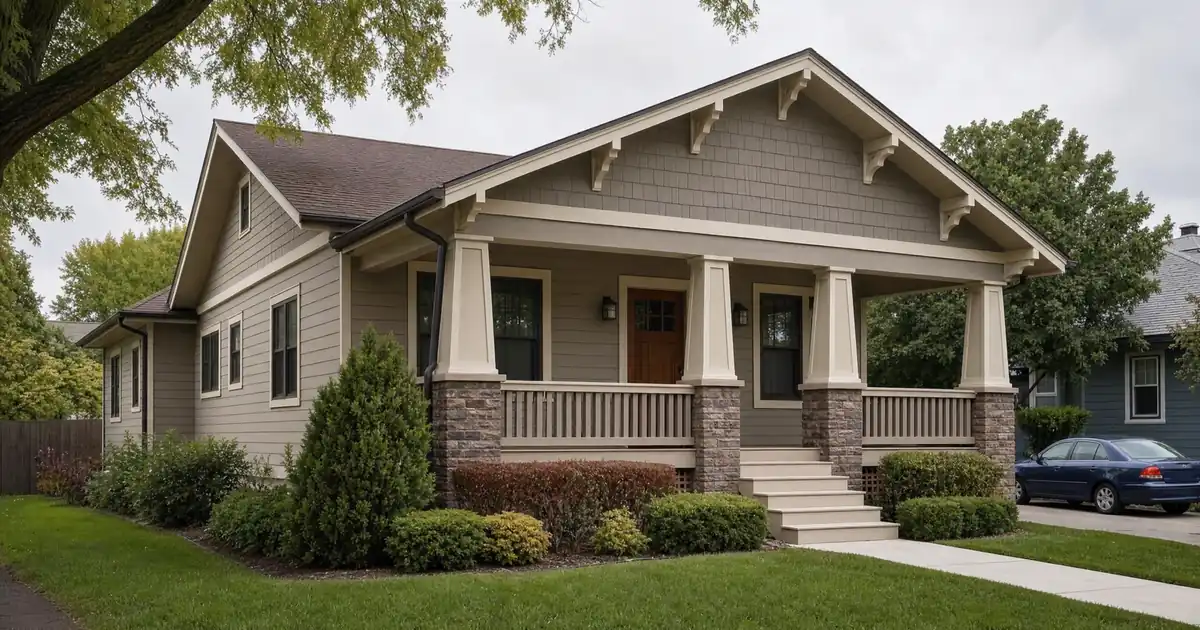
When Renting Makes You A Better Real Estate Investor — The Quick Read: Renting your own home can make you a stronger investor. Here’s why. It keeps your down payment and reserve cash liquid, instead of locked in home equity. DSCR lenders check that liquid cash when you buy or refinance a rental. Renting has zero effect on the loan math itself. DSCR underwriting looks at the property you’re financing. It doesn’t look at where you personally sleep. The real advantage shows up before an underwriter ever opens the file. It shows up in how much cash you have on hand. It shows up in how fast you can act on a deal. And it shows up in how well you understand tenants — because you’ve been one yourself.
That’s the whole idea in one paragraph. Everything below explains how it plays out in real life. You’ll see what a lender checks, what a lender never checks, and where this logic hits real limits.
DSCR Calculator
Run the numbers in your market
Rate source: Freddie Mac 30-yr average via FRED® — Federal Reserve Bank of St. Louis · effective Aug 13, 2026
Prefilled with local estimates — enter your own rent or nightly figures, taxes, insurance, and HOA for a more accurate picture.
Program parameters update from Lendmire’s centralized guideline source. Taxes and insurance are editable estimates.
As of Aug 13, 2026 · General Freddie Mac market benchmark, not a Lendmire loan offer. Rent, nightly rate, occupancy, taxes, and insurance are editable estimates. Short-term rental figures are estimates only and vary significantly by season, property type, management approach, and local short-term-rental rules — confirm local regulations before relying on them. Qualifying income for short-term rentals varies by program — some use appraisal market rent, others use documented STR history or projections — and is confirmed in underwriting. Not a Loan Estimate, approval, or commitment to lend. Program availability and eligibility are subject to lender guidelines, credit approval, property review, and underwriting.
Key Terms Defined
DSCR (debt-service-coverage ratio) compares a property’s monthly rent to its full monthly housing cost. Lenders write it as a ratio, like 1.10x or 1.25x.
PITIA stands for principal, interest, taxes, insurance, and association dues. It’s the full monthly cost of owning the property. It’s also the bottom number in every DSCR calculation.
Subject property is industry shorthand for the exact house or building being financed on a loan. It’s the only property whose occupancy matters to a DSCR file.
Business-purpose loan is a loan made for investment or rental purposes, not to buy a home to live in. This changes how the loan gets classified and reviewed.
Reverse occupancy happens when a borrower finances a property as a rental to qualify for the loan, then moves in themselves instead of renting it out. It’s a form of occupancy misrepresentation.
Seasoning is how long a lender wants a borrower to own a property before pulling cash out through a refinance.
Two Different Kinds of “Renting” — Don’t Mix Them Up
This topic only makes sense once you separate two things. They sound identical. But they have nothing to do with each other. One is where you personally live. The other is what a lender calls the property you’re financing.
“Renting” can mean two things. First, it can mean the investor’s own housing choice — the apartment or house they come home to at night. Second, it can mean the occupancy status of the investment property itself. A DSCR lender needs that property rented or rent-ready before it will fund the loan. DSCR underwriting cares a lot about the second meaning. It doesn’t care at all about the first. Say two investors want to buy the same rental duplex. One rents their own apartment. The other owns a paid-off house next door. Both get evaluated on identical terms. Why? Because the file is built around the property’s economics, not either person’s living arrangement.
That distinction is why the title of this piece isn’t a contradiction. Renting personally doesn’t touch DSCR math directly. It touches the capital and flexibility that sit behind the math. That means the down payment and reserves you have ready for the next deal.
How DSCR Underwriting Actually Treats Your Housing Situation
DSCR underwriting checks the subject property’s rent against its monthly carrying cost. Full stop. It never asks whether the borrower rents or owns their own home. The loan gets reviewed on the property’s income, subject to lender guidelines — not on the borrower’s W-2 or living situation.
Here’s the sequence a file goes through:
Step 1 — The subject property’s occupancy is established, not the borrower’s. DSCR loans are built as non-owner-occupied, business-purpose loans. The property being financed has to be a rental or rent-ready. That rule is fixed. An underwriter can’t waive it just because the borrower happens to rent elsewhere.
Step 2 — An appraiser writes the rent number, not the borrower. For a single-family rental, the appraiser typically fills out a Form 1007 rent schedule. For a multi-unit property, it’s a Form 1025 operating income statement. Both forms pull comparable rents from the area. This shows what the property should reasonably earn, per the Fannie Mae Selling Guide framework these forms come from. That appraised figure is the biggest single factor in the outcome — not what the investor hopes the unit rents for.
Step 3 — Lease versus appraisal: the lower number wins. If the unit is vacant, the appraiser’s market-rent estimate drives the ratio. If it’s already leased, underwriting typically uses whichever number is lower — the actual lease or the appraised market rent. Say an investor negotiated an above-market lease. They still don’t get to use that higher number.
Step 4 — The ratio runs against full PITIA, not just principal and interest. Rent gets divided by the complete monthly cost. That includes taxes, insurance, and any association dues. This gives a clean, comparable ratio across totally different properties.
Step 5 — Reserves and down payment get checked separately, and this is where personal renting reenters the picture. DSCR files don’t verify personal income. So liquidity — cash you can actually get to — does real work here. A lean personal balance sheet, the kind that comes from not having a chunk of net worth locked in home equity, is one factor among several. It affects whether an investor has the down payment and reserve cushion ready when a deal needs to close.
Step 6 — Vacant and short-term-rental treatment diverge. A standard long-term-rent appraisal form wasn’t built to capture nightly-rate income. That’s exactly why STR files often need a different paperwork path than a standard long-term lease.
DSCR loans are built for non-owner-occupied investment properties. Because they’re business-purpose investor loans, they get reviewed differently than a standard owner-occupied mortgage. It’s a distinction worth understanding once — then you never have to worry about it again.
The Loan Structures a Renting Investor Actually Uses
Across the wholesale network Lendmire works with, most DSCR purchases land at 75%–80% loan-to-value. That standard envelope applies to borrowers who already own a primary residence. Investment-property CLTV caps at 70% across the network with a $500,000 maximum line and a hard 700 credit floor — second homes carry the same 70% ceiling from a 640 floor. That means 20%–25% down on most files. A handful of programs in the network push to 85% LTV for borrowers with roughly a 700+ credit score. This matters more to a renting investor than it sounds. Every extra point of leverage is capital that stays in the bank instead of going into the deal.
Cash-out refinances top out around 75% LTV across most of the network. Lenders usually expect about six months of seasoning before letting an investor pull equity back out. That seasoning period is one more place where a renting investor’s liquidity edge shows up. Capital that would’ve been tied up in a primary home is available right away, instead of waiting on a refinance clock. Every figure here varies by lender and program. Guidelines, property type, leverage, and credit profile all apply.
Coverage requirements start at 1.00x on select programs. That’s a floor for those specific programs — never an industry-wide standard. Stronger ratios generally unlock better leverage and pricing tiers. Credit floors run around 620 in parts of the network, though most programs want somewhere near 660. A score of 700+ is typically where the strongest leverage tiers open up. Loan sizes on standard programs run up to roughly $3,000,000. Select lenders in the network handle smaller balances outside that range.
Short-term rentals get their own bracket. Purchase financing generally caps near 75% LTV. Refinance and cash-out cap around 70%. Short-term rentals qualify at a 1.00 coverage threshold on purchase and refinance at reduced maximum leverage, and require a 12-month income history or market data report at most lenders. Investors weighing an STR play against a long-term rental should look at Lendmire’s dedicated STR financing coverage. The requirements genuinely differ by property type.
Investors who already own rentals free and clear, or with a lot of equity, sometimes look at an investment-property HELOC to pull cash for the next deal. Those lines cap at $500,000 total across the network. There’s no tier above that for investment properties. So larger equity positions typically route through a cash-out refinance instead. Anyone building a multi-property portfolio this way should look at Lendmire’s guide on using DSCR loans to scale real estate investing. Sequencing purchases and refinances correctly is most of the strategy.
A handful of state overlays matter too. Purchases in Connecticut, Florida, Illinois, and New Jersey generally cap near 75% LTV. Deal sizes in these overlay states are typically capped around $2,000,000. And a few property types simply aren’t offered through these programs at all. Manufactured homes (single- and double-wide), log homes, and barndominiums fall outside network guidelines. Full stop — regardless of how strong the rent looks on paper.
Where the “Rent Personally, Invest Elsewhere” Logic Breaks
This logic has real limits. Pretending otherwise would be dishonest. Three edge cases matter most.
Reverse occupancy is the mirror-image risk. Market tracking occupancy fraud guidance defines reverse occupancy this way: a borrower finances a home as an investment property, then moves in themselves instead of renting it out. This flips the entire premise the loan was built on. The same risk exists across non-QM and DSCR lending in general. Picture an investor who rents their own home. Say they turn around and quietly occupy the “rental” they just financed. They’ve broken the deal at its foundation — not just bent a rule. Enforcement has gotten more consistent in recent years. Lenders now combine data checks with traditional verification. So this isn’t a theoretical risk to wave off.
The lower-of-lease-or-appraisal rule cuts against the investor, not for them. A great lease doesn’t guarantee a great ratio. Underwriting typically uses whichever number is lower, not whichever helps the file. A vacant unit has no lease to compare. So the appraiser’s market-rent figure is the only number on the table. On multi-unit buildings, occupied units get combined actual rent, while vacant units use the appraised estimate. This detail trips up investors buying partially-vacant multifamily properties.
STR income has no single standard. Some lenders in the network will only credit the long-term rent figure from a standard rent schedule. They treat nightly-rate upside as unqualified income. Others will work with trailing rental-platform data instead. This is one of the most program-specific corners of DSCR underwriting. That’s exactly why an investor’s actual hosting history and paperwork matter as much as the property itself.
Sub-1.00x coverage isn’t off the table entirely. Select lenders in the network do work with properties below that line. But leverage and terms adjust accordingly.Select lenders in the network do offer a no-ratio structure — no coverage ratio is calculated — though it generally requires existing primary-residence ownership, and leverage and terms adjust to match, subject to lender guidelines. That’s a real option, not a workaround. It’s one more reason to talk through a specific file, rather than assume a ratio disqualifies it outright.
The Real Advantage: What Renting Actually Frees Up
Renting your own home doesn’t make the DSCR math easier. It makes the capital and timing around that math easier. That’s a different thing — and arguably a more important one.
Home equity is illiquid by definition. It sits in the property until you sell it or borrow against it. And borrowing against a primary residence has its own approval process and timeline. Capital kept liquid, instead of parked in home equity, is capital ready for a down payment and reserves the moment a rental deal needs to close. Reserves on most DSCR files run around six months of PITIA. That steps up toward nine months on loans above roughly $1,500,000. Having that cash already sitting free — instead of needing to pull it from a home sale or a HELOC draw — is a genuine structural edge.
Run it as a simple comparison. Picture two investors with identical savings. Investor A keeps renting and keeps the full amount liquid. They use it toward a 25% down payment plus reserves on a small multifamily property. That property clears somewhere in the low-1.2x range at 75% LTV. Investor B puts a comparable amount into a primary-home down payment and closing costs instead. They then need another stretch of saving before reserves are rebuilt enough to qualify for the next rental purchase. Same starting capital. Very different pace toward the second deal. And DSCR underwriting only ever sees the deal that’s actually funded — not the one still being saved for. Final terms depend on lender guidelines, property type, leverage, and the borrower’s complete credit picture.
None of this means a bigger down payment fixes every problem. More equity lowers the monthly cost and can lift the DSCR ratio. But it never overrides a leverage cap, a credit floor, a reserve requirement, or an ineligible property type. The strongest files clear two tests at once. First, enough equity to satisfy leverage and reserve guidelines. Second, enough rental coverage to satisfy the ratio. Clearing 1.00x on paper isn’t the same thing as positive cash flow, either. Repairs, vacancy, management fees, utilities, and capital expenses all sit outside the DSCR calculation entirely. So a file that clears the ratio can still run tight in practice. These specifics are subject to lender guidelines and a full review of property, leverage, and credit.
Investors weighing this trade-off in more general terms should look at Lendmire’s piece on how renters can be real estate investors. It walks through the mindset shift in more depth. And for investors short on the down-payment side specifically, private-money financing for the down payment is another lever some use. It helps bridge the gap without waiting to fully rebuild savings.
A Readiness Check — And When to Stop Renting
Renting works best for an aspiring investor who has, or can quickly build, six-plus months of reserves. They also need a leverage-appropriate down payment sitting liquid, plus the schedule and comfort level to manage tenants directly. It works less well for someone who wants the psychological stability of ownership more than the flexibility of liquid capital. That’s a legitimate preference, not a financial mistake.
The signal to stop renting and buy a primary residence usually shows up on the reserve side first. Once an investor has enough capital that a primary-home down payment no longer threatens the reserve cushion needed for the next rental deal, the cost of staying a renter shrinks fast. At that point, the two goals — housing stability and portfolio growth — stop competing for the same dollars.
DSCR lending overall has been absorbing more of this exact borrower profile. Non-QM production is projected to climb from roughly $108 billion to $175 billion, with DSCR and investor products cited as the main driver, per HousingWire reporting. More capital chasing this borrower type generally means more standardized programs. That’s good news for an investor trying to time this exact kind of sequencing decision.
Tax treatment can depend on how funds are used and how a property is held. Investors should keep clear records and speak with a qualified tax professional before relying on any deduction.
This article is general information, not legal or tax advice. Investors should consult a qualified attorney or CPA about their own situation before making a financing decision.
Frequently Asked Questions
Does renting my own home actually help me qualify for a DSCR loan?
Not directly. DSCR underwriting never checks where you personally live. What it helps is your capital position. Keeping savings liquid, instead of tied up in home equity, gives you readier access to a down payment and reserves. That’s what actually gets checked on the file.
Can I buy a rental property before I buy my own home?
Yes, and plenty of investors do it on purpose. DSCR programs qualify primarily on the property’s rental income covering the payment, subject to lender guidelines. So there’s no requirement to already own a primary residence first.
What happens if I move into a property I financed as a DSCR rental?
That’s reverse occupancy. The mortgage industry treats it as a serious misrepresentation, not a gray area. The loan was priced and structured around rental income the lender expects to receive. Occupying the property yourself breaks that premise entirely.
Does a bigger down payment make up for a weak DSCR ratio?
It helps, but it doesn’t override guidelines. A larger down payment lowers the monthly cost and can lift the ratio. But leverage caps, credit floors, reserve requirements, and eligible property types still apply on top of that. Terms vary by lender guidelines, property type, leverage, credit profile, and full file review.
Is short-term rental income treated the same as long-term rent on these files?
No. STR files typically carry their own leverage limits. Lenders usually want a higher credit score, around 640+, plus roughly 12 months of hosting history. Program-specific rules govern how nightly-rate income gets documented. Standard rent-schedule appraisals just weren’t built for that income type.
Program availability, loan terms, and eligibility are all subject to lender guidelines, credit approval, property review, and full underwriting. This article is educational. It is not a loan offer or a commitment to lend.
About Lendmire
Lendmire (NMLS# 2371349) is a mortgage broker, not a lender. It arranges DSCR loans through select lenders across a wholesale network reaching 40 states plus Washington, D.C. — 41 markets total. Every scenario above is general guidance, not a commitment to lend. Actual terms depend on lender approval and the specific borrower, property, and program guidelines involved. Are you weighing a rental purchase or refinance? Want to see how the numbers actually work for your situation? Lendmire can help compare DSCR loan options based on the property’s income, your credit profile, available leverage, and your broader investment goals. Reach the team at 828-256-2183 or start a pricing quote request directly. Scotsman Guide named Lendmire a Top Mortgage Workplace in both 2025 and 2026.
Want the full mechanics of how these loans are structured, start to finish? Lendmire’s complete DSCR loans guide is the deeper reference.
Get Started
Ready to find the right loan for you?
In about 30 seconds you can review financing options available for your home or investment property. No commitment required.
Informational only. Not a Loan Estimate, approval, or commitment to lend. Program availability and eligibility are subject to lender guidelines, credit approval, property review, and underwriting.
References
1. Fannie Mae Selling Guide — Occupancy Types (B2-1.1-01)
2. HousingWire — Non-QM Originations Forecast
This article is part of Lendmire’s DSCR loan program — full qualification details, guidelines, and scenarios live on the program page.
Related reading: Buying A Rental Property In Another State While Renting · Can You Skip Buying A Home And Invest Instead? · Does Renting Your Vacation Home Void A Second-home Mortgage?
Brandon Miller
Founder & CEO, Mortgage Loan Originator, Lendmire LLC
- Mortgage Loan Originator · NMLS# 1129696 · Verify on NMLS Consumer Access
- North Carolina Real Estate Broker · License# 343312 · Verify on NCREC
- North Carolina Insurance Producer · License# 19053198 · Property, Casualty, Life, Health · Verify on NAIC SBS
- Lendmire LLC · Firm NMLS# 2371349 · Verify firm licensure
Legal disclosures. Lendmire (NMLS# 2371349) is a state-licensed mortgage brokerage that arranges financing through wholesale lender relationships. Lendmire is not a direct lender, depository institution, or registered financial advisor. The discussion above is general informational content about real estate financing — it is not financial, legal, or tax advice, and readers should consult licensed professionals for guidance on their individual circumstances. Loan inquiries are subject to lender underwriting; this article does not represent a commitment to lend. Loan terms, rates, and qualification standards vary by borrower, property, and state, and are subject to change at any time. Equal Housing Opportunity. NMLS Consumer Access: nmlsconsumeraccess.org.