
The Quick Read: Yes, when the property is rent-ready at closing and the contract timeline fits the loan process; no, when it still needs real rehab. A DSCR loan is reviewed primarily on property-level rental income covering the payment, subject to lender guidelines, and it does not fund repairs. Condition decides the route, not the fact that a wholesaler sold the deal.
- Rent-ready or light cosmetic work: a direct DSCR purchase is a realistic path.
- Gutted, mid-renovation, or unrentable: hard money first, then a refinance into DSCR.
- Packages can be financed as separate loans or one blended loan, but each property still has to meet eligibility.
- Assigned contracts raise a lender-specific question, and a double close sometimes solves it.
- Skipping hard money removes a second closing, but it also removes rehab funding.
Why Wholesale Buyers Default to Hard Money
Wholesalers sell discounted and often distressed property. A reference definition of wholesaling describes the strategy as putting a property under contract below market value and assigning it to a buyer for a fee, without the wholesaler ever taking title. Discounted usually means deferred maintenance. Deferred maintenance usually means the buyer needs short-term money that funds the purchase and the repairs.
That is the whole reason hard money became the default. It is not because DSCR can’t buy from a wholesaler. It’s because the typical wholesale house isn’t rentable on day one.
Hard money, in plain terms, is short-term, interest-only, asset-based financing. Across the network, terms run 6 to 18 months with no prepayment penalty. Up to 100% of the rehab budget can fund in draws against completed work. Leverage is measured against project cost and after-repair value, never as a simple purchase LTV. All of it varies by lender, property, and experience.
Can This Deal Skip Hard Money? The Condition Test
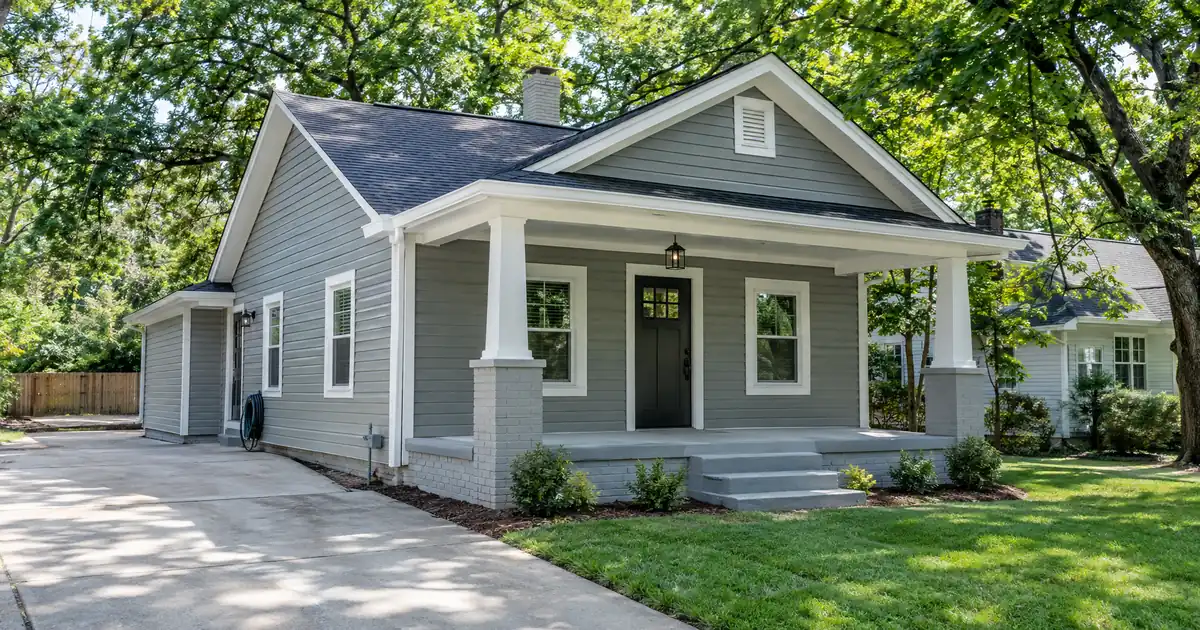
The question that settles it: could a tenant move in today? If yes, a DSCR purchase is on the table. If no, it isn’t.
Most DSCR programs in the wholesale network will finance a vacant purchase when the property is turnkey. A gutted house, or one mid-renovation, usually won’t qualify because it isn’t rentable yet. Utilities need to be on so the appraiser can verify systems. Skip that step and the appraisal stalls.
| Condition tier | Typical read | Likely route |
|---|---|---|
| Rent-ready | Clean, systems working | Direct DSCR purchase |
| Cosmetic work | Paint, floors, fixtures | Often DSCR, subject to lender review |
| Functional but tired | Aging systems, partial repairs | Case by case, may need bridge |
| Major or unlivable | Gutted, no utilities | Hard money, then DSCR exit |
The middle tiers are where files get argued. A lender looks at the appraiser’s report, the repair scope, and whether the rent opinion assumes work that hasn’t been done. Appraisal rent for a house that isn’t finished is a weak foundation.
Lendmire’s complete DSCR loans guide lays out how the coverage test works. Short version: monthly rent divided by the full monthly obligation, meaning principal, interest, taxes, insurance, and any HOA dues. That’s the number the lender reviews.
How Rent Gets Supported on a Vacant Wholesale Property
A vacant purchase doesn’t need a signed lease on most programs. The appraiser’s market-rent opinion stands in for it. For a single unit, that comes from Form 1007. For two to four units, it’s Form 1025. These are Fannie Mae form names that DSCR lenders borrow, not an agency requirement on the loan.
Occupied property is different. The file carries leases plus the appraisal’s rent schedule, and the lower of the lease rent and market rent can drive the number. If a wholesaler hands over a tenant-occupied house, get the leases early.
One more point on short-term rentals. Form 1007 measures monthly market rent. It isn’t built to estimate a nightly rate, and multiplying a nightly rate by 30 isn’t valid support. STR programs in the network run lower leverage than standard rentals, expect about 12 months of hosting history, and carry their own coverage floors on purchase and refinance. A wholesale buyer planning an Airbnb conversion should treat that as a separate conversation.
Assignment vs. Double Close: Where the Lender Gets Involved
Here’s the piece most wholesale buyers don’t see coming. In an assignment, the wholesaler signs the purchase agreement with the seller, then assigns those rights to the end buyer for a fee. The end buyer closes with the seller and pays the contract price plus the fee. Per REI Prime’s assignment glossary, the original contract has to permit assignment, usually through “and/or assigns” language, and some states regulate assignment fees or require licensing for repeated activity.
Now the lender’s side. Redatametrix notes that some buyer lenders won’t fund an assigned contract, and that a double close puts the wholesaler on title first so the buyer’s lender sees an arm’s-length purchase from the owner of record. SellToHomePros makes a similar point about lenders capping or refusing assignment fees. Some REO and corporate sellers ban assignment outright, so those deals get double-closed anyway.
Across the network, treatment of assignments varies by lender. Some are comfortable, some cap the fee, some want a double close. That’s a program-specific rule, and it should be answered before the buyer signs, not after.
Disclosure is not optional either. A Massachusetts law group’s post on assignment and double closing says that when a lender is involved, the fee can’t be hidden, and concealing it through fake invoices or side agreements is fraud. Expect the assignment agreement and the fee to be in the lender’s file. Privacy from the seller is not permission to mislead the lender.
The fee also becomes part of the buyer’s basis. If the buyer pays the contract price plus the fee and the appraisal comes in lower, the buyer covers the gap. Model that before committing.
Direct-to-DSCR vs. Hard-Money-Then-Refinance
| Factor | Direct DSCR purchase | Hard money, then DSCR |
|---|---|---|
| Closings | One | Two |
| Rehab funding | None | Draws on rehab budget |
| Fee layers | Single set | Points, draw, extension fees |
| Maturity risk | None | Balloon-style deadline |
| Prepayment | Often a penalty | Typically none |
| Best fit | Rent-ready, hold | Distressed, value-add |
The direct path wins on simplicity. The hard money payoff includes drawn principal, interest, points, draw fees, and extension fees, so every month on that note costs money. Skip it and you skip those layers.
The trade-off is real, though. A DSCR loan can’t fund a rehab. It often carries a prepayment structure, which punishes a short hold. And if the plan is to buy, fix, and flip, DSCR is generally the wrong tool.
Lendmire’s piece How to Use a DSCR Cash-Out to Clear a Hard Money Note and Rehab Cards covers the exit side for buyers who do take the bridge route.
A Worked Comparison (No Dollars, Just Ratios)
Picture a wholesale buyer with a discounted single-family house that’s vacant but livable. Paint and flooring, nothing structural. Utilities are on.
Path one: direct DSCR purchase at 75% LTV on an investment purchase. The appraiser’s market rent supports coverage in the low 1.2x range. The buyer does cosmetic work out of pocket, rents it, and holds. One closing. One loan. Every figure here varies by lender and program — guidelines, property type, leverage, and credit profile all apply.
Path two: hard money at a loan-to-cost tier, rehab draws, then a refinance into DSCR. The coverage on the refinance may look similar, but the buyer carries a short-term note, pays its fee layers, and bets the takeout appraisal and seasoning work out. If the appraisal disappoints, the buyer is stuck on a maturing note.
For this house, path one is cleaner. Flip the facts so the roof is gone and the kitchen is stripped, and path one stops existing. Condition flips the answer.
Keep in mind that clearing 1.00 on coverage is not the same as positive cash flow. DSCR compares rent to the monthly obligation only. Repairs, vacancy, management, utilities, and capex all sit outside the calculation.
What Leverage and Credit Look Like on a Direct Purchase
Most DSCR purchase files across the network land at 75% to 80% LTV, which means 20% to 25% down. Select high-leverage programs reach 85% LTV with roughly a 700-plus score. Credit floors start around 620 in parts of the network, most programs want about 660, and 700-plus opens the strongest leverage tiers. Coverage of 1.00 is where select programs start, and stronger ratios open better terms. Another path through select lenders goes below 1.00, with leverage and terms adjusted.
Reserves vary by lender, leverage, loan size, and transaction type. Around six months of PITIA is common. Conservative files at modest leverage under $1,500,000 may see reserves waived, and larger loans typically step up to about nine months. A larger down payment helps coverage but never erases a credit floor, a reserve rule, or property eligibility. All of this is subject to lender guidelines and isn’t a commitment to lend.
Many wholesale buyers close in an LLC. That’s workable on many programs, subject to lender program eligibility, and the entity documents belong in the file from the start. Vest the entity before the contract or assignment is signed, not after, or title gets messy.
DSCR is for business-purpose investment property, so it is reviewed differently from a standard owner-occupied mortgage. Manufactured homes, log homes, and barndominiums are not offered in the network.
What About a Package of Several Properties?
A wholesale package is ambiguous. It can mean one deal, or several properties sold together. For the second meaning, there are two structures.
Option one is separate DSCR loans on each property. Each house gets its own appraisal, rent support, and review. A vacant property can sit inside a tenant-occupied package and be reviewed on the appraiser’s market rent on many programs, though some lenders discount vacancy or cut leverage.
Option two is one portfolio loan, also called a blanket loan or cross-collateralized loan: one note secured by several rentals. On the 30-year portfolio DSCR loan, two to 20 properties sit under one note, with loan sizes from $300,000 to $5,000,000 and leverage up to 80% on purchase and rate-and-term. Coverage is measured on the pool, so stronger properties can offset weaker ones. The credit floor is typically 640, higher on some structures. Five or more units under one loan can also go through a rental portfolio term loan, with leverage up to 75%, fixed terms and a balloon at maturity. Small multifamily of five or more units is eligible only on that term structure.
A rental below 1.00 inside the pool is a pooled-coverage fact. Underwriting tests the pooled coverage, the leverage and the terms together.
Blended coverage doesn’t fix a gutted house. Property eligibility and condition still apply to every asset. If one house in the package isn’t rentable, the package may need to split, with the rehab asset on bridge financing and the rest going DSCR.
Cross-collateralization cuts both ways. A default on one property can expose the others, and selling one out of the pool follows the loan documents and release terms. The release price runs above the property’s allocated balance. Buyers planning to flip pieces of a package should read those terms before choosing the blanket structure.
Timeline Mismatch: The Contract Deadline
Wholesale contracts have deadlines. Hard money exists to meet them. A DSCR purchase has appraisal, title, and underwriting steps that a cash buyer skips. If the contract window is tight, a DSCR purchase may not fit, and that’s a legitimate reason to use bridge money.
The practical move: confirm the lender’s process against the contract’s closing date before committing. If the match is poor, ask the wholesaler for a longer window or choose the bridge.
Buying With Cash First, Then Refinancing
Some buyers close with cash and refinance into DSCR later. Delayed financing is an agency exception for all-cash purchases, and it waives the waiting period, not the other tests. It also doesn’t govern DSCR files. DSCR seasoning is set by the individual lender, and cash-out generally expects about six months, at up to 75% LTV on a standard rental. STR cash-out runs lower, around 70%, on short-term-rental collateral.
A purchase financed with hard money generally can’t use the delayed-financing lane. And a hard money advance based on cost doesn’t change the DSCR lender’s LTV test on appraised value. Higher credit doesn’t erase seasoning either.
When Hard Money Is Still the Right Call
Use hard money when:
1. The property needs major repairs and isn’t rentable.
2. The contract deadline is shorter than a DSCR process allows.
3. The plan is a flip, not a hold.
4. The package includes a mix of conditions that would hold up the whole deal.
Hard money leverage is tiered by completed projects. Fix-and-flip runs up to 93% of project cost at five or more completed projects, 90% at two or more, and 85% with fewer, with every tier capped at 75% of after-repair value. Bridge purchases without rehab go up to 80% of purchase price. These all vary by lender, property, and experience, and none of it is a commitment to lend. Many investors refinance out of hard money into long-term DSCR financing once the property is stabilized, and that path is one Lendmire brokers.
Pre-Contract Checklist
Ask the wholesaler:
- Does the contract allow assignment, and is the fee disclosed in writing?
- Will the seller permit it, or is a double close required?
- Is the property vacant, and are utilities on?
- What does the repair scope look like?
Ask the lender:
- Does the program accept an assigned contract?
- How is rent supported on a vacant property?
- What are the entity, reserve, and appraisal requirements?
- Does the closing window fit?
Key Terms Defined
Assignment: the wholesaler transfers purchase-contract rights to the end buyer for a fee.
Double close: the wholesaler buys first and sells to the end buyer in a second closing.
Seasoning: the ownership period a lender expects before it allows cash-out.
Cross-collateralization: one note secured by several properties.
Form 1007 / 1025: appraisal rent schedules for one unit and two to four units.
Frequently Asked Questions
Can I use a DSCR loan on a vacant wholesale property?
Yes, on many programs, if it’s turnkey. Rent is supported by the appraiser’s market-rent opinion rather than a lease. A property that isn’t rentable is generally not eligible until the work is done.
Does a DSCR loan fund the rehab?
No. It’s built for rent-ready property. A bridge or hard money loan handles the repair phase, and DSCR works as the exit once the property is stabilized.
Will a DSCR lender accept an assigned contract?
It depends on the lender. Some accept assignments, some cap the fee, and some want a double close. Confirm before signing, and expect the assignment agreement and fee to appear in the file.
Can I finance a whole wholesale package with one loan?
Often yes, through a portfolio or blanket structure, subject to lender guidelines. Coverage is measured on the pool, but each property still needs to be eligible. A single unrentable house may force a split.
Is a DSCR loan better than hard money for a short hold?
Usually not. DSCR often carries a prepayment structure, while hard money typically doesn’t. Short holds and flips generally point toward hard money.
If you are buying, rehabbing or refinancing an investment property on a short timeline and want to see how the numbers work, Lendmire can help you compare hard money options based on the project, the exit plan, leverage, and your goals. Reach the team at 828-256-2183 or request a quote.
Tax treatment varies by how the property is held and used; consult a qualified tax professional.
About Lendmire
Lendmire — NMLS# 2371349 — is a DSCR and non-QM mortgage brokerage with investor loan programs in 41 markets, including Washington, D.C. DSCR eligibility is commonly reviewed by the lender around property-level rent rather than personal income documentation, subject to lender guidelines, and the brokerage helps arrange financing for LLC-owned portfolios beyond conventional financed-property limits. Recognized by Scotsman Guide as a Top Mortgage Workplace in 2025 and 2026.
Get Started
Ready to find the right loan for you?
In about 30 seconds you can review financing options available for your investment property. No commitment required.
Informational only. Not a Loan Estimate, approval, or commitment to lend. Program availability and eligibility are subject to lender guidelines, credit approval, property review, and underwriting.
References
1. REI Prime: Real Estate Wholesaling
2. REI Prime: Assignment of Contract
3. Redatametrix: Assignment vs. Double Close
4. SellToHomePros: Contract Assignment Guide
5. Martino Law Group: Assignment vs. Double Close
This article is part of Lendmire’s hard money loan program — full qualification details, guidelines, and scenarios live on the program page.
Related reading: Is a DSCR Portfolio Loan Smart If You Will Sell Within Ten Years? · Portfolio DSCR Loan vs. a DSCR Loan on Every Rental · Can You Sell One Rental Before Your DSCR Blanket Loan Matures?
Brandon Miller
Founder & CEO, Mortgage Loan Originator, Lendmire LLC
- Mortgage Loan Originator · NMLS# 1129696 · Verify on NMLS Consumer Access
- North Carolina Real Estate Broker · License# 343312 · Verify on NCREC
- North Carolina Insurance Producer · License# 19053198 · Property, Casualty, Life, Health · Verify on NAIC SBS
- Lendmire LLC · Firm NMLS# 2371349 · Verify firm licensure
Legal disclosures. Lendmire (NMLS# 2371349) is a state-licensed mortgage brokerage that arranges financing through wholesale lender relationships. Lendmire is not a direct lender, depository institution, or registered financial advisor. The discussion above is general informational content about real estate financing — it is not financial, legal, or tax advice, and readers should consult licensed professionals for guidance on their individual circumstances. Loan inquiries are subject to lender underwriting; this article does not represent a commitment to lend. Loan terms, rates, and qualification standards vary by borrower, property, and state, and are subject to change at any time. Equal Housing Opportunity. NMLS Consumer Access: nmlsconsumeraccess.org.