
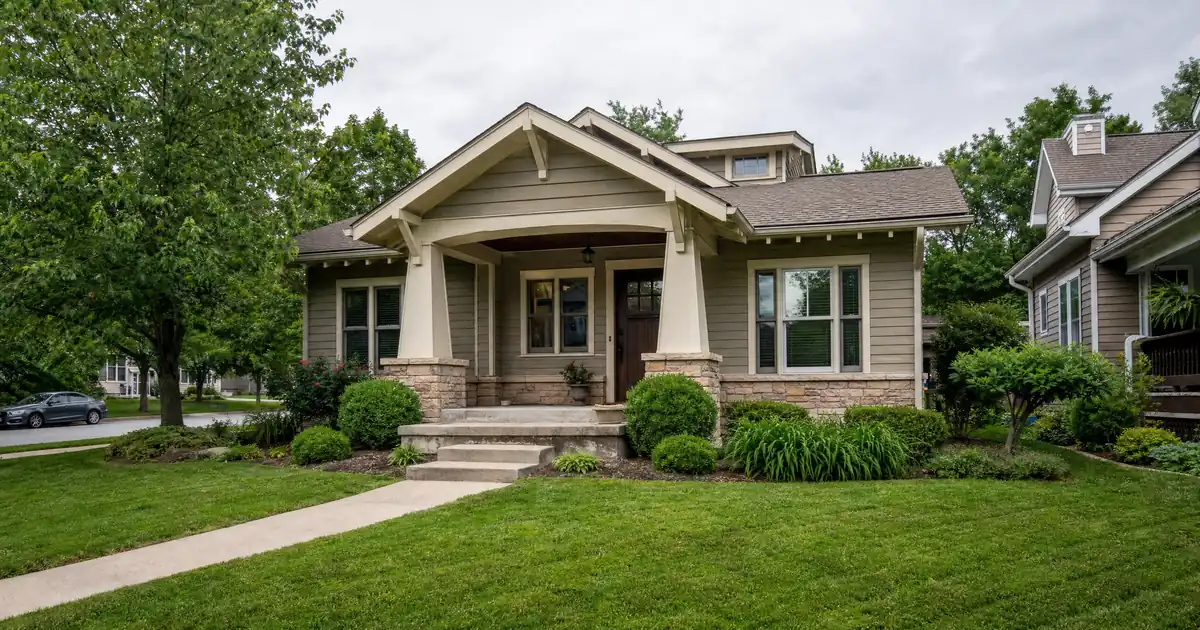
Young Professional Buying First Rental Property — The Quick Read: A working professional in their late 20s or 30s can buy a first rental without ever running their salary through the loan file, using a DSCR loan that checks whether the property’s rent covers its own payment instead of checking a personal debt-to-income ratio. That single difference matters more than most people realize, because conventional financing math punishes exactly the profile a lot of young buyers have: solid income, real savings, and a student loan balance sitting on top of it. The trade-off is that these loans typically want more equity down and a clean credit file, and the rent figure has to hold up under an appraiser’s math, not just a lease you signed with a friend. This article is general information only, not legal or tax advice — see the disclaimers below before acting on anything here.
Key Takeaways
- DSCR loans qualify primarily on property-level rental income covering the payment, subject to lender guidelines — not your paycheck, bonus, or student debt.
- Most purchase files land at 75%-80% loan-to-value; select high-leverage programs reach 85% for borrowers with stronger credit.
- There’s no agency-style cap on how many financed properties you can hold, since these loans sit outside conventional/conforming underwriting entirely.
- Clearing a 1.00 coverage ratio is not the same thing as positive cash flow — vacancy, repairs, management, and capital expenses sit outside that number.
- Younger buyers are increasingly financing rentals through paths other than the traditional owner-occupant mortgage, a shift the data below makes concrete.
- Nothing here is legal or tax advice; loan terms, entity structuring, and tax treatment should be reviewed with qualified professionals for your specific situation.
The Setup: Why a Young Professional Buys a First Rental This Way
The traditional first-time-buyer path has narrowed fast, and the data behind that shift is what makes DSCR financing relevant to this audience in the first place. The first-time buyer share of the market fell to a record-low 21%, with the typical first-time buyer now 40 years old, according to the National Association of Realtors’ 2025 Profile of Home Buyers and Sellers. Inside that same data set, younger millennials saw their first-time-purchaser share drop to 60%, down from 71% the year before, per NAR — a fast collapse for a single age cohort.
DSCR Calculator
Run the numbers in your market
Rate source: Freddie Mac 30-yr average via FRED® — Federal Reserve Bank of St. Louis · effective Aug 13, 2026
Prefilled with local estimates — enter your own rent or nightly figures, taxes, insurance, and HOA for a more accurate picture.
Program parameters update from Lendmire’s centralized guideline source. Taxes and insurance are editable estimates.
As of Aug 13, 2026 · General Freddie Mac market benchmark, not a Lendmire loan offer. Rent, nightly rate, occupancy, taxes, and insurance are editable estimates. Short-term rental figures are estimates only and vary significantly by season, property type, management approach, and local short-term-rental rules — confirm local regulations before relying on them. Qualifying income for short-term rentals varies by program — some use appraisal market rent, others use documented STR history or projections — and is confirmed in underwriting. Not a Loan Estimate, approval, or commitment to lend. Program availability and eligibility are subject to lender guidelines, credit approval, property review, and underwriting.
Student debt is a big part of why. Conventional and FHA underwriting run on a hard debt-to-income ceiling — 28% for conventional, 31% for FHA — and every dollar of student debt eats directly into that room, according to Zillow Research. A DSCR loan never runs that calculation. It evaluates the property, not the borrower’s monthly obligations, which is the structural reason it fits a graduate-degree-holding W-2 earner with real student debt better than a conventional mortgage ever will.
None of this means DSCR borrowers are a weaker credit pool. Non-QM production — the category DSCR loans live in — closed with an average 776 FICO score, Scotsman Guide reports, essentially matching conventional conforming borrowers. The subprime-stigma assumption doesn’t hold up against that number. Terms vary by lender guidelines, property type, leverage, credit profile, and full file review.
Key Terms Defined
DSCR (debt-service coverage ratio): monthly rent divided by the property’s monthly payment — the core number every DSCR file is built around.
PITIA: principal, interest, taxes, insurance, and association dues combined into one monthly payment figure — the denominator in the DSCR math.
LTV (loan-to-value): the loan amount expressed as a percentage of the property’s value or purchase price; higher LTV means a smaller down payment.
Business-purpose loan: a loan made for an investment property rather than a home you live in, which is why DSCR underwriting runs on different rules than a standard owner-occupied mortgage.
Reserves: liquid funds a borrower must have on hand after closing, expressed as a number of months of PITIA rather than a dollar figure.
Seasoning: the waiting period, usually measured in months from purchase, that a lender requires before allowing a cash-out refinance on the same property.
How the Loan Actually Gets Underwritten
Step one replaces the paycheck with the property. Instead of pulling W-2s and calculating personal debt-to-income, the lender asks one question: does the rent cover the payment? DSCR loans are designed for non-owner-occupied investment properties. Because they are business-purpose investor loans, they are reviewed differently from a standard owner-occupied mortgage.
Step two establishes the rent figure through an appraisal, not a hunch. The industry has long borrowed the same standardized rent-documentation approach agency lending uses — a single-family comparable rent schedule for one-unit properties, and an income property report for two-to-four-unit buildings, per Fannie Mae’s Selling Guide. DSCR lenders aren’t bound by agency eligibility rules, but they lean on this same appraisal methodology because it’s the third-party-verifiable rent number underwriters trust. If the unit already has a tenant in place, the existing lease often gets layered in alongside that appraised figure.
Step three still checks credit, assets, and reserves — what’s missing is employment verification and a personal income calculation, not the whole file. Across the network, credit floors run around 620 in parts of the market, though most programs want closer to 660, and a 700+ score is generally what unlocks the strongest leverage tiers. Reserve requirements commonly land around six months of PITIA, and can step up toward nine months on larger loan balances, particularly above roughly $1.5 million.
Step four sizes the loan. Standard files run up to about $3 million, with smaller balances routed through select lenders in the network built for that segment. A larger down payment lowers the payment and can lift the coverage ratio — but it doesn’t erase a credit floor, a reserve requirement, or an ineligible property type. The strongest files clear both tests at once: enough equity down and enough rent to cover the payment comfortably. Exact terms depend on the lender’s guidelines, property type, leverage, and a full review of the borrower’s file.
Say a buyer puts 20% down on an investment purchase. For most standard programs to approve that file as submitted, the appraised rent generally needs to clear somewhere north of 1.00x coverage against the resulting payment — 1.00 is a floor on select programs, not a universal industry standard, and stronger ratios tend to unlock better leverage and pricing.
Financing Paths, Compared
Young buyers usually weigh three real paths before landing on one. Here’s the structural difference, not the sales pitch:
| Factor | Conventional (owner-occupied) | House-Hacking (2-4 unit) | DSCR (investor) |
|---|---|---|---|
| Income basis | W-2, traditional personal-income documentation, personal DTI | Same, with rental offset credit | Property’s rent only |
| Occupancy required | Yes | Yes, one unit | No |
| Financed-property limits | Agency caps apply | Agency caps apply | No agency cap |
| Typical down payment | Program-dependent | Program-dependent | Typically 15%-25% |
| Entity ownership | Borrower’s own name | Borrower’s own name | Often LLC-eligible, subject to program guidelines |
House-hacking — buying a small multifamily and living in one unit — is the closest thing to a bridge between the two worlds, since a portion of the rent can offset personal DTI while you still occupy the property. Once someone wants a pure rental with no owner-occupancy requirement, most young professionals end up here, at DSCR. Lendmire’s piece on why your first property doesn’t have to be your home walks through that decision in more detail.
The Trade-offs and What Can Go Wrong
Clearing a 1.00 coverage ratio feels like a green light, but it isn’t the same thing as positive cash flow. The DSCR calculation only compares rent to PITIA — it says nothing about vacancy months, a new roof, property management fees, or the utilities a landlord sometimes covers between tenants. A file that clears 1.05x on paper can still lose money in a bad year if those costs aren’t budgeted separately.
Coverage below 1.00 isn’t automatically off the table. Some lenders in the network will still review a file below that threshold, but leverage and terms adjust accordingly — lower loan-to-value, different pricing, or more cash down to offset the thinner ratio.No-ratio qualification is available through select lenders in the network, generally limited to borrowers who already own a primary residence, with adjusted leverage and terms and full underwriting still applying under lender guidelines.
Short-term rentals also carry a lower cash-out leverage ceiling than standard rentals on the same program, so the income calculation has to hold up under tighter constraints — an appraiser who simply multiplies a nightly rate by 30 to arrive at monthly rent is making a documented, well-known appraisal error, per McKissock Learning. Short-term rentals qualify at a 1.00 coverage threshold on purchase and refinance at reduced maximum leverage, and require a 12-month income history or market data report at most lenders. Lendmire’s DSCR for Airbnb resource covers that structure directly.
Property type also matters more than most first-time buyers expect. Manufactured homes — both single- and double-wide — along with log homes and barndominiums fall outside these DSCR programs entirely; they aren’t a harder file, they’re simply not offered through the network. Worth checking before falling for a listing.
Who This Fits — and Who It Doesn’t
This path tends to fit a young professional with steady traditional employment income, real savings, and a student loan balance that would otherwise choke conventional DTI math. It also fits someone who wants to scale past one property, since there’s no agency-style cap on financed units waiting to trip them up down the road. Buyers comfortable holding title in an LLC — structuring a first rental purchase that way is common in this space, subject to program guidelines — often find this the more natural fit than a conventional file built around individual ownership.
It fits less well for someone chasing the lowest possible entry cost, since house-hacking or a conventional purchase usually beats DSCR on minimum down payment. It also doesn’t fit someone thin on reserves or sitting below the credit floors most programs expect — a 620 score exists in parts of the network, but it’s the exception, not the target. And it’s a poor match for a buyer who hasn’t priced out a real property manager or repair budget, since a coverage ratio that looks fine on the appraisal can still run cash-negative in year one if nothing was set aside for the unglamorous stuff.
For a broader walkthrough of how leverage, credit tiers, and coverage ratios interact across programs, Lendmire’s complete DSCR loans guide covers the mechanics end to end, and its piece built specifically for first-time rental property buyers is worth a read before shopping lenders. Once the first property is seasoned, some investors use a cash-out refinance to fund a second purchase — cash-out on this type of loan typically tops out around 75% loan-to-value, with roughly six months of seasoning being the common expectation across the network.
Frequently Asked Questions
Does my salary matter at all if I go the DSCR route? Not for qualifying the loan itself — the underwriting math runs on the property’s rent versus its payment, not personal income or employment history. Credit, identity, assets, and reserves still get verified like any other mortgage file; what’s absent is the pay stub and personal debt-to-income calculation.
Can student loan debt keep me from buying my first rental? It can seriously limit conventional or FHA financing, since those programs cap mortgage-related debt-to-income around 28%-31%, but a DSCR loan never calculates that ratio at all. That’s the main reason this structure appeals to buyers carrying a heavier student debt load.
How do you qualify for a DSCR loan in a young professional’s situation? Qualification generally rests on the property’s rent measured against its own payment, plus a credit, asset, and reserve review — not a personal debt-to-income calculation. Most standard purchase files run 75%-80% loan-to-value, though select high-leverage programs reach 85% for borrowers with stronger credit, generally 700 or above. Exact terms depend on credit, property type, and the specific lender’s guidelines.
What are the requirements for a first-time investor buying a rental this way? Expect a credit review (floors around 620-660 depending on the lender, with 700+ unlocking stronger leverage), reserves commonly around six months of PITIA, and an appraised rent figure that generally needs to clear north of 1.00x coverage against the payment on standard programs. These are general guideposts, not guarantees, and every file is subject to full underwriting review.
Can my first rental be a short-term rental instead of a long-term lease? It can, through programs built specifically for that use, but expect different terms — generally a 640+ credit score, about 12 months of hosting history, and financing capped lower than a standard long-term rental file. Purchase leverage on these programs tops out around 75%, with refinance and cash-out typically running a bit lower.
Does it matter how many other properties I already own? For DSCR loans, generally not — there’s no agency-style cap on financed properties the way conventional lending applies one. That’s part of why investors planning to scale past a single rental often gravitate toward this structure early.
About Lendmire
Lendmire (NMLS# 2371349) is a mortgage broker that arranges DSCR investor loans through a wholesale network spanning 41 markets, including Washington, D.C. — it doesn’t fund, underwrite, or guarantee approval on any file. Anyone weighing this path can reach Lendmire at 828-256-2183 or request a quote to see how leverage, credit, and coverage line up on a specific property. Scotsman Guide named Lendmire a Top Mortgage Workplace in both 2025 and 2026.
Disclaimers: This article is provided for general informational purposes only and does not constitute legal, tax, or financial advice. It isn’t legal or tax advice, and tax treatment can depend on how the property is used and held — investors should keep clear records and talk to a qualified tax professional before relying on any deduction. Loan approval is never guaranteed and nothing here is a commitment to lend; every scenario is subject to lender approval and to the borrower’s, property’s, and program’s underwriting guidelines. Anyone considering entity structuring, leverage, or a specific transaction should consult a licensed attorney, CPA, or other qualified professional regarding their own circumstances before making a decision.
Get Started
Ready to find the right loan for you?
In about 30 seconds you can review financing options available for your home or investment property. No commitment required.
Informational only. Not a Loan Estimate, approval, or commitment to lend. Program availability and eligibility are subject to lender guidelines, credit approval, property review, and underwriting.
References
1. National Association of Realtors — First-Time Home Buyer Share Falls to Historic Low of 21%
2. National Association of Realtors — Baby Boomers Remain Largest Share of Home Buyers
3. Zillow Research — Student Debt and DTI Ratio
4. Scotsman Guide — Which Groups Are Driving Non-QM Lending
5. Fannie Mae Selling Guide — Rental Income (B3-3.8-01)
6. McKissock Learning — Form 1007 and Its Impact on Short-Term Rental Appraisals
This article is part of Lendmire’s DSCR loan program — full qualification details, guidelines, and scenarios live on the program page.
Related reading: Young Investor Cash Out Refinance First Rental · How To Qualify For A Rental Property Loan Without W2 Income · Can You Claim HELOC Interest On Investment Property?
Brandon Miller
Founder & CEO, Mortgage Loan Originator, Lendmire LLC
- Mortgage Loan Originator · NMLS# 1129696 · Verify on NMLS Consumer Access
- North Carolina Real Estate Broker · License# 343312 · Verify on NCREC
- North Carolina Insurance Producer · License# 19053198 · Property, Casualty, Life, Health · Verify on NAIC SBS
- Lendmire LLC · Firm NMLS# 2371349 · Verify firm licensure
Legal disclosures. Lendmire (NMLS# 2371349) is a state-licensed mortgage brokerage that arranges financing through wholesale lender relationships. Lendmire is not a direct lender, depository institution, or registered financial advisor. The discussion above is general informational content about real estate financing — it is not financial, legal, or tax advice, and readers should consult licensed professionals for guidance on their individual circumstances. Loan inquiries are subject to lender underwriting; this article does not represent a commitment to lend. Loan terms, rates, and qualification standards vary by borrower, property, and state, and are subject to change at any time. Equal Housing Opportunity. NMLS Consumer Access: nmlsconsumeraccess.org.