
The Quick Read: Yes, it can qualify, but only when the nights the city allows still produce enough income, or when long-term market rent covers the payment on its own. A night cap changes which income a lender can count. It does not change the DSCR formula, which divides qualifying income by the full monthly housing obligation of principal, interest, taxes, insurance, and any HOA dues.
- A night cap is a hard ceiling on rentable nights, so it limits the short-term income a lender can reasonably count.
- If lawful nights leave coverage too thin, the file typically falls back to long-term market rent from the appraisal.
- On a short-term rental, select programs in the network start at a 1.00 coverage floor, with a 640+ score and about 12 months of hosting history.
- Purchase leverage on short-term rentals tops out at 75% LTV, and refinance and cash-out top out around 70%.
- Clearing the ratio is not the same as positive cash flow, and a cap makes that gap wider.
Short-term rental rules can vary by city, county, HOA, and property type, so investors should confirm local rules before relying on projected rental income.
Short-Term Rental Calculator
Run the STR numbers in your market
Rate source: Freddie Mac 30-yr average via FRED® — Federal Reserve Bank of St. Louis · effective Oct 15, 2026
Prefilled with starting assumptions — enter your nightly rate, occupancy, taxes, and insurance for a more accurate picture.
Short-term rental income is documented with a 12-month history or a market data report. Program parameters update from Lendmire’s centralized guideline source.
As of Oct 15, 2026 · General Freddie Mac market benchmark, not a Lendmire loan offer. Nightly rate, occupancy, taxes, and insurance are editable estimates. Qualifying income for short-term rentals varies by program — some use appraisal market rent, others use documented STR history or projections — and is confirmed in underwriting. Not a Loan Estimate, approval, or commitment to lend. Program availability and eligibility are subject to lender guidelines, credit approval, property review, and underwriting.
What Makes a 2-4 Unit Different From a Single-Family Short-Term Rental?
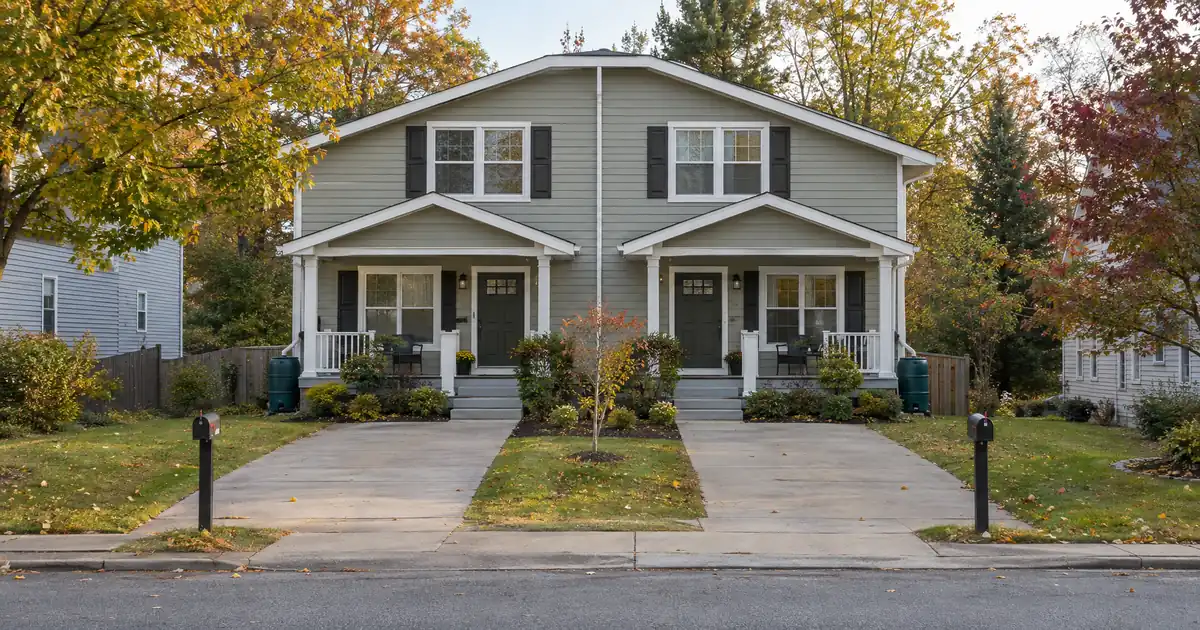
A duplex, triplex, or fourplex is still residential collateral, and the lender combines the income from every unit against one payment. That is the upside: several income streams sit under a single loan. The catch is that each unit brings its own night-cap math, its own documentation, and sometimes its own permit question.
Across the wholesale network, the same program guidelines that apply to a house apply here. Select lenders in the network offer purchase loans on short-term rentals up to 75% LTV. Refinances run around 70%, and cash-out on short-term-rental collateral also tops out at 70%. Expect a 640+ credit score and about 12 months of hosting history. Loan sizes reach up to $3,000,000 on standard programs, with smaller balances routed through select lenders. All of it is subject to lender guidelines and individual underwriting.
Property type matters before income does. Manufactured homes, log homes, and barndominiums are not offered in these programs, no matter how well they would rent. A stick-built 2-4 unit is the normal fit.
What Is a Night Cap, and Why Does It Matter to Underwriting?
A night cap is a local limit on how many nights per year a property can lawfully operate as a short-term rental. AirROI defines an annual night limit as a regulatory ceiling and reports that limits typically range from 30 to 180 nights. It also notes that caps most often bind when the host is absent, and that many places exempt or loosen the rule for owner-occupied or hosted stays.
Underwriting cares because a cap turns a market projection into a ceiling. A booking model might assume the unit rents most of the year. If the ordinance allows 90 nights, the lawful income is a fraction of that. A lender does not want to lend against nights the owner cannot legally sell.
The revenue hit can be large. KeyData modeled a 200-night cap in Salt Lake City. For listings that exceeded the threshold, the cap cut median revenue per available night by roughly 20%. Holding revenue flat would have required about a 23.5% jump in nightly rate. Smaller listings were more likely to exceed the cap. That is one city’s model, not a national average, but it shows the mechanism: demand can be strong and the ceiling can still decide the deal.
Night caps are set locally by cities, counties, and HOAs. No federal rule governs them, and DSCR loans are business-purpose investor loans that sit outside agency rules.
Which Income Does the Lender Use When Nights Are Capped?
The lender uses whichever supportable income figure the program accepts, and on a capped property the lower, more defensible figure usually decides the file. Programs in the network generally work from three routes:
- Trailing platform history. Roughly 12 months of documented bookings and payouts.
- A third-party projection. An AirDNA-type market report, which is more common on purchases where no history exists.
- Appraiser market rent. The long-term rent schedule in the appraisal.
For a 2-4 unit, the appraisal is typically reported on Form 1025, the small residential income property report. That is a form name, not a rule that governs the loan. It lists market rent per unit, and it generally does not capture short-term income. Whether a lender asks for extra short-term support alongside it, such as a per-unit projection report, varies by lender.
Here is how a cap interacts with each route. Platform history that shows more booked nights than the cap allows is a red flag, because those nights may have been unlawful. A projection that ignores the ordinance overstates income. A cap is not a haircut. It is a ceiling on nights, so an underwriter can apply a normal income factor to the lawful nights only. Treat that as typical practice rather than a codified rule, since treatment differs from program to program.
Lenders also split on how much of the short-term figure they will count. Some programs apply a discount to short-term market rent, and a few use the full figure. Because that varies, a broker who sees many lenders’ guidelines can often match a capped file to the program with the friendliest treatment.
A Fourplex Under Three Scenarios
Run the numbers on a fourplex, using ratios instead of dollars. These are modeled assumptions, not market data.
| Scenario | Income basis | Nights counted | Coverage effect |
|---|---|---|---|
| Uncapped projection | Market STR data | Full-year demand | Looks strongest, may overstate |
| Capped, lawful nights only | STR income on permitted nights | Up to the cap | Drops sharply with each lost night |
| Long-term fallback | Appraisal rent schedule | Not applicable | Often the figure that decides it |
Say the uncapped projection clears the 1.00 floor at roughly 1.35x. After applying a 90-night cap to each unit, coverage might slide to something like 0.70x. On long-term rent from the appraisal, the same building might come in near 1.10x. In that picture, the file is reviewed on the long-term figure, and the short-term upside is a bonus the lender never counted.
Flip it, and the lesson changes. If long-term rent lands at 0.90x and the capped short-term figure is also below 1.00x, the building is in sub-1.00 territory. Coverage below 1.00 is available through select lenders in the network, with leverage and terms adjusted. That is a different path from the standard 1.00 floor on short-term-rental purchases, and it depends on credit, reserves, and property review. Nothing here is a commitment to lend.
This is a genuine toss-up for many investors: pay up for a property whose appeal is nightly income, or buy one that already works as a long-term rental. The stronger play on a capped building is usually the second, with short-term income as upside.
How Does a Cap Apply Across Several Units?
It varies by ordinance, and nobody should assume. Some places apply the cap per dwelling unit. Others apply it per parcel or per permit. A 2-4 unit’s permit may cover only one unit, which would leave the other units on long-term leases.
That opens a mixed strategy. One unit might run short-term under the permit while the others carry standard leases. The lender can combine income from both types, subject to the program’s treatment of each. A hosted unit in an owner-occupied building may also sit outside the cap while the rest are capped, but that depends on how the ordinance defines hosted. Investor DSCR purchases are for non-owner-occupied property, so an owner-occupied building is usually a different loan type.
Permit caps and night caps are different animals. A permit cap limits how many licenses the city issues. If none are available, short-term income can disappear entirely. A night cap leaves some lawful income in play. Know which one you are facing.
Does a 30-Night Stay Get Around the Cap?
Often it does for legality, but not necessarily for underwriting. AirROI notes that stays of 30 nights or more typically fall outside the short-term rental definition in most jurisdictions. That is why some hosts run peak-season nightly stays and then switch to medium-term tenants.
A lender, though, will usually treat the long-term rent schedule as the supportable figure for that income. Calling a stay “mid-term” does not make a lender count it as short-term revenue. Plan the file around the appraisal rent, and treat anything above it as upside.
Proving the Rental Is Legal
Lenders look for evidence that short-term use is lawful at the exact address for this owner type. The typical package includes a permit or registration, zoning confirmation, and HOA or condo documents if they apply. The cap itself usually appears in the ordinance or the permit terms.
Two points catch investors off guard. A live listing on a booking platform is not proof of legality. And a seller’s permit does not always transfer to a buyer. Ask early, before the contract is firm.
On a broker’s desk, files with a night cap tend to stall when the investor assumes the projection will be accepted as-is. The smoother ones arrive with the permit terms in hand, a long-term rent figure already supported, and a clear read on how many units the permit covers. Pulling the ordinance text before offering saves more time than any rate conversation.
DSCR vs. conventional financing
There are two common ways to finance an investment property, and they qualify you differently — here’s how investors weigh them.
Why investors choose it
- Qualifies on the property’s rental income — no personal tax returns, W-2s, or pay stubs needed to document income.
- No personal debt-to-income ceiling to clear, so existing mortgages and obligations don’t cap your borrowing the same way.
- Can be closed in an LLC, keeping the property inside a business entity.
- Built for scaling — not held to the limit on number of financed properties that conventional financing applies.
- Underwriting centers on the deal: generally qualifies when the rent covers the payment, a 1.00x coverage ratio being a common baseline (confirmed in underwriting).
- Designed specifically for investment property, including long-term and, where the program allows, short-term rentals.
Where it’s strong
- Often the lowest ongoing financing cost for a buyer who fully qualifies on personal income — a fit for a first property or a cost-first purchase.
Trade-offs for investors
- Requires full personal income documentation and must fit within a debt-to-income limit — salary, existing debts, and other mortgages all count.
- Typically held in your personal name rather than a business entity.
- Caps how many financed properties you can carry, which can become a ceiling as a portfolio grows.
- Evaluates you as a borrower as much as the property, which usually means more paperwork.
How investors usually choose: a first or single property often optimizes for the lowest financing cost; portfolio builders often optimize for leverage, vesting in an LLC, and scaling past conventional caps. The right answer depends on your goals, the property, and current guidelines — both paths run through select lenders in Lendmire’s wholesale network, with eligibility and terms confirmed in underwriting.
Stress-Testing the File
Underwrite it both ways before you make an offer. Run coverage on lawful short-term nights, then run it again on long-term rent. If only the first passes, the loan leans on a figure the lender may not accept.
Then consider a post-closing change. If a city tightens a cap after you close, the loan generally stays in place, but the cash-flow risk shifts to you. Properties that work as long-term rentals and also as short-term rentals give you more lender options and more cushion.
Finally, remember what DSCR measures. It compares rent to the monthly housing payment only. Repairs, vacancy, management, utilities, and capex sit outside it. Clearing 1.00 is not the same as positive cash flow, and with a cap and four sets of utilities, the gap can be real.
A larger down payment lowers the payment and can lift coverage. It does not erase leverage caps, credit floors, reserve rules, or property eligibility. The strongest files clear both tests: enough equity and enough rental coverage. Reserves vary by lender, leverage, and loan size, and are commonly around 6 months of PITIA, which is principal, interest, taxes, insurance, and any HOA dues.
Common Mistakes
- Trusting an uncapped projection. Market data does not know your permit’s night limit.
- Assuming the permit transfers. Confirm it with the city before relying on it.
- Ignoring the per-unit question. A permit covering one unit changes the whole building’s math.
- Counting history above the cap. Nights sold past the limit may not be usable.
- Skipping the long-term test. The fallback figure is often what qualifies the file.
Key Terms Defined
DSCR (debt service coverage ratio): Qualifying income divided by the full monthly housing payment.
PITIA: Principal, interest, taxes, insurance, and association dues, the full monthly obligation.
Night cap: A local limit on the number of nights per year a property can operate as a short-term rental.
Form 1025: The appraisal report used for 2-4 unit income properties, which lists market rent per unit.
Qualifying income: The income figure a lender agrees to count toward the ratio, which may differ from what the property actually earns.
Frequently Asked Questions
Can a night cap kill a DSCR loan on a 2-4 unit?
Not by itself. The cap limits countable short-term income, but the file can still qualify on lawful short-term nights or on long-term market rent. A cap becomes a problem when neither path clears the program’s coverage floor, which is subject to lender guidelines.
Will the lender use an AirDNA-style projection on a capped property?
Sometimes, but the projection must reflect lawful nights. Many lenders adjust or ignore a projection that assumes more booked nights than the ordinance allows. Platform history above the cap can also draw questions.
What if the building only has a permit for one unit?
Then only that unit generally supports short-term income, and the other units are underwritten on long-term rent. The lender combines the income from both against one payment. Check whether your local rules apply the cap per unit, per parcel, or per permit.
What leverage and credit score should I expect?
Select programs in the network generally offer up to 75% LTV on short-term-rental purchases and around 70% on refinance and cash-out, with a 640+ score and about 12 months of hosting history expected. Coverage starts at 1.00 for both purchases and refinances on those programs. Individual files are underwritten separately.
What happens to my loan if the short-term rental cap tightens later?
Generally the loan stays in place after closing, and the risk moves to your cash flow. That is why a long-term rent fallback matters before you buy.
If you are buying or refinancing a rental property and want to see how the numbers work, Lendmire can help you compare DSCR loan options based on the property income, credit profile, leverage, and investor goals. For the wider picture, see the complete DSCR loans guide, or read Lendmire’s piece How to Qualify for a Short-Term Rental DSCR Loan on a 2-4 Unit Property. Tax treatment varies; consult a qualified professional.
About Lendmire
Lendmire is a non-QM mortgage brokerage (NMLS# 2371349) arranging DSCR investor loans in 41 markets, including Washington, D.C., through wholesale and investor-lending channels. DSCR loans are evaluated by the lender on rental income rather than personal income, subject to lender guidelines — a fit for LLC-owned portfolios, self-employed investors, and operators scaling beyond conventional loan caps. Recognized as a Scotsman Guide Top Mortgage Workplace in 2025 and 2026.
Get Started
Ready to find the right loan for you?
In about 30 seconds you can review financing options available for your investment property. No commitment required.
Informational only. Not a Loan Estimate, approval, or commitment to lend. Program availability and eligibility are subject to lender guidelines, credit approval, property review, and underwriting.
References
1. AirROI Glossary: Night Cap / Annual Night Limit
2. KeyData: Salt Lake City 200-Night Cap Revenue Impact
3. Fannie Mae Selling Guide B4-1.2-01
This article is part of Lendmire’s short-term rental loan program — full qualification details, guidelines, and scenarios live on the program page.
Related reading: DSCR Reassessment Rules for a Florida Rental Purchase · How to Insure a Lake House Short-Term Rental for a DSCR Loan · Short-Term Rental DSCR Loan Requirements for an ADU or Guest House
Brandon Miller
Founder & CEO, Mortgage Loan Originator, Lendmire LLC
- Mortgage Loan Originator · NMLS# 1129696 · Verify on NMLS Consumer Access
- North Carolina Real Estate Broker · License# 343312 · Verify on NCREC
- North Carolina Insurance Producer · License# 19053198 · Property, Casualty, Life, Health · Verify on NAIC SBS
- Lendmire LLC · Firm NMLS# 2371349 · Verify firm licensure
Compliance and disclosures. Lendmire (NMLS# 2371349) is a licensed mortgage broker and is not a direct lender, depository institution, financial advisor, or tax professional. Content in this article is general market analysis and educational information — not financial, legal, or tax advice for any specific situation. Lendmire does not guarantee loan approval; every transaction is subject to underwriting by the funding lender. Mortgage pricing and loan program guidelines are subject to change at any time without notice and vary by borrower characteristics, property type, and state regulations. Lendmire complies with Equal Housing Opportunity. Licensure verification: NMLS Consumer Access.