
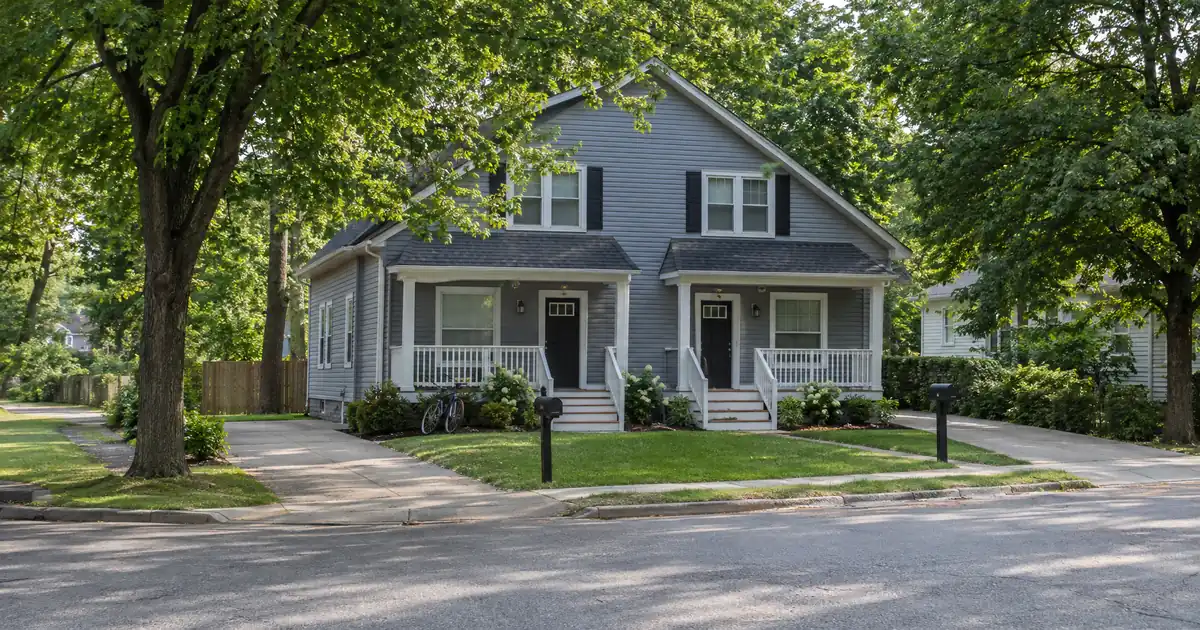
The Quick Read: A 2-4 unit building is the better fit when you want to underwrite on short-term rental income and keep adding properties, because the loan is reviewed in a residential style. A five-plus building is reviewed as commercial, where lenders weigh the building’s operating history, and projected Airbnb income often counts for little. Pick by how the building will be underwritten, not by door count alone.
- Four units or fewer: appraised on a small residential income form, with a rent analysis built in.
- Five or more: appraised and underwritten as commercial multifamily, on the building’s own operating numbers.
- Short-term rental (STR) income may not count at all on residential-style programs for five or more units.
- On STR collateral, purchase leverage tops out at 75% LTV and cash-out or refinance at 70%.
- Multi-property operators scale more easily with several 2-4 unit buildings than with one large asset. Leverage, reserves, and terms vary by lender and program; the final terms follow the full file review.
Here is the honest answer. If you run Airbnbs across several properties and want each new building to qualify on its own rental income, the 2-4 unit tier is where most DSCR files live. The 5+ tier suits an operator with a real operating history, a bigger balance sheet, and a building that can show actual in-place income. Neither is better in the abstract. They are different tools.
DSCR, or debt service coverage ratio, compares a property’s rent to its monthly loan obligation (principal, interest, taxes, insurance, and association dues). Lendmire’s complete DSCR loans guide covers the basics. This article focuses on one question: what changes when your Airbnb building crosses the line from four units to five.
Side-by-Side
The 5+ column describes published industry norms. The 2-4 column reflects how files typically run across Lendmire’s wholesale network, subject to lender guidelines.
| Factor | 2-4 Unit STR | Five-Plus Unit |
|---|---|---|
| Collateral class | Small residential income | Commercial multifamily |
| Review basis | Property rent vs. full housing payment | Net operating income vs. debt service |
| STR income | Often usable with documentation | Often not credited on residential-style programs |
| Documentation | STR appraisal, host statements, entity papers | Rent roll, operating statements, leases |
| Entity vesting | LLC common, per program terms | Single-purpose entity common |
| Reserves | Vary by lender, leverage, size | Often heavier, varies widely |
| Timeline | Shorter, described qualitatively | Longer, more third-party reports |
| Term structure | 30-year fixed is the spine | Balloon structures are common |
Where the Line Actually Comes From
The four/five split is a collateral-class line, not a DSCR rule. Fannie Mae’s Selling Guide names Form 1025 as the appraisal report for two- to four-unit properties, including units in condo, co-op, and PUD projects. That form includes a rental income analysis. DSCR loans are not agency products, so this is only a form-name contrast. It shows where the appraisal world draws the line.
The agency multifamily side draws the line in the same place. Again, that is context, not a DSCR source.
What matters to you is the effect. At four units or fewer, the file leans on the property’s rent and your credit. At five or more, the file leans on the building’s operations and the sponsor’s track record.
DSCR loans are designed for non-owner-occupied investment properties. Because they are business-purpose investor loans, they are reviewed differently from a standard owner-occupied mortgage. That treatment is the same on both sides of the four/five line. What changes is the underwriting style.
How a 2-4 Unit Airbnb File Works
A 2-4 unit STR file is reviewed in a residential style. The lender looks at whether the building’s rent covers the full monthly obligation. You are not asked to prove the building’s operating margin.
Income support usually comes from a short list of sources:
- An appraiser’s short-term rental analysis.
- A twelve-month management or host statement.
- Twelve months of bank statements showing the deposits.
- On some purchases, a market projection from a short-term rental data tool.
Programs differ on which of these they accept. Across the wholesale network, short-term rental files typically expect about 12 months of host experience and a credit score of 640 or higher. Purchase leverage runs up to 75% LTV on the strongest files, and refinance or cash-out runs up to 70% on STR collateral. The coverage floor starts at 1.00 on both purchases and refinances, and stronger ratios open better terms. Loan sizes go up to $3,000,000 on standard programs.
Here is the catch most new operators miss. Clearing 1.00 does not mean the building makes money. DSCR compares rent to the loan obligation only. Repairs, vacancy, cleaning, utilities, management, and furnishing all sit outside it. Airbnb buildings carry more of those costs than long-term rentals.
You may also see coverage below 1.00 discussed. That is a separate path available through select lenders in the network, with leverage and terms adjusted. It is not simply a lower floor on the same program.
How a Five-Plus Unit Airbnb File Works
Once a building has five or more units, the lender typically measures net operating income against annual debt service. Net operating income, or NOI, is rental income minus operating expenses. The question becomes how the building performs, not just what it rents for.
Expect a heavier document stack: a rent roll, trailing operating statements, leases, and often third-party reports on the property’s condition and environment. For an all-Airbnb building, that is the central point. Projection-based STR income is the thing a commercial appraisal is least likely to credit.
Structure changes too. Commercial loans often come with shorter terms than the amortization, meaning a balloon payment due at the end. Sponsor experience matters more, and guaranties can be heavier. These are structural differences, not pricing comparisons.
A warning for the 5-8 unit range. Some residential-style DSCR programs stretch to small multifamily, but availability and unit caps vary by program. On many of them, a unit operated as a short-term rental is treated as vacant, so it adds no income. Confirm that treatment before you contract on a six-unit Airbnb building.
When a 2-4 Unit Building Is the Better Fit
Choose the smaller tier when these describe you:
- You want STR income to count. A fourplex can often be underwritten on documented short-term rental performance. A six-unit building may not be.
- You are adding buildings, not doors. A residential-style file leans less on global cash-flow review. That makes it easier to repeat across several properties.
- You prefer a wider pool of lenders. Across a wholesale network, 2-4 unit STR files have more programs to choose from.
- You want simpler entity structure. An LLC per building is common, subject to lender program eligibility.
- You are still building host history. Programs expect about 12 months of hosting experience, and the smaller tier lets you build it in steps.
Scale works differently here than most people expect. Say you own three duplexes and a fourplex, each in its own LLC. Each loan stands on its own building’s rent. Nobody asks you to combine them into one commercial credit. Scattered 2-4 unit buildings do not add up to a five-plus file, either, so you stay in the residential-style lane.
The tradeoff is concentration of paperwork. More buildings mean more appraisals, more insurance policies, more entity filings, and more host statements. Think of it as many small files versus one big one.
When a Five-Plus Unit Building Is the Better Fit
Choose the larger tier when these describe you:
- You can show real operating history. A building with a seasoned rent roll and trailing statements is the kind of asset commercial underwriting rewards.
- You are running it as a business. On-site staff, professional management, and hotel-like services point toward commercial treatment.
- You have capital and reserves to spare. Commercial files often ask for more liquidity and heavier guaranties.
- You want one large asset instead of many small ones. Fewer closings, fewer insurance policies, one operating statement.
- Long-term or mid-term rent is a credible fallback. If STR income is not credited, the building still has to stand on actual rents.
Honestly, this is a genuine toss-up for some operators. The per-door efficiency of a larger building is real. So is the risk of leaning on income the lender will not count. If your plan depends on Airbnb nightly rates across every unit, the larger tier is where plans most often break.
One more check applies at both tiers. Short-term rental rules can vary by city, county, HOA, and property type, so investors should confirm local rules before relying on projected rental income. Larger buildings may also face different occupancy classifications, so verify the legal use of every unit.
What Multi-Property Operators Should Weigh
On files like these, the deals that stall are rarely about the ratio. They stall because the income story does not match the underwriting style. An operator brings nightly-rate projections to a commercial-style review, or a six-unit building with every unit on Airbnb, and the lender credits only part of it. Settling the income documentation before you go under contract prevents that.
Reserves deserve attention. They vary by lender, leverage, loan size, and transaction type. Commonly they sit around 6 months of PITIA, meaning principal, interest, taxes, insurance, and association dues. Conservative rate-term files at modest leverage under $1,500,000 can see reserves waived. Larger loans typically step up to about 9 months. Several buildings multiply this need, so plan your liquidity across the whole portfolio, not one file.
A larger down payment helps. It lowers the monthly obligation and can lift the coverage ratio. But it does not erase leverage caps, credit floors, reserve rules, or property eligibility. The strongest files clear both tests: enough equity and enough rental coverage.
Also keep property type in mind. DSCR is not offered on manufactured homes, log homes, or barndominiums, so those do not fit either tier.
On taxes: tax treatment can depend on how the funds are used and how the property is held; investors should keep clear records and speak with a qualified tax professional before relying on any deduction.
Which Tier Fits Which Operator
| Operator profile | Likely lane |
|---|---|
| First STR building, building host history | 2-4 unit |
| Several STR buildings, adding steadily | 2-4 unit, one per LLC |
| Seasoned operator with staff and statements | Five-plus, if income is credited |
| All-Airbnb plan across 6+ units | Verify income treatment before contracting |
| Wants fallback to long-term rent | Either, with 5+ judged on actual rents |
For related reading, see Lendmire’s piece on choosing between a 2-4 unit Airbnb building and a five-plus-unit building for a DSCR loan, which goes deeper on the unit-count decision. For financing a smaller building specifically, Lendmire’s take on second home versus DSCR financing for a 2-4 unit Airbnb property covers the tradeoffs.
If you are buying or refinancing a rental property and want to see how the numbers work, Lendmire can help you compare DSCR loan options based on the property income, credit profile, leverage, and investor goals. Reach the team at 828-256-2183 or through the quote link on the site. Program details are subject to lender guidelines, and nothing here is a commitment to lend.
The Verdict
Pick the 2-4 unit tier when STR income is the point of the deal and you want to repeat the process across buildings. Pick the five-plus tier when the building can prove its numbers on actual operations and you have the capital to carry a commercial structure. For most operators scaling an Airbnb portfolio, the smaller tier does more of the work. The larger tier rewards the operator who already looks like a small hotel company.
Frequently Asked Questions
Can a fourplex be fully short-term rental?
Yes, in many cases, subject to program rules and local permission. Most residential-style programs allow STR income on a 2-4 unit building with documentation such as an appraiser’s rental analysis and host statements. Some products limit income to long-term rents only, so check each program. Local rules can still restrict it.
Is a five-unit building automatically commercial for lending?
Usually, yes. A five-unit building is generally appraised and underwritten as commercial multifamily, with NOI and operating history in focus. Some residential-style programs stretch to small multifamily, but unit caps and income treatment vary, and STR income often does not count on them.
Can I combine several 2-4 unit buildings into one five-plus file?
No. Separate buildings stay separate collateral. Each is financed on its own, which is why many operators scale with a string of residential-style files instead.
Does the four/five split change how a business-purpose loan is treated?
No. The CFPB Truth in Lending guide explains that credit extended primarily for a business purpose, including acquiring non-owner-occupied rental property, is treated as business-purpose credit. The difference at five units is underwriting style, not that status.
Does the seven-day average stay decide my loan?
No. A seven-day average stay is a tax-classification question, separate from underwriting. Lenders look at documented income and the property, not your tax classification. Speak with a qualified tax professional on that question.
About Lendmire
Lendmire (NMLS# 2371349) is a DSCR-focused mortgage broker that helps arrange investor financing across 41 markets, including Washington, D.C., through wholesale and investor-lending channels. DSCR eligibility is generally reviewed by the lender around the property’s rental income rather than personal income documentation, subject to lender guidelines. That suits self-employed investors, LLC operators, and portfolios above four financed properties. Scotsman Guide named Lendmire a Top Mortgage Workplace in both 2025 and 2026.
Get Started
Ready to find the right loan for you?
In about 30 seconds you can review financing options available for your investment property. No commitment required.
Informational only. Not a Loan Estimate, approval, or commitment to lend. Program availability and eligibility are subject to lender guidelines, credit approval, property review, and underwriting.
References
1. Fannie Mae Selling Guide B4-1.2-01
This article is part of Lendmire’s short-term rental loan program — full qualification details, guidelines, and scenarios live on the program page.
Related reading: Can a First-Time Airbnb Host Get a DSCR Loan With a Title-Only Spouse? · Does a Portfolio DSCR Loan Take One Payment With a Property Manager? · Does a Trust’s Multi-Market DSCR Refinance Need Audited Financials?
Brandon Miller
Founder & CEO, Mortgage Loan Originator, Lendmire LLC
- Mortgage Loan Originator · NMLS# 1129696 · Verify on NMLS Consumer Access
- North Carolina Real Estate Broker · License# 343312 · Verify on NCREC
- North Carolina Insurance Producer · License# 19053198 · Property, Casualty, Life, Health · Verify on NAIC SBS
- Lendmire LLC · Firm NMLS# 2371349 · Verify firm licensure
Compliance and disclosures. Lendmire (NMLS# 2371349) is a licensed mortgage broker and is not a direct lender, depository institution, financial advisor, or tax professional. Content in this article is general market analysis and educational information — not financial, legal, or tax advice for any specific situation. Lendmire does not guarantee loan approval; every transaction is subject to underwriting by the funding lender. Mortgage pricing and loan program guidelines are subject to change at any time without notice and vary by borrower characteristics, property type, and state regulations. Lendmire complies with Equal Housing Opportunity. Licensure verification: NMLS Consumer Access.