
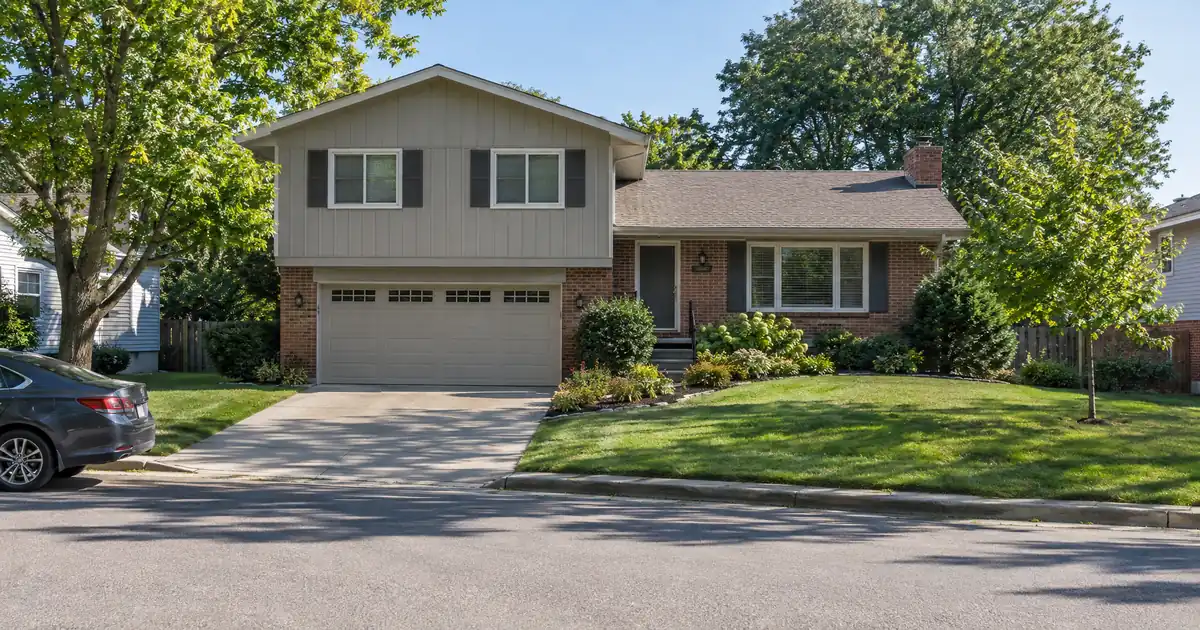
Home Equity Loan For Down Payment On Investment Property — The Quick Read: Yes, pulling equity from a home you already own to fund a down payment on a rental purchase is a real, workable move — lenders generally treat borrowed money secured by an asset as legitimate down payment funds. The equity loan and the new rental loan get underwritten as two separate events, though, which means two separate monthly obligations. Most investors pair this move with a DSCR loan on the new purchase, since that loan is reviewed primarily on the property’s own rental income rather than personal debt.
Key Takeaways
- Borrowed, asset-secured equity — a HELOC or a lump-sum home equity loan — is a widely accepted down payment source, but it still has to be documented and traced.
- The source loan (against the home you already own) and the acquisition loan (against the new rental) are underwritten independently, with two separate payments.
- Rental purchases funded this way commonly close with a DSCR loan, which qualifies primarily on property-level rental income covering the payment, subject to lender guidelines.
- Vesting matters more than most investors expect: home equity lines generally require the source property to sit in an individual name or a revocable living trust, not an LLC.
- A bigger down payment can lower the new payment and lift the coverage ratio — it never overrides a leverage cap, credit floor, or reserve rule on its own.
Key Terms Defined
HELOC (home equity line of credit): a revolving credit line secured by a property’s equity — draw what you need, when you need it, up to a set limit.
How large a line the equity supports in your market.
An equity line is sized by combined loan-to-value, occupancy, and credit — not by rental coverage. Switch the occupancy or the credit band and the ceiling moves with it.
Investment-property lines require a 700 minimum credit score. Second-home tiers reach 640; primary-residence tiers reach 600.
A debt-to-income ratio above 45% requires 680+ credit. Profiles under 640 are limited to single-family homes. At least 75% of the approved line is drawn at closing. Ceilings, floors, and caps update from Lendmire’s centralized guideline source.
Line estimate
Illustrative estimate only — not a quote, Loan Estimate, approval, or commitment to lend. The rate is an editable assumption; equity-line pricing is variable through both the draw and repayment periods and never converts to fixed. Occupancy and credit drive the ceiling together: investment property runs to 70% combined LTV with a 700 credit floor and a $500,000 cap; a second home runs to 90% at a 640 floor with a $500,000 cap; a primary residence reaches up to 90% at a 600 floor, and its $750,000 maximum line applies only at 75% combined LTV or below with 720+ credit and a full appraisal. Lines above $500,000 require a full appraisal. Credit, debt-to-income, property type, and full underwriting review all affect the final line.
Home equity loan: equity pulled out in one lump sum rather than drawn over time, repaid on a set schedule.
DSCR (debt-service coverage ratio): the number that compares a rental property’s monthly rent to its monthly loan payment — the core figure a DSCR lender qualifies a purchase against.
CLTV (combined loan-to-value): every loan against a property, added together, divided by the property’s value.
Business-purpose loan: financing for a rental or investment property rather than a home you live in. DSCR loans fall into this category and get reviewed differently from an owner-occupied mortgage.
Seasoning: how long money has to sit in an account, or a property has to be owned, before a lender stops treating it with extra suspicion.
Is Borrowed Home Equity Actually Allowed as a Down Payment?
Short answer: yes, and this isn’t a gray area. Lenders across the market generally accept borrowed money secured by an asset as a legitimate down payment source, and a home equity line secured by real estate fits that description cleanly.
What actually matters is documentation, not origin. A dollar that came from a HELOC draw and a dollar that came from a savings account look identical once they’re sitting in your bank account — the difference shows up in how each one gets sourced and traced before closing.
In the conforming-loan world, this principle is spelled out directly: agency guidelines describe borrowed funds secured by an asset — real estate, a vehicle, even a retirement account — as an acceptable source for a down payment, closing costs, and reserves. DSCR loans don’t run that same playbook, since they qualify the property rather than the person. That’s precisely why this equity strategy pairs so naturally with a DSCR purchase — the new loan never runs a personal debt-to-income calculation at all.
How the Money Actually Moves, Step by Step
Step 1 — Qualify the equity source. The line or loan against the property you already own gets qualified against that property’s value and your own credit and income, not the new rental. Across Lendmire’s home equity network, debt-to-income tops out around 50% overall, with a tighter 45% ceiling for credit profiles between 600 and 679 — anything above a 45% ratio needs at least a 680 score to clear.
Step 2 — Draw the funds into a liquid account. Money has to land somewhere before the new purchase closes, and any large deposit close to a mortgage application gets a second look. Conforming guidelines require lenders to source large deposits and to verify accounts opened within the last 90 days of the application, per Fannie Mae’s Selling Guide on depository accounts. DSCR lenders aren’t bound by that specific provision, but the underlying instinct — trace the deposit, don’t just take the statement at face value — is standard across the industry.
Step 3 — Let it season. Industry convention calls this “seasoned money,” generally meaning funds held for around 60 days before they’re treated as fully your own without extra sourcing, according to Experian’s consumer guidance. Newer deposits aren’t disqualifying — they just require a paper trail back to the HELOC draw.
Step 4 — Underwrite the acquisition loan on its own terms. This is the step that actually decides whether the purchase works. Most investors move the new rental into a DSCR loan, which runs off the property’s projected rent rather than the borrower’s personal income documents. Lendmire’s complete DSCR loans guide walks through that qualification model in full if you haven’t financed a rental this way before.
Step 5 — Recognize the DTI split. DSCR underwriting doesn’t measure your personal debt load on the acquisition side. But the equity loan you drew from still has its own monthly obligation, and if it was a conventional consumer product, its payment already got counted against you the day it closed. Two loans, two rulebooks, one investor still writing two checks.
HELOC, Home Equity Loan, or Cash-Out Refinance: Which Fits This Move?
A quick side-by-side, using program parameters from Lendmire’s home equity and DSCR networks:
| Option | Structure | Typical Ceiling (this network) | Best Fit |
|---|---|---|---|
| HELOC on your primary home | Revolving line, draw period then repayment | Up to 90% CLTV for the strongest credit tiers (720+); lower ceilings for other profiles | A single, upfront down payment while keeping some flexibility |
| Equity line on a rental you already own | Revolving line, 5-year draw / 25-year repay only | 70% CLTV, capped at $500,000, 700+ credit minimum | Investors with real equity built up in an existing rental |
| Cash-out refinance on an existing rental | Replaces the current loan entirely | Around 75% LTV, roughly six months of ownership seasoning expected | Investors who’d rather carry one lien than two |
Notice something on that second row: credit above 700 doesn’t buy more leverage on an investment-property line, since the ceiling sits flat at 70% for both the 700 and 720 tiers. It buys eligibility, not extra room. Because that line caps at $500,000, it also almost always runs on automated valuation instead of a full appraisal — one less hurdle, but also less line size than a primary-home draw can reach.
Lendmire brokers these home equity lines through its 16-state retail footprint, which is narrower than its DSCR investor platform’s reach across 39 states plus Washington, D.C. Anyone weighing this exact question — which lender pairing actually offers both pieces — can see who does home equity loans on investment property for a closer look at the lending side of the equation.
Where the General Rule Breaks
The general rule holds most of the time. It breaks in a handful of specific spots worth knowing before you draw a dollar.
LLC-titled source property. This is the sharpest break of all. A home equity line generally requires the source property to be held by an individual or an inter vivos revocable living trust — never an LLC, corporation, partnership, or irrevocable trust. A rental you already moved into an LLC for liability protection can’t be tapped through this line at all without changing title first. Investors in that spot usually pivot toward using home equity for a down payment through a DSCR cash-out refinance instead, since DSCR loans commonly close in an LLC’s name, subject to program terms.
Texas homestead quirks. Texas layers on a 12-day waiting period, a one-lien-at-a-time rule, and 12-month ownership seasoning — but only for a primary residence treated as a homestead. Texas second homes and investment properties get treated as non-homestead transactions and skip those restrictions entirely. Texas properties are also capped at 10 acres regardless of occupancy.
Credit-tier restrictions. Sub-640 credit profiles get limited to single-family primary residences with a clean 12-month payment history — a restriction that never touches investment properties, since those already floor at 700 anyway.
Listing status. A property listed for sale, or listed within the past 60 days, is ineligible for a new equity line in several states, including Indiana, North Carolina, Pennsylvania, Tennessee, Texas, and Washington.
A vacant or newly acquired rental. On the acquisition side, if the new property has no lease yet, DSCR underwriting has nothing to work from but the appraiser’s opinion of market rent — completely independent of however the down payment got funded.
What the Acquisition Loan Actually Needs
Once the funds are sourced and seasoned, the acquisition loan is where the real qualification happens — and it runs on a different set of rules entirely.
Purchase leverage typically lands at 75% to 80% LTV across the DSCR programs Lendmire places files with, subject to lender guidelines. A handful of higher-leverage programs stretch to 85% LTV for borrowers around a 700+ score. Cash-out refinances on a standard rental generally top out around 75% LTV, with roughly six months of ownership seasoning expected.
Coverage matters here too. A ratio of 1.00 — meaning rent exactly covers the payment — is where a number of standard programs set their floor, though that’s a baseline for those specific programs, not a universal rule. Coverage below 1.00 isn’t an automatic dead end; it’s available through select lenders in the network, with leverage and terms adjusted accordingly. No-ratio structures exist too, but only through select lenders and generally for borrowers who already own a primary residence — there’s no clean numeric floor to quote there.
Credit floors vary by program. A 620 minimum exists in parts of the network; most programs want something closer to 660; a 700+ score opens the strongest leverage tiers available. Standard loan sizes run roughly up to $3,000,000 on standard programs (smaller balances available through select lenders), and above $2,500,000 the network generally holds to 30-year fixed structures only. Reserve requirements move around by lender, leverage, and loan size — commonly landing near six months of the property’s carrying costs, though conservative rate-and-term files at modest leverage under $1,500,000 sometimes see reserves waived, and loans above that size typically step up to around nine months.
DSCR loans are business-purpose loans by design, since they finance non-owner-occupied property. That classification means they’re exempt from the standard consumer mortgage disclosure timeline that governs an owner-occupied purchase. It also means review details here are subject to lender overlays and can shift by state and by file.
Not everything qualifies. Manufactured homes — single- and double-wide — log homes, and barndominiums aren’t offered through these DSCR programs, full stop. Worth knowing before you fall in love with a listing that funds are already sourced for.
The Leverage Stack: Carrying Two Loans at Once
The strategy is mainstream now, not fringe. U.S. mortgage holders collectively hold a record $18 trillion in home equity, with roughly $11.7 trillion of that considered tappable, according to a Stacker analysis of ICE Mortgage Technology data. Repeat buyers — the group most likely to be tapping equity for a next purchase — are also bringing meaningfully larger down payments to the table than in past cycles, per NAR’s research on buyer trends.
None of that changes the math on your end, though. Both loans exist at the same time, and both need a payment every month regardless of what either underwriter measured. One investor working through this exact tradeoff on a real-estate forum described it plainly: the interest cost on the equity draw can outrun the new property’s early cash flow before the rental has a chance to ramp up. That’s not a reason to avoid the strategy — it’s a reason to run the numbers on both loans together, not one at a time.
This is the part a DSCR lender genuinely doesn’t see. The coverage ratio on the new file only measures rent against that one loan’s payment — it has no visibility into whatever you’re paying on the equity line back home. A file can clear 1.15x on paper and still feel tight in your actual monthly cash flow if the source loan’s payment is heavier than expected. Running both obligations side by side before committing is the difference between a plan and a guess.
Misconceptions Worth Killing Early
“If the new loan skips DTI, my HELOC payment doesn’t matter.” It still has to get paid every month. The loan that opened the equity line already counted its payment against you the day it closed — a later loan not measuring it doesn’t make the obligation disappear.
“Borrowed money needs less documentation than a gift.” Not true. Any large, recent deposit gets the same scrutiny regardless of where it came from — loan draw, gift, or sale proceeds — until it’s properly sourced.
“An informal loan from a relative works the same way as a HELOC.” It doesn’t. Unsecured personal loans, even from family, generally aren’t accepted as down payment funds. A HELOC clears that bar specifically because it’s secured by real property — not simply because it’s borrowed money.
Which Path Fits Your Situation
Need a single, predictable lump sum? A fixed home equity draw with most of the line pulled at closing fits a one-time purchase cleanly.
Want flexibility for a phased plan — maybe a renovation before you buy, or timing uncertainty on the next purchase? A revolving HELOC with ongoing draw access suits that better.
Already own a rental with real equity, and it’s sitting in an LLC? Skip the vesting problem entirely and look at a DSCR cash-out refinance instead.
Strong credit profile, north of 700, and chasing maximum leverage on the new purchase? Pairing a solid down payment with the network’s higher-leverage DSCR tier is usually the stronger play here — though an investor with thinner reserves might reasonably choose lower leverage and a bit more cushion instead.
Frequently Asked Questions
Can I use a HELOC on my primary home to buy a rental property? Generally, yes. Lenders widely accept borrowed, asset-secured equity as a legitimate down payment source, and a primary-residence HELOC is a common way investors fund that first move into a rental purchase.
Does using borrowed equity hurt my chances on the new rental loan? Not directly. A DSCR loan is reviewed primarily on the property’s rental income covering the payment, subject to lender guidelines, rather than your personal debt load. The equity loan’s own payment still exists and still has to be paid, though — it just isn’t part of the new loan’s math.
Is HELOC interest tax deductible if I use it for a rental down payment? Tax treatment can depend on how the funds are used and how the property is held. Investors should keep clear records and speak with a qualified tax professional before relying on any deduction.
Can I pull equity from a rental I already own instead of my primary home? Yes, if that rental is titled to an individual or a revocable living trust rather than an LLC. The network’s investment-property equity line caps around 70% CLTV, tops out at $500,000, and generally requires a 700+ credit profile.
What if the new rental doesn’t have a tenant yet? DSCR underwriting doesn’t require an existing lease. It runs off an appraiser’s opinion of achievable market rent for the property, independent of how the down payment itself got funded.
If you’re weighing a home equity loan against a purchase-side DSCR structure and want to see how the leverage, credit tier, and rental coverage actually line up, Lendmire can help compare options based on the property’s income, your credit profile, and your investment goals. Reach the team at 828-256-2183 or start a rate-free quote request to see how the pieces fit together.
About Lendmire
Lendmire — NMLS# 2371349 — is a DSCR and non-QM mortgage brokerage with investor loan programs in 40 markets, including Washington, D.C. DSCR eligibility is commonly reviewed by the lender around property-level rent rather than personal income documentation, subject to lender guidelines, and the brokerage helps arrange financing for LLC-owned portfolios beyond conventional financed-property limits. Recognized by Scotsman Guide as a Top Mortgage Workplace in 2025 and 2026.
Lendmire’s Top Mortgage Workplace recognition is documented by Scotsman Guide 2025 Top Mortgage Workplace and Scotsman Guide 2026 Top Mortgage Workplace.
Get Started
Ready to find the right loan for you?
In about 30 seconds you can review financing options available for your home or investment property. No commitment required.
Informational only. Not a Loan Estimate, approval, or commitment to lend. Program availability and eligibility are subject to lender guidelines, credit approval, property review, and underwriting.
References
1. Fannie Mae Selling Guide — Depository Accounts (B3-4.2-02)
2. Experian — What Is Seasoned Money for a Down Payment
3. Stacker/ICE Mortgage Technology — Home Equity Reaches a Record $18 Trillion
4. NAR — Home Buyer and Seller Generational Trends
Brandon Miller
Founder & CEO, Mortgage Loan Originator, Lendmire LLC
- Mortgage Loan Originator · NMLS# 1129696 · Verify on NMLS Consumer Access
- North Carolina Real Estate Broker · License# 343312 · Verify on NCREC
- North Carolina Insurance Producer · License# 19053198 · Property, Casualty, Life, Health · Verify on NAIC SBS
- Lendmire LLC · Firm NMLS# 2371349 · Verify firm licensure
Compliance and disclosures. Lendmire (NMLS# 2371349) is a licensed mortgage broker and is not a direct lender, depository institution, financial advisor, or tax professional. Content in this article is general market analysis and educational information — not financial, legal, or tax advice for any specific situation. Lendmire does not guarantee loan approval; every transaction is subject to underwriting by the funding lender. Mortgage pricing and loan program guidelines are subject to change at any time without notice and vary by borrower characteristics, property type, and state regulations. Lendmire complies with Equal Housing Opportunity. Licensure verification: NMLS Consumer Access.


