
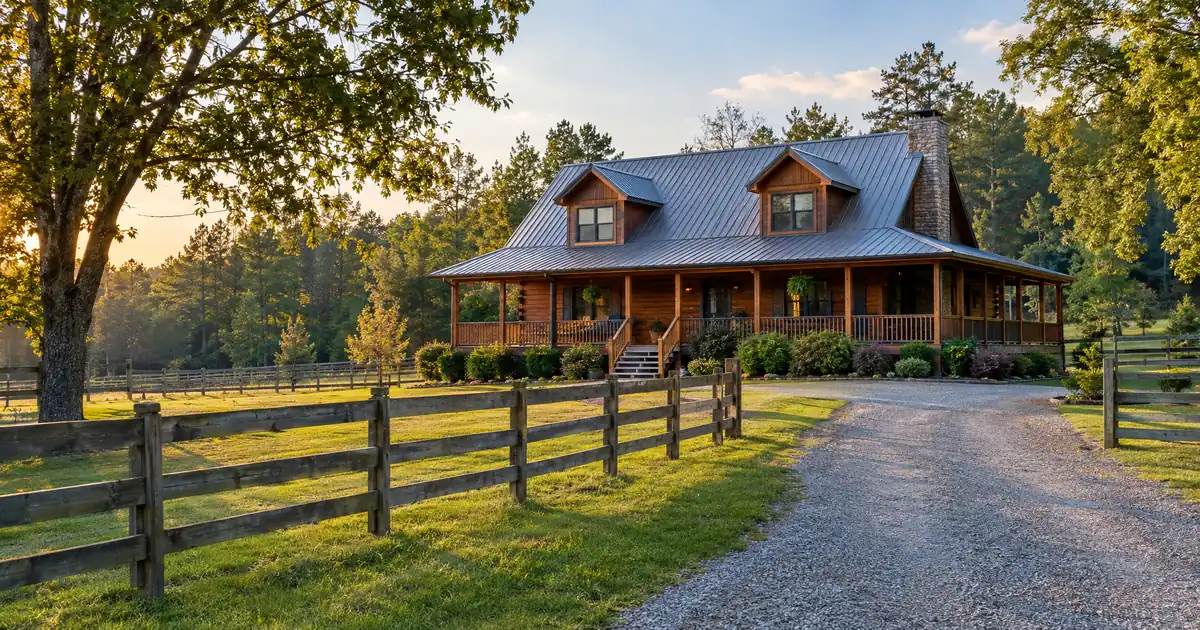
Beach House Vs Mountain Cabin Seasonality Across An LLC Rental Portfolio — The Quick Read: Beach houses and mountain cabins both swing hard on seasonality, but they swing in opposite directions on the calendar. A summer-heavy coastal property and a winter-heavy ski cabin can offset each other inside one LLC, smoothing annual cash flow even though each property individually has a strong season and a weak one. The financing math, the tax math, and the insurance math all treat the two property types differently, and none of the three line up neatly with each other.
This isn’t a lifestyle comparison. It’s a portfolio-construction question: which seasonal asset pairs best with which, and what does a lender actually do with income that arrives in six-month bursts instead of a steady monthly check?
DSCR Calculator
Run the numbers in your market
Rate source: Freddie Mac 30-yr average via FRED® — Federal Reserve Bank of St. Louis · effective Sep 17, 2026
Prefilled with local estimates — enter your own rent or nightly figures, taxes, insurance, and HOA for a more accurate picture.
Program parameters update from Lendmire’s centralized guideline source. Taxes and insurance are editable estimates.
As of Sep 17, 2026 · General Freddie Mac market benchmark, not a Lendmire loan offer. Rent, nightly rate, occupancy, taxes, and insurance are editable estimates. Short-term rental figures are estimates only and vary significantly by season, property type, management approach, and local short-term-rental rules — confirm local regulations before relying on them. Qualifying income for short-term rentals varies by program — some use appraisal market rent, others use documented STR history or projections — and is confirmed in underwriting. Not a Loan Estimate, approval, or commitment to lend. Program availability and eligibility are subject to lender guidelines, credit approval, property review, and underwriting.
The Side-by-Side
Before diving into the mechanics, here’s how the two property types stack up on the factors that actually matter to a LLC-held rental portfolio.
| Factor | Beach House | Mountain Cabin |
|---|---|---|
| Peak season | Summer (varies by coast) | Winter ski season |
| Off-season risk | Storm season, hurricane exposure | Freeze/pipe damage, mud season |
| Flood insurance | Often mandatory in SFHA zones | Rarely applicable |
| Wildfire insurance | Rarely applicable | Increasingly restricted in some states |
| Qualifying income basis | Trailing history, market rent, or AirDNA model | Same three methods, same rules |
| Entity vesting | LLC-held, business-purpose loan | LLC-held, business-purpose loan |
| Documentation | Same LLC paperwork either way | Same LLC paperwork either way |
| Reserve expectations | Six months PITIA typical on the subject | Six months PITIA typical on the subject |
The financing side doesn’t actually distinguish between the two. Lendmire arranges business-purpose loans through select lenders in its wholesale network, and those lenders qualify a property on its rental income regardless of whether the roof line has a palm tree or a pine tree next to it. What differs is everything around the loan — the insurance stack, the tax accounting, and how believable the income projection is twelve months out.
How Lenders Actually Read Seasonal Income
Qualifying income for either property type comes from one of three sources: a documented trailing income history, a market-rent comparable pulled the same way an appraiser pulls one for a long-term rental, or a short-term-rental projection built off market data. None of these three methods care about geography — they care about whether the number holds up across a full year, not just the peak months.
That last point trips up more files than anything else. A beach house with a June-through-August peak and a mountain cabin with a December-through-March peak can post the exact same annualized revenue on paper, yet the actual cash-flow rhythm inside each month looks nothing alike. A lender reviewing only a three-month trailing snapshot taken during peak season sees a number that won’t survive contact with the off-season. That’s why full twelve-month data — not a seasonal window — is what a well-underwritten file actually needs.
For short-term-rental collateral specifically, Lendmire’s wholesale network typically qualifies income at 80% of gross using either twelve months of operating history on a refinance or the appraisal’s short-term-rent analysis on a purchase, and that program is reserved for investors with at least twelve months of experience owning income property in the last three years. Loan sizes on this path run to $2,000,000, with coverage of 1.00 or better required — this isn’t the no-ratio lane. It’s a real haircut against gross revenue, and it’s applied whether the subject property faces the ocean or a ski slope.
Appraisers run into a similar problem, just from a different angle. The standard rent-schedule form used for most conventional rent comps wasn’t designed for nightly-rate math. An appraiser can’t just take a nightly rate, multiply it by thirty, and call that the monthly market rent. That shortcut ignores personal property, business expenses, and vacancy patterns that are part of short-term rental operations. This limitation applies the same way to a beachfront condo and a ski-town cabin. Whoever builds the file needs to reconstruct the income picture using comparable rental data or a documented operating history — not a quick multiplication.
When the Beach House Is the Better Fit
A beach house tends to work best for an investor who wants a longer operating season and can stomach the flood-insurance conversation up front. Coastal markets in warmer climates often rent close to year-round, which keeps the annualized income number closer to what any given month actually produces — less of the “1.15 on paper, 0.6 in February” gap that catches lenders’ attention on more seasonal assets.
The tradeoff sits with flood risk. That’s not agency discretion — it’s statute. Coverage limits under the National Flood Insurance Program’s Dwelling Form cap building and contents coverage well below what a full rebuild can require, per FEMA data summarized by the North Carolina Department of Insurance — a gap worth understanding before assuming a standard policy handles a total loss.
Hurricane-season vacancy is the other beach-specific wrinkle. Most homeowner and dwelling policies define a property as vacant once it sits unoccupied without utilities or contents for somewhere between 30 and 60 consecutive days, and vacancy clauses can exclude coverage entirely past that window. A beach property’s low season often coincides with peak storm months, which means the calendar quarter with the highest insurance risk is also the quarter with the fewest guests keeping the place occupied. An LLC running a beach asset needs an active caretaker or monitoring plan for that stretch, not a “we’ll check on it eventually” approach.
When the Mountain Cabin Is the Better Fit
A mountain cabin tends to work best for investors who want a short, high-rate winter season and don’t mind a harder off-season maintenance schedule. Ski-country demand packs into a shorter window than most coastal markets get. But that window often brings stronger nightly rates. This can still add up to solid coverage on an annual basis, even with a soft shoulder season.
Wildfire risk is the danger specific to mountain properties. It works very differently from flood risk. There’s no federal insurance mandate for wildfire like the NFIP offers for flood. Private carriers price wildfire coverage on their own, and they can sometimes refuse to insure a property outright. State insurance regulators only step in after a disaster is declared. For example, California’s insurance commissioner can issue a mandatory one-year freeze on policy cancellations and non-renewals after the governor declares a wildfire emergency. This protects residents in the affected area, even if they didn’t suffer a loss. Research shows that the highest-risk land often overlaps with the highest rate of insurer non-renewal. This pattern shows up in specific mountain corridors. Check the property’s exact location before assuming its coverage will renew without a problem.
Freeze damage is the mountain cabin’s version of the beach house’s storm-season vacancy problem. A property sitting empty during a cold snap without proper winterization risks frozen-pipe damage that can run into the tens of thousands per incident. Off-season maintenance days — winterizing plumbing, checking snow-load on the roof — don’t count against the personal-use day threshold under the tax code, which is a small silver lining: an LLC can send someone up to do that work without it eating into the property’s rental-use classification.
The Tax Clock Resets Per Property, Not Per Portfolio
One mistake shows up constantly in LLC portfolios holding both a beach asset and a mountain asset: assuming a shared personal-use allowance across the entity. It doesn’t work that way. The personal-use exclusion under Section 280A — generally the greater of 14 days or 10% of the days rented at fair rental value — is measured per dwelling unit, not per entity and not per owner, according to the IRS and confirmed in practitioner guidance from the University of Illinois Tax School. An investor can’t average heavy personal use of the mountain cabin against a hands-off beach house and call it compliant across the LLC. Each property tracks its own day count, independently, every year.
That matters more for the mountain cabin than the beach house in practice. A ski cabin with a short, intense rental season and heavy owner use the rest of the year lands in the more restrictive tax category more easily than a beach house rented close to year-round in a warmer market. The rental-income number a lender uses to qualify the loan and the tax classification the IRS applies to the same property can diverge — and that gap is worth flagging to a tax professional before assuming both numbers tell the same story.
Tax treatment can depend on how the funds are used and how the property is held; investors should keep clear records and speak with a qualified tax professional before relying on any deduction.
Building a Portfolio That Smooths Both Seasons
Pair a summer-peak asset with a winter-peak asset inside the same LLC, and the entity-level cash flow looks a lot steadier than either property does alone — even though nothing about the underlying seasonality changed. That’s the core argument for holding both property types rather than doubling down on one.
Look across files with mixed seasonal properties, and one pattern shows up most often. A beach property carries the summer months, while a mountain property covers the winter shoulder season. Both properties tend to run softer numbers in spring and fall. Lenders reviewing a two-property LLC portfolio typically want to see that each property’s off-season wouldn’t drop coverage below workable levels on its own. Simply averaging the numbers across both properties isn’t the same as confirming each one can stand on its own during its weak months. The stronger loan files show both properties passing that test individually.
Reserve requirements apply to each property on its own, not blended together across a portfolio. Typically, lenders require six months of PITIA for the property being financed. If the loan is interest-only, they require ITIA instead. First-time investors need twelve months of reserves. Lenders don’t stack on extra reserve requirements for other properties you already own. This means a two-property LLC portfolio doesn’t need its reserves counted twice across both assets. Lendmire’s wholesale-network guidelines allow entity vesting without requiring you to layer multiple entities together. This keeps LLC paperwork simple, no matter how many seasonal properties sit inside it.
Say you want to compare how coverage, leverage, and reserves work across a portfolio with both beach and mountain properties. Lendmire’s complete DSCR loans guide explains the qualification details in more depth. And short-term-rental DSCR treatment across an LLC portfolio covers how to document income in more detail. Final eligibility is subject to lender guidelines, credit approval, reserves, and property review.
The Balanced Verdict
Neither property type is objectively the better rental asset. Each carries different risks that happen to peak at opposite times of the year. A beach house offers a longer operating season, but requires mandatory flood coverage and faces a storm-season vacancy problem. A mountain cabin offers a shorter season with higher rates, but comes with wildfire-insurance uncertainty and a risk of freeze damage during the off months.
The stronger portfolio play, for most LLC investors, isn’t picking one over the other — it’s pairing them. A beach asset covering summer cash flow and a mountain asset covering winter cash flow smooths the entity’s income far better than either property alone, provided each one can independently clear coverage during its own weak season, not just on a blended annual basis. That’s the number a lender actually stress-tests, and it’s the number worth stress-testing before closing, too.
None of this is legal or tax advice. Entity structuring, insurance classification, and vacation-home tax treatment all depend on the specific facts of your situation. If you’re building a mixed beach-and-mountain LLC portfolio, talk to a qualified attorney or CPA about your own situation before relying on any of this.
Frequently Asked Questions
Can one LLC hold both a beach house and a mountain cabin under the same loan?
No — each property typically carries its own loan, sized and underwritten to that specific property’s rental income and value. The LLC can hold title to both properties, and Lendmire’s wholesale-network guidelines generally welcome straightforward entity vesting, but the loans themselves are separate files with separate qualification math.
Does short-term rental income get treated differently for a beach house than a mountain cabin? No — the income-documentation rules are the same regardless of location. Short-term rental income on Lendmire’s network typically qualifies at a haircut against gross revenue, using either twelve months of trailing operating history on a refinance or the appraisal’s short-term-rent analysis on a purchase, and that path is generally reserved for investors with at least a year of income-property ownership experience.
Does flood insurance affect DSCR lender review the same way as wildfire insurance?
Not exactly — flood coverage is a federal mandatory-purchase requirement inside FEMA-designated flood zones, while wildfire coverage is priced privately with no equivalent federal mandate. Both affect the property’s ongoing carrying cost, which can factor into the rent-versus-payment coverage math, but they arrive through completely different regulatory channels.
Do short-term-rental rules affect whether a beach or mountain property can be financed as a rental? Short-term rental rules can vary by city, county, HOA, and property type, so investors should confirm local rules before relying on projected rental income. Municipal permission to operate a short-term rental has to be documented for the specific property — it’s never assumed based on the general market.
Is a beach house or mountain cabin easier to qualify with a lower credit score?
Neither property type changes the credit-score floor on its own — Lendmire’s wholesale-network guidelines typically start around a 660 credit floor for standard DSCR files, rising to 700 above larger loan amounts, regardless of whether the collateral sits on a coastline or a mountainside. What can shift the file is the income-documentation path chosen, not the geography.
For current guidelines and terms, see Lendmire’s super jumbo DSCR loan programs page.
Self-employed borrowers can compare both super jumbo programs on Lendmire’s self-employed mortgages page.
About Lendmire
Lendmire (NMLS# 2371349) is a mortgage brokerage built around DSCR investor lending, with programs available in 40 markets, including Washington, D.C. DSCR lenders commonly evaluate rental-income coverage instead of personal income paperwork — a practical fit for LLC-owned and multi-property investors. Terms vary by lender, property, leverage, and program. Scotsman Guide named Lendmire a Top Mortgage Workplace in both 2025 and 2026.
Get Started
Ready to find the right loan for you?
In about 30 seconds you can review financing options available for your home or investment property. No commitment required.
Informational only. Not a Loan Estimate, approval, or commitment to lend. Program availability and eligibility are subject to lender guidelines, credit approval, property review, and underwriting.
References
1. FEMA – NFIP Dwelling Form Summary (via NC DOI)
3. U of I Tax School – Tax Rules for Rentals and Vacation Homes
Brandon Miller
Founder & CEO, Mortgage Loan Originator, Lendmire LLC
- Mortgage Loan Originator · NMLS# 1129696 · Verify on NMLS Consumer Access
- North Carolina Real Estate Broker · License# 343312 · Verify on NCREC
- North Carolina Insurance Producer · License# 19053198 · Property, Casualty, Life, Health · Verify on NAIC SBS
- Lendmire LLC · Firm NMLS# 2371349 · Verify firm licensure
Important disclosures. Lendmire (NMLS# 2371349) is a licensed mortgage brokerage. Lendmire is not a direct lender, depository institution, or financial advisor. All loan inquiries are subject to lender underwriting; this article does not constitute a commitment to lend. Rates, terms, and program guidelines are subject to change without notice and vary by borrower profile, property type, and state. Information in this article is general in nature and is not financial, legal, or tax advice. Equal Housing Opportunity. NMLS Consumer Access: nmlsconsumeraccess.org.


