
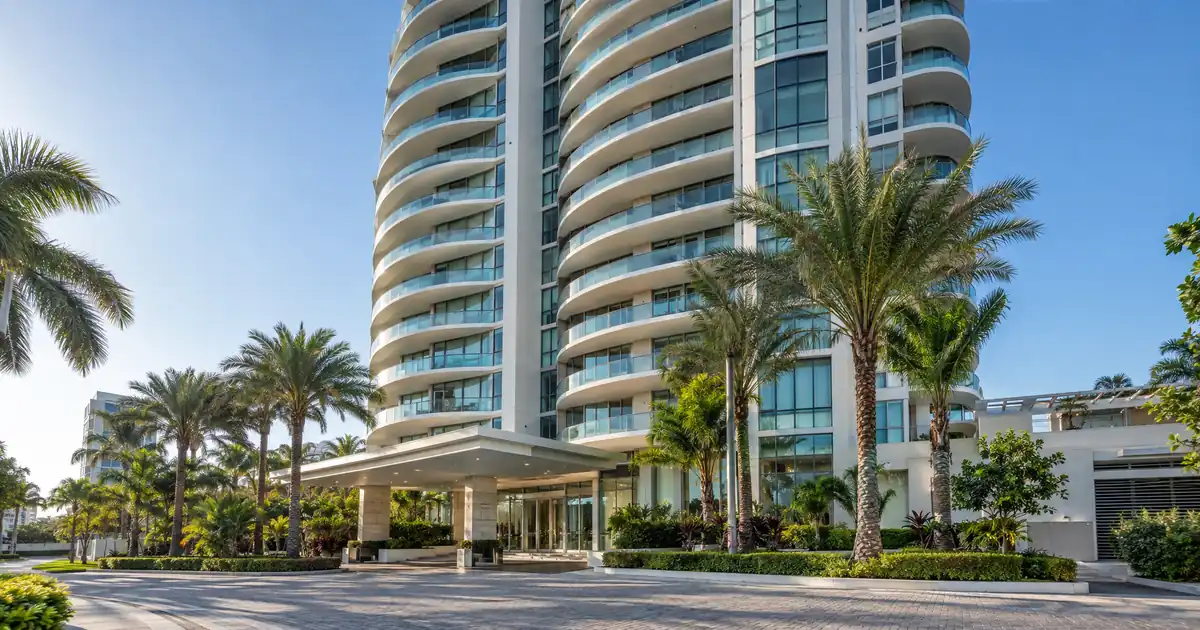
Condo Vs Single-family Super Jumbo DSCR After A Liquidity Event — The Quick Read: Both property types qualify the same way after a liquidity event — on the rent the property produces, not your last two traditional personal-income documentation. The real differences show up in leverage, reserves, and paperwork: condos carry an extra project-review layer single-family homes skip entirely, and non-warrantable condos hit a lower loan-size ceiling. Single-family generally clears more leverage as loan size climbs. Condos can still work — you just need to know where the ceiling sits before you write an offer.
You just sold a business, cashed out equity, or collected a large distribution. The money is real and it’s sitting in your account. What you don’t have — at least not yet — is two years of traditional personal-income documentation that show a lender your “income” in the conventional sense. That’s where a DSCR loan earns its keep: it qualifies primarily on property-level rental income covering the payment, subject to lender guidelines, rather than on your personal earnings history. Whether you buy a beachfront condo or a single-family rental, that basic mechanic doesn’t change. What changes is everything downstream of it.
DSCR Calculator
Run the numbers in your market
Rate source: Freddie Mac 30-yr average via FRED® — Federal Reserve Bank of St. Louis · effective Sep 17, 2026
Prefilled with local estimates — enter your own rent or nightly figures, taxes, insurance, and HOA for a more accurate picture.
Program parameters update from Lendmire’s centralized guideline source. Taxes and insurance are editable estimates.
As of Sep 17, 2026 · General Freddie Mac market benchmark, not a Lendmire loan offer. Rent, nightly rate, occupancy, taxes, and insurance are editable estimates. Short-term rental figures are estimates only and vary significantly by season, property type, management approach, and local short-term-rental rules — confirm local regulations before relying on them. Qualifying income for short-term rentals varies by program — some use appraisal market rent, others use documented STR history or projections — and is confirmed in underwriting. Not a Loan Estimate, approval, or commitment to lend. Program availability and eligibility are subject to lender guidelines, credit approval, property review, and underwriting.
Side-by-Side
| Factor | Single-Family | Warrantable Condo | Non-Warrantable Condo |
|---|---|---|---|
| Review basis | Property rent vs. payment | Property rent vs. payment | Property rent vs. payment |
| Extra project review | None | HOA questionnaire, insurance check | Full non-warrantable underwriting |
| Loan-size ceiling | Up to $10M, case-by-case above $4M | Up to $10M, case-by-case above $4M | Capped at $1,500,000 |
| Max leverage at size | Steps down from 80% | Steps down from 80% | Up to 75% |
| Appraisal form | 1004/1007 | 1073 (project data included) | 1073 (project data included) |
| Entity vesting | Welcome, subject to program eligibility | Welcome, subject to program eligibility | Welcome, subject to program eligibility |
| Reserves | 6 months PITIA, 12 for first-time investors | Same | Same |
| Documentation timeline | Standard file docs | Adds HOA financials, master policy | Adds HOA financials, master policy |
Coverage math itself works identically across both columns: rent divided by the full monthly payment, taxes, insurance, and HOA dues included. A condo’s HOA line item is the one number that quietly pulls the ratio down compared to an otherwise identical single-family file — everything else about the DSCR calculation stays the same. Lendmire’s complete DSCR loans guide walks through that formula in more depth if you want the full mechanics.
Key Terms Defined
DSCR (debt-service coverage ratio): the property’s monthly rent divided by its full monthly payment — principal, interest, taxes, insurance, and HOA dues if any. A ratio at or above 1.00 means the rent covers the payment.
Non-warrantable condo: a condo unit inside a project that doesn’t meet agency purchase standards — often because of insurance gaps, litigation, or high renter concentration. Agencies won’t buy the loan, but that label has nothing to do with whether a DSCR lender will fund it.
Seasoning: the waiting period a lender wants between two events, most often between a large deposit landing in your account and a lender counting it as usable funds.
Reserves: cash left over after closing, measured in months of the property’s payment, that a lender wants sitting in the bank as a cushion.
Cash-in-hand requirement: a minimum amount of liquid funds a borrower must show at closing, on top of the down payment — most common on condotel financing.
Why Post-Liquidity Documentation Looks the Same Either Way
Whichever property type you choose, the funds review is identical — because it attaches to you, not the house. A recent business sale, stock liquidation, or large distribution needs to be sourced and, in many cases, seasoned before a lender will count it as usable. This is where a lot of newly-liquid investors get tripped up: they assume a wire landing in the account is instantly usable. It usually isn’t.
Lenders generally want to see where the money came from — sale documentation, proof of prior ownership, and evidence the funds actually landed in your account. Bank statements covering a defined window are the standard way to show this. Fannie Mae’s own underwriting system draws a helpful line here even though DSCR loans aren’t agency products: if a deposit’s source is readily identifiable on the statement — a transfer between verified accounts, for instance — a lender typically doesn’t need further explanation (Morty Resources). Business-sale proceeds sitting in a business account, though, generally don’t count until they’re moved into personal hands and seasoned there. That’s a real timing issue for someone who wants to close on a rental property soon after an exit — plan the transfer and seasoning window before you go shopping for a property, not after you’re under contract.
None of this differs by property type. A condo buyer and a single-family buyer post-liquidity-event go through the exact same asset review. The property-side review is where the two paths split.
When Single-Family Is the Better Fit
Single-family generally clears higher leverage as loan size grows, and it skips the entire project-review layer a condo requires. Across the network Lendmire places files through, leverage on single-family and warrantable condos runs on the same ladder — up to 80% on smaller loan amounts, stepping down as the loan gets larger, typically 75% through the $1M-$3M range, then compressing further above $3M as terms shift to purchase and rate-and-term only. Non-warrantable condos, by contrast, are capped at a lower loan size entirely — more on that below.
Single-family also skips the HOA questionnaire, the master insurance policy review, and any project-level litigation check. For a post-liquidity-event borrower trying to move on a purchase, that’s fewer documents to chase in parallel with sourcing your sale proceeds. You’re gathering personal-asset paperwork either way — a single-family file just doesn’t ask you to also collect HOA budgets, reserve studies, and a master policy declaration page.
Single-family is generally the stronger fit when the loan size is pushing past $3,000,000, when you want maximum leverage for the size, or when you’d rather not deal with condo association paperwork on top of your own asset documentation. It’s also the simpler path if the property you’re eyeing sits in a project with any red flags — deferred maintenance, active litigation, or a high concentration of renters — since those issues can complicate a condo file regardless of loan type.
When a Condo Is the Better Fit
A warrantable condo works nearly identically to single-family on the DSCR side — same leverage ladder, same coverage math, just an added project-review step. If the building is well-run, well-insured, and the HOA has no major disclosures, that extra step is often a formality rather than a real obstacle.
A common misconception among newly-liquid investors is that “non-warrantable” means unfinanceable. It doesn’t — that label only describes agency ineligibility. It has no bearing on DSCR eligibility, because these loans aren’t sold to Fannie Mae or Freddie Mac in the first place. That said, non-warrantable condos in the Lendmire network cap out at $1,500,000 in loan amount and 75% loan-to-value — a real ceiling worth knowing about before you fall in love with a $2.2 million unit.
Condos also carry an insurance wrinkle single-family properties don’t. The HOA’s master policy covers the building and common areas; it typically does not cover your unit’s interior finishes or belongings. A common misconception corrected by insurance trade sources is that the master policy is a full safety net — in practice, whether the gap is small or large depends entirely on whether the master policy is bare walls-in, single-entity, or all-in coverage (Savin Jones Insurance). An HO-6 policy fills whatever gap the master policy leaves — and that’s a cost and a document you’ll need regardless of loan type, so budget and plan for it early.
A condo is generally the better fit when the loan size fits comfortably within the non-warrantable ceiling (if the project isn’t warrantable), when you want proximity to a specific market that’s condo-heavy, or when the HOA’s financials and insurance are clean enough that project review is a quick check rather than a real hurdle. Condotels are their own category — Lendmire’s network can go to 75% purchase and 65% on a refinance, capped at $1,500,000, and typically wants $250,000 in cash-in-hand on top of the down payment. That’s a meaningfully tighter box than a standard condo, and it’s worth confirming a project’s condotel status before you get attached to a unit.
What Actually Kills Condo Deals
Fannie Mae’s own project data shows that the “non-warrantable condo problem” is smaller than most marketing content implies — as of a recent snapshot, only 3.6% of reviewed projects carried an ineligible status, and the top two reasons were insufficient master insurance and unresolved repair issues (Fannie Mae Condo Status Finder). That agency framework isn’t binding on a DSCR file, but the underlying property risks it flags — thin insurance, deferred maintenance, active litigation — are exactly what an underwriter reviewing your file will still check independently.
One category is a hard stop regardless of loan type: projects operating as a hotel or managing daily/short-term rentals through the HOA itself, which agencies treat as automatically ineligible for agency purchase (Fannie Mae Selling Guide, B4-2.1-03). That distinction matters if you’re eyeing a project you assume is condotel-friendly — confirm the project’s actual designation, not just the listing description, before you count on short-term-rental income to support the coverage ratio. Short-term-rental rules can also vary by city, county, HOA, and property type, so confirm local rules before relying on projected rental income at all.
Active litigation against the HOA is a case-by-case call in most files — a minor nuisance claim usually isn’t disqualifying, while litigation involving structural defects or material financial exposure to the association typically is. A project still under active developer control, with construction ongoing, is a similar gate that a single-family purchase simply never encounters.
The Leverage Ladder in Practice
Loan size, not property type, drives most of the compression at the top end of the super jumbo range. Through select programs in Lendmire’s wholesale network, leverage on standard loans runs up to 80% at smaller balances, stepping down to roughly 75% through the low-seven-figure range, then down further — around 65% — once you cross the $3,000,000 mark, with purchase and rate-and-term available but cash-out no longer on the table above that size. From $4,000,000 to $10,000,000, every file goes through case-by-case review before submission, purchase or rate-and-term only, no cash-out, at leverage typically in the 60% range on review.
DSCR vs. conventional financing
Two common ways to finance an investment property in this market. They qualify you differently — here’s how investors weigh them.
Why investors choose it
- Qualifies on the property’s rental income — no personal tax returns, W-2s, or pay stubs needed to document income.
- No personal debt-to-income ceiling to clear, so existing mortgages and obligations don’t cap your borrowing the same way.
- Can be closed in an LLC, keeping the property inside a business entity.
- Built for scaling — not held to the limit on number of financed properties that conventional financing applies.
- Underwriting centers on the deal: generally qualifies when the rent covers the payment, a 1.00x coverage ratio being a common baseline (confirmed in underwriting).
- Designed specifically for investment property, including long-term and, where the program allows, short-term rentals.
Where it’s strong
- Often the lowest ongoing financing cost for a buyer who fully qualifies on personal income — a fit for a first property or a cost-first purchase.
Trade-offs for investors
- Requires full personal income documentation and must fit within a debt-to-income limit — salary, existing debts, and other mortgages all count.
- Typically held in your personal name rather than a business entity.
- Caps how many financed properties you can carry, which can become a ceiling as a portfolio grows.
- Evaluates you as a borrower as much as the property, which usually means more paperwork.
How investors usually choose: a first or single property often optimizes for the lowest financing cost; portfolio builders often optimize for leverage, vesting in an LLC, and scaling past conventional caps. The right answer depends on your goals, the property, and current guidelines — both paths run through select lenders in Lendmire’s wholesale network, with eligibility and terms confirmed in underwriting.
Coverage matters too. A ratio at 1.00 or higher earns full leverage on the ladder above. Coverage between roughly 0.75 and 0.99 is a real path available through select programs, up to $2,000,000, but leverage and terms adjust downward, subject to underwriting. No-ratio qualification — where the lender doesn’t require a coverage number at all — exists through a handful of programs in the network up to $2,000,000, generally requiring a seven-year clean housing history, subject to underwriting.
Reserves scale with the file, not the property type: most programs want six months of the full monthly payment sitting in reserve on the subject property, twelve months if you’re a first-time real estate investor. Credit floors work the same way — a 660 minimum on most files, stepping up to 700 once the loan crosses $3,000,000, generally paired with a clean recent payment history and, on larger balances, a 48-month seasoning window on any major credit event. Two full appraisals are typically required above $2,000,000 on either property type, which is one more reason to build extra time into your closing calendar regardless of whether you’re buying a condo or a house.
If your file leans toward the larger end of this ladder, it’s worth comparing this super jumbo DSCR path against a portfolio loan structure, since the tradeoffs shift again once you’re financing multiple properties at once rather than a single large purchase.
Entity Vesting and the Liquidity-Event Investor
Post-exit investors commonly want to hold new rental property inside an LLC or trust — for liability protection, estate planning, or both. That’s not a problem on the DSCR side. Entity vesting is welcome across the network, subject to program eligibility, without layering multiple entities on top of each other. This is a real point of divergence from conventional lending, where a trust or LLC often has to be unwound into an individual borrower’s name before a loan can close. DSCR underwriting generally doesn’t require that step, which matters if your liquidity event came with a tax or estate structure already built around entity ownership.
Foreign-national files exist in the network too, though capped tighter — up to $1,500,000 at 65% leverage — worth knowing if your liquidity event involved cross-border assets. Terms vary by lender guidelines, property type, leverage, credit profile, and full file review.
A Practical Way to Frame the Decision
Run the numbers on a scenario where an investor closes a business sale and wants to deploy roughly $2,500,000 into a rental property. A single-family purchase in that range lands in the $2M-$3M leverage bracket — purchase up to 75%, credit floor around 720, coverage at 1.00 earning full leverage on the ladder. A comparable warrantable condo purchase runs the same ladder, same coverage math, with the added step of an HOA questionnaire and master-policy review before the file clears underwriting. A non-warrantable condo at that price point, though, runs into the network’s $1,500,000 ceiling on non-warrantable properties — meaning that specific project simply isn’t reachable at that size through this path, regardless of how strong the rent coverage looks.
That’s the piece newly-liquid investors most often overlook: it’s not the coverage ratio that kills a non-warrantable condo deal at scale, it’s the loan-amount ceiling itself. Confirming a project’s warrantable status — and the actual dollar cap tied to it — before making an offer saves a lot of wasted diligence time later in the file.
Frequently Asked Questions
Does a recent business sale hurt my DSCR lender review? Not directly — DSCR loans don’t require personal income documentation in the way a conventional mortgage does. What matters is sourcing and, in many cases, seasoning the sale proceeds before a lender counts them as usable funds, and that review applies whether you’re buying a condo or a single-family home.
Can I finance a non-warrantable condo above $1,500,000? Through Lendmire’s current network guidelines, non-warrantable condo financing caps at $1,500,000 and 75% loan-to-value. A property above that threshold would need to either qualify as warrantable or be financed through a different structure entirely.
What does HOA review actually look for? Underwriters generally want the HOA questionnaire, the master insurance policy’s coverage type, and any disclosed litigation. Insurance gaps and unresolved repair issues are the two most common reasons a project gets flagged, based on Fannie Mae’s own project-review data — though that agency standard doesn’t govern DSCR eligibility directly, it reflects the same property risks a DSCR underwriter checks.
Is a condotel ever worth the tighter terms? It can be, if the location and rental demand justify it, but expect a lower ceiling — 75% purchase, 65% refinance, capped at $1,500,000, generally with $250,000 in cash-in-hand required beyond the down payment. That’s a materially tighter structure than a standard condo or single-family file.
Do reserves or a bigger down payment matter more after a liquidity event? Both get checked, but they serve different purposes. Reserves are cash reviewed as a cushion sitting in the bank after closing — the amount required varies by lender and can be higher for first-time investors — while leverage and down payment size are separate, subject to underwriting on a file-by-file basis. Investors with strong post-exit liquidity often have room on both fronts, but a lender still reviews each independently.
If you’re weighing loan size against property type more broadly, Lendmire’s breakdown of jumbo vs. super jumbo financing covers where that line typically sits.
DSCR loans are designed for non-owner-occupied investment properties. Because they are business-purpose investor loans, they are reviewed differently from a standard owner-occupied mortgage. Tax treatment can depend on how the funds are used and how the property is held; investors should keep clear records and speak with a qualified tax professional before relying on any deduction.
If you’re weighing a condo against a single-family rental after a liquidity event and want to see how the leverage ladder and coverage math actually apply to your numbers, Lendmire can help you compare DSCR loan options based on the property’s income, your credit profile, available leverage, and your broader investment goals.
For current guidelines and terms, see Lendmire’s super jumbo DSCR loan programs page.
Self-employed borrowers can compare both super jumbo programs on Lendmire’s self-employed mortgages page.
About Lendmire
As a DSCR and non-QM mortgage broker, Lendmire — NMLS# 2371349 — connects investors with wholesale lending channels across 40 markets, including Washington, D.C. The property’s rental income, not the borrower’s tax returns, is central to lender review, which works for self-employed operators and portfolios beyond four financed properties. Scotsman Guide named Lendmire a Top Mortgage Workplace in both 2025 and 2026.
Get Started
Ready to find the right loan for you?
In about 30 seconds you can review financing options available for your home or investment property. No commitment required.
Informational only. Not a Loan Estimate, approval, or commitment to lend. Program availability and eligibility are subject to lender guidelines, credit approval, property review, and underwriting.
References
1. Morty Resources — Large Deposits
2. Savin Jones Insurance — MA Condo Insurance Walls-In Coverage
3. Fannie Mae Condo Status Finder
4. Fannie Mae Selling Guide — Ineligible Projects (B4-2.1-03)
Brandon Miller
Founder & CEO, Mortgage Loan Originator, Lendmire LLC
- Mortgage Loan Originator · NMLS# 1129696 · Verify on NMLS Consumer Access
- North Carolina Real Estate Broker · License# 343312 · Verify on NCREC
- North Carolina Insurance Producer · License# 19053198 · Property, Casualty, Life, Health · Verify on NAIC SBS
- Lendmire LLC · Firm NMLS# 2371349 · Verify firm licensure
Disclosure information. Lendmire is a state-licensed mortgage brokerage under NMLS# 2371349. Lendmire is not a depository institution, direct lender, or financial advisor — all loans referenced are placed through wholesale lender partners and are subject to each lender's underwriting standards. This article is provided for general informational purposes and is not a commitment to lend, nor does it constitute financial, legal, or tax advice. Loan programs, terms, rates, and qualification standards change without notice and depend on borrower profile, property type, and the state in which the subject property is located. Equal Housing Opportunity provider. NMLS Consumer Access: nmlsconsumeraccess.org.


