
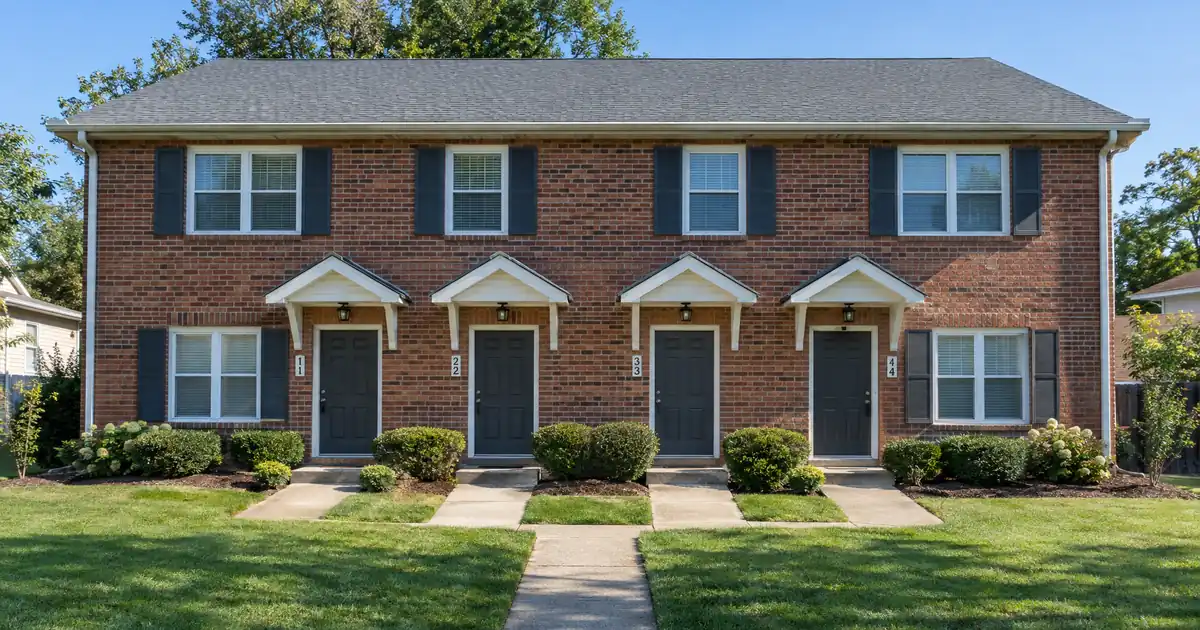
Finance A Fourplex Through A DSCR Portfolio Loan — The Quick Read: A fourplex is reviewed on its own rent roll, not your traditional personal-income documentation, and it stays in the residential lane through four units rather than getting bumped into commercial underwriting. Fold that fourplex into a DSCR portfolio loan alongside other rentals, and the lender looks at blended income across the whole pool instead of grading each address on its own. That structure lets a strong-performing fourplex carry a softer single-family in the same loan, and it steps past the financed-property caps that stop conventional borrowers cold. The tradeoff is cross-collateralization — every property in the pool is tied to the same note.
Here’s the setup worth understanding before anything else: a fourplex is a four-unit property, and DSCR stands for debt-service coverage ratio — a simple test of whether the rent a property brings in covers its full monthly housing payment. A portfolio loan bundles several rental properties under one loan instead of financing each one separately. Put those two ideas together and you get a specific, repeatable strategy for scaling past the point where most rental investors stall out.
DSCR Calculator
Run the numbers in your market
Rate source: Freddie Mac 30-yr average via FRED® — Federal Reserve Bank of St. Louis · effective Sep 17, 2026
Prefilled with local estimates — enter your own rent or nightly figures, taxes, insurance, and HOA for a more accurate picture.
Program parameters update from Lendmire’s centralized guideline source. Taxes and insurance are editable estimates.
As of Sep 17, 2026 · General Freddie Mac market benchmark, not a Lendmire loan offer. Rent, nightly rate, occupancy, taxes, and insurance are editable estimates. Short-term rental figures are estimates only and vary significantly by season, property type, management approach, and local short-term-rental rules — confirm local regulations before relying on them. Qualifying income for short-term rentals varies by program — some use appraisal market rent, others use documented STR history or projections — and is confirmed in underwriting. Not a Loan Estimate, approval, or commitment to lend. Program availability and eligibility are subject to lender guidelines, credit approval, property review, and underwriting.
What Makes A Fourplex Different From A Bigger Building?
A fourplex stays in residential underwriting; a five-unit building does not — and that single-unit difference changes almost everything about how the loan is built. Below five units, the income math is simple: gross rent divided by the payment. At five units and up, lenders start subtracting operating expenses — management, maintenance, utilities — before running the ratio, which usually produces a lower number for the same building.
The appraisal method flips at the same line. A 2-4 unit property gets valued against comparable sales, the same way a single-family home does, because owner-occupants and small investors both buy at that size. A 5+ unit building gets valued on net operating income against the local cap rate, because larger buildings trade on their income stream, not their curb appeal. The standard tool for a fourplex appraisal is a form built for exactly this size range — a four-page report with a unit-by-unit rent schedule, maps, and photos, known industry-wide as Fannie Mae Form 1025 even outside agency lending. DSCR programs aren’t agency products, but they lean on this form because nothing else at this unit count fills the same role.
Practically, that means your fourplex doesn’t need to be fully leased to close. The appraiser’s rent schedule fills in market rent for any vacant unit, sums all four, and hands the underwriter one combined number. One empty unit doesn’t stall the file — it just gets priced at what it should rent for.
How Does A DSCR Portfolio Loan Actually Work?
A portfolio DSCR loan takes rent and payment across every property in the pool and blends them into one ratio, instead of grading each address separately. In practice this means: total monthly rent across the pool, divided by total monthly PITIA across the pool, produces a single blended number the lender underwrites against.
That blending is the whole point. A fourplex throwing off strong coverage — four rent checks instead of one — can offset a single-family rental in the same pool that’s running thin on its own. Fourplexes are naturally suited to this because partial vacancy doesn’t collapse their income the way it does on a single-family rental. Lose the tenant in an SFR and that property’s individual DSCR drops to zero until it’s re-leased. Lose one unit out of four in a fourplex, and the other three keep paying — the blended number barely moves.
Documentation focuses on the property, not your paycheck. The file includes rent rolls or leases, the 1025 appraisal with its rent schedule, a landlord insurance policy, title work, and entity paperwork if you’re vesting in an LLC. Across most programs in Lendmire’s wholesale network, employment history, W-2s, and traditional personal-income documentation simply aren’t part of the review. You qualify primarily on whether property-level rental income covers the payment, subject to lender guidelines.
Lendmire’s network places small-multifamily loans through many lenders. These loans typically use fully amortizing 30- or 40-year fixed terms on most files. They don’t use the shorter, balloon-structured commercial notes that larger buildings require. That’s because a 2-4 unit property counts as residential collateral, not commercial.
Why Bother With A Portfolio Structure At All?
Investors move to a portfolio loan mainly for scale. Conventional agency lending caps the total number of financed 1-4 unit properties a borrower can hold. Fannie Mae’s own Selling Guide on multiple financed properties spells out these limits by underwriting method. DSCR portfolio loans are business-purpose, non-QM products, so they don’t carry that same cap structure. Instead, loan size and blended coverage become the binding constraints.
There’s a real regulatory reason DSCR loans skip a lot of consumer-mortgage machinery. CFPB Regulation Z treats credit extended against a non-owner-occupied rental property as business-purpose lending. This classification turns on whether you’ll occupy the property more than 14 days a year — not on how many units the building has. Because they’re business-purpose, DSCR loans are exempt from TRID. That means no Loan Estimate, no Closing Disclosure, and no three-day waiting period like a personal-residence mortgage requires.
Beyond the cap issue, pooling gives you bookkeeping simplicity — one note, one servicing relationship, instead of juggling five separate mortgages with five separate due dates. And it lets you use a fourplex’s income density strategically: pair it with a slower-performing property, and the pool clears where a standalone loan on the weaker asset might not.
Sizing And Leverage: What A Fourplex Actually Gets
Across Lendmire’s wholesale network, this ladder runs from $150,000 up to $10,000,000, with the standard DSCR program stopping at $3,000,000 and this larger-balance ladder carrying qualified investors past that point. On the smaller end — up to $1,000,000 — purchase and rate-and-term leverage typically run to 80%, with cash-out to 75% on standard rentals (or 70% on short-term-rental collateral in the same size band), on most files with credit around 660 or better.
Move into the $1,000,000 to $1,500,000 range and leverage typically steps down to 75% on purchase and rate-and-term, with cash-out around 70%, and credit expectations move up toward 700. From $1,500,000 to $3,000,000, purchase and rate-and-term still typically run around 75%, though cash-out compresses further, closer to 60%, with credit near 720 on most files. Push past $3,000,000 and cash-out disappears from the menu entirely — you’re purchase or rate-and-term only from that point up through $10,000,000, reviewed case by case, never a flat percentage promised in advance.
Coverage of 1.00 or better — meaning rent covers the payment dollar-for-dollar or with room to spare — earns full leverage on the ladder above. Files running between roughly 0.75 and 0.99 coverage are a real path through select programs in the network, capped around $2,000,000, but LTV and terms adjust to compensate, subject to underwriting. No-ratio qualification — meaning the lender doesn’t test the rent-to-payment math at all — also exists through select wholesale programs to $2,000,000, generally requiring a clean seven-year housing payment history and no late payments in the past 24 months, subject to underwriting; no minimum ratio applies to that path because there isn’t one to publish.
Reserves, Credit, And What The File Actually Needs
Reserves typically run six months of PITIA on the subject property across most files in this network, stepping up to twelve months for first-time investors — and notably, no additional reserves get stacked on for other properties you already own. Credit floors sit around 660 on most files, moving to 700 above the $3,000,000 mark, alongside a clean payment history over the trailing 24 months and roughly four years of seasoning since any major credit event. Loans above $2,000,000 typically call for two separate appraisals rather than one, which adds cost but also adds a layer of value confirmation on a larger note.
Interest-only structuring is available on many files. It typically offers a 120-month interest-only runway inside a 30- or 40-year term, up to 75% leverage. Coverage should run roughly 0.75 or better, and qualification is based on the interest-only payment rather than full amortization. This is a real lever for investors who prioritize cash flow over equity paydown in the early years.
Here’s something worth flagging from experience. When a fourplex gets added to an existing multi-property pool, files tend to get flagged for closer review of insurance costs. That’s because a 2-4 unit policy typically costs meaningfully more than a comparable single-family policy. This added cost feeds straight into the PITIA side of the ratio. A blended pool that looked fine on last year’s insurance renewal can come in tighter once you get a fresh quote. Get an updated quote before the file goes to underwriting — this avoids a late-stage surprise.
What Happens If You Want To Add A Property Later?
Adding a new property to an existing portfolio loan isn’t a quick add-on — it’s a fresh underwriting event, with a new appraisal and a recalculated blended ratio, and not every program supports it mid-term. For most investors, the cleaner path is refinancing the whole pool into a new loan that includes the additional property rather than trying to bolt one on.
Know this before you build a portfolio loan expecting to plug and play. If you plan to keep acquiring properties, ask upfront whether your program supports substitutions or additions. If it doesn’t, plan mentally for a future refinance event rather than a simple modification. Weighing portfolio-wide financing against property-by-property financing? Lendmire’s complete DSCR loans guide walks through the tradeoffs in more depth. And a look at how portfolio structuring compares to a straightforward eleven-property DSCR file offers a useful side-by-side if you’re scaling past a handful of doors.
DSCR vs. conventional financing
Two common ways to finance an investment property in this market. They qualify you differently — here’s how investors weigh them.
Why investors choose it
- Qualifies on the property’s rental income — no personal tax returns, W-2s, or pay stubs needed to document income.
- No personal debt-to-income ceiling to clear, so existing mortgages and obligations don’t cap your borrowing the same way.
- Can be closed in an LLC, keeping the property inside a business entity.
- Built for scaling — not held to the limit on number of financed properties that conventional financing applies.
- Underwriting centers on the deal: generally qualifies when the rent covers the payment, a 1.00x coverage ratio being a common baseline (confirmed in underwriting).
- Designed specifically for investment property, including long-term and, where the program allows, short-term rentals.
Where it’s strong
- Often the lowest ongoing financing cost for a buyer who fully qualifies on personal income — a fit for a first property or a cost-first purchase.
Trade-offs for investors
- Requires full personal income documentation and must fit within a debt-to-income limit — salary, existing debts, and other mortgages all count.
- Typically held in your personal name rather than a business entity.
- Caps how many financed properties you can carry, which can become a ceiling as a portfolio grows.
- Evaluates you as a borrower as much as the property, which usually means more paperwork.
How investors usually choose: a first or single property often optimizes for the lowest financing cost; portfolio builders often optimize for leverage, vesting in an LLC, and scaling past conventional caps. The right answer depends on your goals, the property, and current guidelines — both paths run through select lenders in Lendmire’s wholesale network, with eligibility and terms confirmed in underwriting.
Who This Fits — And Who It Doesn’t
This structure fits an investor who already owns rentals and wants to consolidate, or one buying a fourplex specifically to pair with weaker-performing properties in a blended pool. It also fits someone who’s hit — or is about to hit — the ceiling on conventional financed-property limits and needs a business-purpose path forward. Vesting in an LLC works cleanly across most programs in this network, subject to program eligibility, so an investor building out an entity structure isn’t boxed out.
It fits less well for someone planning to sell one property in the pool soon — cross-collateralization means every asset in the loan is tied together, and pulling one out cleanly generally means a refinance of the whole structure, not a simple release. It also fits less well for a true first-time landlord chasing a fourplex with a thin rent history and no reserves lined up; twelve months of reserves on top of a 700+ credit expectation on larger files is a real bar, not a formality.
Short-term rentals can fit this structure too, but they qualify differently. On a refinance, you typically need twelve months of documented operating history. On a purchase, lenders typically use the appraisal’s short-term-rent analysis, discounted to 80% of gross rent. This path is generally reserved for investors with prior income-property experience. Short-term rental rules can vary by city, county, HOA, and property type. So confirm what’s legally allowed at the specific address before you rely on projected nightly income.
This is not legal or tax advice, and it isn’t a substitute for reviewing your own numbers with a qualified attorney or CPA — property tax treatment and entity structuring both depend heavily on how a given deal is held and financed. If you’re comparing a fourplex purchase against pooling it with existing rentals, Lendmire can help you compare DSCR loan options based on the property’s income, your credit profile, target leverage, and where you’re trying to take the portfolio next.
Frequently Asked Questions
Does a fourplex have to be fully leased before the loan closes?
No. The 1025 appraisal includes a unit-by-unit rent schedule, and if one unit sits vacant, the appraiser assigns it a market-rent figure that gets summed with the other three. The lender uses that combined number, so a fully-leased building isn’t a precondition to closing.
Is a fourplex underwritten the same way as a small apartment building?
No — the underwriting lane changes at five units, not at four. A fourplex appraises against comparable sales and is reviewed on gross rent, while a 5+ unit building appraises on net operating income against a cap rate and has expenses subtracted before the ratio is calculated. Mixing up the two is a common and costly assumption.
Can a first-time investor buy a fourplex with a DSCR portfolio loan?
It’s possible on many files, though reserve requirements typically step up for first-time investors — often to around twelve months of PITIA versus six for an established landlord. Credit and reserve expectations get reviewed on a file-by-file basis, subject to lender guidelines.
What happens if one unit in my fourplex goes vacant after closing?
The loan itself doesn’t get re-underwritten off a single vacancy after closing — the DSCR was set at origination using the appraiser’s rent schedule. Going forward, though, an ongoing vacancy affects your actual cash flow even if it doesn’t reopen the loan file.
Are “portfolio loan,” “blanket loan,” and “DSCR loan” the same thing?
Not exactly, and mixing them up causes real confusion. A portfolio loan technically just describes a loan the originating lender keeps rather than sells; a blanket loan covers multiple properties under one note; and DSCR describes how the loan is qualified — on the property’s income rather than your personal income. A single loan can be all three at once, but the terms describe different features.
For current guidelines and terms, see Lendmire’s super jumbo DSCR loan programs page.
Self-employed borrowers can compare both super jumbo programs on Lendmire’s self-employed mortgages page.
About Lendmire
A DSCR-focused mortgage broker, Lendmire (NMLS# 2371349) places investor financing across 40 markets — 39 states plus Washington, D.C. — with DSCR eligibility generally reviewed by the lender on property cash flow instead of tax returns, subject to lender guidelines. Scotsman Guide named Lendmire a Top Mortgage Workplace in 2025 and 2026.
Lendmire’s Top Mortgage Workplace recognition is documented by Scotsman Guide 2025 Top Mortgage Workplace and Scotsman Guide 2026 Top Mortgage Workplace.
Get Started
Ready to find the right loan for you?
In about 30 seconds you can review financing options available for your home or investment property. No commitment required.
Informational only. Not a Loan Estimate, approval, or commitment to lend. Program availability and eligibility are subject to lender guidelines, credit approval, property review, and underwriting.
References
1. Fannie Mae Form 1025 — Small Residential Income Property Appraisal Report
2. Fannie Mae Selling Guide B2-2-03 — Multiple Financed Properties for the Same Borrower
Brandon Miller
Founder & CEO, Mortgage Loan Originator, Lendmire LLC
- Mortgage Loan Originator · NMLS# 1129696 · Verify on NMLS Consumer Access
- North Carolina Real Estate Broker · License# 343312 · Verify on NCREC
- North Carolina Insurance Producer · License# 19053198 · Property, Casualty, Life, Health · Verify on NAIC SBS
- Lendmire LLC · Firm NMLS# 2371349 · Verify firm licensure
Important disclosures. Lendmire (NMLS# 2371349) is a licensed mortgage brokerage. Lendmire is not a direct lender, depository institution, or financial advisor. All loan inquiries are subject to lender underwriting; this article does not constitute a commitment to lend. Rates, terms, and program guidelines are subject to change without notice and vary by borrower profile, property type, and state. Information in this article is general in nature and is not financial, legal, or tax advice. Equal Housing Opportunity. NMLS Consumer Access: nmlsconsumeraccess.org.


