
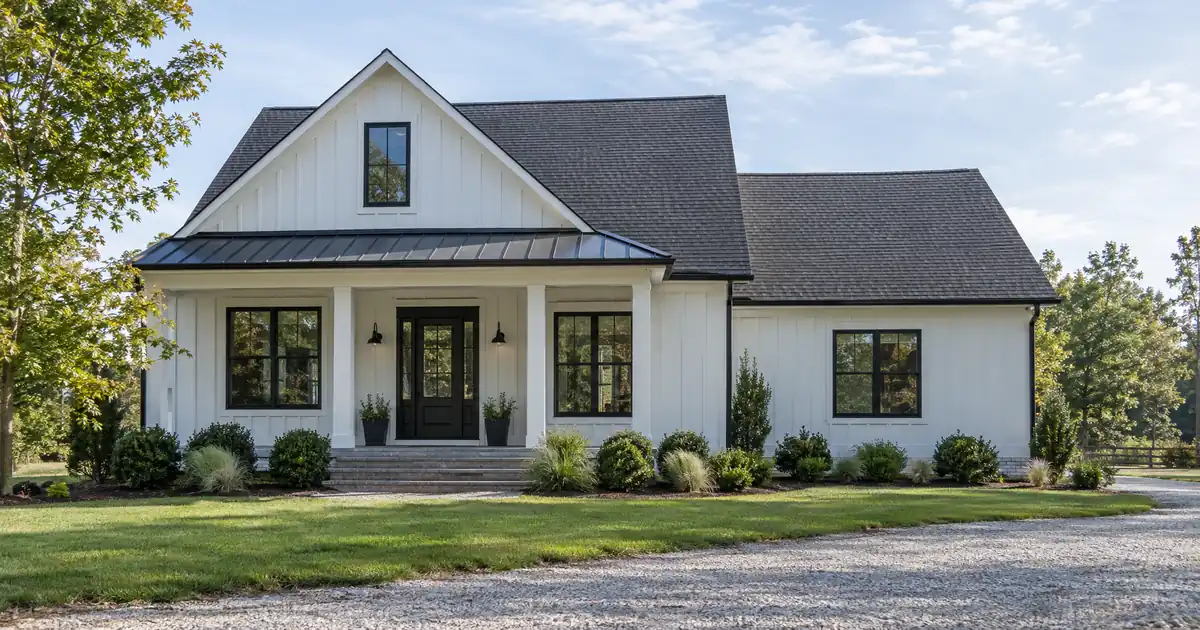
The Quick Read: A DSCR loan in Jackson Hole qualifies primarily on property-level rental income covering the payment, subject to lender guidelines. Across Lendmire’s wholesale network, purchase leverage typically runs 75%-80% LTV, with credit tiers starting around 620 and strengthening at 700+. The variable that decides most Jackson Hole files is not the loan program. It is whether the property can legally earn the rent the file assumes.
Lendmire is a broker. It arranges these loans through select lenders in its network across 41 markets, including Washington, D.C. Lenders review and approve each file.
DSCR Calculator
Run the numbers in your market
Rate source: Freddie Mac 30-yr average via FRED® — Federal Reserve Bank of St. Louis · effective Sep 24, 2026
Prefilled with starting assumptions — enter your own rent or nightly figures, taxes, insurance, and HOA for a more accurate picture.
Program parameters update from Lendmire’s centralized guideline source. Taxes and insurance are editable estimates.
As of Sep 24, 2026 · General Freddie Mac market benchmark, not a Lendmire loan offer. Rent, nightly rate, occupancy, taxes, and insurance are editable estimates. Short-term rental figures are estimates only and vary significantly by season, property type, management approach, and local short-term-rental rules — confirm local regulations before relying on them. Qualifying income for short-term rentals varies by program — some use appraisal market rent, others use documented STR history or projections — and is confirmed in underwriting. Not a Loan Estimate, approval, or commitment to lend. Program availability and eligibility are subject to lender guidelines, credit approval, property review, and underwriting.
Key Takeaways
- DSCR compares rent used for lender review to the full monthly obligation (PITIA). It is not a cash-flow test.
- Short-term rental rules can vary by city, county, HOA, and property type, so investors should confirm local rules before relying on projected rental income.
- In Jackson Hole, the same ZIP code can hold a nightly rental, a capped nightly rental, and a long-term-only property.
- High purchase prices against limited rent are the usual reason coverage runs thin.
- Documentation (entity papers, lease or appraisal rent, insurance, HOA information) drives most preventable file friction.
What Is a DSCR Loan, and How Does Underwriting Treat It?
A DSCR loan is a business-purpose investor loan. The lender divides the property’s rent used for lender review by its full monthly obligation: principal, interest, taxes, insurance, and HOA dues where they apply. Personal income documents are not the center of the file. For the full mechanics, see Lendmire’s complete DSCR loans guide.
Here is how a file moves through underwriting, step by step.
1. Rent is set by the strategy. A long-term rental usually uses an appraiser’s market rent (Form 1007 for a single-family home, Form 1025 for a 2-4 unit property) or a signed lease.
2. Short-term income gets a different treatment. The 1007 form was built for monthly leases. Nightly income needs a separate analysis, such as a platform-history review or an appraiser’s short-term addendum.
3. Lenders often discount before dividing. Where both a lease-style figure and a market-data projection exist, many programs use the lower one.
4. The ratio is computed. The lender takes the rent used for review and divides it by PITIA. In a condo-hotel or resort project, HOA dues and special assessments can weigh heavily here.
5. Appraisal, title, and insurance come in. Insurance is a real gating item in this market. An insurance practitioner’s Jackson Hole STR insurance post notes that standard homeowners forms usually exclude nightly-rental operation, so the property needs a policy written for paid guest occupancy.
6. Reserves are documented. Commonly about 6 months of PITIA, stepping up to about 9 months above $1,500,000. Conservative rate-term files at modest leverage can see reserves waived. It varies by lender, leverage, and transaction type.
What Are the Core Program Numbers?
Most Jackson Hole files run into the program numbers fast, because prices are high. These are typical ranges from select lenders in Lendmire’s network, subject to lender guidelines. They are not a commitment to lend.
| Factor | Typical network range |
|---|---|
| Purchase LTV | 75%-80% (up to 85% on select high-leverage programs, roughly 700+ score) |
| Cash-out refinance | Up to about 75% LTV |
| Credit tiers | 620 floor; most programs want about 660; 700+ for top leverage |
| Standard loan size | Up to $3,000,000 |
| Reserves | About 6 months PITIA; about 9 months above $1,500,000 |
| Coverage | 1.00 is where select programs start |
Two points matter here. First, 1.00 is a floor for specific programs, not a universal standard. Stronger ratios open better pricing and leverage. Second, coverage below 1.00 is available through select lenders in the network, with leverage and terms adjusted. No-ratio structures are available only through select lenders, generally for borrowers who already own a primary residence.
A larger down payment lowers the monthly obligation and can lift the ratio. It never erases leverage caps, credit floors, reserve rules, or property eligibility. The strongest files clear both tests: enough equity and enough rental coverage.
Why Does Jackson Hole Pressure the Ratio?
The market’s price level is the issue. The Jackson Hole Report shows a record median sale price near $2.995 million for the first half of its latest reporting period, up 27%, with luxury sales at 15% of transactions but about 45% of dollar volume.
That price tier does three things to a DSCR file.
- It pushes many deals above $1,500,000, where the network’s reserve requirement steps up.
- It pushes some toward the $2,500,000 mark, where the network generally holds to 30-year fixed structures.
- It sets a high monthly obligation against rent that may not scale with price.
A buyer paying for appreciation should model the ratio before making an offer. Run the numbers on a long-term rent basis first. If the property clears there, any legal nightly income is upside. If it only clears on projected nightly income, the file depends on documentation that may not hold.
Extended terms (40-year) and interest-only periods are available through select lenders in the network, and ARM structures exist. These can lift a thin ratio. They also change the loan’s long-run shape, so weigh them deliberately.
Where Does the General Rule Break in Jackson Hole?
The general rule says an investor can underwrite a rental on its best-supported income. In Jackson Hole, the best-supported income depends on which side of a jurisdictional line the property sits.
Here are the named edge cases that change files.
Teton Village versus the rest of the county. Unincorporated Teton County generally requires rentals of at least 31 days, with a published list of resort areas as the exception. Per the Teton County rental FAQ, Teton Village Areas I and II are on that list. A property there stands on different footing than a ranch parcel a few miles away.
Town of Jackson caps. The Town of Jackson’s short-term rental page says operating a rental anywhere in town requires a Business License and a Basic Use Permit. Reporting by Buckrail described limits in residential zones of three stays and 60 total days per year. That report is dated, so confirm the current caps against the town page. If the cap holds, nightly income may be too small to underwrite, and the likelier basis is long-term market rent.
Accessory residential units. A guest house or ARU with a 90-day minimum is effectively a long-term rental. Build the coverage on long-term rent.
Properties with violation history. The county’s enforcement page says owners who rented in violation may not be permitted to rent short-term later. Past platform history at a non-permitted property is a warning sign, not proof of income. Underwriters generally want income that is legal as well as marketable.
Condos and townhomes. These behave differently from single-family homes. Condo projects add warrantability and HOA questionnaire questions, and an incomplete questionnaire stalls a file. Keller Williams’ year-end market report shows weakness in condo and townhome trades while single-family and land sales rose, which can matter for appraisal comps.
Gateway and federal-adjacent parcels. Grand Teton and Yellowstone are federal lands, and the Yellowstone South Entrance gateway sits well outside Teton County’s core. No financing-specific rule was verified for those areas. The practical advice is to check zoning, access, utilities, and title on any gateway-area parcel before it goes into a file.
What Does the Investor Decision Look Like in Practice?
Picture an investor looking at a Teton Village condo. The first question is not the loan. It is whether the unit sits inside the permitted resort area, and what the HOA charges. If nightly rental is legal there, the file can use a short-term income analysis.
Short-term rental programs in the network run lower on leverage than standard rentals. Purchase goes to 75% LTV, refinance around 70%, and cash-out 70% on short-term-rental collateral, versus 75% for standard rental cash-out. Expect a 640+ credit score, about 12 months of hosting history, and a 1.00 coverage floor on both purchases and refinances. Exact terms depend on the lender’s guidelines, property type, leverage, and a full review of the borrower’s file.
Now say you own a single-family home in town, outside the Lodging Overlay. The cap may make nightly income thin. Underwrite it on long-term rent, and treat any capped nightly income as a bonus.
One more scenario. An investor holds a property through an LLC. Entity documents have to be clean before the file goes in: operating agreement, formation papers, and a clear signatory, subject to lender program eligibility. DSCR suits LLC holders and investors with complex income, but it still demands property, entity, appraisal, and insurance paperwork.
Operators see the same pattern in resort markets. Files stall on the unglamorous items: a condo questionnaire with blanks, a quote for the wrong policy type, or a rent figure the appraisal does not support. Fresh insurance quotes and a complete HOA package before submission prevent most of it.
Clearing 1.00 is also not positive cash flow. Repairs, vacancy, management, utilities, and capex sit outside the calculation. In a resort market with seasonal demand, that gap is wider than usual.
DSCR vs. conventional financing
There are two common ways to finance an investment property in this market, and they qualify you differently — here’s how investors weigh them.
Why investors choose it
- Qualifies on the property’s rental income — no personal tax returns, W-2s, or pay stubs needed to document income.
- No personal debt-to-income ceiling to clear, so existing mortgages and obligations don’t cap your borrowing the same way.
- Can be closed in an LLC, keeping the property inside a business entity.
- Built for scaling — not held to the limit on number of financed properties that conventional financing applies.
- Underwriting centers on the deal: generally qualifies when the rent covers the payment, a 1.00x coverage ratio being a common baseline (confirmed in underwriting).
- Designed specifically for investment property, including long-term and, where the program allows, short-term rentals.
Where it’s strong
- Often the lowest ongoing financing cost for a buyer who fully qualifies on personal income — a fit for a first property or a cost-first purchase.
Trade-offs for investors
- Requires full personal income documentation and must fit within a debt-to-income limit — salary, existing debts, and other mortgages all count.
- Typically held in your personal name rather than a business entity.
- Caps how many financed properties you can carry, which can become a ceiling as a portfolio grows.
- Evaluates you as a borrower as much as the property, which usually means more paperwork.
How investors usually choose: a first or single property often optimizes for the lowest financing cost; portfolio builders often optimize for leverage, vesting in an LLC, and scaling past conventional caps. The right answer depends on your goals, the property, and current guidelines — both paths run through select lenders in Lendmire’s wholesale network, with eligibility and terms confirmed in underwriting.
Finally, a note on pricing power. Local brokerage commentary suggests the highest price tiers lean toward cash and asset-backed buyers. That is a qualitative point only, but it means financed buyers often compete in the tiers below it.
Key Terms Defined
DSCR (debt service coverage ratio): rent used for program review divided by the full monthly obligation on the property.
PITIA: Principal, interest, taxes, insurance, and HOA dues, the full monthly obligation used in the ratio.
Form 1007 / Form 1025: Appraisal rent schedules for single-family homes and 2-4 unit properties, built for monthly leases.
ARU (accessory residential unit): A secondary dwelling, such as a guest house, that Teton County treats under its own rental rules.
Warrantability: Whether a condo project meets lender standards, based on the HOA questionnaire and project details.
Seasoning: The ownership period a lender expects before cash-out, about 6 months on most network programs.
Which Properties Are Not Offered?
Manufactured homes (single- and double-wide), log homes, and barndominiums are not offered in the network’s DSCR programs. That matters in Teton County, where rustic and log construction is common. Check the construction type early.
This article is general information, not legal or tax advice. Tax treatment can depend on how the funds are used and how the property is held; investors should keep clear records and speak with a qualified tax professional before relying on any deduction. Consult an attorney or CPA about your own situation, and confirm local rental rules directly with the county or town.
If You Are Buying or Refinancing
For related reading, see Lendmire’s piece on a second home in Jackson Hole. If you are buying or refinancing a rental property and want to see how the numbers work, Lendmire can help you compare DSCR loan options based on the property income, credit profile, leverage, and investor goals. Call 828-256-2183.
Frequently Asked Questions
Can I qualify a Jackson Hole property on Airbnb income?
Only if nightly rental is legal at that address and the income is documented. Outside the county’s listed resort areas, short-term rentals are generally not allowed. Where they are allowed, lenders typically look at platform history or an appraiser’s short-term analysis, and may use the lower of two figures.
What down payment does a Jackson Hole investment purchase usually need?
Typically 20%-25% down on most files, which is 75%-80% LTV. Select high-leverage programs reach 85% LTV with roughly a 700+ score. Short-term-rental purchases top out at 75% LTV. All of it is subject to lender guidelines and property review.
Does a big down payment fix a thin DSCR?
It helps, because it lowers the monthly obligation and can lift the ratio. It does not override leverage caps, credit floors, reserve rules, or property eligibility. The file still has to clear both the equity test and the coverage test.
What if the ratio falls below 1.00?
Coverage below 1.00 is available through select lenders in the network, with leverage and terms adjusted. Interest-only periods or a long-term-rent basis can change the picture. Eligibility review depends on the lender, credit profile, reserves, and property review.
Are condos in Teton Village treated differently?
Yes. Condo projects add warrantability review and an HOA questionnaire, and dues and special assessments enter the ratio through PITIA. An incomplete questionnaire is a common source of delay in file review.
For current guidelines and terms, see Lendmire’s DSCR loan programs page.
About Lendmire
As a non-QM mortgage broker (NMLS# 2371349), Lendmire facilitates DSCR investor loans across 41 markets, including Washington, D.C. DSCR eligibility is generally reviewed around property-level rental income instead of personal income documentation, subject to lender guidelines, serving LLC-structured portfolios and self-employed borrowers who don’t fit conventional boxes. Lendmire is a two-time Scotsman Guide Top Mortgage Workplace (2025, 2026).
Scotsman Guide’s Top Mortgage Workplace lists for 2025 and 2026 document Lendmire’s recognition.
Get Started
Ready to find the right loan for you?
In about 30 seconds you can review financing options available for your investment property. No commitment required.
Informational only. Not a Loan Estimate, approval, or commitment to lend. Program availability and eligibility are subject to lender guidelines, credit approval, property review, and underwriting.
References
1. Jackson Hole STR insurance post
3. Teton County WY – Rent home/guest house FAQ
4. Town of Jackson – Short-Term Rentals
5. Buckrail – Town of Jackson STR rules
6. Keller Williams Jackson Hole – Year-end report
7. Scotsman Guide 2025 Top Mortgage Workplace
8. Scotsman Guide 2026 Top Mortgage Workplace
This article is part of Lendmire’s DSCR loan program — full qualification details, guidelines, and scenarios live on the program page.
Related reading: Luxury Rental DSCR Loans In New Jersey · Jersey Shore Vacation Rental Loans: DSCR Financing In Ocean City, Cape May And Long Beach Island · DSCR Cash-out Refinance In New Jersey: Pulling Equity From A Rental
Brandon Miller
Founder & CEO, Mortgage Loan Originator, Lendmire LLC
- Mortgage Loan Originator · NMLS# 1129696 · Verify on NMLS Consumer Access
- North Carolina Real Estate Broker · License# 343312 · Verify on NCREC
- North Carolina Insurance Producer · License# 19053198 · Property, Casualty, Life, Health · Verify on NAIC SBS
- Lendmire LLC · Firm NMLS# 2371349 · Verify firm licensure
Legal disclosures. Lendmire (NMLS# 2371349) is a state-licensed mortgage brokerage that arranges financing through wholesale lender relationships. Lendmire is not a direct lender, depository institution, or registered financial advisor. The discussion above is general informational content about real estate financing — it is not financial, legal, or tax advice, and readers should consult licensed professionals for guidance on their individual circumstances. Loan inquiries are subject to lender underwriting; this article does not represent a commitment to lend. Loan terms, rates, and qualification standards vary by borrower, property, and state, and are subject to change at any time. Equal Housing Opportunity. NMLS Consumer Access: nmlsconsumeraccess.org.