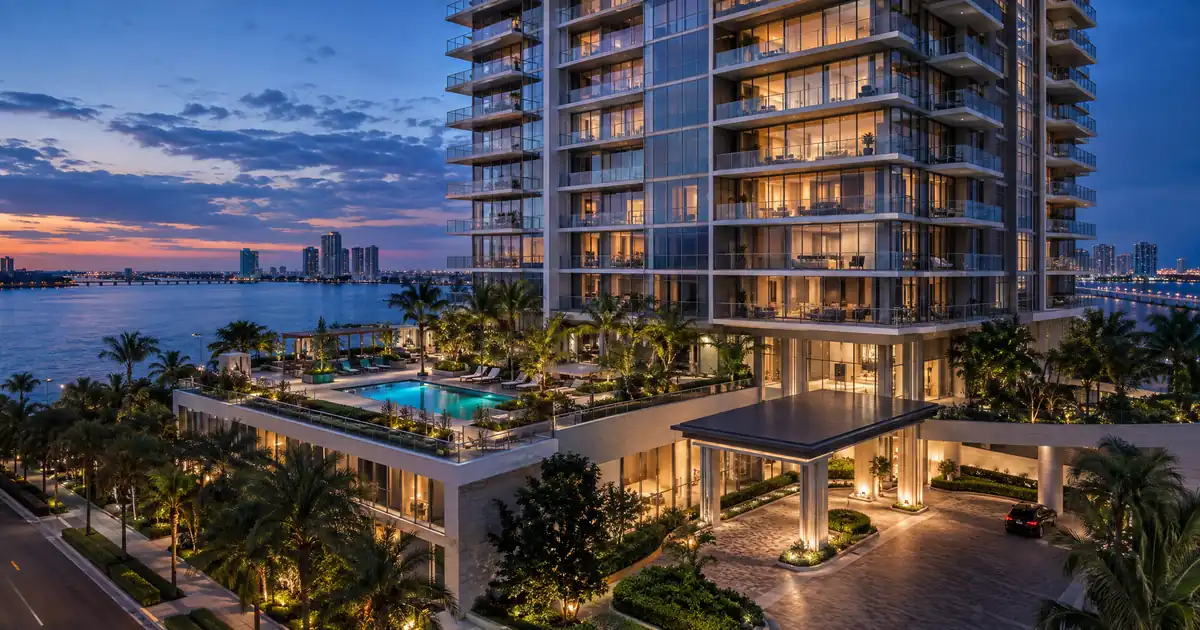
DSCR Loan Requirements For A Warrantable Condo Investment Property — The Quick Read: A warrantable condo is the easiest condo type to finance with a DSCR loan, because the project already meets Fannie Mae and Freddie Mac’s paperwork standards, even though those standards don’t actually govern the loan. DSCR underwriting looks at whether the unit’s rent covers its monthly obligation, not at the condo project’s warrantability status. Leverage, credit floor, and reserves come from the DSCR lender’s own guidelines, not from any GSE checklist.
Here’s the part that trips up a lot of investors: warrantability is a Fannie Mae and Freddie Mac concept. It was built for conventional loans that get sold to those two agencies. DSCR loans never get sold there. So the warrantable label doesn’t gate approval the way it does on a regular mortgage — it just tends to make the file cleaner.
DSCR Calculator
Run the numbers in your market
Rate source: Freddie Mac 30-yr average via FRED® — Federal Reserve Bank of St. Louis · effective Sep 17, 2026
Prefilled with local estimates — enter your own rent or nightly figures, taxes, insurance, and HOA for a more accurate picture.
Program parameters update from Lendmire’s centralized guideline source. Taxes and insurance are editable estimates.
As of Sep 17, 2026 · General Freddie Mac market benchmark, not a Lendmire loan offer. Rent, nightly rate, occupancy, taxes, and insurance are editable estimates. Short-term rental figures are estimates only and vary significantly by season, property type, management approach, and local short-term-rental rules — confirm local regulations before relying on them. Qualifying income for short-term rentals varies by program — some use appraisal market rent, others use documented STR history or projections — and is confirmed in underwriting. Not a Loan Estimate, approval, or commitment to lend. Program availability and eligibility are subject to lender guidelines, credit approval, property review, and underwriting.
Key Terms Defined
DSCR (debt service coverage ratio) — a ratio that divides the property’s monthly rental income by its full monthly housing obligation. A ratio of 1.00 means the rent exactly covers the payment.
Warrantable condo — a condo project that meets Fannie Mae and Freddie Mac’s project-level rules on things like investor concentration, HOA financial health, and insurance coverage, making it eligible for agency-backed conventional loans.
Non-warrantable condo — a condo project that fails one or more of those agency rules — too many investor-owned units, ongoing litigation, an underfunded reserve account — and therefore can’t be financed with a standard agency-backed conventional loan.
PITIA — principal, interest, taxes, insurance, and association dues, all rolled into the monthly obligation used to calculate DSCR on a condo.
HOA questionnaire — a form the condo association or its management company fills out describing the project’s finances, insurance, and any pending legal disputes.
Business-purpose loan — a mortgage made to an entity or individual buying property strictly as a rental investment, not as a primary residence. DSCR loans are designed for non-owner-occupied investment properties, and because they’re business-purpose loans, they’re reviewed differently than a standard owner-occupied mortgage.
Why Warrantable Status Barely Moves the Needle on a DSCR File
A DSCR loan doesn’t care whether the condo project passed Fannie Mae’s review — it cares whether the unit generates enough rent to cover its own payment. That single fact separates DSCR financing from every conventional condo loan on the market.
The warrantable-versus-non-warrantable line exists because Fannie Mae and Freddie Mac won’t buy a loan secured by a unit in a project that doesn’t meet their standards — investor concentration limits, HOA reserve funding, insurance adequacy, no active litigation. DSCR loans are never sold to those agencies. They sit in a non-QM lane, underwritten to the property’s income and the borrower’s credit and reserves. Because of that, a lender working DSCR files can finance a unit in a non-warrantable building as long as the unit itself pencils — the pillar guide covers how that income-first structure works across the whole DSCR loans guide.
So what does warrantable status actually buy an investor on a DSCR file? Mostly speed of paperwork, not eligibility. A warrantable project usually has a clean HOA questionnaire already on file somewhere, updated insurance certificates, and no red flags on investor concentration. That means less back-and-forth chasing documents from a management company that’s slow to respond. It doesn’t mean better leverage by itself — leverage on a DSCR file is driven by loan size, credit, and coverage ratio, not by whether the GSEs would have bought the loan.
How the DSCR Math Actually Works on a Condo
The math is the same formula used on any rental property — rent divided by the full monthly obligation — except condos add one line item that single-family homes don’t carry: the HOA due.
DSCR = monthly rental income ÷ (principal + interest + taxes + insurance + HOA dues). That HOA line is the single biggest condo-specific wrinkle in the calculation. A meaningful monthly due on a mid-size unit reduces the coverage ratio the same way a property tax bill would — it’s real money coming out of the numerator’s coverage before the ratio clears.
Picture an investor running the numbers on a condo purchase. The unit rents for enough to comfortably beat its principal-and-interest payment on its own, but once taxes, insurance, and the HOA due get added into the obligation, the ratio comes down closer to breakeven. That’s exactly why an investor should model HOA dues into the ratio before assuming a number holds — a dues increase driven by a reserve-funding catch-up, which is increasingly common as associations respond to tighter agency reserve standards, can move a marginal deal from comfortably qualifying to barely clearing 1.00.
On most DSCR files in the wholesale network Lendmire works through, a coverage ratio at or above 1.00 earns full leverage for the loan size in question. Coverage between roughly 0.75 and 0.99 is a real path too — several lenders in the network will still work these files up to $2,000,000, just with the LTV and terms adjusted down, subject to underwriting. No-ratio options also exist up to $2,000,000 for borrowers with a seven-year clean housing history and no late payments or major derogatory events in the past two years, though a bare “no-ratio available” claim never tells the whole story — it always comes with tighter credit and reserve requirements behind it.
What the Appraisal Looks Like on a Condo Unit
Condo units get a different appraisal form than detached homes — the appraiser can’t use the standard form built for single-family properties.
The Uniform Residential Appraisal Report works for a detached house or a planned-unit-development home, but it isn’t built for condos. Appraisers use the Individual Condominium Unit Appraisal Report instead — commonly called Form 1073 on the Fannie Mae side — because it captures project-level details a single-family form skips entirely: unit count, any commercial space in the building, HOA dues, and the condition of shared hallways, elevators, and common areas. Even on non-agency DSCR files, appraisers commonly reach for this same form or its exterior-only variant, because it’s simply built to gather the data a lender needs on any condo, agency-backed or not.
Loan size drives how many appraisals a file needs. Most DSCR files in the network require a single appraisal. Above $2,000,000, two independent appraisals become standard practice — a second set of eyes on a bigger piece of collateral, which matters more on a condo where common-area condition and reserve health directly affect resale value down the road.
Does the HOA Still Get Reviewed on a DSCR File?
Yes, but lighter than on a conventional loan. A DSCR lender typically pulls some version of an HOA questionnaire — sometimes a shortened attestation instead of the full form — to confirm the unit is complete, insurable, and legally rentable, not to certify agency eligibility.
Freddie Mac’s own Condominium Project Questionnaire asks whether construction is 100% complete, whether any part of the building is used for non-residential or commercial space, and requires documentation of any pending litigation. On a DSCR file, the questionnaire’s job changes. Nobody’s checking investor-concentration percentages against an agency threshold. The lender wants to know the unit is habitable, insurable, and free of a legal cloud that would tank resale value if the loan ever needed to be worked out.
Insurance gets checked at two levels on any condo, warrantable or not. The association’s master policy covers the building shell and common areas. Most associations run what’s called a “bare walls” master policy. This means interior finishes, fixtures, and flooring inside each unit are the owner’s responsibility. That’s why a lender financing a condo — whether DSCR or conventional — will require the borrower to carry an individual HO-6 policy on top of the master policy. A DSCR lender still confirms the master policy is active and adequately funded. A lapsed master policy is a real collateral risk. This holds true even though the reserve-percentage math that governs agency eligibility never enters a non-QM file.
Where the General Rule Breaks: The Real Edge Cases
Non-warrantable status doesn’t disqualify a DSCR loan — but it does cap leverage, and a few condo types get treated as their own category entirely.
Presale-stage new construction. Fannie Mae’s updated project standards, laid out in Lender Letter LL-2026-03, require a set share of units in a new project to be sold or under contract before remaining units become agency-eligible. That’s purely a timing condition — once the project crosses the threshold, the restriction lifts. A project that hasn’t sold enough units yet doesn’t have a collateral problem; it has a completion timeline. DSCR lenders can move on these units well before an agency ever would, because the loan was never headed for agency purchase in the first place.
Condotels and hotel-run buildings. These get treated differently even by the agencies themselves — a project that operates primarily on a transient, hotel-style basis, often with a resort management company running short-term bookings for unit owners, falls outside standard agency eligibility entirely, not just outside the warrantable category. DSCR lenders in the network will finance condotels, typically up to 75% LTV on a purchase and 65% on a refinance, capped around $1,500,000, generally with a meaningful cash-in-hand requirement given the higher collateral risk. But the income analysis looks completely different from a standard long-term rental — it’s built on nightly-rate and occupancy data rather than a lease, which is exactly the kind of file a broker specialist should structure carefully rather than force through a standard rental template.
Insurance-driven non-warrantability is expanding. The same 2026 lender letter tightened property-insurance sufficiency standards project-wide, requiring replacement-cost coverage with a carve-out for roofs. Buildings that could always meet agency standards before may fall out of eligibility simply because their master policy doesn’t meet the new replacement-cost bar — pushing more otherwise-normal buildings into DSCR territory as the practical financing route, not as a workaround for a troubled property.
Reserve underfunding. Per the CAI Advocacy Blog, the minimum reserve-funding allocation is rising from 10% to 15% of an association’s budgeted assessment income, unless the association is fully funded per a recent reserve study. Boards that can’t hit that number lose warrantable status even with a clean litigation and occupancy history. For an investor, that means a building that was perfectly reviewable conventionally last year can flip to DSCR-only financing this year — and the HOA dues line on the DSCR calculation can move at the same time, since a board catching up on reserves usually raises assessments to do it.
DSCR vs. conventional financing
Two common ways to finance an investment property in this market. They qualify you differently — here’s how investors weigh them.
Why investors choose it
- Qualifies on the property’s rental income — no personal tax returns, W-2s, or pay stubs needed to document income.
- No personal debt-to-income ceiling to clear, so existing mortgages and obligations don’t cap your borrowing the same way.
- Can be closed in an LLC, keeping the property inside a business entity.
- Built for scaling — not held to the limit on number of financed properties that conventional financing applies.
- Underwriting centers on the deal: generally qualifies when the rent covers the payment, a 1.00x coverage ratio being a common baseline (confirmed in underwriting).
- Designed specifically for investment property, including long-term and, where the program allows, short-term rentals.
Where it’s strong
- Often the lowest ongoing financing cost for a buyer who fully qualifies on personal income — a fit for a first property or a cost-first purchase.
Trade-offs for investors
- Requires full personal income documentation and must fit within a debt-to-income limit — salary, existing debts, and other mortgages all count.
- Typically held in your personal name rather than a business entity.
- Caps how many financed properties you can carry, which can become a ceiling as a portfolio grows.
- Evaluates you as a borrower as much as the property, which usually means more paperwork.
How investors usually choose: a first or single property often optimizes for the lowest financing cost; portfolio builders often optimize for leverage, vesting in an LLC, and scaling past conventional caps. The right answer depends on your goals, the property, and current guidelines — both paths run through select lenders in Lendmire’s wholesale network, with eligibility and terms confirmed in underwriting.
What DSCR Underwriting Actually Checks on Non-Warrantable Condos
Lendmire’s wholesale network finances non-warrantable condos, typically up to 75% LTV and capped around $1,500,000, subject to underwriting. That’s meaningfully tighter than the leverage available on a straightforward warrantable single-family rental. There, full-leverage files can reach 80% up to $1,000,000 on most programs. The gap reflects real risk. If a loan on a non-warrantable unit ever needs to be worked out through foreclosure, the resale pool is thinner. That’s because most condo buyers plan to finance through conventional lending, and they can’t touch a genuinely non-warrantable building.
That leverage haircut, not an outright decline, is where a non-warrantable condo’s condition typically shows up on a DSCR file. Rather than reject the deal, underwriting adjusts the loan-to-value ceiling downward to compensate for the added collateral risk. Lendmire’s guide to DSCR loan requirements for a non-warrantable condo investment property covers this topic in more depth. It walks through how the network treats investor-concentration issues, active litigation, and HOA control transitions specifically.
Across files that come through with high-investor-concentration buildings or resort-town condos, a pattern shows up consistently: the coverage ratio itself is rarely the problem — it’s the leverage cap and the reserve requirement that tighten first. A unit renting well above breakeven can still need a bigger down payment simply because the building carries more collateral risk than a warrantable one would. Final terms depend on lender guidelines, property type, leverage, and the borrower’s complete credit picture.
What This Means for an Investor’s Decision
Picture an investor comparing a warrantable unit against a non-warrantable one in the same building or market. For them, the financing pool is the real difference, not the deal’s underlying viability. A DSCR loan is reviewed primarily on property-level rental income covering the payment, subject to lender guidelines. It’s not reviewed on whether the condo project would pass an agency’s project review.
That opens deal flow in resort towns, high-investor-concentration towers, and newer construction still working through presale requirements. These are markets where conventional buyers using agency financing are effectively locked out, meaning there’s less competition on the offer. It’s a real advantage for an investor who doesn’t need agency pricing and just wants the unit to cash flow.
Entity vesting is generally welcome across the network. An LLC, trust, or individual name can typically hold title. Layered entity structures usually can’t, though. Are you weighing a purchase against pulling equity out of a condo you already own? You can see how that math runs differently in Lendmire’s guide to investment property condo refinance.
The credit floor across most of the network sits around 660 on standard files, stepping up to roughly 700 above $3,000,000. Reserves typically run six months of the full monthly obligation on the subject property, with 12 months commonly required for first-time investors. None of that changes based on warrantable status — it’s driven by loan size and borrower profile, the same as it would be on a single-family rental.
Frequently Asked Questions
Does a condo need to be warrantable to get a DSCR loan?
No. DSCR loans aren’t sold to Fannie Mae or Freddie Mac, so the agency warrantability checklist doesn’t apply. A warrantable condo just tends to have cleaner project paperwork on file, which can make the process smoother — but a non-warrantable unit can still qualify through select lenders in the network, typically at reduced leverage.
How do HOA dues affect my DSCR ratio?
HOA dues get added directly into the monthly obligation used to calculate the ratio, right alongside taxes and insurance. A higher due lowers the ratio the same way a bigger tax bill would, so it’s worth confirming the current dues amount and asking whether a special assessment or dues increase is pending before locking in a number.
Can I get a DSCR loan on a condotel?
Condotels are reviewable through select lenders in the network, generally up to 75% LTV on a purchase and 65% on a refinance, capped around $1,500,000 with meaningful cash-in-hand required. The income analysis runs on nightly-rate and occupancy data rather than a standard lease, since these units operate more like short-term rentals than traditional condos.
Do I need two appraisals on a condo purchase?
Most files need just one appraisal on the standard condo appraisal form. Above $2,000,000, two independent appraisals become standard practice across most programs in the network, which is common on larger condo purchases regardless of property type.
Will a pending HOA lawsuit block my loan?
It depends on the nature of the dispute and the lender reviewing the file. Litigation involving structural defects or major common-area disputes tends to draw more scrutiny than a routine assessment dispute, and it can affect leverage even on a DSCR file, since it speaks to the building’s future resale value.
Are you buying or refinancing a condo rental? Do you want to see how the numbers work for your specific unit? Lendmire can help. We help you compare DSCR loan options based on the property’s rental income, the building’s warrantability status, your credit profile, and available leverage.
For current guidelines and terms, see Lendmire’s super jumbo DSCR loan programs page.
Self-employed borrowers can compare both super jumbo programs on Lendmire’s self-employed mortgages page.
About Lendmire
Lendmire is a non-QM mortgage brokerage (NMLS# 2371349) arranging DSCR investor loans in 40 markets, including Washington, D.C., through wholesale and investor-lending channels. DSCR loans are evaluated by the lender on rental income rather than personal income, subject to lender guidelines — a fit for LLC-owned portfolios, self-employed investors, and operators scaling beyond conventional loan caps. Recognized as a Scotsman Guide Top Mortgage Workplace in 2025 and 2026.
Lendmire’s Top Mortgage Workplace recognition is documented by Scotsman Guide 2025 Top Mortgage Workplace and Scotsman Guide 2026 Top Mortgage Workplace.
Get Started
Ready to find the right loan for you?
In about 30 seconds you can review financing options available for your home or investment property. No commitment required.
Informational only. Not a Loan Estimate, approval, or commitment to lend. Program availability and eligibility are subject to lender guidelines, credit approval, property review, and underwriting.
References
1. Uniform Residential Appraisal Report – Wikipedia
2. Freddie Mac – Condominium Project Questionnaire
3. Fannie Mae – Lender Letter LL-2026-03
Brandon Miller
Founder & CEO, Mortgage Loan Originator, Lendmire LLC
- Mortgage Loan Originator · NMLS# 1129696 · Verify on NMLS Consumer Access
- North Carolina Real Estate Broker · License# 343312 · Verify on NCREC
- North Carolina Insurance Producer · License# 19053198 · Property, Casualty, Life, Health · Verify on NAIC SBS
- Lendmire LLC · Firm NMLS# 2371349 · Verify firm licensure
Legal disclosures. Lendmire (NMLS# 2371349) is a state-licensed mortgage brokerage that arranges financing through wholesale lender relationships. Lendmire is not a direct lender, depository institution, or registered financial advisor. The discussion above is general informational content about real estate financing — it is not financial, legal, or tax advice, and readers should consult licensed professionals for guidance on their individual circumstances. Loan inquiries are subject to lender underwriting; this article does not represent a commitment to lend. Loan terms, rates, and qualification standards vary by borrower, property, and state, and are subject to change at any time. Equal Housing Opportunity. NMLS Consumer Access: nmlsconsumeraccess.org.