
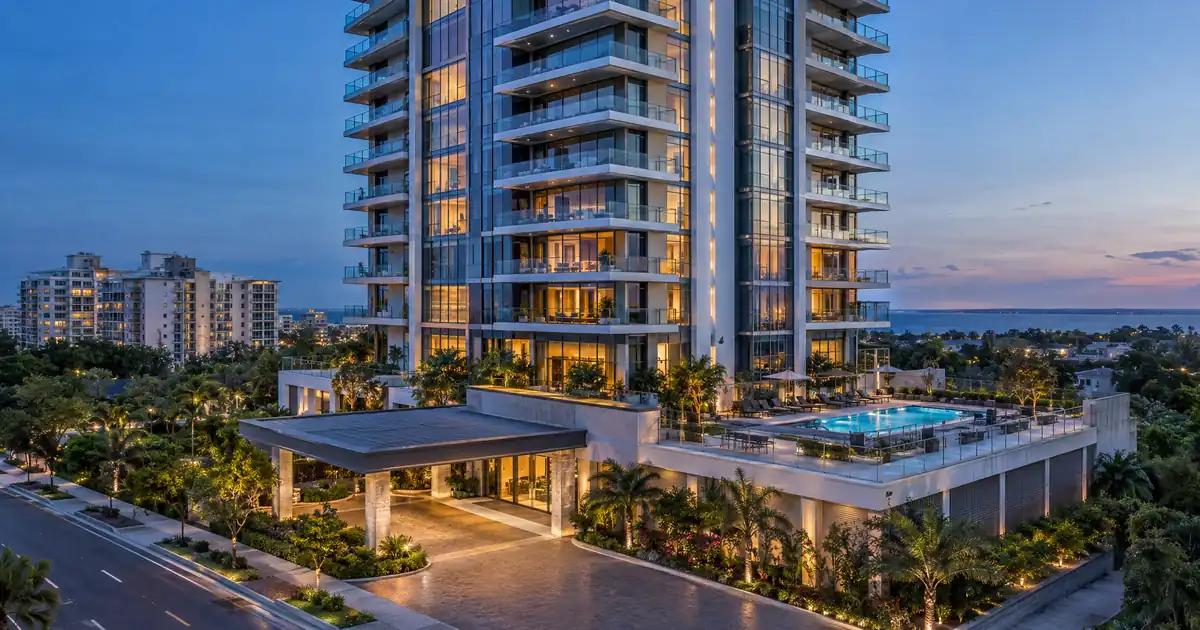
Condotel Financing Options for Resort Unit Buyers — The Quick Read: A condotel is a deeded condo unit inside a building that runs like a hotel — front desk, housekeeping, and a rental program. Big banks and agency lenders won’t touch them, because Fannie Mae specifically excludes hotel-operated projects from its buying rules. That leaves DSCR and other non-QM loans as the practical financing lane, since these are business-purpose products underwritten to the property’s income, not the borrower’s W-2s. Below is how the financing actually works, step by step, plus where the general rule breaks.
What Exactly Is A Condotel?
A condotel is real estate you own outright, sitting inside a building that operates like hospitality property. You get a deed. You also get a front desk, a housekeeping staff, and — usually — a rental program that puts your unit into the hotel’s inventory when you’re not using it.
DSCR Calculator
Run the numbers in your market
Rate source: Freddie Mac 30-yr average via FRED® — Federal Reserve Bank of St. Louis · effective Sep 17, 2026
Prefilled with local estimates — enter your own rent or nightly figures, taxes, insurance, and HOA for a more accurate picture.
Program parameters update from Lendmire’s centralized guideline source. Taxes and insurance are editable estimates.
As of Sep 17, 2026 · General Freddie Mac market benchmark, not a Lendmire loan offer. Rent, nightly rate, occupancy, taxes, and insurance are editable estimates. Short-term rental figures are estimates only and vary significantly by season, property type, management approach, and local short-term-rental rules — confirm local regulations before relying on them. Qualifying income for short-term rentals varies by program — some use appraisal market rent, others use documented STR history or projections — and is confirmed in underwriting. Not a Loan Estimate, approval, or commitment to lend. Program availability and eligibility are subject to lender guidelines, credit approval, property review, and underwriting.
That combination is what makes condotels legally distinct from a regular condo down the hall. A standard condo owner controls occupancy completely. A condotel owner often signs governing documents that cap personal use, route bookings through a central reservation system, and sometimes require participation in a rental pool. The building looks and feels like a resort because it’s built and run as one — the condo structure is really a way to sell individual pieces of a hotel to investors.
This isn’t a fringe concept. Florida is where the model took hold, and condotels there fall under Chapter 718 of the state’s condominium statute, layered on top of whatever additional rules the resort operator imposes. Florida condotel units also tend to run small — Miami Beach studios frequently land in the 315 to 600 square foot range, smaller than a typical condo and often priced higher per square foot, according to a Sweeney Law PA analysis of Florida condo hotels.
Why Won’t A Regular Mortgage Work Here?
The short answer: the building disdrives lender review, not you. Fannie Mae’s rules specifically exclude condo projects with hotel-operation traits, and that exclusion attaches to the property regardless of the buyer’s credit or income.
Fannie Mae’s selling guide states plainly that certain non-real-estate characteristics — plus hotel-like project features — can make a project ineligible for agency purchase. The guide calls out “condotel characteristics and short-term rentals” as one of the most common reasons a project fails review. This sits right alongside insufficient master insurance and unresolved repair issues, per the Fannie Mae Condo Status Finder FAQ. A front desk, a central key system, mandatory housekeeping, or a rental-pooling clause in the HOA documents are enough to trip this rule. Even a single trait — like a listing on a travel booking platform — can be the deciding factor, per Fannie Mae’s own Selling Guide on ineligible projects.
This is a common point of confusion worth clearing up directly: there is no special Fannie Mae condotel approval path. If the building carries hotel operating characteristics, it’s out — full stop, regardless of your down payment or credit score.
Here’s the nuance most buyers miss, though. Fannie Mae’s own project-review guidance acknowledges that professional hotel-brand management alone doesn’t automatically sink a building. Some projects hire a resort management company purely for property services. These buildings have no rental program or condotel characteristics attached. Those cases can get case-by-case exception review rather than automatic rejection. It’s rare, but it’s real. This is exactly why building-level classification — not borrower credit — is the first real hurdle in any condotel purchase.
How Does DSCR Financing Actually Treat A Condotel?
DSCR loans are business-purpose investor products, not consumer mortgages. Lenders underwrite them against the property’s income and the deal’s structure, not against agency rules that exclude the building outright. That’s the door condotel buyers walk through when agency financing is closed.
DSCR loans qualify a rental property based on whether the rent covers the mortgage payment — the debt-service coverage ratio, or DSCR, is just monthly rental income divided by the total monthly obligation (principal, interest, taxes, insurance, and HOA dues). A ratio of 1.00 means the rent covers the payment exactly. This works differently from a standard mortgage, where a lender pores over your traditional personal-income documentation and W-2s. For a fuller walkthrough of how the math and underwriting work, Lendmire’s complete DSCR loans guide covers it in depth.
The regulatory hook that allows this is narrow but important: DSCR loans are designed for non-owner-occupied investment properties. Because they’re business-purpose loans, they’re reviewed differently from a standard owner-occupied mortgage — a threshold the CFPB’s Regulation Z commentary sets at more than 14 days of personal use per year. Cross that line and the loan starts looking like a consumer mortgage again, with all the rules that come with it.
Across Lendmire’s wholesale lending network, condotels get their own dedicated bucket inside the broader super-jumbo DSCR ladder — not the standard investment-property terms. On most files, leverage on a condotel purchase tops out around 75%, refinances step down to roughly 65%, and loan size caps out near $1,500,000 with a documented cash-in-hand requirement of about $250,000, subject to underwriting. That’s a noticeably tighter box than a standard single-family rental gets on the same ladder, which typically reaches 80% on a purchase in lower loan bands. The gap reflects real risk — resale pools for condotels are thinner, and HOA structures carry more moving parts.
Step By Step: How A Condotel File Actually Gets Underwritten
Step one — the building gets classified first. Before a single number gets run on the borrower, the file goes through project review: does the building have hotel characteristics, a mandatory rental pool, or a hospitality brand attached? This determines the whole financing path before borrower underwriting even starts.
Step two — HOA and governing document review. Underwriting pulls the rental program terms, checks whether pooling is mandatory or voluntary, reviews the master insurance declaration, and looks for pending litigation. A mandatory rental-pool clause reads as a bigger risk factor than a voluntary, opt-in program with no forced profit-sharing.
Step three — the appraisal. This is where condotels get tricky. The standard rent-schedule form used for most single-family rental appraisals is built around monthly leases, and it’s explicitly not designed to convert nightly hotel-style income into an usable rent figure. As appraisal-education source McKissock puts it, that form “cannot be used to determine or document short-term rental rates” — appraisers instead lean on an income approach once there’s enough operating history to work with, per McKissock’s breakdown of Form 1007 and short-term rental appraisals. Above $2,000,000, two appraisals are required on most files in Lendmire’s network, reflecting the added scrutiny large-balance condotel and resort files typically draw.
Step four — insurance verification. The lender checks both the HOA’s master policy and your individual unit-owner (HO-6) policy, because coverage gaps between the two directly affect collateral protection. Master policies generally fall into three tiers — bare walls, single entity, or all-in — and a “bare walls” building pushes far more coverage cost onto you individually, per ValuePenguin’s condo insurance breakdown.
Step five — income qualification. For a condotel operating with real short-term-rental activity, most programs in the network want twelve months of documented operating history on a refinance, or the appraisal’s short-term-rent analysis on a purchase — credited at roughly 80% of gross income, and reserved for investors with prior experience owning income property. Municipal permission to operate short-term rentals is documented at the specific property level; it’s never assumed just because the building or city allows it generally, and rules vary widely by city, county, and HOA.
What About Sub-1.00 Coverage — Or No Rent History At All?
Does your condotel fall short of 1.00 DSCR on paper? It can still move forward through select programs in Lendmire’s network. Leverage and terms simply adjust to reflect the added risk, subject to underwriting. Coverage in roughly the 0.75 to 0.99 range is a genuine select-program lane, though at reduced leverage. No-ratio qualification also exists on a select basis. With this option, the lender doesn’t require a minimum coverage number at all. This path generally goes to borrowers with a longer, cleaner track record of owning investment property.
Neither of these is a rubber stamp. A weaker coverage ratio typically means a lower LTV ceiling and stronger reserve requirements to offset it. But it’s worth knowing these lanes exist before assuming a condotel with thin or seasonal rental history is a dead end.
Where The General Rule Breaks: Real Edge Cases
A building’s condotel classification isn’t permanent, and it isn’t always obvious either. A few situations investors run into regularly:
- Voluntary vs. mandatory pooling changes everything. A building where owners can opt into a rental program — but aren’t required to — reads very differently to underwriting than one with forced profit-sharing baked into the HOA bylaws.
- Brand loss reshapes the building later. If a condotel loses its hotel-brand affiliation, its operating characteristics can shift, and the next refinance may get reviewed differently than the original purchase — even though nothing changed about your own loan.
- New local short-term-rental rules can retroactively change a building’s profile. A city ordinance restricting nightly rentals doesn’t touch your existing loan, but it can change how the property is classified — and financed — the next time around.
- A property with hotel management but no rental program can be an exception. As covered above, this is rare, but it’s the one scenario where a building that looks like a condotel on the surface might still clear agency-style review — though almost never at the loan sizes or leverage levels condotel buyers are typically chasing.
For a closer comparison of how a true condotel differs from a non-warrantable condo that just has heavy short-term rental activity but no hotel operations, Lendmire’s condotel vs. warrantable condo financing piece walks through that line in more detail.
What This Actually Means For You As A Buyer
Here’s the practical takeaway: the building decides your financing path before your credit score ever matters. Even a borrower with excellent credit and deep reserves still can’t get an agency loan on a true condotel. The disqualification is baked into the project, not the applicant.
That reframes how you shop. Before you fall in love with a unit, ask about the HOA’s rental program (mandatory or voluntary?), get the master insurance policy type, and find out whether the building has any hotel-brand affiliation that could change down the road. These questions determine whether your file sails through DSCR underwriting or hits friction at the appraisal and insurance stages.
On the credit and reserve side, most programs in Lendmire’s network want a credit score of at least 660 on standard condotel files, stepping up to 700 on larger balances above $3,000,000, along with six months of reserves covering the property’s payment — twelve months if this is your first investment property purchase. These are typical ranges from select wholesale guidelines, not universal minimums, and every file gets underwritten individually.
Are you financing a condotel along with other large resort properties? It’s worth knowing the bigger loan ladder these deals sit on. Lendmire arranges business-purpose financing from $150,000 up to $10,000,000 through its portfolio investor program. Condotels have a lower cap, though. This reflects the added collateral risk compared to a standard rental. Some buyers use bank statement or documentation-light strategies to size larger files. If you’re one of them, it may help to see how documentation checklists get built for jumbo resort purchases. Lendmire covers this in its super jumbo bank statement loan documentation checklist.
Key Terms Defined
Condotel (condo-hotel): A fee-simple condo unit individually owned but operated as part of a hotel’s rental inventory, typically with front-desk, housekeeping, and rental-pool services.
DSCR (debt-service coverage ratio): Monthly rental income divided by the total monthly payment obligation — a ratio of 1.00 means rent exactly covers the payment.
Business-purpose loan: A loan made for an investment or rental property rather than a primary home, which places it outside standard consumer-mortgage rules.
Non-warrantable condo: A condo project that doesn’t meet agency (Fannie Mae/Freddie Mac) eligibility standards, often due to high investor concentration, litigation, or — in this case — hotel operating characteristics.
No-ratio loan: A DSCR structure where the lender doesn’t require a minimum coverage ratio, available on a select basis to experienced investors, subject to underwriting.
Frequently Asked Questions
Can I get a conventional mortgage on a condotel if my credit is excellent?
No. Agency ineligibility attaches to the project, not the borrower. A condotel with hotel-operation characteristics is excluded from Fannie Mae purchase regardless of how strong your personal financial profile is.
Does rental income from my condotel actually help me qualify?
Yes, on a DSCR loan — that’s the whole basis of the underwriting. Rental income is what the loan is qualified against, either through twelve months of documented operating history on a refinance or a short-term-rent appraisal analysis on a purchase, at roughly 80% of gross income on most files.
What if the building doesn’t have twelve months of rental history yet?
Sub-1.00 coverage and no-ratio paths exist through select programs in the network, though leverage and terms adjust to reflect the added risk, subject to underwriting. A newer property or a first-time investor may see a lower LTV ceiling as a result.
Is a condotel the same thing as a timeshare?
No. A condotel buyer holds full deeded, fee-simple title to one specific unit. A timeshare buyer holds a fractional, time-based interest — the two structures are legally distinct even though both involve resort-style properties.
Can I use cash-out refinancing on a condotel later?
Cash-out is generally more limited on condotels than on standard rental properties, and proceeds and leverage caps tighten as loan size grows, subject to underwriting and current program guidelines at the time of the request.
If you’re evaluating a condotel purchase or refinance and want to see how the numbers actually run — property income, credit profile, leverage, and your broader investment goals — Lendmire can help you compare DSCR loan options built for exactly this kind of property. Reach the team at 828-256-2183 or request a quote directly.
For current guidelines and terms, see Lendmire’s super jumbo DSCR loan programs page.
Self-employed borrowers can compare both super jumbo programs on Lendmire’s self-employed mortgages page.
About Lendmire
Lendmire is a non-QM mortgage brokerage (NMLS# 2371349) arranging DSCR investor loans in 40 markets, including Washington, D.C. DSCR eligibility is generally reviewed around property-level rental income rather than personal income, subject to lender and program guidelines, a fit for self-employed investors and LLC-owned portfolios. Lendmire was recognized as a Scotsman Guide Top Mortgage Workplace in 2025 and 2026.
Lendmire’s Top Mortgage Workplace recognition is documented by Scotsman Guide 2025 Top Mortgage Workplace and Scotsman Guide 2026 Top Mortgage Workplace.
Get Started
Ready to find the right loan for you?
In about 30 seconds you can review financing options available for your home or investment property. No commitment required.
Informational only. Not a Loan Estimate, approval, or commitment to lend. Program availability and eligibility are subject to lender guidelines, credit approval, property review, and underwriting.
References
1. Sweeney Law PA — Resurgence of Florida Condo Hotels
2. Fannie Mae Condo Status Finder FAQ
3. Fannie Mae Selling Guide B4-2.1-03: Ineligible Projects
4. McKissock Learning — Form 1007 and Its Impact on Short-Term Rental Appraisals
5. ValuePenguin — What Condo Insurance Covers
Brandon Miller
Founder & CEO, Mortgage Loan Originator, Lendmire LLC
- Mortgage Loan Originator · NMLS# 1129696 · Verify on NMLS Consumer Access
- North Carolina Real Estate Broker · License# 343312 · Verify on NCREC
- North Carolina Insurance Producer · License# 19053198 · Property, Casualty, Life, Health · Verify on NAIC SBS
- Lendmire LLC · Firm NMLS# 2371349 · Verify firm licensure
Disclosures. The information presented in this article is general market commentary, not financial, legal, or tax advice. Lendmire is a mortgage brokerage (NMLS# 2371349) — not a direct lender or depository institution — and loan placement is subject to lender underwriting. Nothing in this content represents a commitment to lend. Loan terms, pricing, and program availability vary based on borrower qualifications, property characteristics, and state of subject property, and are subject to change at any time. Lendmire complies with Equal Housing Opportunity requirements. Consumer access: nmlsconsumeraccess.org.


