
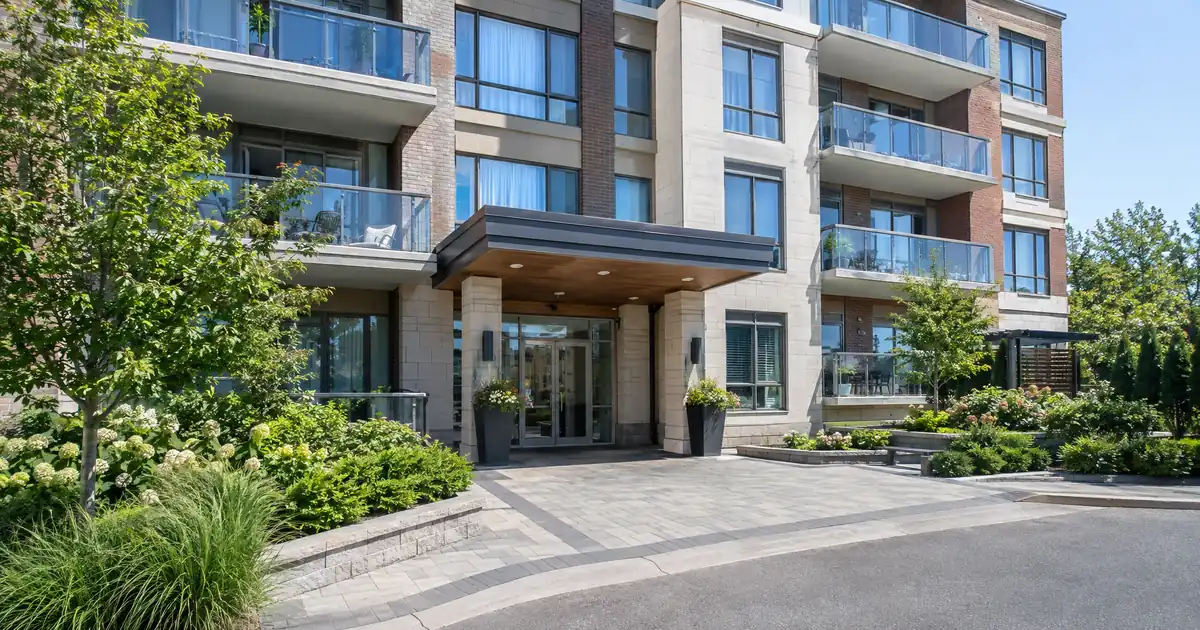
Condotel vs warrantable condo financing — the quick read: if you buy a warrantable condo, you get the widest range of loans and the best terms. If you buy a condotel — or a condo that’s non-warrantable for reasons that have nothing to do with hotel operations — you usually need a different path. That path is non-QM financing. Most often, it’s a DSCR loan. A DSCR loan looks at the property’s rental income, not your paycheck.
Key Takeaways
- Warrantability tests the building, not the borrower. Even a buyer with great credit can get shut out if the project itself fails review.
- Condotel status is its own category under Fannie Mae’s Selling Guide — it’s not just a type of “non-warrantable” condo, it’s a separate disqualifying condition tied to hotel-style operations.
- Non-warrantable and condotel are not the same problem. The reason a project fails review changes what financing options remain.
- DSCR loans sit outside the agency rulebook entirely, which is why they can underwrite both categories that conventional lenders won’t touch.
- Rental-pool revenue splits and income paperwork differ a lot between the two paths, and that difference shows up directly in the debt-coverage math.
Key Terms Defined
Non-warrantable condo — a condo unit in a project that fails one or more agency eligibility rules. The reasons vary. It could be too many investor-owned units, unresolved litigation, or too much commercial space in the building.
DSCR Calculator
Run the numbers in your market
Rate source: Freddie Mac 30-yr average via FRED® — Federal Reserve Bank of St. Louis · effective Aug 20, 2026
Prefilled with starting assumptions — enter your own rent or nightly figures, taxes, insurance, and HOA for a more accurate picture.
Program parameters update from Lendmire’s centralized guideline source. Taxes and insurance are editable estimates.
As of Aug 20, 2026 · General Freddie Mac market benchmark, not a Lendmire loan offer. Rent, nightly rate, occupancy, taxes, and insurance are editable estimates. Short-term rental figures are estimates only and vary significantly by season, property type, management approach, and local short-term-rental rules — confirm local regulations before relying on them. Qualifying income for short-term rentals varies by program — some use appraisal market rent, others use documented STR history or projections — and is confirmed in underwriting. Not a Loan Estimate, approval, or commitment to lend. Program availability and eligibility are subject to lender guidelines, credit approval, property review, and underwriting.
Condotel — a unit in a building run like a hotel. It usually has a front desk, daily or weekly rentals, and often a required rental-pool or profit-sharing deal with a management company. Fannie Mae’s Selling Guide says flatly that the agency does not purchase or securitize mortgages on units in condo or co-op hotels.
DSCR loan (debt-service coverage ratio loan) — a non-QM investment-property loan. It qualifies mainly on whether the property’s rental income covers its monthly payment, rather than on your personal income documentation, subject to lender guidelines.
Rental pool — a deal where a hotel management company controls when the unit gets rented and splits gross rental revenue with the owner. This materially cuts the income an investor actually receives, compared to the headline nightly rates.
Side-by-Side
| Factor | Warrantable Condo | Condotel (DSCR / Non-QM) |
|---|---|---|
| Review basis | Borrower credit, income, DTI + full project review | Property rental income vs. debt service, plus property-risk review |
| Documentation | Form 1007 rent schedule (or Form 1025 for 2-4 units), HOA questionnaire, agency project cert | Trailing rental income statements from the hotel operator, HOA docs, insurance verification |
| Eligible property types | Only projects clearing agency warrantability review | Condotels and non-warrantable condos, per program eligibility |
| Entity vesting | Individual borrower, in most conventional scenarios | LLC or individual, subject to program eligibility, with a personal guaranty either way |
| Process pacing | Runs on standard agency underwriting timelines | Runs on non-QM underwriting, often paced by how quickly rental-income records come in |
| Reserve expectations | Set by agency guidelines and project condition | Typically around 6 months of PITIA on most files, moving toward roughly 9 months above $1,500,000 |
Why Lenders Draw the Line at the Building, Not the Buyer
Conventional lenders look at the whole project first. Why? Because the risk isn’t just the borrower defaulting. It’s also the building losing value if it’s financially shaky. A condo purchase needs two approvals at once: one for the person, one for the project. Property managers describe this process as underwriting that “also conducts a project-level review of the entire building or association — covering financial strength, reserve funding, insurance coverage, maintenance history, and structural concerns” (FirstService Residential). A single-family home purchase skips this step entirely.
Hotel-style operations trip a hard wire in that review. Fannie Mae’s Ineligible Projects guidance disqualifies a project outright in three cases. It fails if the HOA restricts an owner’s ability to occupy the unit. It fails if the HOA mandates rental-pool participation. It fails if the HOA requires profit-sharing with a management company or resort operator (Fannie Mae Selling Guide). That’s the real difference between a building with some informal short-term rentals and a true condotel: control. In a condotel, management decides who occupies the unit and when — not the owner.
Non-warrantable status can also happen for much simpler reasons. A project can fail if commercial space takes up more than roughly 35% of the building. It can fail from active litigation naming the HOA or sponsor. It can fail if a newer building missed its presale thresholds, according to underwriting guidance published by mortgage insurer Enact. None of these reasons involve hotel operations at all — which is exactly why lumping “non-warrantable” and “condotel” together as one problem leads investors to misjudge their financing options.
When Warrantable Condo Financing Is the Better Fit
Warrantable condo financing works best for a W-2 buyer. It fits a straightforward building with mostly owner-occupants, a financially sound HOA, and no hotel-style operations. The turning point is simple: once the project itself can’t clear agency review, no amount of borrower strength fixes that, and the conversation moves to non-QM by default.
This lane tends to make the most sense when the investor:
- Has strong, verifiable personal income and wants the broadest set of loan products available
- Is buying in a project with a healthy owner-occupancy ratio, adequate reserve funding, and no active litigation
- Plans to hold title personally rather than in an LLC
- Doesn’t need the property’s rental income to carry the underwriting decision
Here’s where it breaks down. Say a buyer targets a resort-area building with a front desk, on-site rental management, or mandatory rental-pool language in the HOA documents. Conventional approval generally isn’t available — regardless of how clean the borrower’s file is. That’s the exact scenario DSCR financing exists to solve.
When Condotel Financing Is the Better Fit
Condotel financing through the DSCR/non-QM channel is the practical path for an investor targeting a resort or vacation-market unit. It fits when the building operates with hotel-style services and rental-pool participation. And it fits when the deal needs to be underwritten on the unit’s actual income, rather than the buyer’s W-2.
The underwriting mechanics differ from a standard rental purchase in one important way. Conventional lenders use appraisal Form 1007 to estimate long-term market rent, and that tool wasn’t built for hotel-style income. Appraisal industry analysis notes that using Form 1007 in a short-term-rental context “often” produces “an artificially low DSCR that does not reflect real-world performance,” because the form simply isn’t compatible with that kind of income (Class Valuation). Instead, DSCR underwriting on a condotel typically leans on the trailing income the hotel operator’s own accounting has produced. Lenders average that income over several months to smooth out seasonal swings. They still apply a conservative haircut before treating that figure as the coverage numerator.
Here’s the catch. The revenue an owner actually nets from a rental-pool building is already lower than the gross booking figure before any lender adjustment even happens — the operator takes a cut before the owner sees a dollar. That’s a common reason a condotel’s DSCR math can look tighter than a comparable long-term rental at the same price point. It’s worth running that comparison before assuming a resort unit will pencil the same way a standard investment condo does. Investors weighing that tradeoff against a straight long-term-lease strategy may find it useful to read Lendmire’s breakdown of Airbnb versus mid-term rental financing before locking in a strategy.
This lane tends to fit best when the investor:
- Is buying specifically for short-term or resort rental income, not personal full-time occupancy (living in the unit full-time typically violates the hotel management agreement anyway)
- Can document at least a stretch of trailing rental history through the property’s management company
- Wants or needs LLC vesting, which most DSCR programs allow subject to program eligibility
- Has a credit profile that clears the network’s working floor — commonly starting near 620, with most programs preferring something closer to 660, and the strongest leverage tiers opening up around 700 or better
DSCR loans are business-purpose products built for non-owner-occupied investment properties, which is why lenders review them on a different track than a standard owner-occupied mortgage.
The Non-Warrantable Middle Ground Investors Often Miss
Not every non-warrantable condo is a condotel. Treating the two as interchangeable is where investors get their strategy wrong. What actually matters is the reason a project failed review. Say a building is non-warrantable because of investor-concentration limits or a presale-timing snag — and its HOA documents and zoning still support the owner controlling occupancy independently. That building may still qualify under a standard DSCR investment program rather than needing condotel-specific underwriting. If the non-warrantability instead traces back to deed restrictions, active litigation, or mandatory rental-pooling, that’s functionally a condotel-risk profile even if no one on the listing calls it one.
This distinction changes which financing conversation an investor should even be having. A file that’s non-warrantable purely on occupancy-mix grounds is a much simpler DSCR underwrite than a file with hotel-style operational restrictions layered on top.
A Self-Check Before Making an Offer
Before you write an offer on a condo unit that isn’t obviously a standard warrantable project, it helps to ask:
- Does the HOA license the building as a hotel, motel, or resort entity, or does its management company market nightly bookings directly?
- Do the governing documents require rental-pool participation or profit-sharing with a management company?
- Is there a front desk, daily housekeeping, or centralized check-in — features that function like a hotel even without the word “condotel” anywhere in the marketing?
- Would an appraiser need to develop short-term rental income separately from a standard Form 1007 rent schedule?
- Is the plan personal occasional use, or does the investor need consistent rental income to carry the payment?
Answer these honestly, early. That way, you avoid discovering mid-contract that conventional financing was never on the table for this particular building.
The Balanced Verdict
Neither path is categorically better — they solve different problems. Warrantable condo financing through conventional channels generally offers the broadest lender pool and the simplest underwriting path. It’s the right call whenever the building itself qualifies and the buyer doesn’t need rental income to make the deal work. Condotel financing through DSCR/non-QM channels exists precisely because agency capital markets won’t touch hotel-operated buildings. It’s not a workaround — it’s the only functioning lane for that property type. It evaluates the deal on what the unit actually produces, rather than declining it outright.
Here’s the honest tension: DSCR underwriting on a condotel has to account for rental-pool revenue splits, seasonal income volatility, and a lender-applied conservative discount on trailing income. All of that can tighten the coverage math more than a first-time condotel buyer expects. An investor comparing a warrantable long-term-rental condo against a condotel at similar price points should run the DSCR math on both before assuming the resort unit is the stronger cash-flow play — sometimes it isn’t. Lendmire’s complete DSCR loans guide walks through how that coverage ratio gets built for any investment property type, condotel or otherwise.
Lendmire (NMLS# 2371349) works with a wholesale network spanning 40 states plus Washington, D.C., 41 markets total. Across that network, purchase leverage on eligible condotel and non-warrantable files most often lands in the 75%-80% LTV range, with a handful of high-leverage programs reaching 85% for borrowers around a 700 credit score or better. Cash-out refinances on these property types generally cap closer to 75% LTV, with roughly six months of seasoning measured from the date title was recorded. Investors pulling equity out of a rental-pool unit sometimes explore that alongside a delayed financing strategy, depending on how the original purchase was funded. On the short-term-rental side specifically, purchase leverage tops out around 75% LTV with a 1.00 coverage floor common on many files, while refinance and cash-out transactions on STR-classified units generally cap closer to 70% LTV. Those refinance deals typically come alongside a 640-plus credit profile and roughly 12 months of hosting history. Coverage below 1.00 is available through select lenders in the network with adjusted leverage and terms, and no-ratio structures exist only through select lenders, generally for borrowers who already own a primary residence. Neither path is a given — both depend on the individual file.
Tax treatment for a condotel or non-warrantable condo purchase can depend on how the funds are used and how the property is held. Investors should keep clear records and speak with a qualified tax professional before relying on any deduction.
If you’re weighing a condotel purchase against a warrantable condo and want to see how the numbers actually run, Lendmire can help compare DSCR loan options based on the property’s income, the credit profile involved, available leverage, and the investor’s broader goals — reach the team at 828-256-2183 or request a quote to start the conversation.
No loan approval is guaranteed, and nothing here is a commitment to lend. Every scenario described here is subject to lender approval and to the specific borrower, property, and program guidelines in effect at the time of application. This article is provided for general informational purposes only and is not financial, legal, or tax advice.
Frequently Asked Questions
Can a condotel ever become warrantable later?
In theory, yes — if the HOA eliminates mandatory rental-pool language and hotel-style operations entirely. But that’s a rare and slow structural change. In practice, most condotel investors should plan around non-QM financing for the life of the hold rather than expecting the building to requalify for agency lending.
Does an LLC change which building types I can finance?
Not directly. LLC vesting is a DSCR program feature available on many files subject to program eligibility, but it doesn’t override the underlying property-eligibility question of whether the building is a condotel or non-warrantable condo. The lender still requires a personal guaranty from whoever signs, and the property still has to pass its own risk review.
Why does the same building sometimes get labeled non-warrantable by one lender and condotel by another?
Because Fannie Mae’s criteria are characteristic-based, not name-based. A single feature, like a rental-pooling requirement, can trigger condotel-level exclusion even if the marketing materials never use that word. Different reviewers sometimes flag the same disqualifying feature under different labels.
Is a condotel purchase always going to need a bigger down payment than a warrantable condo?
Usually, yes — leverage tends to run lower on condotels than on straightforward warrantable purchases, largely because of the property-risk and income-volatility factors involved. But the exact leverage available depends on credit profile, the specific property, and current program guidelines rather than a fixed rule.
What happens if I buy in a building that’s non-warrantable now but wasn’t when the HOA was formed?
Project status can shift over time. A building can move from warrantable to non-warrantable if occupancy mix changes, litigation arises, or reserve funding falls short, and it can occasionally move back the other direction once those issues resolve. That volatility is one more reason DSCR financing, which doesn’t depend on agency project certification, appeals to investors buying in older or transitioning buildings.
About Lendmire
Lendmire is a DSCR-focused mortgage brokerage, NMLS# 2371349, placing investor loans across 41 markets, including Washington, D.C. Lenders generally review DSCR eligibility around a property’s rental income rather than personal income documentation, which fits LLC-held rentals, self-employed investors, and portfolios scaling past conventional financed-property limits. Scotsman Guide named Lendmire a Top Mortgage Workplace in both 2025 and 2026.
Get Started
Ready to find the right loan for you?
In about 30 seconds you can review financing options available for your investment property. No commitment required.
Informational only. Not a Loan Estimate, approval, or commitment to lend. Program availability and eligibility are subject to lender guidelines, credit approval, property review, and underwriting.
References
1. Fannie Mae Selling Guide — General Property Eligibility
3. Fannie Mae Selling Guide — Ineligible Projects
4. Enact — What Makes a Condominium Non-Warrantable
5. Class Valuation — Why Form 1007 Can’t Be Used for Short-Term Rentals
This article is part of Lendmire’s DSCR loan program — full qualification details, guidelines, and scenarios live on the program page.
Related reading: Jumbo DSCR Loan Requirements For A Non-warrantable Condo Rental · DSCR Loan Requirements For A Non-warrantable Condo Investment Property · Are Condotels Eligible For DSCR Loans?
Brandon Miller
Founder & CEO, Mortgage Loan Originator, Lendmire LLC
- Mortgage Loan Originator · NMLS# 1129696 · Verify on NMLS Consumer Access
- North Carolina Real Estate Broker · License# 343312 · Verify on NCREC
- North Carolina Insurance Producer · License# 19053198 · Property, Casualty, Life, Health · Verify on NAIC SBS
- Lendmire LLC · Firm NMLS# 2371349 · Verify firm licensure
Important disclosures. Lendmire (NMLS# 2371349) is a licensed mortgage brokerage. Lendmire is not a direct lender, depository institution, or financial advisor. All loan inquiries are subject to lender underwriting; this article does not constitute a commitment to lend. Rates, terms, and program guidelines are subject to change without notice and vary by borrower profile, property type, and state. Information in this article is general in nature and is not financial, legal, or tax advice. Equal Housing Opportunity. NMLS Consumer Access: nmlsconsumeraccess.org.