
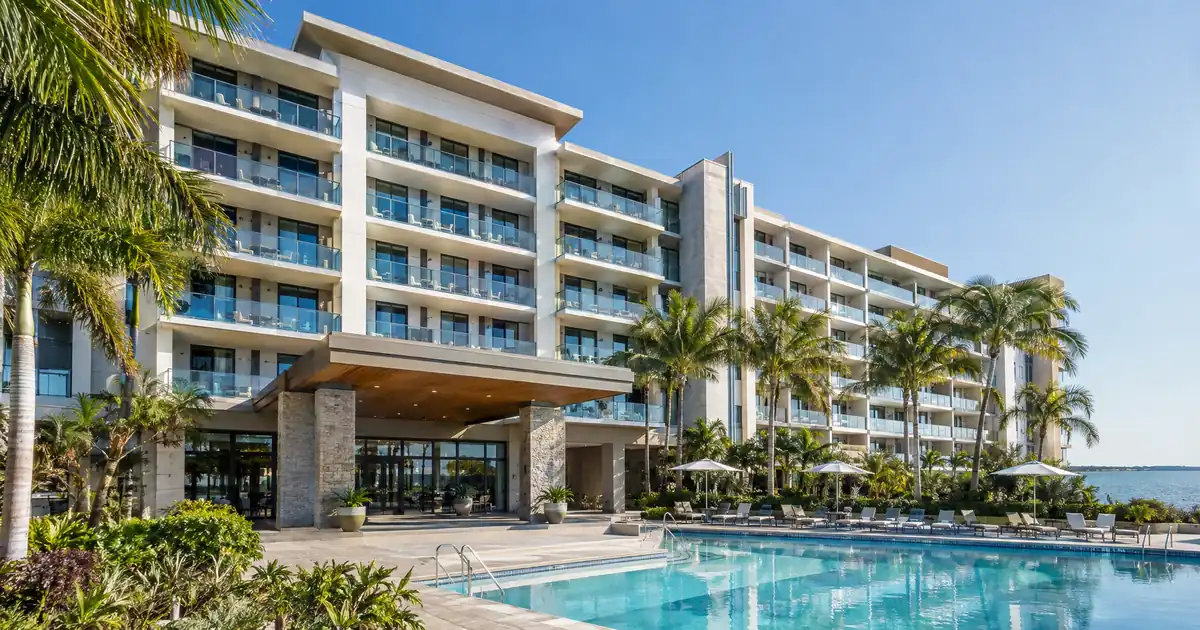
The Quick Read: Yes, but only through non-QM/DSCR programs. Conventional and government-backed loans won’t work. Fannie Mae, Freddie Mac, FHA, and VA all list condotels as ineligible in their own rulebooks. That pushes every condotel purchase or refinance into the DSCR lane by default. Once there, the deal still has to clear tighter rules than a normal rental. Expect lower leverage, stronger credit requirements, and rental income that has to survive a harder check than a typical single-family lease.
Key Terms Defined
- DSCR (debt-service coverage ratio): compares a property’s rental income to its full monthly housing payment. A ratio of 1.00 means the rent covers the payment exactly.
- PITIA: principal, interest, taxes, insurance, and association dues — the full monthly obligation used on the bottom half of the DSCR math.
- LTV (loan-to-value): the share of a property’s value the loan covers. The rest is the down payment or, on a refinance, the equity left in the deal.
- Non-QM (non-qualified mortgage): a loan built outside the standard government-backed underwriting box. DSCR loans are one type of non-QM loan.
- Condotel: a condominium unit inside a building run with hotel-style services — front desk, housekeeping, a central reservation system — usually tied to a rental program.
- Non-warrantable condo: any condo project that fails Fannie Mae or Freddie Mac eligibility rules, for reasons that may or may not involve hotel operations.
- Seasoning: how long a borrower has owned a property before a lender will consider a cash-out refinance on it.
What Actually Makes a Condotel Different From a Regular Condo?
A regular condo is a residential unit. It has an HOA, and the owner sets the lease terms. A condotel works differently. It’s a unit inside a building that runs like a hotel. Think reservations, housekeeping, and often a mandatory rental-pool agreement. That agreement puts the owner’s unit into shared inventory.
DSCR Calculator
Run the numbers in your market
Rate is an editable market assumption — the live benchmark loads when available.
Prefilled with starting assumptions — enter your own rent or nightly figures, taxes, insurance, and HOA for a more accurate picture.
Program parameters update from Lendmire’s centralized guideline source. Taxes and insurance are editable estimates.
Fallback assumption · General Freddie Mac market benchmark, not a Lendmire loan offer. Rent, nightly rate, occupancy, taxes, and insurance are editable estimates. Short-term rental figures are estimates only and vary significantly by season, property type, management approach, and local short-term-rental rules — confirm local regulations before relying on them. Qualifying income for short-term rentals varies by program — some use appraisal market rent, others use documented STR history or projections — and is confirmed in underwriting. Not a Loan Estimate, approval, or commitment to lend. Program availability and eligibility are subject to lender guidelines, credit approval, property review, and underwriting.
This distinction matters. People use “non-warrantable” and “condotel” as if they mean the same thing. They don’t. A condo can lose agency eligibility for reasons that have nothing to do with hotel operations. Pending litigation is one. Thin HOA reserves is another. So is having too many investor-owned units instead of owner-occupied ones. Condotel status is just one trigger among several.
| Feature | Traditional Condo | Non-Warrantable Condo | Condotel |
|---|---|---|---|
| Agency financing (Fannie/Freddie) | Eligible | Ineligible, reason varies | Never eligible |
| Rental structure | Owner sets lease terms | Varies by project | Hotel-style program, often mandatory |
| On-site services | Typically none | Varies | Front desk, housekeeping, reservations |
| Underlying issue | N/A | Litigation, reserves, investor concentration | Hotel-style operation, by definition |
| DSCR path | Standard DSCR | Standard DSCR, possible overlay | Restricted DSCR overlay tier |
Why Fannie, Freddie, FHA, and VA Say No
Agency and government-backed loans rule out condotels by name. They don’t just imply it. Fannie Mae’s Condo Status Finder lists condotel features and short-term-rental operation as standard reasons a project ends up ineligible. That said, ineligible status overall is rare — it applies to only about 3.6% of projects reviewed. HUD is just as direct. Its Condominium Project Approval and Processing Guide places “Condominium Hotel or ‘Condotels'” right under Ineligible Property Types for FHA loans. Projects where more than a quarter of the building is nonresidential space land in the same category.
This is a permanent, structural exclusion. It’s not a paperwork problem you can solve with more documents. No amount of extra paperwork gets a true condotel into the agency pipeline. Every condotel deal — whether it’s a purchase or a refinance — has to go through non-QM.
How DSCR Loans Pick Up Where Agency Financing Stops
DSCR loans exist for property types the agencies won’t touch. Condotels are a clear example. Non-QM financing works here because it’s never sold to Fannie or Freddie, so it doesn’t have to follow their rules. Scotsman Guide’s analysis of condotel financing points to DSCR loans specifically for this reason. These loans look at the property’s income, not the borrower’s job or standard personal-income paperwork.
But here’s the catch: DSCR loans existing for condotels doesn’t mean every condotel automatically qualifies. The property still has to be a recognized condotel project with clean documentation. The borrower still has to meet credit and reserve requirements. DSCR loans qualify mainly on whether the property’s rental income covers the payment, subject to lender guidelines. That’s a real underwriting standard — not a shortcut around one. Lendmire’s complete DSCR loans guide walks through how this income-first approach works across property types generally.
Where the Income Number Actually Comes From
This is where most condotel files run into trouble. Standard DSCR underwriting relies on the appraiser’s rent schedule. That form estimates market rent for a long-term lease. It was built for a single-family home with one tenant paying one monthly rent. It wasn’t built for a unit generating nightly hotel-style revenue. Appraisal trade education says this plainly: McKissock Learning notes the standard rent schedule “is not designed for single-family properties used as short-term rentals.” It doesn’t capture vacancy, business expenses, or the services a hotel-style operator provides.
Because of that gap, lenders working condotel files usually skip the standard rent schedule. Instead, they pull from trailing revenue statements the hotel operator provides, the rental-management agreement, and third-party short-term-rental market data. Different lenders count that income differently, too:
| Method | How Income Is Counted | Effect on the Ratio |
|---|---|---|
| Gross rental revenue | Full booking revenue before any operator split | Highest figure, may overstate what the owner keeps |
| Net revenue-share | Owner’s contractual share after the operator’s management cut | Lower, closer to actual cash flow |
| Standardized rent schedule | A market-rent estimate similar to a long-term lease comp | Often understates a hotel-style unit’s real potential |
The method a lender picks can shift the same property’s coverage ratio by a lot. That swing matters more on a condotel file than it does on a standard rental, where the rent number is much simpler to pin down.
What Leverage, Credit, and Loan Size Actually Look Like
Across Lendmire’s wholesale network, condotels sit at the tighter end of every DSCR parameter. This isn’t because the loan type rejects condotels. It’s because the property carries more underwriting risk than a standard rental. On a typical DSCR purchase, most programs land between 75% and 80% loan-to-value. Select high-leverage programs reach 85% for borrowers with stronger credit. Condotels rarely hit that top tier. Leverage on this property type generally stays toward the lower end of the range instead of stretching higher.
Cash-out refinances follow the same pattern. The general network ceiling on a cash-out refinance sits around 75% LTV, with roughly six months of seasoning expected. Condotel refinances typically land below that ceiling, given the extra documentation and valuation work involved. Credit requirements skew stronger too. A 620 floor exists in parts of the network, and 660 is common for standard rentals. Condotel files usually need stronger credit — often in the 680–700+ range — to offset the added property-type risk. Loan sizes on standard DSCR programs run up to $3,000,000. Condotel loan amounts on the high end generally stay well under that ceiling, since this is such a narrow niche. Reserve requirements also run higher than the network’s typical six-month PITIA guideline, reflecting the added liability tied to hotel-style operations. DSCR loans on condotels can also close in an LLC’s name, subject to lender program eligibility.
None of this promises approval. It just describes where the guidelines tend to sit before underwriting even begins.
Property and Borrower Checklist
| Property / Project Criteria | Borrower Criteria |
|---|---|
| Building is a recognized condotel project, not just STR-friendly | Credit profile strong enough for the tighter overlay tier |
| Rental-management agreement and revenue split fully documented | Reserves on hand beyond the down payment |
| HOA/master policy reviewed for hotel-style liability exposure | Existing primary residence, if a no-ratio structure is on the table |
| No pending litigation or unresolved investor-concentration flags | Down payment funds sourced and seasoned per program guidelines |
Lendmire’s DSCR loan requirements for investment properties cover the borrower-side basics. Those carry over from a standard rental file to a condotel file, even with the tighter overlay stacked on top.
If the Coverage Ratio Doesn’t Clear 1.00
A condotel that falls short of 1.00 coverage on paper isn’t automatically dead. A handful of lenders in Lendmire’s network will still review sub-1.00 files. Leverage and terms adjust to offset the weaker income number. Separately, no-ratio structures exist too — these set aside the rental-income calculation entirely. But they’re only available through select lenders in the network, and they’re generally reserved for borrowers who already own a primary residence. Neither path is guaranteed on any specific file. Both are real options a lender may review, subject to credit approval and property underwriting.
The Risks Worth Weighing Before You Buy One
DSCR eligibility answers the financing question. It doesn’t answer the investment question. A condotel’s income depends on a hotel operator’s occupancy and rate performance. That can swing more than a long-term lease ever would. If the brand affiliation or management contract ever lapses, the unit reverts to a plain condo. Income typically resets lower without the booking system and marketing behind it.
DSCR vs. conventional financing
Two common ways to finance an investment property in this market. They qualify you differently — here’s how investors weigh them.
Why investors choose it
- Qualifies on the property’s rental income — no personal tax returns, W-2s, or pay stubs needed to document income.
- No personal debt-to-income ceiling to clear, so existing mortgages and obligations don’t cap your borrowing the same way.
- Can be closed in an LLC, keeping the property inside a business entity.
- Built for scaling — not held to the limit on number of financed properties that conventional financing applies.
- Underwriting centers on the deal: generally qualifies when the rent covers the payment, a 1.00x coverage ratio being a common baseline (confirmed in underwriting).
- Designed specifically for investment property, including long-term and, where the program allows, short-term rentals.
Where it’s strong
- Often the lowest ongoing financing cost for a buyer who fully qualifies on personal income — a fit for a first property or a cost-first purchase.
Trade-offs for investors
- Requires full personal income documentation and must fit within a debt-to-income limit — salary, existing debts, and other mortgages all count.
- Typically held in your personal name rather than a business entity.
- Caps how many financed properties you can carry, which can become a ceiling as a portfolio grows.
- Evaluates you as a borrower as much as the property, which usually means more paperwork.
How investors usually choose: a first or single property often optimizes for the lowest financing cost; portfolio builders often optimize for leverage, vesting in an LLC, and scaling past conventional caps. The right answer depends on your goals, the property, and current guidelines — both paths run through select lenders in Lendmire’s wholesale network, with eligibility and terms confirmed in underwriting.
Resale is also harder. The next buyer faces the same agency exclusion, so the buyer pool is smaller than for a standard condo. And because condotels sell less often, appraisers lean more on income-based valuation than on comparable sales. That means price gains in the building don’t always show up as unit-level resale value.
DSCR loans are built for non-owner-occupied investment properties. Because they’re business-purpose investor loans, they’re reviewed differently than a standard owner-occupied mortgage. That’s part of why condotel underwriting can pull from hotel revenue statements instead of a W-2 or tax return.
Condotel DSCR vs. Standard Rental vs. Non-Warrantable Condo
| Factor | Standard Rental DSCR | Non-Warrantable Condo DSCR | Condotel DSCR |
|---|---|---|---|
| Purchase leverage | Up to 80%, 85% on select programs | Often near the standard range | Tighter, lower end of the range |
| Cash-out ceiling | Around 75% | Around 75%, program-dependent | Typically below the standard ceiling |
| Income documentation | Lease or market rent | Lease or market rent | Trailing hotel revenue, harder to verify |
| Loan size flexibility | Full network range | Full range, program-dependent | Narrower at the top end |
Files like this cross Lendmire’s desk with a consistent pattern. The ones that clear underwriting cleanly are the ones where the borrower brings a full trailing revenue package and a signed management agreement upfront. That’s better than leaving the lender to reconstruct income from a generic rent estimate. The files that stall are almost always ones where the “condotel” label turns out to be a self-managed short-term rental with no formal hotel program behind it. That’s a different property type, with its own overlay — not a condotel at all.
Lendmire is a mortgage broker, NMLS# 2371349, arranging DSCR investor loans through a wholesale network spanning 40 states plus Washington, D.C. Investors weighing a condotel purchase against a self-managed short-term rental condo can request a comparison at 828-256-2183 or through Lendmire’s quote request page.
Tax treatment can depend on how the funds are used and how the property is held. Investors should keep clear records and talk with a qualified tax professional before relying on any deduction.
Loan approval is never guaranteed, and nothing here is a commitment to lend. Every scenario described here is subject to lender approval and to borrower, property, and program guidelines that can change. This article is general information, not financial, legal, or tax advice.
Frequently Asked Questions
Can I use an FHA or VA loan for a condotel?
No. Both HUD’s FHA guidance and VA-backed lending exclude condotels by name, no matter the borrower’s credit or income. A DSCR loan is the practical path for this property type.
Can foreign nationals get a DSCR loan on a condotel?
Some lenders in the DSCR space do work with foreign national borrowers. But condotel files layer that eligibility on top of the property-type overlay already covered above. Whether a specific lender offers both depends on that lender’s guidelines and the borrower’s documentation.
Can I live in my condotel part of the year and still finance it as an investment?
Many condotel management agreements allow limited personal use. But DSCR loans are business-purpose investor loans, and heavy personal occupancy can conflict with that classification. The management agreement’s specific terms matter here as much as the loan program does.
Can I refinance a condotel I originally bought with cash?
Yes. Refinancing a cash-purchased condotel is generally possible through the same DSCR overlay used for a condotel purchase, once the required seasoning period has passed. Leverage on the refinance side still sits below the standard cash-out ceiling.
Is a condotel a good rental investment compared to a standard single-family rental?
That depends entirely on the specific building’s brand strength, occupancy history, and management terms. There’s no blanket answer here. A condotel with a strong trailing revenue history in a destination market can perform well. A weak or newly de-flagged property carries meaningfully more income risk than a standard long-term rental.
About Lendmire
Lendmire, NMLS# 2371349, is a mortgage brokerage focused on investor financing. It arranges DSCR loans in 40 states plus Washington, D.C. — 41 markets total. Qualification is based on the property’s income rather than personal income documentation, subject to lender guidelines. That makes it a fit for LLC-held rentals and growing portfolios. Scotsman Guide named Lendmire a Top Mortgage Workplace in both 2025 and 2026.
Get Started
Ready to find the right loan for you?
In about 30 seconds you can review financing options available for your investment property. No commitment required.
Informational only. Not a Loan Estimate, approval, or commitment to lend. Program availability and eligibility are subject to lender guidelines, credit approval, property review, and underwriting.
References
1. Fannie Mae Condo Status Finder
2. HUD Condominium Project Approval and Processing Guide
3. Scotsman Guide — Take Advantage of the Best of Both Worlds
4. McKissock Learning — Form 1007 and Its Impact on Short-Term Rental Appraisals
This article is part of Lendmire’s DSCR loan program — full qualification details, guidelines, and scenarios live on the program page.
Related reading: Can A Condotel Work As A Short-term Rental DSCR Property? · Can A Business Refinance Rental Properties? · Can A Condotel Qualify For A Jumbo DSCR Rental Loan?
Brandon Miller
Founder & CEO, Mortgage Loan Originator, Lendmire LLC
- Mortgage Loan Originator · NMLS# 1129696 · Verify on NMLS Consumer Access
- North Carolina Real Estate Broker · License# 343312 · Verify on NCREC
- North Carolina Insurance Producer · License# 19053198 · Property, Casualty, Life, Health · Verify on NAIC SBS
- Lendmire LLC · Firm NMLS# 2371349 · Verify firm licensure
Disclosures. The information presented in this article is general market commentary, not financial, legal, or tax advice. Lendmire is a mortgage brokerage (NMLS# 2371349) — not a direct lender or depository institution — and loan placement is subject to lender underwriting. Nothing in this content represents a commitment to lend. Loan terms, pricing, and program availability vary based on borrower qualifications, property characteristics, and state of subject property, and are subject to change at any time. Lendmire complies with Equal Housing Opportunity requirements. Consumer access: nmlsconsumeraccess.org.