
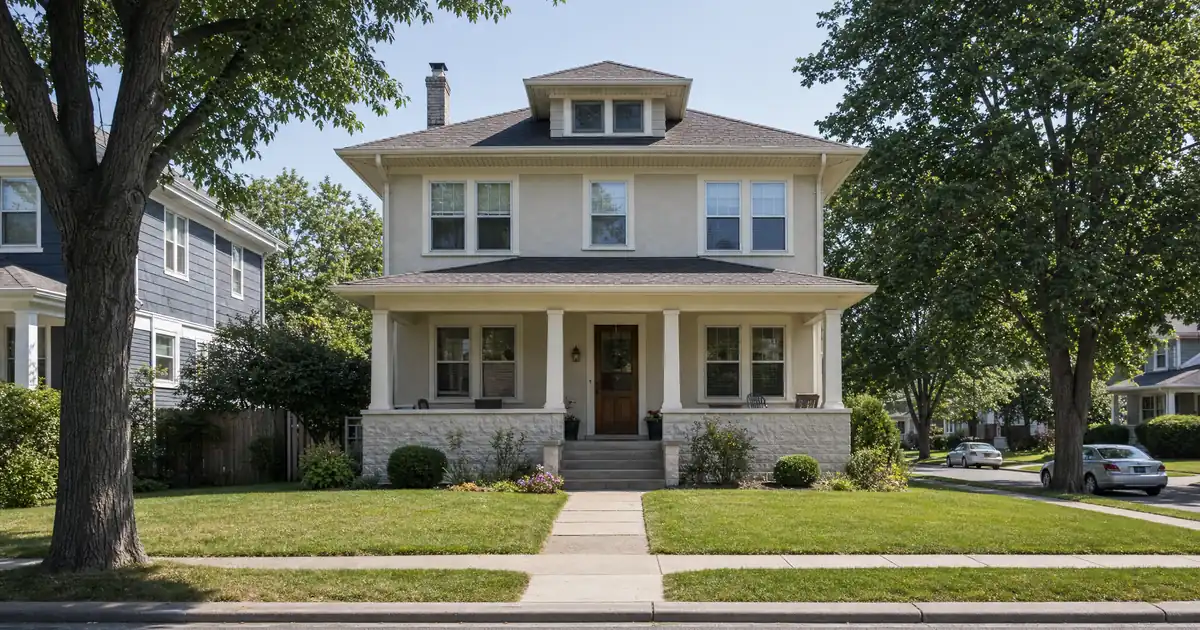
The Quick Read: Hard money is the tool for a property that isn’t rent-ready yet. Think distressed, vacant, mid-renovation, or unlicensed. DSCR is the tool for a property that already earns income — or can document income strong enough to cover its own payment. Most investors who buy a short-term rental that needs work end up using both. They just use them in sequence, not forever.
Key Takeaways
- Hard money underwrites the asset and the exit plan. DSCR lenders review the property’s rental income against its payment.
- Neither loan asks for traditional personal-income paperwork the way a conventional owner-occupied mortgage does. Both rely on business-purpose lending instead.
- Short-term rental income gets special treatment on a DSCR file. Lenders decide whether to count it as rental income or business income, and that choice changes what paperwork they ask for.
- A common path: use hard money to buy and stabilize the property. Then refinance into a DSCR loan once it has income history or a supportable appraisal.
- Coverage below 1.00 and no-ratio structures both exist in parts of the DSCR market. But they usually come with adjusted leverage and stricter eligibility. Approval still depends on underwriting, not a guarantee.
Key Terms Defined
A few terms get used loosely in this space. Here’s what they actually mean.
What this loan actually costs to carry in your market.
Hard money is sized against the project and priced by time. Enter the deal and see how much the program will lend, the cash required at closing, the carry while you hold it, and what is left at the exit.
Leverage tiers on the current program: up to 85% of project cost with fewer than two completed projects, 90% with two or more, 93% with five or more — every tier capped at 75% of after-repair value. Loan amounts up to $5,000,000, larger by exception; terms of 6 to 18 months, interest-only, no prepayment penalty. The rehab portion funds in draws against completed work, not at closing.
Program parameters shown update from Lendmire’s centralized guideline source. Rate, points, and months are editable assumptions, not quoted terms.
Cost cap sets the loan · positive spread
Illustrative estimate only — not a quote, Loan Estimate, approval, or commitment to lend. Rate, points, and months are editable assumptions. Hard money is business-purpose financing for real estate investors, not a consumer mortgage. Leverage on the current program tops out at 93% of project cost for investors with a documented track record, capped at 75% of after-repair value, with rehab funding up to 100% of the documented budget released in draws; actual terms vary by lender, borrower experience, property, and exit. Lendmire is a mortgage broker, not a lender.
DSCR (debt service coverage ratio) is a number. You get it by dividing a property’s monthly rental income by its full monthly payment — principal, interest, taxes, insurance, and any HOA dues. A ratio at or above 1.00 means the rent covers the payment. Below 1.00 means it doesn’t, at least on paper.
LTV (loan-to-value) is the loan amount shown as a percentage of the property’s value. Lower LTV means the borrower is covering more of the purchase with their own cash.
Business-purpose loan is financing for an investment or income-producing purpose, not a place the borrower will live. Both hard money and DSCR loans are almost always set up this way for a pure rental purchase.
Bridge loan (what a lot of people still call “hard money”) is short-term financing. It’s meant to move a property from its current condition to a stabilized, sellable, or refinanceable state.
Seasoning is the wait time a lender wants before a borrower can use certain refinance options. Lenders usually count it from the purchase closing date.
Reserves are liquid funds a borrower has left after closing. Lenders usually measure this in months of PITIA (the full payment). They want to see this cushion in case of vacancy or surprise costs.
Side-by-Side
The two products answer completely different underwriting questions. The table below lines them up by what actually matters for a short-term rental file. It skips pricing — that’s a calculator conversation, not something to put in body copy.
| Factor | Hard Money / Private Lending | DSCR Loan |
|---|---|---|
| Review basis | Property value, equity position, exit strategy | Rental income covering the monthly payment |
| Documentation | Appraisal, scope of work, exit plan | Rent schedule/appraisal, STR booking history or projections |
| Best-fit property condition | Distressed, vacant, mid-renovation, unlicensed | Stabilized, rent-ready, or with booking history |
| Term structure | 6–18 months, interest-only, no prepayment penalty | 30-year fixed spine; 40-year and interest-only available on select files |
| Entity vesting | Commonly closes in an LLC or business entity | Commonly closes in an LLC, subject to program guidelines |
| Reserve expectations | Varies by lender, property, and exit plan | Often around 6 months of PITIA, more on larger loan amounts |
Neither column has a rate or payment row. That’s on purpose. Pricing is a file-specific conversation, not a fact you can print on a spec sheet. It doesn’t belong next to program details that stay the same no matter where pricing sits in any given week.
When Hard Money Is the Better Fit
Hard money is the right call when a property doesn’t have rentable income yet. Not projected income — actual income. And it won’t have that income for a while. That covers a distressed purchase, a gut renovation, or a conversion from long-term rental to short-term rental that needs permits or licensing. It also covers a purchase that must close before an appraisal-supported rent number even exists.
The underwriting logic here centers on the asset, not the income statement. Lenders in this space look at current value, projected after-repair value, the scope of work, and the borrower’s exit plan — sell, refinance, or hold once stabilized. Across the wholesale network Lendmire places files through, fix-and-flip leverage on the current program runs up to 93% of project cost for investors with five or more completed projects and up to 90% with two or more, with every tier capped at 75% of after-repair value; bridge purchases without rehab run up to 80% of purchase price, and cash-out or refinance files top out at 65% of value. The top tier is reserved for more experienced investors. Some programs also finance up to 100% of the rehab budget on qualifying fix-and-flip and value-add deals. That rehab piece is separate from the purchase LTV. It isn’t a zero-down program. It’s a rehab-cost facility layered on top of asset-based purchase leverage. Loan sizes on the current program run up to $5,000,000, with larger amounts considered by exception. Terms vary a lot by lender and file. Terms are short by design — 6 to 18 months on the current program, interest-only, with no prepayment penalty — and investors who need longer runway refinance into a DSCR loan once the property qualifies.
Credit minimums vary by program in this space. The current program carries a 620 minimum credit score, with additional conditions under 660; credit is one input among several in an asset-based review that centers on the property, the plan, and the exit. But that never guarantees approval. Underwriting still weighs the property, the exit plan, and the borrower’s experience level, even when a hard credit score cutoff isn’t the gatekeeper. Eligible collateral on the current program is non-owner-occupied residential property of one to four units, with ground-up construction up to ten units.
Hard money is also becoming a less accurate label for what the product has turned into, by the trade’s own admission. Both major private-lending trade groups passed resolutions in recent years urging the industry to drop the term “hard money.” They prefer “private lending” or “bridge lending.” This reflects a shift toward more relationship-based underwriting that still weighs experience and exit strategy alongside collateral value (Scotsman Guide). Whatever the label, the mechanics for a short-term rental stay the same. It’s the tool for getting a property to the finish line, not the tool for holding it long-term.
When DSCR Is the Better Fit
DSCR is the right call once the short-term rental can point to real income. That means either a documented booking history or an appraisal-supportable market rent, strong enough to cover the payment. This is a long-term hold product, not a bridge. Lenders review it based on the property’s economics, not the borrower’s personal income paperwork.
For short-term rentals specifically, the network Lendmire works with typically wants a track record. That means around 12 months of hosting history on most files, a credit score of 640 or better, and purchase leverage up to 75% loan-to-value. Refinance and cash-out transactions on an established short-term rental generally run closer to 70% LTV. Coverage floors also differ by transaction type. Purchases on most STR programs want the ratio at or above 1.00. Refinances carry their own separate 1.00 floor, rather than sharing a blended number with purchase transactions. Credit floors across the broader DSCR network go as low as 620 on parts of the network. Most programs want something closer to 660. And 700-plus is where the strongest leverage tiers open up.
None of that is a promise. DSCR lender review runs mainly on whether the property’s rental income covers the payment. That’s subject to lender guidelines, credit approval, reserves, and a property-level review. It’s not a guarantee that any specific file clears underwriting. Loan sizes across the DSCR network Lendmire places through typically reach up to $3,000,000 on standard programs. Smaller balances are available through select lenders. Above $2,500,000, the network generally sticks to 30-year fixed structures instead of the shorter-term or adjustable options available lower on the loan-amount scale.
Here’s one structural wrinkle worth knowing. Business-purpose loans like these are typically exempt from the consumer disclosure timelines that apply to owner-occupied mortgages. No three-day waiting period. No standard Loan Estimate or Closing Disclosure sequence. That’s because both hard money and DSCR loans for a pure rental purchase are extended for a business purpose, not personal, family, or household use (Consumer Financial Protection Bureau). If you’re reading these disclosure sequences the way you did on an owner-occupied purchase, you’re reading the wrong playbook here. Lendmire’s complete DSCR loans guide walks through how that qualification process actually runs, file by file.
The Hybrid Play: Bridge Now, Refinance Later
The most common short-term rental financing pattern isn’t “hard money or DSCR.” It’s hard money first, then DSCR once the property proves itself. An investor buys a distressed or unpermitted property with a bridge loan. That same facility funds the renovation and furnishing. Once licensing and the listing go live, the property runs for a stretch. Then the investor refinances into permanent DSCR financing.
The catch is what “proves itself” actually requires. A DSCR refinance on a short-term rental generally wants one of two things before it will treat that income as qualifying: a documented booking history from a platform like Airbnb or VRBO, or an appraisal-supported market rent. Roughly 12 months of hosting history is a common benchmark on the DSCR side of the network. Cash-out refinance transactions also expect around 6 months of seasoning from the purchase date before a lender will consider pulling equity back out.
For properties that haven’t hit that mark yet, or where income is thinner than a lender wants at full leverage, two other paths exist on parts of the DSCR network. Coverage below 1.00 is available through select lenders, though leverage and terms adjust to reflect the added risk. It isn’t a blanket workaround. It isn’t priced or leveraged the same as a file that clears 1.00 comfortably. No-ratio qualification, where the lender skips measuring rent against the payment entirely, is available only through a narrower set of lenders in the network. It’s generally reserved for borrowers who already own a primary residence. Neither path is a default fallback. Both require stronger compensating factors elsewhere in the file, and eligibility runs through lender guidelines, credit profile, and property review case by case.
Every DSCR file coming out of a hard-money-to-DSCR sequence tells its own income story. Files where the property already had months of documented booking revenue before the refinance tend to move through underwriting more predictably. Files leaning entirely on a projected market rent have a harder time, because the lender only has a comp-based estimate instead of an actual track record. That gap shows up again and again in how these transitions get structured across the network.
Lendmire (NMLS# 2371349) arranges both sides of this sequence through select lenders in its wholesale network, spanning DSCR investor loans across 40 states plus Washington, D.C. For the refinance leg specifically, Lendmire has a more detailed guide on what refinancing a short-term rental with a DSCR loan typically requires. Its comparison of a HELOC and a cash-out refinance is worth a look too, for investors deciding between pulling equity out entirely or keeping a line open instead.
How Appraisers Handle a Short-Term Rental’s Income
This is where a lot of confusion starts, so let’s untangle it directly: an appraiser does not decide how your short-term rental income counts toward DSCR lender review. That decision belongs to the lender.
The standard appraisal tool for a one-unit rental, Fannie Mae’s Form 1007, was built to estimate a monthly market rent. It does this by comparing the subject property to similar homes leased on a monthly basis — not nightly listings (Fannie Mae Selling Guide). It was never designed for nightly-rate properties, and Fannie Mae has said so directly. An appraiser cannot take a nightly rate, multiply it by 30, and call that a monthly rent — even if business expenses get backed out of the math afterward (Fannie Mae Appraiser Update, June 2024). Appraisal educators back up the same restriction. The form calls for an “Indicated Monthly Market Rent.” Using short-term comparables to back into that number the way an investor might on a spreadsheet is explicitly the wrong approach (McKissock Learning).
So how does short-term income actually get counted? The lender chooses how to categorize it. It can go through as standard rental income, which routes through the 1007/1025 rent-schedule framework. Or it can go through as business income, which follows a different paperwork path entirely and skips the 1007 requirement. That choice sits with the lender, not a fixed industry rule. So two lenders looking at the identical short-term rental can land on different qualifying income conclusions from the same file. This is also why third-party data platforms show up so often in STR-specific DSCR underwriting. They model projected nightly revenue and occupancy for a given market, filling a gap the standard appraisal form was never built to cover.
Short-term rental rules can vary by city, county, HOA, and property type. Investors should confirm local rules before relying on projected rental income to qualify. A licensing restriction or HOA ban discovered after closing turns a stabilized-income assumption into a vacant one fast.
DSCR vs. conventional financing
Two common ways to finance an investment property in this market. They qualify you differently — here’s how investors weigh them.
Why investors choose it
- Qualifies on the property’s rental income — no personal tax returns, W-2s, or pay stubs needed to document income.
- No personal debt-to-income ceiling to clear, so existing mortgages and obligations don’t cap your borrowing the same way.
- Can be closed in an LLC, keeping the property inside a business entity.
- Built for scaling — not held to the limit on number of financed properties that conventional financing applies.
- Underwriting centers on the deal: generally qualifies when the rent covers the payment, a 1.00x coverage ratio being a common baseline (confirmed in underwriting).
- Designed specifically for investment property, including long-term and, where the program allows, short-term rentals.
Where it’s strong
- Often the lowest ongoing financing cost for a buyer who fully qualifies on personal income — a fit for a first property or a cost-first purchase.
Trade-offs for investors
- Requires full personal income documentation and must fit within a debt-to-income limit — salary, existing debts, and other mortgages all count.
- Typically held in your personal name rather than a business entity.
- Caps how many financed properties you can carry, which can become a ceiling as a portfolio grows.
- Evaluates you as a borrower as much as the property, which usually means more paperwork.
How investors usually choose: a first or single property often optimizes for the lowest financing cost; portfolio builders often optimize for leverage, vesting in an LLC, and scaling past conventional caps. The right answer depends on your goals, the property, and current guidelines — both paths run through select lenders in Lendmire’s wholesale network, with eligibility and terms confirmed in underwriting.
A Worked Example on Coverage, Not Dollars
Picture a short-term rental with a market-rent-based estimate. That estimate could use either an appraisal comp or a platform-based projection. Say it produces a monthly income figure that clears the property’s full payment by a comfortable margin, landing somewhere in the 1.3x-1.4x coverage range. That’s a strong file. It clears the common 1.00x floor by a wide cushion, which typically supports stronger leverage and more program flexibility.
Now drop the occupancy assumption a bit, the way a lender’s conservative model or a slower shoulder season might. That same property could land closer to 1.1x or 1.15x. That’s still above the floor most STR purchase and refinance programs are built around. But there’s much less room for error if a repair, a vacancy stretch, or a variable-expense increase eats into the margin. And if the income estimate comes in lower still, dropping the ratio under 1.00, that’s exactly the scenario where sub-1.00 programs or a no-ratio structure through a narrower set of lenders becomes the conversation. It’s not a default. It’s an option a lender would review against the rest of the file.
Notice what’s absent from that math: a dollar rent figure, a dollar payment figure, or a rate. DSCR is a ratio. Clearing 1.00 does not mean the property is cash-flow positive in the everyday sense. Repairs, vacancy, cleaning and management fees, and utilities all sit outside that calculation. A 1.0x file covers its mortgage payment. It doesn’t necessarily cover everything else that comes with running a short-term rental.
Where the Real Risk Sits
Seasonality is the risk both products handle differently, and it’s worth naming directly. A hard money exit plan built around refinancing into DSCR financing needs the property’s income to actually stabilize on schedule. A slow shoulder season right when the refinance is supposed to happen can push the coverage ratio below what a program wants — right when the bridge loan’s term is running out. That timing gap is the single most common failure point in the acquire-then-refinance sequence. It causes more trouble than the renovation itself usually does.
Permitting and licensing risk cuts across both products too, just at different stages. Hard money lenders generally care less about a licensing timeline mid-renovation, since the exit plan already accounts for a period of no income. A DSCR lender is different. It’s qualifying on income that assumes the license or permit is already in hand and the platform listing is live. A gap there isn’t a paperwork inconvenience — it’s a qualification problem.
Frequently Asked Questions
Can I use projected Airbnb income if I don’t have any booking history yet?
Sometimes, depending on the lender. Some DSCR programs will accept a market-rent estimate from an appraisal or a data platform even without an operating history. Others specifically want documented booking revenue before they’ll count short-term income toward qualification. This is exactly the kind of lender-by-lender variation that makes shopping the right program matter more than it does on a conventional mortgage.
Does a hard money lender care that I plan to run the property as a short-term rental eventually?
Not typically during the bridge phase itself. Hard money underwrites the asset and the exit plan, not ongoing rental income. What matters more is whether your exit — sale, refinance, or hold — is realistic given the property’s condition and the local market. It doesn’t much matter which platform you eventually list on.
How many months of short-term rental history do I need before refinancing into a DSCR loan?
Around 12 months of hosting history is a common benchmark across the DSCR network Lendmire places files through. This varies by lender and by whether the income gets treated as rental income or business income. Cash-out refinance transactions also typically expect around 6 months of seasoning from the purchase date, separate from the income-history requirement.
Can foreign nationals or self-employed investors use either loan type?
Both hard money and DSCR loans are generally more accessible to self-employed and foreign national borrowers than a conventional owner-occupied mortgage. Neither relies on W-2s, traditional personal-income paperwork, or personal debt-to-income calculations the way agency financing does. Specific eligibility still depends on the individual lender’s program, the property, and the borrower’s overall file.
What happens if my short-term rental doesn’t clear 1.00 DSCR on paper?
It isn’t automatically disqualified. Coverage below 1.00 is available through select lenders in the network, though leverage and terms get adjusted to reflect the added risk. A narrower group of lenders also offers no-ratio qualification, generally for borrowers who already own a primary residence. Both paths run through lender guidelines and property review rather than a fixed formula.
Tax treatment can depend on how loan proceeds are used and how the property is held. Investors should keep clear records and speak with a qualified tax professional before relying on any deduction tied to either financing type.
Loan approval is never guaranteed, and nothing here is a commitment to lend. Every scenario described here is subject to lender approval, credit review, property-level underwriting, and the specific guidelines of the program involved. This content is general information, not financial, legal, or tax advice.
If you’re weighing a short-term rental purchase, renovation, or refinance and want to see how the numbers actually stack up, Lendmire can help you compare hard money and DSCR loan options based on the property’s condition, its income, your credit profile, and your leverage goals. Reach Lendmire at 828-256-2183 or request a quote through the mortgage quote form to talk through where a specific property stands in this decision. Lendmire’s overview of short-term rental loans covers the category more broadly.
The property lifecycle, more than any personal preference, decides which of these two tools fits a given short-term rental at a given moment. For most investors who buy distressed or unstabilized properties, the honest answer ends up being both — just not at the same time.
Short-term financing tends to work best when the long-term plan is decided early — see refinancing out of a hard money loan with a DSCR loan.
Many investors treat hard money as the acquisition tool and plan the exit up front.
About Lendmire
Lendmire, NMLS# 2371349, is a mortgage brokerage focused on investor financing, arranging DSCR loans in 40 states plus Washington, D.C. — 41 markets total. Qualification is based on the property’s income rather than personal income documentation, subject to lender guidelines, making it a fit for LLC-held rentals and scaling portfolios. Scotsman Guide named Lendmire a Top Mortgage Workplace in both 2025 and 2026.
The exit plan matters as much as the purchase price on short-term financing — see “What Is a DSCR Loan” for the long-term exit.
Get Started
Ready to find the right loan for you?
In about 30 seconds you can review financing options available for your investment property. No commitment required.
Informational only. Not a Loan Estimate, approval, or commitment to lend. Program availability and eligibility are subject to lender guidelines, credit approval, property review, and underwriting.
References
1. Scotsman Guide — Discern All the Flavors of Private Lending
2. Consumer Financial Protection Bureau — Regulation Z, §1026.3 Exempt Transactions
3. Fannie Mae Selling Guide — B3-3.8-01, Rental Income
4. McKissock Learning — Form 1007 & Its Impact on Short-Term Rental Appraisals
This article is part of Lendmire’s hard money loan program — full qualification details, guidelines, and scenarios live on the program page.
Related reading: Hard Money Loan Vs Mortgage · Cash Vs Hard Money · Hard Money Second Home Equity Loan
Brandon Miller
Founder & CEO, Mortgage Loan Originator, Lendmire LLC
- Mortgage Loan Originator · NMLS# 1129696 · Verify on NMLS Consumer Access
- North Carolina Real Estate Broker · License# 343312 · Verify on NCREC
- North Carolina Insurance Producer · License# 19053198 · Property, Casualty, Life, Health · Verify on NAIC SBS
- Lendmire LLC · Firm NMLS# 2371349 · Verify firm licensure
Disclosure information. Lendmire is a state-licensed mortgage brokerage under NMLS# 2371349. Lendmire is not a depository institution, direct lender, or financial advisor — all loans referenced are placed through wholesale lender partners and are subject to each lender's underwriting standards. This article is provided for general informational purposes and is not a commitment to lend, nor does it constitute financial, legal, or tax advice. Loan programs, terms, rates, and qualification standards change without notice and depend on borrower profile, property type, and the state in which the subject property is located. Equal Housing Opportunity provider. NMLS Consumer Access: nmlsconsumeraccess.org.