
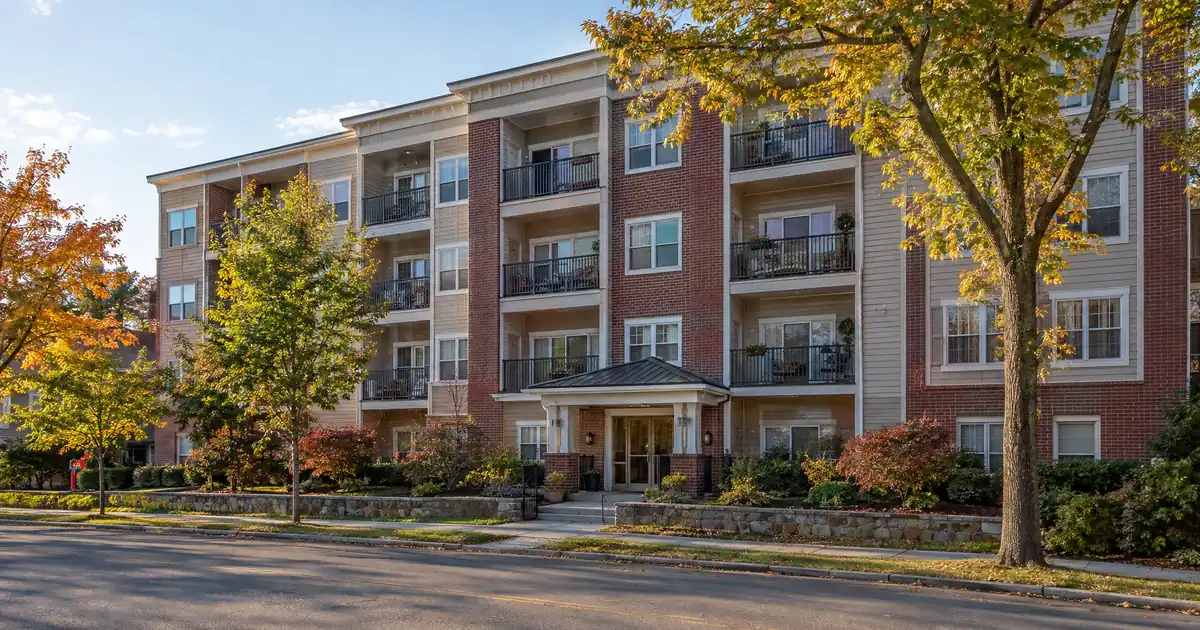
Picture an investor holding a Forest Park property bought at $291,500, renovated, re-tenanted, and now sitting well past the six-month mark. The appraisal might come back strong. It might come back flat, because the appraiser pulled comps from the wrong side of town. Either way, the cash-out only works if the property’s rent covers its full monthly obligation and the new balance stays under the 75% LTV ceiling. Springfield is a market where those two conditions are easy to meet on some buildings and hard on others, and the gap between them is the whole article. These specifics are subject to lender guidelines and a full review of property, leverage, and credit.
Lendmire (NMLS# 2371349) places DSCR investor loans on Springfield, Massachusetts properties through wholesale lending channels reaching 41 markets, including D.C. This piece is about the equity side: what you can pull, which buildings support it, and where the math turns on you.
DSCR Cash-Out Calculator
Run the cash-out numbers in Springfield, MA
Rate source: Freddie Mac 30-yr average via FRED® — Federal Reserve Bank of St. Louis · effective Sep 24, 2026
Prefilled with starting assumptions — enter your property’s value, balance, taxes, and insurance for a more accurate picture.
Program parameters update from Lendmire’s centralized guideline source. Taxes and insurance are editable estimates.
As of Sep 24, 2026 · General Freddie Mac market benchmark, not a Lendmire loan offer. Property value, balance, taxes, and insurance are editable estimates. Maximum loan-to-value varies by lender, program, property type, and seasoning. Not a Loan Estimate, approval, or commitment to lend. Program availability and eligibility are subject to lender guidelines, credit approval, property review, and underwriting.
The Short Version:
A cash-out refinance on a Springfield, Massachusetts rental is underwritten primarily on the property’s rental income measured against its full monthly obligation, with proceeds limited by a 75% LTV ceiling and roughly six months of seasoning, which makes multi-unit buildings in the older core the structurally stronger fit. Terms vary by lender guidelines, property type, leverage, credit profile, and full file review.
- Two- to four-unit stock carries several rents against one loan, unlike single-family rentals.
- Multi-family median listings run roughly $380K to $400K in Indian Orchard, Upper Hill, and ZIP 01108, per Redfin.
- Single-family rentals near the $341K Sixteen Acres median model close to 1.0x coverage.
- Health care is the largest resident employment sector, at 14,945 workers per Data USA.
- Appraisal comps, not rents, are the biggest swing factor on proceeds.
Springfield Market Snapshot
A quick read on the Springfield investor landscape — figures come from the cited sources below. Confirm current property-level numbers before underwriting.
| Metric | Detail |
|---|---|
| Home prices | Median property value $245,000 (Data USA, Springfield MA) |
| University enrollment | 6,150 students (Wikipedia, STCC) |
| Population | Population 154,702 (Every City in the USA) |
| Employment | 12,000+ employees (Baystate Health careers) |
Which Number Is the Equity Built On?
Springfield’s value data disagrees with itself, and the lender’s appraisal is the only figure that matters for a cash-out. Zillow puts the typical home value at $265,192, up 3.3% over the past year. Resideline measures a $312,000 median closed sale, the lowest among high-volume Massachusetts markets, against a statewide median of $669,900. Data USA shows a $245,000 median property value, but that’s owner-reported and runs below market.
Three sources, three answers. Don’t plan a refinance off any of them. They’re useful for one thing: confirming Springfield is the cheap end of Massachusetts, which cuts both ways. Low basis means equity builds fast on a renovated building, but thin price levels also mean the appraiser has fewer high-value comps to lean on.
Skeptical read: appreciation in this city is steady, not explosive. Zillow’s 3.3% is a long way from a market that manufactures equity on its own. Forced appreciation, meaning renovation, re-tenanting, and bringing rents to market, does most of the work in a Springfield cash-out. Investors who bought on a “rising market” thesis should be stress-testing that assumption.
Why the Rent Roll Holds Up
Springfield’s tenant base is deep and anchored by institutions rather than a single employer. Per Every City in the USA, the city has about 154,700 residents with a median household income of $52,656, and RentCafe reports 51% of households, 29,319 in total, rent. That’s a working-wage renter market, which matters for one reason: rents can’t stretch far past what local wages support. Underwrite to market rent, not aspirational rent.
Baystate Health employs more than 12,000 people and operates a 724-bed academic medical center, per its careers page. MassMutual is headquartered in the city, and the resident workforce’s second and third largest sectors are manufacturing (6,343) and retail trade (5,989). Springfield Technical Community College enrolls 6,150 students, and Western New England University adds 3,674. Those are secondary rental demand, not the main engine.
One gap to state plainly: there’s no reliable vacancy rate for Springfield and no verified neighborhood-level rent bands. Anyone quoting a precise vacancy number for this city is working from data this research couldn’t confirm. The cash-out file will rest on the appraiser’s market-rent schedule or actual leases, so get both in order before applying.
Forest Park and the Two-to-Four-Unit Math
Forest Park is the strongest cash-out submarket in the city for DSCR. The housing stock is dominated by small two-, three-, and four-unit apartment buildings, which is exactly the product where coverage ratios stay comfortable after a 75% LTV refinance. Exact terms depend on the lender’s guidelines, property type, leverage, and a full review of the borrower’s file.
Pricing is messy. Homes.com shows single-family medians of $291,500 in Forest Park and $315,000 in East Forest Park, Movoto shows a median list price of $327K, and NeighborhoodScout’s median real estate price sits at $427,251, probably reflecting multi-unit stock. That spread is the point. Pull actual comps for your building type rather than trusting any single median.
Run the numbers on a modeled two-family valued at $400,000, roughly the median multi-family listing in ZIP 01108. Assume the units rent at market for bedroom count, about $1,700 for a two-bedroom and $2,000 for a three-bedroom, based on the Rentometer and RentHop ranges. At 75% LTV, with taxes and insurance built into the full PITIA, modeled coverage lands around 1.4x. These are modeled assumptions, not sourced deal data. A comparable single-family at the $320,000 level with one three-bedroom rent in the $2,000 to $2,200 range models closer to 1.0x on the same basis. Every figure here varies by lender and program — guidelines, property type, leverage, and credit profile all apply.
That’s the structural story. A two- or three-family costs only modestly more than a single-family, since Redfin’s multi-family medians run $380K to $400K against citywide single-family medians around $300K to $320K. But it carries two or three rents. The numerator grows much faster than the loan does.
Indian Orchard and Upper Hill: Cheaper Entry, Thinner Data
Indian Orchard and Upper Hill both offer multi-family entry at the low end of the city’s range, with less market evidence behind them. Redfin shows a median multi-family listing of $380K in Indian Orchard, and Upper Hill’s comes in at $399K. NeighborhoodScout puts Indian Orchard’s median price at $314,664. The stock skews toward small apartment buildings, and the unit sizes are large. Listings describe three-family buildings with three-bedroom units on each floor, and one Upper Hill two-family with a five-bedroom upper unit.
Treat those as anecdotes. One renovated four-bedroom upper unit that previously rented at $2,500 tells you a ceiling, not a market. Larger units do tend to support longer lease terms, which helps the income side of a DSCR file, but the rent schedule on your specific building decides the ratio.
Indian Orchard is a former mill village, and neighborhood guides call it affordable. Affordable cuts two ways for a cash-out. Lower basis means more equity potential on a renovation, but lower sale prices also cap the appraised value, and the 75% ceiling applies to that capped number. Not every affordable submarket produces meaningful proceeds.
Working DSCR brokers see a recurring pattern in older-stock New England markets like this one: the rent side of the file is rarely the problem, and the appraisal side is. Two- and three-family buildings often have unit rents that clear coverage comfortably, but unrenovated buildings appraise on the as-is condition, so the cash-out that looked possible on paper shrinks. Files that order a realistic renovation scope before the refinance, and give the appraiser clean comps, tend to land closer to expectations.
North End and Liberty Heights: The Baystate Cluster
The North End is the steadiest per-square-foot story in the research. Redfin shows a $311K median, up 3.8%, with price per square foot at $194, up 5.4%. There were 45 sales in the most recent month, and the average home sells about 3% above list. That’s an appraiser-friendly dataset: active comps, rising per-foot values, and buyers paying above asking.
Liberty Heights sits near Baystate Medical Center, and Rent.com lists one-bedroom averages of $1,200 in both the North End and Liberty Heights. That’s all the rent data there is, with no two- or three-bedroom figures and no price data for Liberty Heights. Hospital-staff demand is plausible but unquantified here. Good candidate for a small multi-unit cash-out, provided the comps hold.
Sixteen Acres and East Forest Park: Where the Math Gets Harder
Skip Sixteen Acres if your thesis is multi-family cash flow. It’s a suburban, car-dependent, owner-heavy neighborhood where 76.5% of residents own, and it’s a single-family play. Redfin’s $341K median is up 5.8% year over year, which looks great until you see price per square foot at $252, down 3.4%. That divergence suggests larger homes are driving the median, not real appreciation. Appraisers can use those comps unevenly, which makes proceeds less predictable here. Sixteen Acres does have the most active sales market in the research, at 82 sales in a month, and the Western New England University link supports some rental demand, but a single-family at that price models near the 1.0x line.
If a Sixteen Acres rental lands below 1.00 on long-term rent, there are structures a lender may review: a sub-1.00 DSCR program, an interest-only period, or a lower leverage tier with stronger credit and reserves. Each comes with its own trade-offs, and eligibility depends on lender guidelines, credit approval, and property review. Not ideal for an investor whose only goal is maximum proceeds.
East Forest Park is the other caution. Homes.com shows it as 86.7% owner-occupied, with a $315,000 median. That means a thin rental market, few rent comps, and a small tenant pool. The rent schedule is harder to support, which is exactly what a DSCR file depends on. Pull rent comps before buying or refinancing there, not after.
Metro Center condos are also worth skipping for cash-out purposes. Homes.com shows one-bedroom condo medians around $94,000, and low-value condos don’t generate meaningful equity at 75% LTV. East Springfield has no price or rent data in this review, so there’s nothing to underwrite from. Final terms depend on lender guidelines, property type, leverage, and the borrower’s complete credit picture.
What Seasoning and the 75% Cap Do to Your Proceeds
The mechanics are simple and the consequences are not. Cash-out on an investment property typically runs to a 75% LTV ceiling, with about six months of ownership measured from title recording. The minimum standard DSCR is 1.00, meaning rent covers the full monthly obligation: principal, interest, taxes, insurance, and any dues. Most files expect reserves around six months of PITIA, rising to about nine above $1.5 million. Credit tiers generally run from a 620 floor up through 660, 680, and 700, with better leverage at higher tiers. Loan amounts go up to $3,000,000 on standard programs, and smaller balances route through select lenders. All of this is subject to lender guidelines and varies by borrower, property, and loan scenario.
Here’s what that does in Springfield specifically. Redfin’s neighborhood data shows enough sales volume in the core to support post-renovation values: 82 sales in Sixteen Acres in a month, 45 in the North End. A building renovated and leased, then appraised at 75% LTV, can return capital if the appraised value outruns the purchase plus rehab. On a modeled two-family appraised at $400,000, the lender’s 75% ceiling sets the maximum balance, and whatever remains after paying off the existing loan is your proceeds, not guaranteed and dependent on the appraisal, the rent schedule, and reserves.
The catch is that the ceiling applies to appraised value, not your hopes. A building bought at a discount and renovated lightly might appraise at a number that leaves little to extract. Ask the lender’s appraiser which comps they’ll use. Our page on pulling equity with a DSCR cash-out covers the structure, and the investor refinance breakdown compares the refinance types.
One honest contrast: a conventional cash-out refinance documents personal income, while DSCR lenders review the property’s rental income. The guide “Where DSCR and Conventional Diverge” lays out the trade-offs. For Springfield investors holding several buildings in LLCs, the property-income route often fits better, subject to lender program eligibility.
The Rail Line Nobody Can Date Yet
Springfield has a genuine catalyst, and it’s the one thing in this market that’s uncertain in timing. The city describes Union Station as being redeveloped into a regional intermodal hub for Amtrak. MassDOT reports a $36.8 million federal grant for track reconfiguration, and Spectrum News reports a $108 million federal grant to add track capacity between Worcester and Springfield for two daily round trips.
The investor angle: a more affordable high-volume market in Massachusetts would sit on a future Boston rail link. The skeptical angle: rail timelines slip, and no appraiser prices a train that hasn’t arrived. Don’t underwrite a cash-out to a catalyst. Treat it as upside on top of numbers that already work, and as a reason to hold the asset after you pull capital, not as a reason to refinance more aggressively.
Where the Proceeds Go
Pulling equity is only half the decision. The other half is what the capital does next. In Springfield, the logical reinvestment is another small multi-unit, since the two- to four-unit pipeline looks liquid. Redfin lists 78 multi-family units for sale in a recent month alongside 91 homes sold. Investors who redeploy into the same building type can keep coverage ratios comfortable across a growing portfolio, while investors who pull cash and buy single-family rentals near the 1.0x line are trading a strong coverage position for a thin one.
Think about concentration too. Springfield’s tenant base leans on health care, manufacturing, and retail, so a portfolio entirely in one submarket carries one local risk profile. Spreading across Forest Park, Indian Orchard, and the North End diversifies the comp base at least.
For the state-level program picture, see Lendmire’s Massachusetts DSCR loan programs, and for the general mechanics, Lendmire’s DSCR walkthrough. Investors who want a file reviewed can connect with Lendmire or call 828-256-2183. Before any refinance, verify current local rental rules, taxes, and insurance with qualified local professionals.
Frequently Asked Questions
How long do I have to own a Springfield rental before a cash-out refinance?
About six months, measured from title recording, is the typical seasoning benchmark on these programs. That gives a renovated Forest Park or Indian Orchard building a short runway between purchase and refinance. The appraisal still has to support the value, so the clock is necessary but not sufficient, and lender guidelines vary.
DSCR vs. conventional financing
There are two common ways to finance an investment property in Springfield, MA, and they qualify you differently — here’s how investors weigh them.
Why investors choose it
- Qualifies on the property’s rental income — no personal tax returns, W-2s, or pay stubs needed to document income.
- No personal debt-to-income ceiling to clear, so existing mortgages and obligations don’t cap your borrowing the same way.
- Can be closed in an LLC, keeping the property inside a business entity.
- Built for scaling — not held to the limit on number of financed properties that conventional financing applies.
- Underwriting centers on the deal: generally qualifies when the rent covers the payment, a 1.00x coverage ratio being a common baseline (confirmed in underwriting).
- Designed specifically for investment property, including long-term and, where the program allows, short-term rentals.
Where it’s strong
- Often the lowest ongoing financing cost for a buyer who fully qualifies on personal income — a fit for a first property or a cost-first purchase.
Trade-offs for investors
- Requires full personal income documentation and must fit within a debt-to-income limit — salary, existing debts, and other mortgages all count.
- Typically held in your personal name rather than a business entity.
- Caps how many financed properties you can carry, which can become a ceiling as a portfolio grows.
- Evaluates you as a borrower as much as the property, which usually means more paperwork.
How investors usually choose: a first or single property often optimizes for the lowest financing cost; portfolio builders often optimize for leverage, vesting in an LLC, and scaling past conventional caps. The right answer depends on your goals, the property, and current guidelines — both paths run through select lenders in Lendmire’s wholesale network, with eligibility and terms confirmed in underwriting.
Does a two-family in Forest Park cover better than a single-family in Sixteen Acres?
Generally, yes. A modeled two-family at the ZIP 01108 median listing of about $400K, with market rents on both units, lands around 1.4x including taxes and insurance. A single-family near the Sixteen Acres median models closer to 1.0x. Both are illustrations using modeled rents, so actual leases and the appraiser’s rent schedule decide the real ratio.
Why do Springfield home values look so different across sources?
The sources measure different things. Zillow’s $265,192 is a typical-value index, Resideline’s $312,000 is a six-month median of closed sales, and Data USA’s $245,000 is owner-reported. For a cash-out, none of them substitute for the appraisal, which is based on recent comparable sales near your property.
Is there enough rental data to underwrite Springfield neighborhoods?
Citywide, yes. By neighborhood, not really. Rentometer and RentHop show two-bedrooms around $1,670 to $1,720 and three-bedrooms around $2,000 to $2,200, but no verified neighborhood-level rent bands or vacancy rate exist in this review. Use actual leases and appraiser market-rent schedules rather than listing-site averages.
Will the Union Station rail project raise my appraisal?
Not on its own. The federal grants are real, but construction timelines are likely to shift, and appraisers value what’s observable in recent sales. Treat the rail link as long-term upside rather than a factor in the refinance math.
What the Next Two Years Probably Look Like
Springfield’s cash-out math should keep favoring the older multi-unit core over single-family suburbs. Rent data points to low-to-mid single-digit growth (RentCafe shows 2.91%, though Zumper reports higher), which supports steady coverage rather than windfalls. Sale prices in active neighborhoods like the North End and Sixteen Acres are rising at a pace of roughly 4% to 6% year over year, enough to support equity on renovated buildings but not enough to rescue overpaid ones. If the rail funding translates into visible construction, expect investor attention to drift toward Metro Center and the core before it reaches the outlying neighborhoods. Until then, the buildings with two or three rents and a clean appraisal are where Springfield equity is actually pulled out.
For current guidelines and terms, see Lendmire’s DSCR loan programs page.
About Lendmire
Lendmire, NMLS# 2371349, is a mortgage brokerage focused on investor financing, arranging DSCR loans in 40 states plus Washington, D.C. — 41 markets total. Qualification is based on the property’s income rather than personal income documentation, subject to lender guidelines, making it a fit for LLC-held rentals and scaling portfolios. The brokerage was recognized by Scotsman Guide as a 2026 Top Workplace and named a 2025 Scotsman Guide Top Mortgage Workplace. More company news is available through Lendmire’s press newsroom.
Get Started
Ready to find the right loan for you?
In about 30 seconds you can review financing options available for your investment property. No commitment required.
Informational only. Not a Loan Estimate, approval, or commitment to lend. Program availability and eligibility are subject to lender guidelines, credit approval, property review, and underwriting.
References
1. Redfin — Zipcode Multi Family Homes for Sale
2. Redfin, Sixteen Acres housing market
4. Wikipedia — Springfield Technical Community College
6. choosebaystatehealth.org — Careers page
7. Zillow
8. Resideline, Massachusetts housing market
9. RentCafe, Springfield rent trends
10. Baystate Health
11. Western New England University
12. NeighborhoodScout — Springfield Forest Park
13. Homes.com
14. Movoto
15. Rentometer
16. RentHop
17. Redfin
18. Redfin — Upper Hill Multi Family Homes for Sale
19. Redfin, North End housing market
20. Homes.com
21. Union Station as being redeveloped
22. MassDOT, Springfield area track reconfiguration project
23. Spectrum News, West-East Rail
25. a 2025 Scotsman Guide Top Mortgage Workplace
This article is part of Lendmire’s investment property cash-out refinance program — full qualification details, guidelines, and scenarios live on the program page.
Related reading: Luxury Rental DSCR Loans In New Jersey · Jersey Shore Vacation Rental Loans: DSCR Financing In Ocean City, Cape May And Long Beach Island · DSCR Cash-out Refinance In New Jersey: Pulling Equity From A Rental
Guides: Investment Property Cash-Out Refinance in Springfield, MA · Investment Property Cash-Out Refinance in Massachusetts
Brandon Miller
Founder & CEO, Mortgage Loan Originator, Lendmire LLC
- Mortgage Loan Originator · NMLS# 1129696 · Verify on NMLS Consumer Access
- North Carolina Real Estate Broker · License# 343312 · Verify on NCREC
- North Carolina Insurance Producer · License# 19053198 · Property, Casualty, Life, Health · Verify on NAIC SBS
- Lendmire LLC · Firm NMLS# 2371349 · Verify firm licensure
Disclosure information. Lendmire is a state-licensed mortgage brokerage under NMLS# 2371349. Lendmire is not a depository institution, direct lender, or financial advisor — all loans referenced are placed through wholesale lender partners and are subject to each lender's underwriting standards. This article is provided for general informational purposes and is not a commitment to lend, nor does it constitute financial, legal, or tax advice. Loan programs, terms, rates, and qualification standards change without notice and depend on borrower profile, property type, and the state in which the subject property is located. Equal Housing Opportunity provider. NMLS Consumer Access: nmlsconsumeraccess.org.