
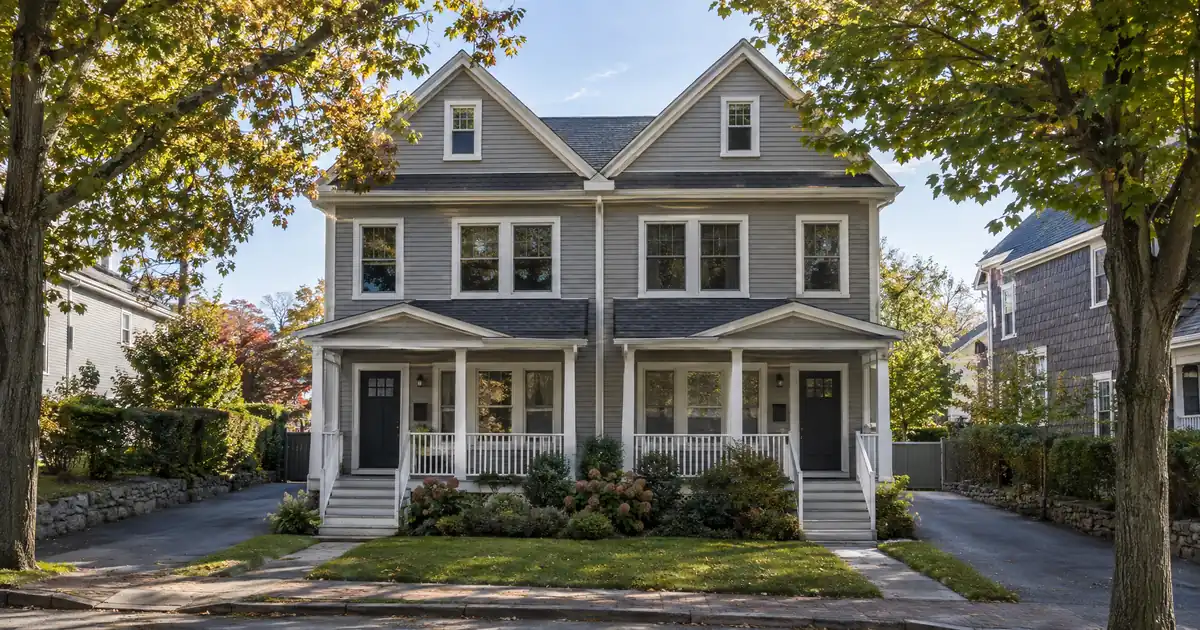
The easiest way to misread Quincy is to anchor a cash-out plan to the $610,000 citywide median. That number blends condos, single-families, and a thin monthly sample of 41 sales. It says little about what a two- or three-family appraises for, and the appraisal on that rent roll is what sets how much equity comes out. Lendmire, a DSCR-focused mortgage broker, sees this mismatch often in Boston-area files: the owner thinks in median terms, and the lender underwrites the specific building.
DSCR Cash-Out Calculator
Run the cash-out numbers in Quincy, MA
Rate source: Freddie Mac 30-yr average via FRED® — Federal Reserve Bank of St. Louis · effective Sep 24, 2026
Prefilled with starting assumptions — enter your property’s value, balance, taxes, and insurance for a more accurate picture.
Program parameters update from Lendmire’s centralized guideline source. Taxes and insurance are editable estimates.
As of Sep 24, 2026 · General Freddie Mac market benchmark, not a Lendmire loan offer. Property value, balance, taxes, and insurance are editable estimates. Maximum loan-to-value varies by lender, program, property type, and seasoning. Not a Loan Estimate, approval, or commitment to lend. Program availability and eligibility are subject to lender guidelines, credit approval, property review, and underwriting.
Key Takeaways:
A cash-out refinance on a rental in Quincy, Massachusetts is underwritten primarily on the property’s rental income measured against its full monthly obligation, with the loan-to-value ceiling applied to the appraised value rather than the purchase price, subject to lender guidelines.
- Cash-out LTV tops out at 75 percent, with about six months of ownership from title recording.
- Single-family rent-to-price runs near 0.45 percent a month, which strains coverage at full leverage.
- Two- and three-families stack rent faster than price, which is why they carry most cash-out files here.
- Quincy Point looks cash-flow-led. Wollaston looks appreciation-led.
Quincy Market Snapshot
A quick read on the Quincy investor landscape — figures come from the cited sources below. Confirm current property-level numbers before underwriting.
| Metric | Detail |
|---|---|
| Home prices | $610K median (Redfin Quincy Housing Market) |
| Recent appreciation | +2.4% yoy (Redfin Quincy Housing Market) |
| University enrollment | 3,022 total (Data USA Quincy College) |
| Employment | 39,235 employees (zip-codes.com Quincy) |
Why the Median Misleads
Quincy’s median sits near $610,000, but the property types that work for DSCR cash-outs price well above it. Houzeo splits the market into condos around $501,250 and single-family homes averaging $756,000. Homes.com showed 11 multi-family listings citywide, priced from $849,900 upward. A duplex or triplex therefore costs roughly 40 to 70 percent more than the median home. In exchange, it carries two or three rent rolls instead of one.
Appreciation is flat to low-single-digit by most measures. Redfin shows prices up 2.4 percent year over year, while Houzeo shows essentially flat. Price per square foot is rising faster than the median, at $501, up 8.2 percent. If the thesis is “the market will lift my value,” Quincy offers a mild version of it. Equity here comes mostly from the purchase basis, the rent roll, and the appraiser’s read of the building.
Rents are decent and growing slowly. Zumper puts the median at $2,752 a month, up 5.9 percent. RentCafe puts the average at $2,816, up just 1.62 percent, though it covers only buildings with 50 or more units. Those two growth figures disagree, so underwrite in-place rents and ignore the higher one.
The Math at 75 Percent (and Where It Breaks)
Single-family refinances struggle to reach 1.0x in Quincy at full leverage; two-families can clear it, depending on the submarket. The ratio is monthly rent divided by the full monthly obligation: principal, interest, taxes, and insurance. Lendmire’s modeling here includes taxes and insurance at Massachusetts averages. All rents below are modeled assumptions, not market data.
| Property (modeled) | Value basis | Rent assumed | Coverage at 75% LTV |
|---|---|---|---|
| Single-family | $756,000 | $3,400 | Low 0.7s |
| North Quincy two-family | About $1.02M | $3,000 per unit | Low-to-mid 0.9s |
| Wollaston two-family | About $1.1M | $3,000 per unit | High 0.8s |
| Quincy Point two-family | About $779,000 | $2,700 to $3,000 per unit | 1.1 to 1.2 |
These bands are directional. The single-family line follows from the roughly 0.45 percent monthly rent-to-price ratio. That ratio is Lendmire Research’s own arithmetic from the Redfin and Rentometer figures, not a published statistic. The North Quincy value basis reflects a median listing of about $1.02 million across five multi-family listings per Redfin. That is a small sample.
Now the choice. Standard DSCR programs are commonly built around a 1.00x benchmark, and a file below it isn’t automatically dead. A lender may review a sub-1.00 program, interest-only structuring, or a lower LTV, though each usually comes with stronger credit, bigger reserves, or different pricing. For a North Quincy two-family sitting in the 0.9s, stepping the target down to roughly 65 percent LTV moves the modeled coverage to around 1.0 or slightly above. Qualification stays subject to lender guidelines, credit approval, and property review.
Taking less cash out is often the better answer. It means buying a smaller next deal with the proceeds. Forcing a high-leverage pull on a thin-coverage building is how a refinance turns into a carry problem.
Wollaston vs. Quincy Point: Appreciation Against Cash Flow
Wollaston is the appraisal story, and Quincy Point is the coverage story. Investors usually want both, and Quincy rarely delivers both in the same building.
Wollaston is the city’s most walkable neighborhood, with a Walk Score of 78. Its stock is a mix of single-families, two-families, and condo buildings, skewing toward the 1920s and 1930s. Homes.com listed multi-family homes between $1,075,000 and $1,280,000 and reported the 12-month average sale price at $725,638, up 9 percent. That was an older snapshot from a small sample. Redfin’s rental table showed a neighborhood median rent of $2,300 in an earlier reading. Rents that modest against a seven-figure entry price are why coverage runs thin. An owner who bought before the run-up has real equity to pull. An owner who bought recently at the top of the band probably doesn’t.
Quincy Point lists multi-family homes from $779,000 to $1,300,000, so the entry point sits about $300,000 below Wollaston. Apartments.com names Quincy Point, Merrymount, and West Quincy among the most affordable neighborhoods by rent. Lower rents on a lower basis still pencil better than Wollaston’s combination. Sources also flag South Quincy as lower-rent, though sample sizes are thin and the Zumper neighborhood figures look noisy. Treat the rankings as directional and pull your own rent comps.
Thinking out loud: the cleanest play might be a Quincy Point two-family refinanced at moderate leverage. Wollaston’s appreciation could argue the other way for a long hold, but a stronger appraisal doesn’t pay the monthly obligation.
Does the Red Line Premium Survive New Supply?
Older small-building stock near the T competes with a large Class A pipeline, so rent growth shouldn’t be in the model. North Quincy’s MBTA lot is turning into The Abby, a 610-unit community roughly 20 to 25 minutes from South Station. A local broker blog also flags additional new units in the pipeline. Per H+O Structural Engineering, AvalonBay is building 288 homes near Quincy Adams. Guide to Quincy, the same local source, says new apartments can pressure rents on older units in the short run. It also says effective vacancy has been very low. That is broker commentary, not an official vacancy rate. I found no verified vacancy statistic.
Practically, a two-family a few blocks from a new tower is exposed in a way a building farther from the stations is not. Lenders and appraisers will see the same competition. The most that lease-up can do for you is leave in-place rents untouched. Don’t plan on it doing more.
Appraisal risk adds to this. Homes.com showed only 2 multi-family listings in Wollaston at capture. An appraiser working from one or two sales can come in conservative, and that caps proceeds before LTV even applies. Budget for it, and ask the appraiser to pull adjacent-submarket comps.
Who Rents Here (Employment, Not Guesswork)
Renters are the majority. RentCafe counts 24,794 renter-occupied households, 55 percent of the total. Per Data USA, health care and social assistance is the top resident employment sector at 9,470 people. Professional and technical services follow at 8,142, and educational services at 6,093. Many of those jobs are outside the city. Quincy has no acute-care hospital of its own, since Quincy Medical Center closed in December 2014. Its health care demand is therefore commuter-based and tied to Boston’s systems.
Jobs located inside the city add a second layer. zip-codes.com shows 2,199 establishments employing about 39,235 people. Stop & Shop is headquartered here, and Quincy College enrolled 3,022 students. The tenant base is wide and employment-driven, and that is what supports long-term leases on the older stock.
Condos deserve a note. Marina Bay posts the highest median rent in the Redfin table at $3,455, but condo buildings there may be non-warrantable, and HOA costs eat into coverage. Confirm project eligibility with the lender before counting on a condo refinance.
What the Deal Desk Tends to See
In markets like this one, where entry prices are high and rents are moderate, the common friction point is a gap between the rent the owner expects and the rent the file can document. The cleaner files from a documentation standpoint tend to carry current leases, a rent roll, and an insurance quote in hand before the appraisal is ordered. Files where the owner is anchored to the unit’s best-ever rent, or where one unit is owner-occupied or vacant, tend to need more reshaping on LTV. Pricing and reserves follow the same logic.
Seasoning, Reserves, and What the Proceeds Do
The program parameters are straightforward. Cash-out LTV tops out at 75 percent. Seasoning is about six months of ownership from title recording. Reserves typically run about six months of the full monthly obligation, and about nine months above $1,500,000 in loan size. Credit tiers start at a 620 floor. Equity available depends on rent used for lender review, the full monthly obligation, reserves, and that 75 percent ceiling, so it is never a guaranteed cash figure. All terms are subject to lender guidelines. For the mechanics, see the cash-out refinance walkthrough and the investment property refinance options.
Where the money goes decides whether the pull was smart. Proceeds that fund a Quincy Point two-family, where modeled coverage clears 1.1x, make the refinance self-reinforcing. Proceeds that go into a lower-coverage building in an out-of-state market, or into a thin single-family purchase here, are a different bet. Test that decision before committing.
Conventional financing may be cheaper for a single property owned personally by a high-W-2 borrower, as laid out in the side-by-side comparison. DSCR tends to fit better for entity-held portfolios, self-employed owners, or anyone past the conventional lane’s financed-property limits. For the broader state picture, see DSCR loans in Massachusetts. Investors can also get a DSCR quote or reach Lendmire at 828-256-2183. Verify current local rental rules, taxes, and insurance with qualified local professionals before underwriting.
Where Quincy Is Underpriced
The asymmetric opportunity is older two- and three-family stock at Quincy Point and South Quincy, away from the Red Line’s new-construction tier. Those buildings enter about $300,000 below Wollaston. They draw from the same Boston-commuter renter base that supports the pricier submarkets, and they still pencil at coverage ratios the Wollaston and North Quincy stock can’t reach at 75 percent leverage.
Frequently Asked Questions
How do you qualify for a DSCR cash-out refinance in Quincy?
The property has to show rental income that covers its full monthly obligation, with 1.00x the common baseline. The borrower typically needs a credit score of at least 620, about six months of ownership, and about six months of reserves. The loan amount can’t exceed 75 percent of appraised value. Lender guidelines vary.
DSCR vs. conventional financing
There are two common ways to finance an investment property in Quincy, MA, and they qualify you differently — here’s how investors weigh them.
Why investors choose it
- Qualifies on the property’s rental income — no personal tax returns, W-2s, or pay stubs needed to document income.
- No personal debt-to-income ceiling to clear, so existing mortgages and obligations don’t cap your borrowing the same way.
- Can be closed in an LLC, keeping the property inside a business entity.
- Built for scaling — not held to the limit on number of financed properties that conventional financing applies.
- Underwriting centers on the deal: generally qualifies when the rent covers the payment, a 1.00x coverage ratio being a common baseline (confirmed in underwriting).
- Designed specifically for investment property, including long-term and, where the program allows, short-term rentals.
Where it’s strong
- Often the lowest ongoing financing cost for a buyer who fully qualifies on personal income — a fit for a first property or a cost-first purchase.
Trade-offs for investors
- Requires full personal income documentation and must fit within a debt-to-income limit — salary, existing debts, and other mortgages all count.
- Typically held in your personal name rather than a business entity.
- Caps how many financed properties you can carry, which can become a ceiling as a portfolio grows.
- Evaluates you as a borrower as much as the property, which usually means more paperwork.
How investors usually choose: a first or single property often optimizes for the lowest financing cost; portfolio builders often optimize for leverage, vesting in an LLC, and scaling past conventional caps. The right answer depends on your goals, the property, and current guidelines — both paths run through select lenders in Lendmire’s wholesale network, with eligibility and terms confirmed in underwriting.
What are the requirements for an investment property loan in Quincy, Massachusetts?
Expect a rental income test, a property appraisal, credit review, and reserves. Condos get additional project review, which matters in Marina Bay. Manufactured homes, log homes, and barndominiums are not eligible under these programs. Requirements vary by lender and program.
Does Wollaston’s recent price growth mean a bigger cash-out?
Not automatically. The Homes.com average showing 9 percent growth comes from a small, older sample, and the appraiser works from closed comps. Higher value helps only if the rent roll still covers the monthly obligation at the loan size. Wollaston’s modeled coverage is thinner than Quincy Point’s.
Will new apartment towers hurt rents on older two-families?
It can, for units close to the stations. A local broker blog warns of short-run pressure from new supply, though it also reports very low effective vacancy. Underwrite at in-place rents and avoid counting on increases. Buildings farther from the Red Line are less exposed.
For current guidelines and terms, see Lendmire’s DSCR loan programs page.
About Lendmire
Lendmire is a non-QM mortgage brokerage (NMLS# 2371349) arranging DSCR investor loans in 41 markets, including Washington, D.C. DSCR eligibility is generally reviewed around property-level rental income rather than personal income, subject to lender and program guidelines, which suits self-employed investors and LLC-owned portfolios. Lendmire was recognized as a top-ranked workplace in 2025 and a top-ranked workplace in 2026 by Scotsman Guide as a Top Mortgage Workplace.
Get Started
Ready to find the right loan for you?
In about 30 seconds you can review financing options available for your investment property. No commitment required.
Informational only. Not a Loan Estimate, approval, or commitment to lend. Program availability and eligibility are subject to lender guidelines, credit approval, property review, and underwriting.
References
1. Redfin: Quincy Housing Market
4. Homes.com: Quincy Multi-Family
5. Zumper: Quincy Rent Research
6. RentCafe: Quincy Rent Trends
7. Redfin
9. Homes.com
10. Redfin: Quincy Rental Market
11. Quincy Point
12. Apartments.com
13. The Abby
14. H+O Structural Engineering
15. Guide to Quincy
17. Wikipedia: Quincy Medical Center
18. Scotsman Guide — Top Workplaces 2025
19. Scotsman Guide — Top Workplaces 2026
This article is part of Lendmire’s investment property cash-out refinance program — full qualification details, guidelines, and scenarios live on the program page.
Related reading: Luxury Rental DSCR Loans In New Jersey · Jersey Shore Vacation Rental Loans: DSCR Financing In Ocean City, Cape May And Long Beach Island · DSCR Cash-out Refinance In New Jersey: Pulling Equity From A Rental
Guides: Investment Property Cash-Out Refinance in Quincy, MA · Investment Property Cash-Out Refinance in Massachusetts
Brandon Miller
Founder & CEO, Mortgage Loan Originator, Lendmire LLC
- Mortgage Loan Originator · NMLS# 1129696 · Verify on NMLS Consumer Access
- North Carolina Real Estate Broker · License# 343312 · Verify on NCREC
- North Carolina Insurance Producer · License# 19053198 · Property, Casualty, Life, Health · Verify on NAIC SBS
- Lendmire LLC · Firm NMLS# 2371349 · Verify firm licensure
Important disclosures. Lendmire (NMLS# 2371349) is a licensed mortgage brokerage. Lendmire is not a direct lender, depository institution, or financial advisor. All loan inquiries are subject to lender underwriting; this article does not constitute a commitment to lend. Rates, terms, and program guidelines are subject to change without notice and vary by borrower profile, property type, and state. Information in this article is general in nature and is not financial, legal, or tax advice. Equal Housing Opportunity. NMLS Consumer Access: nmlsconsumeraccess.org.