
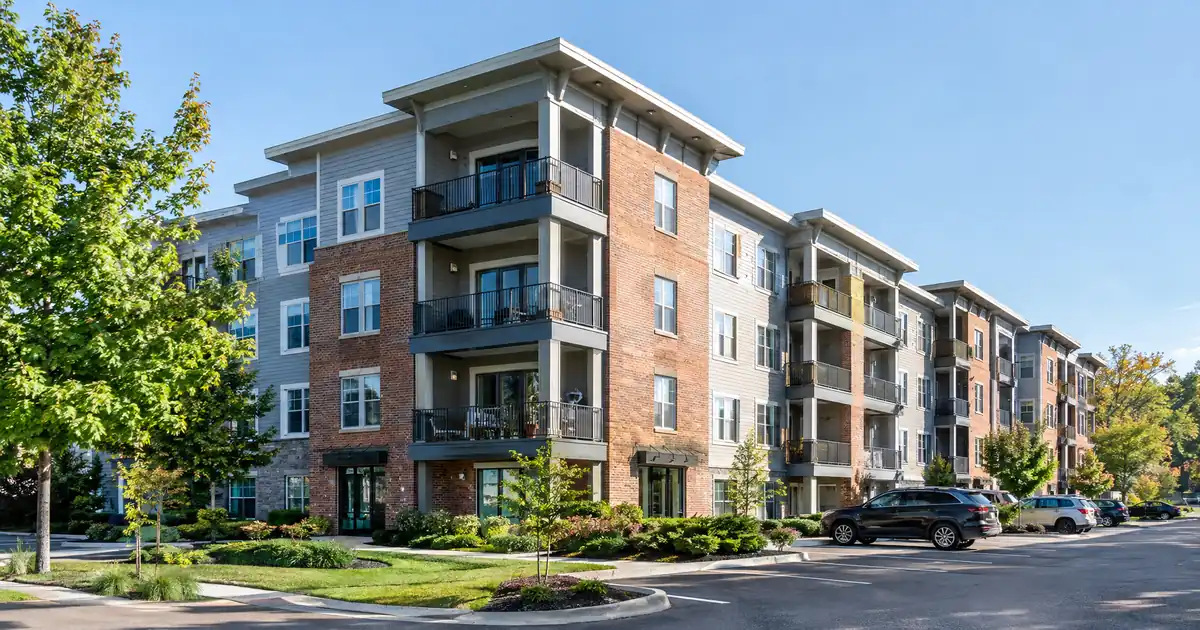
Along the Mentor Avenue corridor in ZIP 44060, the listing median sits at $286,250 per Redfin, and that basis is the whole story for a cash-out investor. A typical house in Mentor rents for about $1,800 per Zumper. That is solid money for Northeast Ohio, but against a near-$290K value it sets a hard ceiling on how much debt the rent can carry. Mentor, Ohio investors can have DSCR scenarios reviewed through lender programs that Lendmire (NMLS# 2371349), a DSCR-focused mortgage broker, helps place across 41 markets, including Washington, D.C. Mentor is also one of the trickier Ohio cities to pull equity from, because the math splits sharply by property type. For the statewide picture, see the brokerage’s page on DSCR loans in Ohio.
DSCR Cash-Out Calculator
Run the cash-out numbers in Mentor, OH
Rate source: Freddie Mac 30-yr average via FRED® — Federal Reserve Bank of St. Louis · effective Sep 24, 2026
Prefilled with starting assumptions — enter your property’s value, balance, taxes, and insurance for a more accurate picture.
Program parameters update from Lendmire’s centralized guideline source. Taxes and insurance are editable estimates.
As of Sep 24, 2026 · General Freddie Mac market benchmark, not a Lendmire loan offer. Property value, balance, taxes, and insurance are editable estimates. Maximum loan-to-value varies by lender, program, property type, and seasoning. Not a Loan Estimate, approval, or commitment to lend. Program availability and eligibility are subject to lender guidelines, credit approval, property review, and underwriting.
Key Takeaways:
A DSCR cash-out refinance in Mentor, Ohio is underwritten primarily on the property’s rental income measured against its full monthly obligation, so the file depends on rent, taxes, insurance, and the 75% loan-to-value ceiling lining up, and houses priced near the $289,855 citywide median usually need lower leverage than duplexes or lakeside stock.
- Houses rent near $1,800 per Zumper, so modeled 75% LTV cash-outs land below 1.00x.
- Mentor-on-the-Lake’s $239,856 median lifts modeled coverage to roughly 1.1x.
- Seasoning runs about 6 months from title recording; reserves about 6 months PITIA.
- Only about 15% of Mentor housing is renter-occupied, which thins appraisal comps.
- Every figure here varies by lender and program — guidelines, property type, leverage, and credit profile all apply.
Mentor Market Snapshot
A quick read on the Mentor investor landscape — figures come from the cited sources below. Confirm current property-level numbers before underwriting.
| Metric | Detail |
|---|---|
| Home prices | $247,700 median value (DataUSA) |
| Recent appreciation | +7.6% (Redfin) |
| University enrollment | Nearly 8,000 credit students (Lakeland Community College) |
| Employment | Just under 1,000 employees (Mentor Public Schools) |
Where Does 75% LTV Actually Clear in Mentor?
Final terms depend on lender guidelines, property type, leverage, and the borrower’s complete credit picture.
Mentor single-family houses fall just short of 1.00x at the 75% LTV cap, while lakeside three-bedrooms and duplexes clear it. Lower leverage closes most of the gap on houses. The modeled figures below are this report’s assumptions, not sourced market data, built on full PITIA including taxes and insurance at Ohio-average loads. These specifics are subject to lender guidelines and a full review of property, leverage, and credit.
| Property (modeled) | Rent input | Coverage at 75% LTV | Coverage at 60% LTV |
|---|---|---|---|
| Mentor house, ~$290K | $1,800 | ~0.95x | ~1.1x |
| Lakeside 3BR, ~$240K | $1,734 | ~1.1x | ~1.3x |
| Duplex at ~$290K basis | $2,560 | ~1.3x | ~1.5x |
The house rent comes from Zumper’s Mentor data. The lakeside rent is an asking-rent average from a small sample on ApartmentHomeLiving. The duplex figure assumes two 2BR units at the Rentometer 2BR level of $1,282 each, and the ~$290K duplex price is a modeled input, not a listing.
The standard benchmark for most DSCR programs is 1.00x, where rent covers the full monthly obligation. Lendmire’s primer on DSCR loans walks through the calculation. Some lenders review sub-1.00 scenarios, but those usually bring lower leverage, different pricing, or stronger compensating factors.
A Mentor house at 75% LTV sits just under that line. That doesn’t end the conversation. A lender would look at a lower loan-to-value, an interest-only structure, or a sub-1.00 program, each subject to lender guidelines, credit approval, and property review. Drop leverage to around 60% and the same house clears comfortably. The price is less cash out. (That trade is the core of nearly every Mentor house file.)
The Mentor-on-the-Lake Pocket (If the Rents Hold)
The lakefront city next door is where the small-building math works best, at a materially lower basis than Mentor proper. Redfin shows a median sale price of $239,856, up 10.0% year over year, and Homes.com lists a $240,000 median.
The rental stock is the draw. RentCafe reports that 40% of housing there is renter-occupied, 81% of apartments sit in smaller complexes, and 19% are single-family rentals. That profile suits duplex and small-multifamily cash-outs.
Here’s the catch. RentCafe’s rent trend data puts the average rent at $1,145, up 5.98%, with 90% of rentals between $1,001 and $1,500. The $1,734 three-bedroom asking average comes from a small listing sample. At the top of RentCafe’s band, about $1,500, the modeled lakeside house drops back to roughly 0.95x at 75% LTV. Terms vary by lender guidelines, property type, leverage, credit profile, and full file review.
So which number governs? It’s a genuine toss-up until a local appraiser weighs in. An investor holding a renovated three-bedroom should underwrite to the lower band and treat the asking average as upside. Don’t assume a rehab pushes rents sharply higher, because the narrow band says it won’t.
Duplexes: Better Coverage, Thinner Comps
Two units on one basis lift coverage in a way a single house can’t, and Mentor has a small but real supply of them. Zillow shows 8 duplex and triplex listings in the city, and Redfin’s Lake County multifamily page includes a Mentor side-by-side duplex with three-bedroom units. No sourced price or rent exists for those listings, so the modeled duplex figure above stays a model.
The larger issue is appraisal support. Sales of small multifamily inside Mentor are scarce, so an appraiser may lean on Willoughby, Painesville, or Mentor-on-the-Lake transactions. Redfin shows Willoughby’s listing median at $314,700 and Painesville’s at $219,900. That spread is wide enough to move the appraised value, and appraised value sets the 75% ceiling.
Rentometer’s three-bedroom figure of $1,900 probably reflects a house-heavy sample, so a duplex unit likely rents for less. RentCafe’s Mentor average for a 3BR is $1,516. Use that unless you hold real comps.
Equity Math: Appreciation, Seasoning, and What Comes Out
Cash-out proceeds equal 75% of the appraised value minus the existing payoff, and that figure only counts if the property clears coverage and reserves. Mentor’s appreciation has cooled, so appraised value is the variable to watch.
Redfin’s housing market page showed prices up 7.6% over the three months ending in May, at a $280K median. The later snapshot shows a $289,855 median up just 1.0% year over year. Zillow puts ZIP 44060 at an average home value of $281,641, up 3.7%. The trend is positive but no longer fast, and the gap between those snapshots is the reason to order an appraisal before planning the next purchase.
Picture an investor who bought a Mentor ranch, renovated it, and holds it past the seasoning window. Seasoning is about 6 months of ownership, measured from title recording. If the payoff sits near 55% of appraised value, the 75% cap leaves roughly 20 points of value to extract, and the property still has to show the coverage. At 75% the modeled house file sits under the line, so the realistic move is lower leverage and a smaller draw. A lender would also look for about 6 months of PITIA in reserves, with credit tiers starting from a 620 floor. Holding title in an LLC is common, subject to lender program eligibility.
Those proceeds are working capital. They can seed the next acquisition’s down payment, and the lakeside duplex math is the obvious destination. Loan sizes run up to $3,000,000 on standard programs, and smaller balances route through select lenders in the network. Equity available always depends on rent used for lender review, PITIA, reserves, and the 75% ceiling. It isn’t a guaranteed figure. The brokerage’s cash-out refinance details and investor refinance options cover the structures, and a comparison of DSCR and conventional loans explains why owners skip income-based underwriting.
The files that tend to move cleanly in markets like this one arrive with a current lease or market-rent opinion, a fresh insurance quote, and a clear payoff figure. The common friction point in owner-heavy suburbs is an appraisal with few rental comps, so Lendmire’s deal desk usually suggests ordering the valuation conversation early and running coverage at two leverage levels before choosing one. Investors who want to see those two scenarios side by side can run the numbers with Lendmire or call 828-256-2183.
Why Does Demand Hold Up When Rental Supply Is This Thin?
Mentor’s employer base gives a small rental pool unusually steady tenant demand. STERIS was founded in Mentor and is headquartered there, and Mentor’s manufacturers include Lincoln Electric and Avery Dennison, per the Ohio Auditor’s school district report.
Cleveland Clinic Mentor Hospital opened recently with a full ER and inpatient and outpatient care. Lakeland Community College in Kirtland enrolls nearly 8,000 credit students on a 400-acre campus. Great Lakes Mall anchors a retail and dining corridor of more than 100 stores and restaurants along Mentor Avenue. Together these produce a steady base of medical, manufacturing, and retail workers.
The scarcity is the asset. DataUSA puts homeownership at 84.7%, and the latest decennial Census count is 47,450 residents, making Mentor the most populous city in Lake County. RentCafe reports essentially no new apartment buildings in decades, so the rental stock is aging and thinly supplied. Well-kept units stay occupied. It also means fewer comps, which loops back to the appraisal problem.
Soft Rents: What’s the Catch?
The sources disagree on rent direction, and that disagreement should shape how you underwrite. Zillow’s rental manager rates Mentor’s market “COOL,” with a $1,722 average down $173 year over year. RentCafe shows rents up 7.61%, and Zumper shows roughly 2% growth.
Level differences are just as wide. Zillow’s $1,722 includes houses, Zumper’s overall figure is $1,445, and RentCafe’s is $1,237. Apartment-only sources run lower. Attribute each figure and don’t blend them. Zillow’s decline likely reflects a shift in listing mix, but underwriting flat rents is the cautious read.
Condos offer another low-basis route. Redfin shows Independence Place Condominiums at a $165,000 listing median and Meadowlawn Condominiums at $149,900. Project eligibility and HOA rental restrictions decide whether those work, and they weren’t researched here. Skip any condo whose association limits leasing.
As a generic reminder, verify current local rental rules, taxes, and insurance with qualified local professionals.
Frequently Asked Questions
How much equity can I realistically pull from a Mentor house?
Less than the 75% cap implies. At Mentor’s roughly $290K basis and a $1,800 rent, modeled coverage including taxes and insurance lands just under 1.00x at 75% LTV. Dropping toward 60% LTV moves it to around 1.1x. The draw shrinks, but the file fits the baseline, subject to lender guidelines.
Can Mentor-on-the-Lake sales support an appraisal for a Mentor property?
Often, yes, as a comparable, though an appraiser decides. Mentor-on-the-Lake is a separate city with a lower basis, about $240K versus $290K, so adjustments run large. For duplexes, where Mentor sales are scarce, expect Willoughby and Painesville comps to appear too.
DSCR vs. conventional financing
There are two common ways to finance an investment property in Mentor, OH, and they qualify you differently — here’s how investors weigh them.
Why investors choose it
- Qualifies on the property’s rental income — no personal tax returns, W-2s, or pay stubs needed to document income.
- No personal debt-to-income ceiling to clear, so existing mortgages and obligations don’t cap your borrowing the same way.
- Can be closed in an LLC, keeping the property inside a business entity.
- Built for scaling — not held to the limit on number of financed properties that conventional financing applies.
- Underwriting centers on the deal: generally qualifies when the rent covers the payment, a 1.00x coverage ratio being a common baseline (confirmed in underwriting).
- Designed specifically for investment property, including long-term and, where the program allows, short-term rentals.
Where it’s strong
- Often the lowest ongoing financing cost for a buyer who fully qualifies on personal income — a fit for a first property or a cost-first purchase.
Trade-offs for investors
- Requires full personal income documentation and must fit within a debt-to-income limit — salary, existing debts, and other mortgages all count.
- Typically held in your personal name rather than a business entity.
- Caps how many financed properties you can carry, which can become a ceiling as a portfolio grows.
- Evaluates you as a borrower as much as the property, which usually means more paperwork.
How investors usually choose: a first or single property often optimizes for the lowest financing cost; portfolio builders often optimize for leverage, vesting in an LLC, and scaling past conventional caps. The right answer depends on your goals, the property, and current guidelines — both paths run through select lenders in Lendmire’s wholesale network, with eligibility and terms confirmed in underwriting.
How long must I own a Mentor rental before a cash-out?
About 6 months, measured from title recording. After that window, cash-out is generally available on select programs, with a 75% LTV cap and a 1.00x coverage baseline. Pricing and available terms vary by lender, borrower profile, property type, and full underwriting review.
Does Zillow’s “cool” rental reading hurt a Mentor file?
It matters mainly through the rent figure used to qualify. Many programs use the lower of the lease or the appraiser’s market-rent opinion, subject to guidelines. Since Mentor’s sources conflict, a file built on a modest rent assumption holds up better than one built on the highest asking comp.
Is Mentor a good fit for small multifamily cash-outs?
The math favors it, but supply is thin. Only 51% of Mentor’s rental units are in buildings under 50 units, and Zillow shows just 8 duplex or triplex listings. Coverage is stronger than on houses, while comps and exit liquidity are weaker.
For current guidelines and terms, see Lendmire’s DSCR loan programs page.
The Blind Spot Worth Naming
The biggest risk for a DSCR-financed Mentor investor is leaning on a number the market can’t confirm. With only about 15% of housing renter-occupied, rental comps are sparse, rent sources disagree by hundreds of dollars, and appreciation has slowed from a 7.6% burst to 1.0% year over year. A cash-out sized to an optimistic appraisal and a high asking rent can leave a Mentor property sitting at or below 1.00x the moment either one softens.
About Lendmire
Lendmire is a non-QM mortgage brokerage (NMLS# 2371349) arranging DSCR investor loans in 41 markets, including Washington, D.C. DSCR eligibility is generally reviewed around property-level rental income rather than personal income, subject to lender and program guidelines, which suits self-employed investors and LLC-owned portfolios. Lendmire was recognized as a 2025 Scotsman Guide Top Mortgage Workplace and a 2026 Scotsman Guide Top Workplace.
Get Started
Ready to find the right loan for you?
In about 30 seconds you can review financing options available for your investment property. No commitment required.
Informational only. Not a Loan Estimate, approval, or commitment to lend. Program availability and eligibility are subject to lender guidelines, credit approval, property review, and underwriting.
References
2. Zumper
3. Redfin — Mentor on the Lake
5. DataUSA
6. Redfin — Mentor Housing Market
10. Rentometer
11. Homes.com
12. RentCafe
13. RentCafe — Average Rent Market Trends Mentor on the Lake
15. Lake County multifamily page
16. Mentor average
17. ZIP 44060
18. mentormeansbusiness.com — Industry Clusters Biomedical
19. Ohio Auditor’s school district report
20. Cleveland Clinic Mentor Hospital
21. Census count
23. a 2025 Scotsman Guide Top Mortgage Workplace
24. a 2026 Scotsman Guide Top Workplace
This article is part of Lendmire’s investment property cash-out refinance program — full qualification details, guidelines, and scenarios live on the program page.
Related reading: Luxury Rental DSCR Loans In New Jersey · Jersey Shore Vacation Rental Loans: DSCR Financing In Ocean City, Cape May And Long Beach Island · DSCR Cash-out Refinance In New Jersey: Pulling Equity From A Rental
Guides: Investment Property Cash-Out Refinance in Ohio
Brandon Miller
Founder & CEO, Mortgage Loan Originator, Lendmire LLC
- Mortgage Loan Originator · NMLS# 1129696 · Verify on NMLS Consumer Access
- North Carolina Real Estate Broker · License# 343312 · Verify on NCREC
- North Carolina Insurance Producer · License# 19053198 · Property, Casualty, Life, Health · Verify on NAIC SBS
- Lendmire LLC · Firm NMLS# 2371349 · Verify firm licensure
Disclosure information. Lendmire is a state-licensed mortgage brokerage under NMLS# 2371349. Lendmire is not a depository institution, direct lender, or financial advisor — all loans referenced are placed through wholesale lender partners and are subject to each lender's underwriting standards. This article is provided for general informational purposes and is not a commitment to lend, nor does it constitute financial, legal, or tax advice. Loan programs, terms, rates, and qualification standards change without notice and depend on borrower profile, property type, and the state in which the subject property is located. Equal Housing Opportunity provider. NMLS Consumer Access: nmlsconsumeraccess.org.