
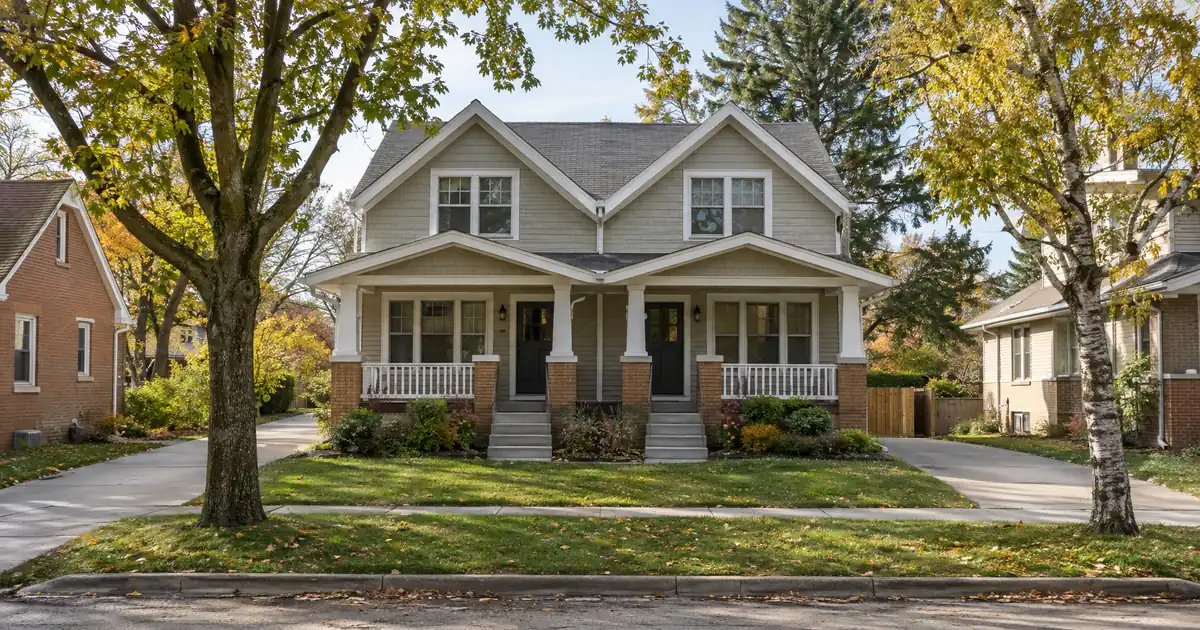
Two sources, two answers on what a West Allis house is worth. Zillow’s typical home value sits at $238,555, while Redfin’s median sale price runs $279,833. A cash-out refinance depends on the appraiser’s number, not either index. The proceeds are capped at 75% of that appraised value, so the spread between those two figures is the first thing to understand about equity extraction here.
TL;DR: A DSCR cash-out refinance in West Allis, Wisconsin is underwritten primarily on the property’s rental income measured against its full monthly obligation, not traditional personal-income documentation. It converts equity in a rental the investor already owns into capital, with proceeds shaped by the appraisal, the LTV ceiling, and lender review.
DSCR Cash-Out Calculator
Run the cash-out numbers in West Allis, WI
Rate source: Freddie Mac 30-yr average via FRED® — Federal Reserve Bank of St. Louis · effective Sep 24, 2026
Prefilled with starting assumptions — enter your property’s value, balance, taxes, and insurance for a more accurate picture.
Program parameters update from Lendmire’s centralized guideline source. Taxes and insurance are editable estimates.
As of Sep 24, 2026 · General Freddie Mac market benchmark, not a Lendmire loan offer. Property value, balance, taxes, and insurance are editable estimates. Maximum loan-to-value varies by lender, program, property type, and seasoning. Not a Loan Estimate, approval, or commitment to lend. Program availability and eligibility are subject to lender guidelines, credit approval, property review, and underwriting.
- Duplexes and small multifamily make up 18.90% of housing units, per NeighborhoodScout. That is the stacked-income opportunity.
- Cash-out tops out at 75% LTV, with about 6 months of seasoning from title recording.
- Single-family rentals at median prices sit near 1.0x including taxes and insurance. Duplexes clear more comfortably.
- Neighborhood comps are thin, so appraisal variance is the real risk here.
- These specifics are subject to lender guidelines and a full review of property, leverage, and credit.
West Allis Market Snapshot
A quick read on the West Allis investor landscape — figures come from the cited sources below. Confirm current property-level numbers before underwriting.
| Metric | Detail |
|---|---|
| Home prices | 103 sales (Movoto Market Trends) |
| Typical rents | $1,041 (City-Data) |
| Employment | 500+ employees (City of West Allis) |
Six Points: Where the Stacked Income Sits
Six Points and the Farmers Market district (ZIP 53214) is the strongest cash-out pocket in West Allis for DSCR purposes. Old industrial land has been redeveloped into a mixed-use district, and the surviving housing is mostly small 2–4 unit buildings, duplexes, and converted Victorians, per NeighborhoodScout’s Six Points profile. Two incomes on one title is exactly the structure a coverage ratio rewards.
The tenant story is commuting. Trike Property Management describes the area as five minutes to I-94 and ten minutes to downtown Milwaukee, and it sits close to the Milwaukee Regional Medical Center campus. City-Data reports only 6,700 workers (21.3%) both live and work in West Allis, so most residents take jobs elsewhere in the metro. A duplex tenant here is a Milwaukee-metro worker who wants a short drive to the interstate and a rent below what the new buildings charge.
That last point is the catch. The same neighborhood is getting new institutional supply, and it competes directly with older duplexes. More on that in the next section.
The upper/lower duplex is the typical product. For a refinance, it also means two leases, two rent comps, and a cleaner paper trail than a single-family rental with one tenant and one lease to prove.
Downtown and the New-Supply Problem
Downtown West Allis is a weaker cash-out play than Six Points right now. Skip it if your thesis depends on rent growth. The pipeline of new Class A apartments is large relative to the city’s renter base, and it lands on the same commuter tenants.
The city’s economic development office reports The Revv at 247 units now open, and The Apiary at 248 units was in the pipeline with first units expected around summer. Hoodline reports a proposed second phase at SoNa Lofts of roughly 117 more apartments, beside an existing 110-unit building. That is about 600 units, against 12,538 renter households per RentCafe.
A new building holds concessions to fill. An owner of a 1930s duplex a few blocks away doesn’t get to match those concessions. The prudent move is to stress-test rents on any 2–4 unit near Six Points and the Farmers Market. A refinance packaged on peak-month rents can look worse once the lender’s rent schedule or market-rent review comes in lower.
The price signal in the core is noisy, too. One Redfin City Center read showed a median of $243K, down 14.7% year over year, with homes selling in 32 days. A later read showed $285,000, up 22.8%. Neither is a trend. Both are small-sample noise.
Why the Appraisal Is the Real Risk
Appraisers anchor to sold comps, not to index values. In West Allis, the comps are thin enough that the neighborhood you refinance in can matter as much as the building.
Redfin’s neighborhood pages show how few sales sit behind each median. Wood Dale printed $260K, down 0.38%, on about seven sales. Greenfield Park printed $230K, down 10.7%, on three. Eckel Woods printed $265K, down 13.8%. With 3–7 sales a month, one renovated flip can swing a neighborhood’s percentage change by double digits.
So don’t size a refinance to a neighborhood-level gain. Use the city-level trend or a trailing multi-comp set. Redfin has the city at +3.6% year over year, while Zillow shows +5.4%, and the two disagree on level for a reason: Redfin reflects transactions, which skew toward renovated stock. If the building is unrenovated, underwrite toward the lower Zillow-type level and treat anything above it as upside.
Age of stock feeds the same problem. Per Point2Homes, the largest share of rentals, 21% or 2,729 units, were built in 1939 or earlier. BestNeighborhood puts the average home’s build year at 1957. Appraisers and lenders want rent-ready condition, and deferred maintenance can cost value on the appraisal, not just cash.
Running the Numbers: Duplex vs. Single-Family
Duplexes clear 1.00x with cushion in West Allis. Single-family rentals at median prices sit right at the line. The table below uses modeled assumptions, not sourced market comps, and every ratio includes full taxes and insurance (PITIA) at a 75% LTV refinance. Terms vary by lender guidelines, property type, leverage, credit profile, and full file review.
| Scenario (modeled) | Rent assumption | Coverage incl. Taxes and insurance |
|---|---|---|
| Duplex, $300K value | 2 units at $1,300 | Around 1.3x |
| Same duplex, softer rents | 2 units at $1,100 | Around 1.1x |
| SFR, $280K value | $1,800 rent | Just under 1.0x |
Run the numbers on the duplex first. Assume a $300,000 appraised value and two 2-bedroom units at $1,300 each. That sits comfortably in the band where the tenant pool is deepest: RentCafe says 52% of rentals fall between $1,001 and $1,500 a month. Coverage lands around 1.3x. Drop each unit to $1,100, which is plausible if a new building down the street is offering concessions, and it falls to around 1.1x. Still above the standard 1.00x benchmark, but the cushion is thin.
Now the single-family version. Say you own a three-bedroom appraised near $280,000, with a modeled rent of $1,800. Coverage comes in just under 1.0x including taxes and insurance. RentCafe’s average 3-bedroom rent is $1,827, but that figure covers only buildings with 50 or more units, so it overstates what an older single-family home will rent for.
For a sub-1.00 file, there are structures a lender may review: a sub-1.00 program, interest-only restructuring, or reduced leverage. Each comes with stronger credit, more reserves, or additional lender review, and none is a given. A 1.00x baseline is common because rent covers the payment at that level. Some lenders will look below it, but pricing and leverage usually change.
Rent sources also disagree. Averages run from Census-based median gross rent of $1,041 to RentCafe’s $1,478. Don’t underwrite to the high end. A realistic band for an older duplex unit is toward the lower-to-middle part of that range, and the lender’s rent schedule or market-rent review decides the final number.
What the Lender Wants to See
Six months. That is the seasoning clock on most cash-out files: about six months of ownership measured from title recording. Buy a West Allis duplex, renovate it, and the lender wants that clock run before the cash-out request, though specifics vary by lender and program.
If you want the mechanics in more depth, the equity-extraction mechanics page walks through them. The guide “What Is a DSCR Loan” covers the basics, and Lendmire’s refi programs cover rate-and-term versus cash-out structures. For borrowers weighing a bank, the conventional-vs-DSCR tradeoffs matter mainly if your traditional personal-income documentation undercounts your real income.
In markets like this, with older small-balance rentals and thin comps, the cleaner files from a documentation standpoint tend to have complete leases, entity paperwork, title, and property details ready for eligibility review before the appraisal is ordered. The common friction point is not the DSCR ratio. It is an appraisal that comes in under the owner’s expectation, which cuts the available proceeds and sometimes pushes a file into a different leverage tier. Owners of older duplexes who budget for that gap tend to have smoother files. If you’re structuring one, DSCR loan options for Wisconsin investors covers the state-level view, and the team can be reached at 828-256-2183.
(One reminder, once: verify current local rental rules, property taxes, and insurance with qualified local professionals. Wisconsin property taxes in particular can move a DSCR result.)
Who Rents Here, and Why It Holds
The tenant base is a workforce one, and that is a feature. Data USA shows resident employment concentrated in manufacturing (5,484 people), health care and social assistance (4,920), and retail trade (2,972). These count where residents live, not where they work, but the mix points to steady, mid-wage households rather than a single-employer dependency.
The city’s identity is industrial. The Encyclopedia of Milwaukee notes that Allis-Chalmers became Wisconsin’s largest employer, with about 15,000 employees on 160 acres. That factory era is gone, but the housing it built, small upper/lower buildings near the old works, is still the rental backbone.
Other anchors include Aurora West Allis Medical Center, the school district, and the city government itself, which says it has over 500 employees. The Wisconsin State Fair adds a seasonal layer: 1,136,805 visitors over 11 days at a 190-acre fairgrounds inside the city. I wouldn’t build a rental thesis on it. Treat it as a state-run anchor that adds seasonal hiring, not as an underwriting input.
According to NeighborhoodScout, West Allis has 59,784 residents and 28,311 housing units, and single-family homes are 50.88% of stock. Add the renter share (45% of households) and the case is simple: a deep renter pool in a stock that is half single-family and heavy on 2–4 units.
Frequently Asked Questions
How long do I have to own a West Allis duplex before a cash-out refinance?
Plan on about six months of ownership, measured from title recording. The clock matters most for investors who bought below market, renovated, and want the new value reflected in the loan. Specific seasoning rules vary by lender and program.
Can I pull cash out of a Six Points duplex with a DSCR loan?
Often, yes, subject to lender guidelines. Six Points is mostly 2–4 unit stock, and two units’ rents stacked against one payment is the structure DSCR programs are built for. The binding constraints are the 75% LTV ceiling, the appraisal, and reserves of about six months of PITIA.
DSCR vs. conventional financing
There are two common ways to finance an investment property in West Allis, WI, and they qualify you differently — here’s how investors weigh them.
Why investors choose it
- Qualifies on the property’s rental income — no personal tax returns, W-2s, or pay stubs needed to document income.
- No personal debt-to-income ceiling to clear, so existing mortgages and obligations don’t cap your borrowing the same way.
- Can be closed in an LLC, keeping the property inside a business entity.
- Built for scaling — not held to the limit on number of financed properties that conventional financing applies.
- Underwriting centers on the deal: generally qualifies when the rent covers the payment, a 1.00x coverage ratio being a common baseline (confirmed in underwriting).
- Designed specifically for investment property, including long-term and, where the program allows, short-term rentals.
Where it’s strong
- Often the lowest ongoing financing cost for a buyer who fully qualifies on personal income — a fit for a first property or a cost-first purchase.
Trade-offs for investors
- Requires full personal income documentation and must fit within a debt-to-income limit — salary, existing debts, and other mortgages all count.
- Typically held in your personal name rather than a business entity.
- Caps how many financed properties you can carry, which can become a ceiling as a portfolio grows.
- Evaluates you as a borrower as much as the property, which usually means more paperwork.
How investors usually choose: a first or single property often optimizes for the lowest financing cost; portfolio builders often optimize for leverage, vesting in an LLC, and scaling past conventional caps. The right answer depends on your goals, the property, and current guidelines — both paths run through select lenders in Lendmire’s wholesale network, with eligibility and terms confirmed in underwriting.
Will thin neighborhood comps hurt my appraisal in West Allis?
Yes, they can. Redfin’s neighborhood pages show only 3–7 sales a month, so a single comp can swing the appraiser’s view. Expect value variance, and size the request to a trailing multi-comp set rather than one hot month in one neighborhood.
Does new apartment supply near downtown threaten my rent numbers?
It’s a real risk near Six Points and the Farmers Market. About 600 units across The Revv, The Apiary, and SoNa Lofts compete for the same commuter tenants. A refinance packaged on peak rents can look weaker if concessions reset the market, so stress-test the income before the lender does.
Is a West Allis single-family rental a good cash-out candidate?
It depends on the rent. At median-ish prices, modeled coverage sits near 1.0x once taxes and insurance are included. If rent doesn’t clear that, options like reduced leverage or interest-only structures may be reviewed, but they aren’t guaranteed.
Where the Asymmetry Sits
The best opportunity is the older 2–4 unit building in the Six Points footprint, bought or held at workforce-rent pricing. The rent band is deep, the buildings are priced well below the new apartments around them, and two or three leases give the coverage ratio room that a single-family rental in the same city doesn’t have. Compare that to downtown, where new supply is the story, and to single-family at median prices, where coverage sits at the line.
The proceeds are only as good as the appraisal. Seasoned, rent-ready, documented duplexes with leases in the $1,000–$1,500 band are the cleanest paper in this market, and they are where the equity pulled out turns into the next deal.
For current guidelines and terms, see Lendmire’s DSCR loan programs page.
About Lendmire
A DSCR-focused mortgage broker, Lendmire (NMLS# 2371349) places investor financing across 41 markets — 40 states plus Washington, D.C. — with DSCR eligibility generally reviewed by the lender on property cash flow instead of traditional personal-income documentation, subject to lender guidelines. Lendmire was recognized by Scotsman Guide as a 2026 Top Workplace and is a 2025 Scotsman Guide Top Mortgage Workplace.
Get Started
Ready to find the right loan for you?
In about 30 seconds you can review financing options available for your investment property. No commitment required.
Informational only. Not a Loan Estimate, approval, or commitment to lend. Program availability and eligibility are subject to lender guidelines, credit approval, property review, and underwriting.
References
1. Zillow Home Values, West Allis
5. City-Data
6. westalliswi.gov — Work in West Allis
7. NeighborhoodScout’s Six Points profile
8. City of West Allis, Economic Development
10. Hoodline reports
11. RentCafe, West Allis rent trends
13. Wood Dale
14. Point2Homes
15. Census-based median gross rent of $1,041
18. Badger Institute, State Fair attendance
19. recognized by Scotsman Guide as a 2026 Top Workplace
20. a 2025 Scotsman Guide Top Mortgage Workplace
This article is part of Lendmire’s investment property cash-out refinance program — full qualification details, guidelines, and scenarios live on the program page.
Related reading: DSCR Cash Out Refinance in Greenfield, Wisconsin: Pulling Equity From the Older Duplex Blocks · Cash Out Refinance Investment Property in New Berlin, Wisconsin · DSCR Cash Out Refinance in Beloit, Wisconsin: The 2026 DSCR Financing Guide to Downtown Beloit
Guides: Investment Property Cash-Out Refinance in West Allis, WI · Investment Property Cash-Out Refinance in Wisconsin
Brandon Miller
Founder & CEO, Mortgage Loan Originator, Lendmire LLC
- Mortgage Loan Originator · NMLS# 1129696 · Verify on NMLS Consumer Access
- North Carolina Real Estate Broker · License# 343312 · Verify on NCREC
- North Carolina Insurance Producer · License# 19053198 · Property, Casualty, Life, Health · Verify on NAIC SBS
- Lendmire LLC · Firm NMLS# 2371349 · Verify firm licensure
Disclosure information. Lendmire is a state-licensed mortgage brokerage under NMLS# 2371349. Lendmire is not a depository institution, direct lender, or financial advisor — all loans referenced are placed through wholesale lender partners and are subject to each lender's underwriting standards. This article is provided for general informational purposes and is not a commitment to lend, nor does it constitute financial, legal, or tax advice. Loan programs, terms, rates, and qualification standards change without notice and depend on borrower profile, property type, and the state in which the subject property is located. Equal Housing Opportunity provider. NMLS Consumer Access: nmlsconsumeraccess.org.