
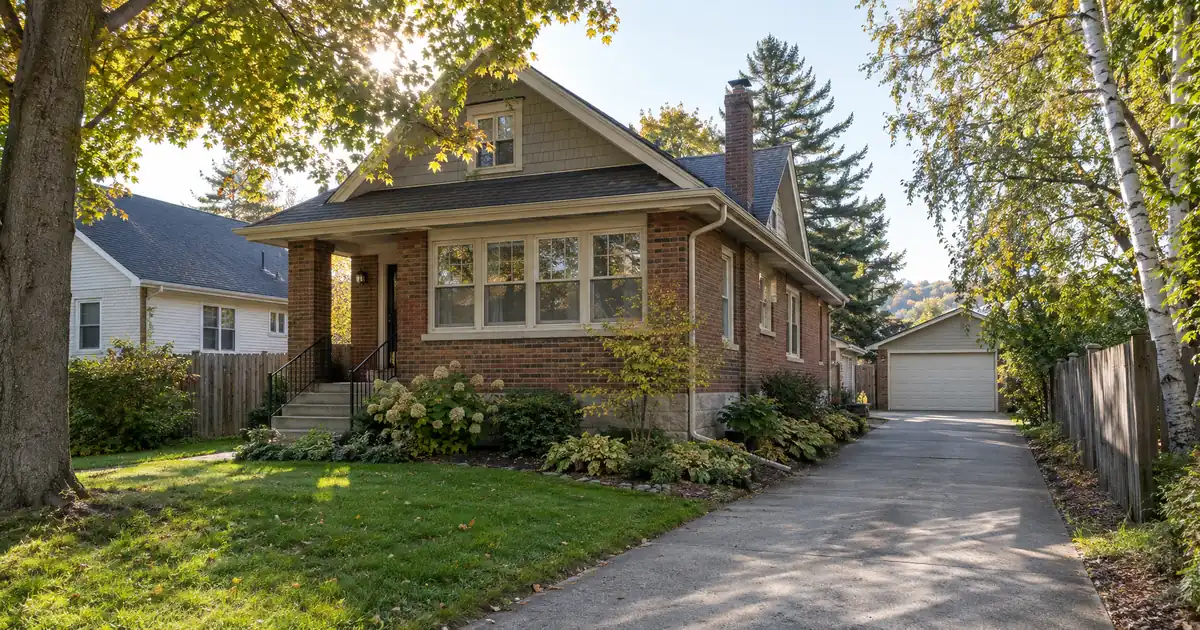
Picture an investor holding a duplex in the Lower Northside, bought a few years back with a loan balance that has barely moved. The appraisal would come in higher now, and the next deal is waiting. But the math on a cash-out pull depends on three things: the leverage cap, the rent schedule, and whether the building covers its own full monthly obligation. In La Crosse, the third item is where files stall.
Lendmire (NMLS# 2371349) works with investors buying or refinancing in La Crosse, Wisconsin, helping place DSCR financing across 41 markets, including Washington, D.C. This article covers the equity-extraction side only: what a La Crosse owner can realistically pull, and which buildings hold up under that math.
DSCR Cash-Out Calculator
Run the cash-out numbers in La Crosse, WI
Rate source: Freddie Mac 30-yr average via FRED® — Federal Reserve Bank of St. Louis · effective Sep 24, 2026
Prefilled with starting assumptions — enter your property’s value, balance, taxes, and insurance for a more accurate picture.
Program parameters update from Lendmire’s centralized guideline source. Taxes and insurance are editable estimates.
As of Sep 24, 2026 · General Freddie Mac market benchmark, not a Lendmire loan offer. Property value, balance, taxes, and insurance are editable estimates. Maximum loan-to-value varies by lender, program, property type, and seasoning. Not a Loan Estimate, approval, or commitment to lend. Program availability and eligibility are subject to lender guidelines, credit approval, property review, and underwriting.
Key Takeaways:
A DSCR cash-out refinance on an investment property in La Crosse, Wisconsin is underwritten primarily on the property’s rental income measured against its full monthly obligation, with proceeds capped at a 75 percent loan-to-value ceiling and a roughly six-month seasoning period counted from title recording, subject to lender guidelines.
- Single-family rentals in La Crosse tend to land well under 1.00x coverage, based on Zillow’s rent data measured against typical home values in the area.
- Multi-family listings span a wide price range, so extra doors carry the coverage.
- The city’s housing study reports actual vacancy running low.
- New downtown supply is the soft spot for amenity-driven rents.
La Crosse Market Snapshot
A quick read on the La Crosse investor landscape — figures come from the cited sources below. Confirm current property-level numbers before underwriting.
| Metric | Detail |
|---|---|
| Recent appreciation | +5.5% yoy (Zillow Home Values) |
| University enrollment | ~6,200 students (CouleeRegionJobs largest) |
| Employment | Over 1,000 employees (CouleeRegionJobs largest) |
| Vacancy | 3.1% (Habitat for Humanity La Crosse) |
Campus-Edge Small Multifamily: The Strongest File in Town
Small multi-unit buildings near the campuses are the best cash-out candidates in La Crosse. One 8-unit listing sits in downtown La Crosse, blocks from UWL and WTC, with leases running through a full school year. That is what a lender wants to see: a visible rent roll with dated leases.
The demand anchor is real. UW-La Crosse draws 10,000-plus students, and Viterbo and Western Technical College add to the enrollment base. Combined, that is well over 15,000 students in a city of roughly 52,000 residents.
Here’s the catch. Student leases follow the academic calendar. A building that turns over every May has a lease gap built into its year, and a lender reviewing in-place income will notice. The seller marketing on that same campus-area listing claims the building meets the “one percent rule.” That’s a seller’s pitch, not a market norm. Skip it when sizing a refinance.
Why Single-Family Struggles on the Cash-Out Math
Single-family in La Crosse does not clear 1.00x on a cash-out at full leverage. Run the numbers this way, as a modeled assumption: Zillow’s typical value of $242,696 against its $1,195 average rent is about 0.49 percent a month. Include taxes and insurance in the full obligation at 75 percent LTV, and coverage lands in the 0.7 range. Round down.
Sub-1.00 is not a dead end, but it changes the file. A lender may review a sub-1.00 program, an interest-only structure, or lower leverage with more cash left in the deal. Each carries different pricing and reserve expectations, and eligibility is subject to lender guidelines, credit approval, and property review. The DSCR calculation is monthly rent divided by the full monthly obligation: principal, interest, taxes, and insurance. Most standard programs are built around a 1.00x benchmark.
The four-bedroom outlier, at an average of $2,715 on Zillow, is one data point in a $425 to $3,900 range. Don’t build a refinance on it.
The Appreciation Math (Less Than It Looks)
Appreciation helps, but sources disagree, and the gap matters at appraisal. Zillow shows the typical value up 5.5 percent year over year. Redfin’s city median sale price is $265,000, up 16.5 percent, but only 45 homes sold that month. That is a thin sample. The county median of $320K includes pricier Holmen and Onalaska, so it doesn’t describe a city duplex.
Now the percentage math on a modeled owner. Say you bought at 80 percent LTV. Against a 75 percent cash-out cap, the value has to rise about 7 percent just to get your balance down to the ceiling. At 5.5 percent a year, that takes more than a year of appreciation before any cash appears. If the value climbs 15 percent, the original balance sits near 70 percent of the new value, which leaves roughly 5 percent of value as proceeds before costs. The calculator converts that into dollars. Prose shouldn’t.
The takeaway: the owner who bought at lower leverage, or who has held through a run of gains, has real room. The owner who bought at 80 percent last year mostly doesn’t. Equity available depends on rent used for lender review, the full obligation, reserves, and the 75 percent ceiling. It isn’t a guaranteed figure.
Six Doors on the North Side
The north side and Lower Northside are the workforce-rental entry point. Redfin’s neighborhood rent ranking puts the Lower Northside as the lowest-rent area of the four it lists, so treat it as a qualitative rank only. A six-unit north-side listing shows total rents of $6,200 a month, about $1,033 per door. A duplex listing breaks out $1,475 for a 3BR main level and $1,050 for a 2BR upper unit. Those are asking and in-place benchmarks from listings, not closed comps.
Rent per door in the $1,000 to $1,050 range ties closely to Zillow’s bedroom averages of $1,150 for a two-bedroom and $1,385 for a three-bedroom. Older stock should be underwritten at that lower band. Newer product, at $1,342 and $1,639 for the same sizes, is a different tenant and a different risk.
Run the numbers on the low end of multi-family pricing. A building listed at $359,900 with about $2,525 in combined duplex rents lands right around 1.0x including taxes and insurance, at 75 percent LTV. That is modeled, using a listing rent. It’s a coin flip, not a comfortable file. The six-unit shape works better because the numerator grows faster than the price.
Near the Hospitals: Demand You Can Document
Duplexes near the health systems have a different kind of tenant base: employment, not enrollment. Choose La Crosse puts Gundersen, now part of Emplify Health, at almost 9,000 employees and Kwik Trip at over 3,500 local coworkers. Mayo Clinic Health System runs its Franciscan campus here and serves over half a million people across southern Minnesota and western Wisconsin. One rental listing notes a duplex a block from Gundersen Hospital.
Employment-based tenants mean 12-month leases without a school-year gap. That’s easier for a lender to verify. It’s also easier for a reserves review, because steady in-place income doesn’t need a narrative.
Lendmire’s deal desk sees a consistent pattern on files from small college-and-hospital markets like this one. The cleaner files come in with an executed lease for every unit, a rent roll that matches the lease dates, and entity documents that match the title holder. The common friction point is the appraisal rent schedule: if the appraiser’s market-rent figure lands below in-place rents, coverage shifts and the file gets re-sized. Proof of seasoning, meaning the settlement statement and recording date, belongs in the package from the start. Reserves documentation of about six months of the full obligation should be seasoned in the account, not moved in the week before submission.
Downtown and Riverfront: Where I’d Underwrite Harder
New Class A supply is the risk nobody mentions in the “college town” pitch. A permit for 283 multi-family units on the former Tribune site was approved, though whether it has been built isn’t confirmed. Listings for buildings newly delivered show one-bedrooms at $1,350 to $1,625. Zillow still labels the overall rental market “COOL.”
A renovated older building competes for the same renters as a new one. If your in-place rents depend on downtown amenity demand, underwrite conservatively. Older stock in Washburn and the north side isn’t competing with those new buildings on the same terms, but it isn’t immune either.
This is a genuine toss-up for some owners. Downtown holds the highest rents, but also the highest exposure to new supply. Workforce buildings hold lower rents, but with less new competition. The stronger play for a cash-out is probably the building whose rents don’t need the new-build premium to cover. Investors chasing appreciation could argue the other way.
Why the Tight Market Helps the File
The vacancy story supports coverage. The city’s recent housing study puts actual vacancy at 3.1 percent, versus 6.4 percent in the American Community Survey (the figure is relayed by an advocacy group, so the study itself is the authority). The study also estimates a need of about 203 to 232 units a year through 2030.
The county housing needs assessment says household formation, not population growth, is driving demand. A 4.3 percent rise in headship produced roughly 3,000 additional households, alongside faster rent growth since 2020 and persistently low rental vacancy. That supports a long-hold rental thesis and works against a lender’s concern about rent softness on a refinance.
Still, tight vacancy doesn’t fix a thin sales sample. Zillow’s 5-day pending time and Redfin’s 14 days on market describe a fast-moving market, but on small volume. If the appraisal comes back light, an appraisal reconsideration with recent in-neighborhood sales and condition adjustments is a routine step, not an emergency.
What the Cash-Out File Needs
Cash-out is a refinance, so the file looks different from a purchase. The typical parameters, subject to lender guidelines and varying by borrower, property, and loan scenario:
| Item | Typical guidance |
|---|---|
| Max LTV, cash-out | 75 percent |
| Seasoning | About 6 months from title recording |
| Minimum DSCR | 1.00 baseline |
| Credit | 620 floor; tiers at 660, 680, 700 |
| Reserves | About 6 months of the full obligation |
Files that assume the seasoning requirement away get kicked back. The cash-out refinance walkthrough covers the mechanics, and Lendmire’s guide to investor refinance options lays out the alternatives if a cash-out doesn’t fit. If you’re weighing this against a bank product, Lendmire’s comparison of conventional and DSCR investor loans covers the tradeoffs. Wisconsin investors can also see Wisconsin DSCR financing for the state-level picture. LLC-titled properties are accepted subject to lender program eligibility.
Verify current local rental rules, taxes, and insurance with qualified local professionals before underwriting. To discuss a specific building, call 828-256-2183 or send over the file details.
Frequently Asked Questions
How long before I can cash out on a La Crosse duplex I just bought?
Typically about six months of ownership, measured from title recording. The settlement statement documents the date. If the purchase was recent, the seasoning clock decides the timing, not the appraisal.
DSCR vs. conventional financing
There are two common ways to finance an investment property in La Crosse, WI, and they qualify you differently — here’s how investors weigh them.
Why investors choose it
- Qualifies on the property’s rental income — no personal tax returns, W-2s, or pay stubs needed to document income.
- No personal debt-to-income ceiling to clear, so existing mortgages and obligations don’t cap your borrowing the same way.
- Can be closed in an LLC, keeping the property inside a business entity.
- Built for scaling — not held to the limit on number of financed properties that conventional financing applies.
- Underwriting centers on the deal: generally qualifies when the rent covers the payment, a 1.00x coverage ratio being a common baseline (confirmed in underwriting).
- Designed specifically for investment property, including long-term and, where the program allows, short-term rentals.
Where it’s strong
- Often the lowest ongoing financing cost for a buyer who fully qualifies on personal income — a fit for a first property or a cost-first purchase.
Trade-offs for investors
- Requires full personal income documentation and must fit within a debt-to-income limit — salary, existing debts, and other mortgages all count.
- Typically held in your personal name rather than a business entity.
- Caps how many financed properties you can carry, which can become a ceiling as a portfolio grows.
- Evaluates you as a borrower as much as the property, which usually means more paperwork.
How investors usually choose: a first or single property often optimizes for the lowest financing cost; portfolio builders often optimize for leverage, vesting in an LLC, and scaling past conventional caps. The right answer depends on your goals, the property, and current guidelines — both paths run through select lenders in Lendmire’s wholesale network, with eligibility and terms confirmed in underwriting.
Does a La Crosse single-family rental work for a DSCR cash-out?
Usually not at full leverage. With rents near 0.4 to 0.5 percent of value monthly, modeled coverage including taxes and insurance sits well under 1.00x. Lower leverage, a sub-1.00 program, or an interest-only structure may be reviewed, subject to lender guidelines.
Will an appraisal support Redfin’s 16.5 percent price jump?
Don’t count on it. That median comes from a small month of sales, and Zillow’s index shows 5.5 percent. Appraisers lean on closed comps in the immediate area, so size the refinance on the conservative number.
Do student leases hurt a cash-out near the campuses?
They can, depending on how the leases are structured. Leases that end with the academic year create a gap that a lender weighs when reading in-place income. A fully leased rent roll with dated leases and a clear renewal pattern is the cleaner package.
Does new downtown construction affect an older duplex?
It can, where rents rely on downtown-adjacent demand. Underwrite to Zillow’s bedroom averages rather than new-build rents, and keep a modest vacancy factor.
About Lendmire
Lendmire (NMLS# 2371349) is a mortgage brokerage focused on DSCR investor financing, helping arrange programs through wholesale and investor-lending channels in 41 markets, including Washington, D.C. DSCR loans are evaluated by the lender on property cash flow rather than personal income, subject to lender guidelines, supporting LLC closings and accommodating investors with four or more financed properties. Scotsman Guide named Lendmire a Top Mortgage Workplace in both 2025 and 2026.
Get Started
Ready to find the right loan for you?
In about 30 seconds you can review financing options available for your investment property. No commitment required.
Informational only. Not a Loan Estimate, approval, or commitment to lend. Program availability and eligibility are subject to lender guidelines, credit approval, property review, and underwriting.
References
1. Zillow Rental Manager, La Crosse
2. Multi-family listings run $359,900 to $825,000
3. habitatlacrosse.org — La Crosse City Council Candidate Survey
4. Zillow Home Values, La Crosse
7. UW-La Crosse
9. Redfin La Crosse Housing Market
10. $320K
11. Redfin — La Crosse Multi Family Homes for Sale
12. Apartments.com — La Crosse WI Recent Build
13. Choose La Crosse
14. Mayo Clinic Health System, La Crosse
16. ApartmentHomeLiving — Apartments for Rent New
17. RDG Planning, La Crosse Housing Study
18. La Crosse County Housing Needs Assessment
19. 2025
20. 2026
This article is part of Lendmire’s investment property cash-out refinance program — full qualification details, guidelines, and scenarios live on the program page.
Related reading: Cash Out Refinance Investment Property in La Crosse WI · Cash Out Refinance Investment Property in Stevens Point, Wisconsin: How the Rent Math Clears at 75% LTV · DSCR Cash Out Refinance in Eau Claire, Wisconsin: How Rent Math Clears at 75% LTV on the Hill
Guides: Investment Property Cash-Out Refinance in La Crosse, WI · Investment Property Cash-Out Refinance in Wisconsin
Brandon Miller
Founder & CEO, Mortgage Loan Originator, Lendmire LLC
- Mortgage Loan Originator · NMLS# 1129696 · Verify on NMLS Consumer Access
- North Carolina Real Estate Broker · License# 343312 · Verify on NCREC
- North Carolina Insurance Producer · License# 19053198 · Property, Casualty, Life, Health · Verify on NAIC SBS
- Lendmire LLC · Firm NMLS# 2371349 · Verify firm licensure
Required disclosures. Lendmire (NMLS# 2371349) operates as a licensed mortgage broker, not a direct lender or depository. The discussion in this article is general in nature and should not be relied upon as financial, legal, or tax advice — every investment scenario is unique and should be reviewed by a qualified professional. Any loan inquiry is subject to lender underwriting, and this article is not a commitment to lend or a guarantee of approval. Mortgage rates, loan terms, and program guidelines vary by borrower, property, and state, and may change without notice. Equal Housing Opportunity. Verify licensure at NMLS Consumer Access.