
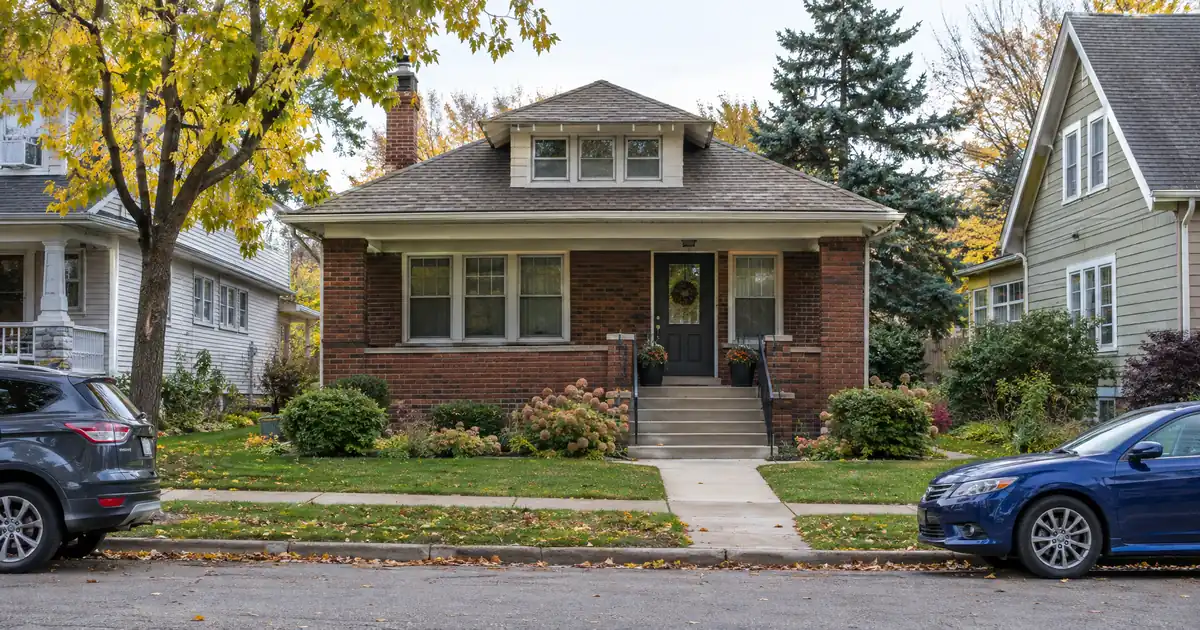
Picture two Sheboygan owners with similar equity. One holds a single-family rental near the $235,000 median sale price that Redfin reports for the city, renting at the $1,700 house median Zumper shows. The other holds an older duplex with two modest rent streams. The duplex owner generally has more room to pull equity out. Rent-to-price on the house is thin, so the loan gets sized by coverage rather than by appraised value, and the second owner’s stacked rents clear the test with more cushion.
TL;DR: A cash-out refinance in Sheboygan, Wisconsin, is underwritten primarily on the property’s rental income measured against its full monthly obligation, which favors small multi-unit owners over single-family holders with thin rent-to-price ratios.
DSCR Cash-Out Calculator
Run the cash-out numbers in Sheboygan, WI
Rate source: Freddie Mac 30-yr average via FRED® — Federal Reserve Bank of St. Louis · effective Sep 24, 2026
Prefilled with starting assumptions — enter your property’s value, balance, taxes, and insurance for a more accurate picture.
Program parameters update from Lendmire’s centralized guideline source. Taxes and insurance are editable estimates.
As of Sep 24, 2026 · General Freddie Mac market benchmark, not a Lendmire loan offer. Property value, balance, taxes, and insurance are editable estimates. Maximum loan-to-value varies by lender, program, property type, and seasoning. Not a Loan Estimate, approval, or commitment to lend. Program availability and eligibility are subject to lender guidelines, credit approval, property review, and underwriting.
- Median house rent is $1,700 against $1,192 for apartments, a gap that squeezes single-family coverage.
- The city’s housing study believed rental vacancy was below 1 percent.
- Cash-out leverage tops out at 75 percent LTV, with seasoning of about six months.
- Rising values with soft listing rents mean equity grows faster than coverage.
Why Sheboygan Equity Is Easier to See Than to Extract
Values here are rising faster than rents, and that gap is the whole story for a cash-out. Redfin puts the city’s median sale price up 8.6 percent year over year at $235,000, with homes sitting about 42 days. Zillow measures the county differently, at an average home value of $330,025, up 5.6 percent. That is an estimated value across a wider geography, not a competing city median, so this article uses the Redfin city figure for city-level math. Meanwhile Zumper shows average city rent at $1,197, down 4.2 percent year over year.
Appreciation lifts the appraisal, which raises the 75 percent LTV ceiling. It does nothing for rent. Because DSCR underwriting divides rent used for lender review by full monthly obligation (principal, interest, taxes, insurance, and any HOA dues), the loan amount an owner can actually use is usually set by coverage, not by the ceiling. Treat the LTV cap as the outer limit, not the expected outcome.
This is a skeptic’s read of the market. Rising comps help an appraisal. Equity on paper and equity you can borrow against a rent roll are different things.
What the Employer Base Says About Tenant Durability
Sheboygan’s tenant pool is anchored by manufacturing and healthcare, not students. The Sheboygan County Economic Development Corporation lists Kohler Co. at 5,000 or more employees, the only employer in the county in that tier. Bemis Manufacturing, Aurora Medical Group, Nemak, Sargento, and Acuity each sit at 1,000 or more. Johnsonville and HSHS St. Nicholas Hospital, a 185-bed nonprofit community hospital on Superior Avenue, land in the 500 to 999 band.
Many of those plants sit in Sheboygan Falls and Kohler, so tenant demand runs beyond the city limits. The city itself holds 42 percent of county residents per the City of Sheboygan Housing Study, and Census Bureau QuickFacts counts 49,645 residents with a median age of 36.8. Lakeland University and Lakeshore College are small enough that student housing is not the demand story. Working adults are.
That employer diversity matters for a lender’s eye on a refinance. A single-plant town can empty out; a county with insurance, healthcare, food processing, and aluminum die-casting under one roof is harder to shock.
The Single-Family Trap
The house-rent math is where Sheboygan owners get surprised. Zumper’s $1,700 median house rent against the $235,000 median price works out to roughly 0.7 percent monthly rent-to-price. Run the numbers on a modeled case: assume a $235,000 value, $1,700 in rent used for lender review, a 75 percent LTV cash-out, and a full-PITIA calculation that includes taxes and insurance. Coverage lands around 1.05, close enough to the 1.00 benchmark that any slip in rent or any rise in insurance can push the number below it. These are modeled assumptions, not market data.
Drop leverage and the picture changes. At 65 percent LTV on the same modeled house, coverage rises above 1.2, but the proceeds shrink. That trade-off is the core of the single-family cash-out decision here: more cash out means thinner coverage, and a sub-1.00 file may need a different structure or more cash in the deal.
Some lenders do review sub-1.00 and no-ratio scenarios, but those typically carry stronger compensating factors, lower leverage, or different pricing. Eligibility is subject to lender guidelines, credit profile, reserves, and property review.
Sheboygan’s rent sources also disagree, so use ranges. Zumper reports three-bedrooms at $1,600, and Rentometer shows $1,679 for three-bedrooms and $1,741 for four-plus. A reasonable listing-based band for a family-sized unit is $1,600 to $1,700. Anyone underwriting a refinance on a house should assume the lower end.
Why Two Doors Beat One
Older-stock duplex and small multifamily units rent well below the single-family median, but two of them stack. Listing snapshots show older units in the roughly $1,000 range, with studios and one-bedrooms in small buildings starting lower. Those are anecdotal listings, useful as illustrations, not as a rent roll.
Run the numbers on a modeled duplex. Assume a $260,000 value and $2,100 in combined rent, with a 75 percent LTV cash-out and full taxes and insurance in the calculation. Coverage comes out in low-1.2 territory. That is a modeled scenario, not a quoted deal, but it shows why two modest rent streams against one purchase price can clear where a $1,700 house does not. Underwrite each unit at its own lower rent, not at the house figure.
The city’s own housing study points the same way. According to Sheboygan Press coverage of the study, consultants say smaller lots could support “missing middle” workforce housing such as duplexes, townhomes, and cottage courts. The study also projects a need for 2,165 rental units once employer needs are included, split between 1,125 market-rate and 1,040 affordable or workforce rentals. These are recommendations, not adopted policy, but they show where the market’s own analysts see the shortage.
Working DSCR brokers see a recurring pattern in tight-vacancy industrial markets: the single-family house gets appraised well but rents like an apartment, and the borrower arrives expecting a cash-out sized to value. The file then gets sized to rent instead. Owners with two- to four-unit holdings usually have the easier conversation, because the rent roll, not the appraisal, is what the lender reviews. Running coverage before applying prevents most surprises.
Where Coverage Holds Up: Submarkets in Plain View
The research found no reliable neighborhood-level prices or rents, so submarkets are described by tenant base and anchor, not by number.
North Side. Residential and light-industrial, with a mix of condos, duplexes, and larger-bedroom units, and close to the I-43 corridor toward Acuity and the replacement Aurora hospital. Manufacturing workers drive demand. This is the strongest candidate for small multifamily income stacking.
Far North Side and the I-43 corridor. Newer apartment communities sit here, along with employers including Acuity, Aurora, and Kohler. It suits small newer rentals. Newer construction can compete with an owner’s older units, so rent comps matter more than headline demand.
Near-East and the Superior Avenue corridor. The 185-bed HSHS St. Nicholas campus anchors healthcare-worker demand. No separate neighborhood data exists, so treat this as an employer-adjacency thesis.
Gateway, The Flats, River Watch, and Business Drive South. Apartments.com names River Watch, The Flats, and Business Drive South as the most affordable neighborhoods. Lower rents mean a thinner numerator on any coverage test. Skeptics should note this is a rent ranking, not a price or yield ranking.
Downtown and Riverfront. Walkable, with the lakefront, harbor, and the Kohler arts campus nearby. Tenants skew toward young professionals, healthcare staff, and hospitality workers. Zumper’s downtown sample was small and soft, so this is the submarket where a cash-out should lean on conservative rent assumptions rather than asking rents on live listings.
(Higher asking rents on downtown listings are not the same as achieved rents. Lenders look at the latter.)
Vacancy: The Number That Cuts Both Ways
The city housing study’s consultants believed rental vacancy was below 1 percent, and they recommended a healthy range of 4 to 7 percent. The study also found only six units available within HUD Fair Market Rents on Apartments.com, and it described higher-income tenants “renting down,” which crowds lower-income renters. That supports demand for older, lower-rent stock, which is where duplexes sit.
Two cautions apply. First, the study covers a period that predates Zumper’s softer listing data, so the vacancy finding is not current. Second, tight vacancy supports occupancy but not necessarily rent growth, which is why coverage can stay flat while values climb. In March 2024 the city created four Tax Increment Districts that include housing costs, and the study projects employers needing 1,500 to 2,000 new workers. Both point toward more supply over time, which is a long-horizon market-rate factor for owners holding older units.
Seasoning, Leverage, and Where the Proceeds Go
Cash-out files typically look for about six months of ownership, measured from title recording, though lender guidelines vary. For recently acquired Sheboygan rentals, that clock matters more than most owners expect. Appreciation that happened inside the window may not be accessible yet.
Typical program guidance for cash-out on investment property includes:
| Factor | Typical guidance |
|---|---|
| Max cash-out LTV | 75 percent |
| Seasoning | About 6 months |
| Minimum DSCR | 1.00 benchmark |
| Credit floor | 620 on most files |
| Reserves | About 6 months PITIA |
These are guideline ranges, subject to lender guidelines, credit approval, and property review. For more detail on the ratio itself, see the guide “What Is a DSCR Loan”. For investors who have outgrown conventional financed-property limits, the guide “Where DSCR and Conventional Diverge” covers the trade-offs. Loan amounts generally run up to $3,000,000 on standard programs, though Sheboygan balances sit far below that.
DSCR vs. conventional financing
There are two common ways to finance an investment property in Sheboygan, WI, and they qualify you differently — here’s how investors weigh them.
Why investors choose it
- Qualifies on the property’s rental income — no personal tax returns, W-2s, or pay stubs needed to document income.
- No personal debt-to-income ceiling to clear, so existing mortgages and obligations don’t cap your borrowing the same way.
- Can be closed in an LLC, keeping the property inside a business entity.
- Built for scaling — not held to the limit on number of financed properties that conventional financing applies.
- Underwriting centers on the deal: generally qualifies when the rent covers the payment, a 1.00x coverage ratio being a common baseline (confirmed in underwriting).
- Designed specifically for investment property, including long-term and, where the program allows, short-term rentals.
Where it’s strong
- Often the lowest ongoing financing cost for a buyer who fully qualifies on personal income — a fit for a first property or a cost-first purchase.
Trade-offs for investors
- Requires full personal income documentation and must fit within a debt-to-income limit — salary, existing debts, and other mortgages all count.
- Typically held in your personal name rather than a business entity.
- Caps how many financed properties you can carry, which can become a ceiling as a portfolio grows.
- Evaluates you as a borrower as much as the property, which usually means more paperwork.
How investors usually choose: a first or single property often optimizes for the lowest financing cost; portfolio builders often optimize for leverage, vesting in an LLC, and scaling past conventional caps. The right answer depends on your goals, the property, and current guidelines — both paths run through select lenders in Lendmire’s wholesale network, with eligibility and terms confirmed in underwriting.
Holding title in an LLC is common for rentals, subject to lender program eligibility.
The proceeds question deserves as much attention as the loan. Cash from a refinance on a Sheboygan duplex generally goes one of three places: down payment capital for a second small multifamily, renovation of older units, or reserves. The stronger play might be the second duplex over the renovation, because rent growth is flat. Tight vacancy tends to fill units regardless of finish level, so renovation spending may not produce proportionate rent. Honestly, it is a toss-up that depends on the unit’s condition, so run both scenarios before committing.
Where Investors Get It Wrong in Sheboygan
- Assuming appreciation equals access. Equity access depends on rent used for program review, full PITIA, reserves, and the 75 percent LTV ceiling. It is not a guaranteed cash figure.
- Using asking rents. Listing pages show asks, not medians. Zumper’s average is $1,197, and Apartments.com’s older reading is $1,033. Use ranges, attributed.
- Ignoring supply. The study’s own recommendations point toward new construction and density over time.
- Overweighting resort glamour. Whistling Straits and the arts campus add hospitality-sector renters, but no source here shows they drive rent levels. Treat them as a modest tenant-mix factor.
- Skipping the local-rules check. Verify current local rental rules, taxes, and insurance with qualified local professionals before sizing any deal.
For a quote tailored to a specific Sheboygan property, start your quote or call 828-256-2183.
Frequently Asked Questions
How do you qualify for a DSCR cash-out refinance in Sheboygan?
Qualification centers on the property’s rent used for eligibility review against its full monthly obligation, with a 1.00 benchmark common on standard programs. Lenders also review credit (620 is a typical floor), reserves of about six months, and roughly six months of seasoning. For a Sheboygan house renting near $1,700, coverage at 75 percent LTV is tight, so the file may need lower leverage. Eligibility is subject to lender guidelines.
What are the requirements for an investment property loan in Sheboygan, Wisconsin?
Requirements typically include a minimum credit score, reserves, rent used for the lender’s review supported by a lease or appraisal rent schedule, and leverage within program caps (75 percent for cash-out). Eligible property types include single-family, duplexes, and small multifamily. Manufactured homes, log homes, and barndominiums fall outside these programs. Exact terms vary by borrower, property, and lender.
Does Sheboygan’s sub-1 percent vacancy mean a cash-out will be easy to approve?
No. Low vacancy supports occupancy, but lenders size to rent, not to occupancy. The city housing study’s vacancy finding comes from a period before softer listing rents showed up in Zumper’s data. A fully leased single-family house at $1,700 can still land near the 1.00 line once taxes and insurance are included.
Is a duplex or a single-family rental the better cash-out candidate in Sheboygan?
Usually the duplex, on the coverage math. Two modest rents against one value tend to produce a stronger ratio than one house at the median rent, as the modeled scenarios above show. The housing study also identifies missing-middle units as what the market lacks. Condition, rent comps, and each unit’s own rent still decide the outcome.
Can Lendmire help investors explore DSCR financing for properties outside Wisconsin?
Yes. A key program feature is that eligibility is generally reviewed around the property’s rental income instead of personal income documentation, subject to program terms.
Your Next Move
Sheboygan’s housing study describes a county that needs thousands of rental units while listing rents drift softer, so the real question for your own property is this: if the appraisal comes in high but the rent roll only supports a conservative loan, would you rather take less cash out of the house you own, or use the equity you do have to add a second door?
For current guidelines and terms, see Lendmire’s DSCR loan programs page.
About Lendmire
Lendmire is a DSCR-focused mortgage brokerage, NMLS# 2371349, placing investor loans across 41 markets, including Washington, D.C. A lender generally reviews DSCR eligibility around a property’s rental income rather than personal income documentation, which suits LLC-held rentals, self-employed investors, and portfolios growing past conventional financed-property limits. Lendmire has been recognized by Scotsman Guide as a 2026 Top Workplace and recognized by Scotsman Guide in 2025.
For broader investor-financing rules and property-type coverage across the state, see Wisconsin DSCR loans.
Investors weighing their equity options can start with cash-out refinance on an investment property.
Get Started
Ready to find the right loan for you?
In about 30 seconds you can review financing options available for your investment property. No commitment required.
Informational only. Not a Loan Estimate, approval, or commitment to lend. Program availability and eligibility are subject to lender guidelines, credit approval, property review, and underwriting.
References
1. Redfin, Sheboygan housing market
2. Zumper, Sheboygan rent research
3. City of Sheboygan Housing Study
4. Zillow, Sheboygan County home values
5. Sheboygan County Economic Development Corporation, Top Employers
7. Census Reporter, Sheboygan profile
8. Rentometer, Sheboygan metro
10. recognized by Scotsman Guide as a 2026 Top Workplace
11. recognized by Scotsman Guide in 2025
This article is part of Lendmire’s investment property cash-out refinance program — full qualification details, guidelines, and scenarios live on the program page.
Related reading: Cash Out Refinance on a Sheboygan Investment Property · Cash Out Refinance Investment Property in West Bend, Wisconsin: How Much Equity Can My Rent Unlock? · DSCR Cash Out Refinance in West Bend, Wisconsin: Can Your West Bend Rent Cover a Cash-Out Loan?
Guides: Investment Property Cash-Out Refinance in Sheboygan, WI · Investment Property Cash-Out Refinance in Wisconsin
Brandon Miller
Founder & CEO, Mortgage Loan Originator, Lendmire LLC
- Mortgage Loan Originator · NMLS# 1129696 · Verify on NMLS Consumer Access
- North Carolina Real Estate Broker · License# 343312 · Verify on NCREC
- North Carolina Insurance Producer · License# 19053198 · Property, Casualty, Life, Health · Verify on NAIC SBS
- Lendmire LLC · Firm NMLS# 2371349 · Verify firm licensure
Compliance and disclosures. Lendmire (NMLS# 2371349) is a licensed mortgage broker and is not a direct lender, depository institution, financial advisor, or tax professional. Content in this article is general market analysis and educational information — not financial, legal, or tax advice for any specific situation. Lendmire does not guarantee loan approval; every transaction is subject to underwriting by the funding lender. Mortgage pricing and loan program guidelines are subject to change at any time without notice and vary by borrower characteristics, property type, and state regulations. Lendmire complies with Equal Housing Opportunity. Licensure verification: NMLS Consumer Access.