
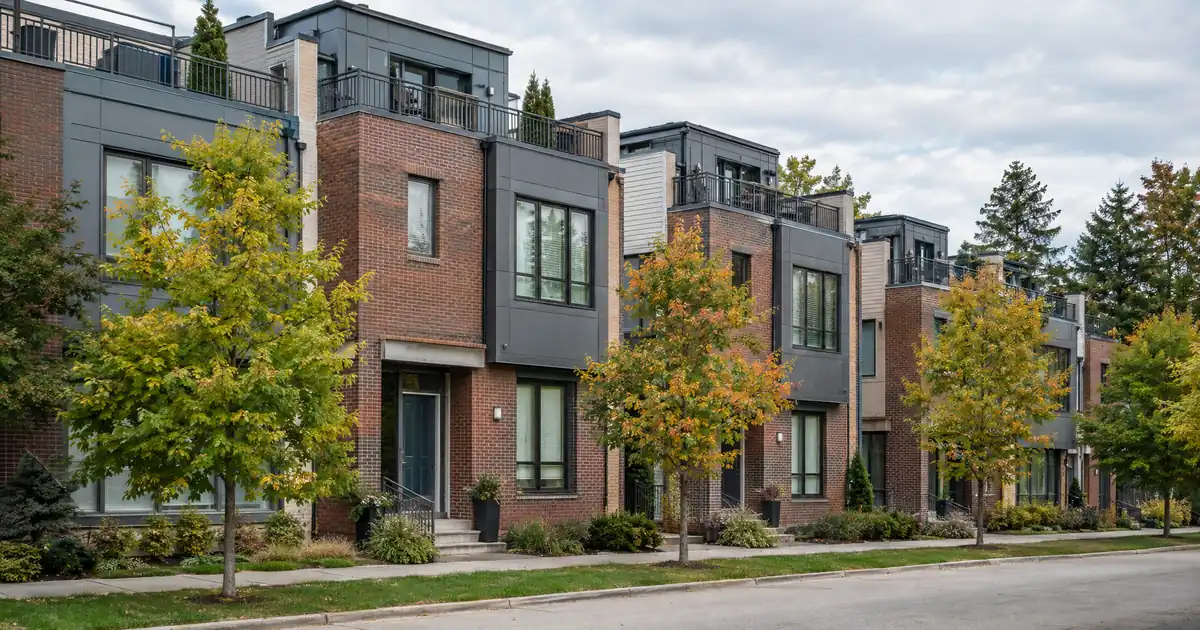
Picture two Pewaukee owners with equal equity. One holds a lake-area house in a market where lakefront estates go for over $1,000,000. The other holds an attached unit near the town’s condo pockets, where one recent condo sale printed at $270,000. Both want a DSCR cash-out refinance. The math favors the second owner, because the rent-to-debt ratio on the higher-priced house is thin enough that the coverage test, not the equity, sets the proceeds.
This article is about pulling equity out of a Pewaukee rental you already own. It is not about buying one.
DSCR Cash-Out Calculator
Run the cash-out numbers in Pewaukee, WI
Rate source: Freddie Mac 30-yr average via FRED® — Federal Reserve Bank of St. Louis · effective Oct 1, 2026
Prefilled with starting assumptions — enter your property’s value, balance, taxes, and insurance for a more accurate picture.
Program parameters update from Lendmire’s centralized guideline source. Taxes and insurance are editable estimates.
As of Oct 1, 2026 · General Freddie Mac market benchmark, not a Lendmire loan offer. Property value, balance, taxes, and insurance are editable estimates. Maximum loan-to-value varies by lender, program, property type, and seasoning. Not a Loan Estimate, approval, or commitment to lend. Program availability and eligibility are subject to lender guidelines, credit approval, property review, and underwriting.
The Quick Read:
A DSCR cash-out refinance in Pewaukee, Wisconsin is underwritten primarily on the property’s rental income measured against its full monthly obligation, rather than on the borrower’s personal income. The file still has to hold together from start to finish: title seasoning and a rent schedule at the front, then the appraisal and reserves documentation, and finally a lender-reviewed payoff and proceeds reconciliation at settlement.
- Single-family rents sit near 0.45% of value against a $460K Redfin median.
- Townhomes and condos pencil better, until HOA dues enter the payment.
- Cash-out caps at 75% LTV, after roughly 6 months of ownership.
- ProHealth Care employs 4,300 people county-wide, which anchors long-term tenant demand.
- Terms vary by lender guidelines, property type, leverage, credit profile, and full file review.
Why Single-Family Coverage Struggles Here
Single-family coverage in Pewaukee runs well under 1.00. Zumper puts the average house rent at $2,050, and Redfin’s median sale price is $460K. That is roughly 0.45% a month of value. This is Lendmire Research’s own arithmetic from two sources, not a published statistic.
Model it at 75% LTV with the full payment, meaning principal, interest, taxes, and insurance. Coverage lands around 0.65x to 0.75x. That is modeled, not quoted, and it is well short of the 1.00 benchmark most standard DSCR programs are built around. Exact terms depend on the lender’s guidelines, property type, leverage, and a full review of the borrower’s file.
A sub-1.00 result does not end the conversation. A lender may review a sub-1.00 program, a lower cash-out LTV, or an interest-only structure. Each of those carries its own pricing, leverage, and reserve conditions, and eligibility depends on lender guidelines, credit profile, and property review. The practical read is that the cash-out here is sized by coverage first, equity second.
One more caution on the price baseline. The sources disagree widely. Redfin’s $460K is the figure used here. Resideline shows a 12-month median of $445,450 with the middle half of sales between $335,000 and $703,000. Houzeo shows $655,000, likely a different geography or property mix. A $335K asset and a $700K asset behave very differently on coverage, so quote the subject property’s own comps, not a citywide median.
Where the Ratio Improves (Townhomes and Condos)
Attached product is the better cash-out candidate. The condo sale mentioned above, a 1-bed, 1,087 sq ft unit in the Meadowgrass pocket, is a single comp, not a median. Current asking rents on small units run from about $1,209 to $1,875 for two-bedrooms and near $1,250 for a one-bedroom, per Zillow’s condo listings. Those are asking rents from individual listings.
A rent of $1,250 to $1,400 against a $270K basis works out to roughly 0.46% to 0.52% a month. That is a modest edge over single-family, and it is an inference, not a market statistic.
Here’s the catch. HOA dues go into the monthly obligation and can erase that edge. Condo certification and HOA questionnaire completeness are the usual friction points. A blank reserve line or an incomplete budget on the questionnaire stalls a file for reasons unrelated to rent. Underwrite these unit by unit.
The South Pewaukee and Grandview Boulevard-to-I-94 corridor is the other pocket worth a look. City-data shows hotels and an office park cluster along N. Grandview Blvd. Townhomes such as Hunter’s Ridge sit near Interstate 94. No sourced rent or price data exists at the submarket level, so treat this as a qualitative read, not a coverage claim.
Run the lakefront through the same test, and it is a niche. At seven-figure values, rent-to-value is too thin for this structure unless leverage drops far below the cap. (Owners there tend to hold for appreciation, not cash flow, and the refinance logic should match.)
Seasoning, LTV, and What the Appraisal Will See
Cash-out on a DSCR file typically caps at 75% LTV. The file generally needs about 6 months of ownership measured from title recording, documented by the settlement statement and recorded deed. Credit tiers commonly start at a 620 floor, reserves run about 6 months of PITIA (about 9 months above $1,500,000), and standard programs reach up to $3,000,000. These are guideline ranges, subject to lender and program terms. Files that assume the seasoning clock away get kicked back.
The appraisal is the bigger Pewaukee risk. The market is thin. Houzeo counted just 10 sales in a recent month and about 4.6 months of supply. Redfin shows homes averaging 63 days on market versus 50 the year before. Fewer close comps means more appraisal variance on a refinance.
Treat appraisal reconsideration as a routine step, not an emergency. A packet with recent same-product sales, condition adjustments, and a clear explanation of why a lake-adjacent comp does not fit an inland townhome can recover value. Comps must match the subject’s product type.
Price momentum is flat to modest. Redfin shows a 0.65% year-over-year decline, and Houzeo shows a 0.41% gain. Neither source supports underwriting on appreciation. Cash-out proceeds depend on your acquisition basis and any value you added, not on market drift.
Demand Anchors Behind the Rent Roll
Tenant demand is real but small-scale. Pewaukee (city and village combined) has a 2024 population of 16,437 per city-data. RentCafe shows 2,779 renter-occupied households (25%) against 8,350 owner-occupied (75%). Its data covers buildings with 50+ units only, so it does not describe 2-4 unit rents. Within that set, 71% of rentals fall between $1,501 and $2,000 and average rent barely moved year over year.
Employment sources point the same direction. Data USA lists manufacturing (986 people), health care and social assistance (667), and retail (454) as the largest industries, with a 20.9-minute average commute. Milwaukee 7 names Generac, Milwaukee Tool, GE HealthCare, and Kohl’s as Waukesha County anchors. ProHealth Care runs the UW Cancer Center in Pewaukee.
Then there is the college. Waukesha County Technical College has its main campus in Pewaukee, on 110 acres since 1972. Its own release projected total headcount rising from 18,024 to 18,650 between consecutive academic years. A narrower credit-based count is much lower, so the definition matters. Students, staff, and training-program renters support small-unit demand near the campus, but no sourced rents exist for that area.
Two municipalities share the Pewaukee name, the City and the Village. Confirm which jurisdiction a property sits in, and verify current local rental rules, taxes, and insurance with qualified local professionals.
What Happens to the Proceeds?
Cash-out proceeds are only worth pulling if they become capital for the next deal, and Pewaukee’s flat rents shape how you should use them. Rents are flat to slightly down. Zumper shows average rent down 4% year over year. Do not underwrite a cash-out on rent growth, and stress-test lease-up, because a 25% renter share is a shallow pool for small-landlord units. Every figure here varies by lender and program — guidelines, property type, leverage, and credit profile all apply.
The more defensible play here is a lower-basis, lower-leverage cash-out, not a high-LTV extraction. Pull less, keep coverage closer to 1.00, and keep the reserves documentation clean. Then redeploy into a market with stronger rent-to-value, or into a Pewaukee attached unit. This is a genuine toss-up for owners who are appreciation-minded: keep the lake-area asset and extract modestly, or sell and redeploy. The coverage test favors the former only if you accept smaller proceeds.
Lendmire’s deal desk sees a pattern in suburban markets like this one: the common friction point is not the rent number, it is the paper around it. Cleaner files tend to arrive with a signed lease or rent schedule, entity documents in order for LLC-titled properties (subject to lender program eligibility), a recorded-deed date that clears seasoning, and reserve statements dated recently. The files that stall are usually the ones where the appraiser’s comps and the owner’s value assumption diverge by a lot.
For the mechanics, see the guide “What Is a DSCR Loan” and the cash-out qualification details. Other structures are covered under refinancing options, and the comparison lays out where this differs from conventional financing. Statewide context sits on the page for DSCR loans in Wisconsin.
Where the Answer Flips
The math flips in three situations. First, it flips if the property is a duplex or small multifamily. No sourced supply data exists, and the housing stock reads as primarily single-family, but a small multi-unit with two rents against one basis would change the ratio. Second, it flips if the original basis is far below today’s value, in which case the 75% cap leaves room even at lower leverage. Third, it flips if the borrower has strong reserves and a lender that reviews sub-1.00 files, in which case proceeds can be larger, at different pricing and terms.
It flips the other way for a recent buyer at a high basis. Seasoning blocks the file at the front, and thin coverage caps it at the back.
Frequently Asked Questions
How do you qualify for a DSCR cash-out refinance in Pewaukee?
Qualification centers on the property’s rent against its full monthly obligation, with 1.00 as a common benchmark. Lenders also review credit (a 620 floor is typical), about 6 months of reserves, ownership seasoning near 6 months, and a 75% LTV ceiling. On Pewaukee single-family, modeled coverage often falls under 1.00, so a sub-1.00 program or lower leverage may come into the review. All of this is subject to lender guidelines.
DSCR vs. conventional financing
There are two common ways to finance an investment property in Pewaukee, WI, and they qualify you differently — here’s how investors weigh them.
Why investors choose it
- Qualifies on the property’s rental income — no personal tax returns, W-2s, or pay stubs needed to document income.
- No personal debt-to-income ceiling to clear, so existing mortgages and obligations don’t cap your borrowing the same way.
- Can be closed in an LLC, keeping the property inside a business entity.
- Built for scaling — not held to the limit on number of financed properties that conventional financing applies.
- Underwriting centers on the deal: generally qualifies when the rent covers the payment, a 1.00x coverage ratio being a common baseline (confirmed in underwriting).
- Designed specifically for investment property, including long-term and, where the program allows, short-term rentals.
Where it’s strong
- Often the lowest ongoing financing cost for a buyer who fully qualifies on personal income — a fit for a first property or a cost-first purchase.
Trade-offs for investors
- Requires full personal income documentation and must fit within a debt-to-income limit — salary, existing debts, and other mortgages all count.
- Typically held in your personal name rather than a business entity.
- Caps how many financed properties you can carry, which can become a ceiling as a portfolio grows.
- Evaluates you as a borrower as much as the property, which usually means more paperwork.
How investors usually choose: a first or single property often optimizes for the lowest financing cost; portfolio builders often optimize for leverage, vesting in an LLC, and scaling past conventional caps. The right answer depends on your goals, the property, and current guidelines — both paths run through select lenders in Lendmire’s wholesale network, with eligibility and terms confirmed in underwriting.
What are the requirements for an investment property loan in Pewaukee, Wisconsin?
Typical requirements cover a property appraisal, a lease or rent schedule, entity documents if an LLC holds title, reserves documentation, and title information. Condos add an HOA questionnaire and condo certification. Manufactured homes, log homes, and barndominiums fall outside these DSCR programs. Loan amounts generally reach up to $3,000,000 on standard programs.
How much equity can a Pewaukee owner expect to pull out?
It is not a fixed figure. Proceeds depend on rent used for lender review, the full payment, reserves, and the 75% LTV ceiling. With single-family rents near 0.45% of value, the coverage test usually limits the amount before equity does. Lower leverage tends to improve the ratio.
Does the lake raise or lower the DSCR math?
It raises prices more than rents. Pewaukee Lake covers about 2,400 acres, per Century 21 Benefit Realty, and lakefront values exceed $1,000,000. Rents do not scale with that, so rent-to-value is weakest near the water. Inland attached units tend to pencil better.
What down-payment ranges may DSCR lenders review for Pewaukee investment-property purchases?
Purchase leverage generally tops out around 80% LTV, so down payments typically start near 20%, depending on credit, reserves, and the property. Lendmire arranges DSCR investor loans, and lender reviews are built around the property’s rental income rather than personal income, subject to program guidelines.
For current guidelines and terms, see Lendmire’s DSCR loan programs page.
Pewaukee Outlook
Over the next 6 to 24 months, expect Pewaukee cash-out files to be won on basis and leverage, not on appreciation. Prices are flat, rents are soft, and supply is close to balanced, so the likeliest winners are owners of attached units or lower-basis houses who extract modestly and keep coverage near 1.00. If WCTC’s headcount and Waukesha County’s employer base hold, small-unit demand near the Village and the I-94 corridor should stay steady even while citywide rents drift.
About Lendmire
Lendmire is a non-QM mortgage brokerage (NMLS# 2371349) arranging DSCR investor loans in 41 markets, including Washington, D.C. DSCR eligibility is generally reviewed around property-level rental income rather than personal income, subject to lender and program guidelines, which suits self-employed investors and LLC-owned portfolios. Lendmire was recognized as a 2026 Scotsman Guide Top Mortgage Workplace and a top-ranked workplace in 2025. See recent Lendmire news and press releases.
Get Started
Ready to find the right loan for you?
In about 30 seconds you can review financing options available for your investment property. No commitment required.
Informational only. Not a Loan Estimate, approval, or commitment to lend. Program availability and eligibility are subject to lender guidelines, credit approval, property review, and underwriting.
References
1. lakecountrylistings.com — Pewaukee WI Homes for Sale
2. Redfin — Pewaukee Housing Market
4. Zumper — Rent Research Pewaukee WI
5. Resideline
6. Houzeo
8. City-data
9. RentCafe
10. Data USA
11. Milwaukee 7
12. Waukesha County Technical College
13. wctc.edu — Waukesha County Technical College Sees Enrollment Jump for Fall 2023 Semester
15. a 2026 Scotsman Guide Top Mortgage Workplace
16. Scotsman Guide — Top Workplaces 2025
This article is part of Lendmire’s investment property cash-out refinance program — full qualification details, guidelines, and scenarios live on the program page.
Related reading: Cash Out Refinance Investment Property in Pewaukee, Wisconsin: Lake Equity Meets Thin Rents · Cash Out Refinance Investment Property in Muskego, Wisconsin: The 2026 DSCR Playbook for Muskego Rental Equity · Cash Out Refinance Investment Property in Brookfield, Wisconsin: The 2026 DSCR Guide to Bluemound Road
Guides: Investment Property Cash-Out Refinance in Wisconsin
Brandon Miller
Founder & CEO, Mortgage Loan Originator, Lendmire LLC
- Mortgage Loan Originator · NMLS# 1129696 · Verify on NMLS Consumer Access
- North Carolina Real Estate Broker · License# 343312 · Verify on NCREC
- North Carolina Insurance Producer · License# 19053198 · Property, Casualty, Life, Health · Verify on NAIC SBS
- Lendmire LLC · Firm NMLS# 2371349 · Verify firm licensure
Important disclosures. Lendmire (NMLS# 2371349) is a licensed mortgage brokerage. Lendmire is not a direct lender, depository institution, or financial advisor. All loan inquiries are subject to lender underwriting; this article does not constitute a commitment to lend. Rates, terms, and program guidelines are subject to change without notice and vary by borrower profile, property type, and state. Information in this article is general in nature and is not financial, legal, or tax advice. Equal Housing Opportunity. NMLS Consumer Access: nmlsconsumeraccess.org.