
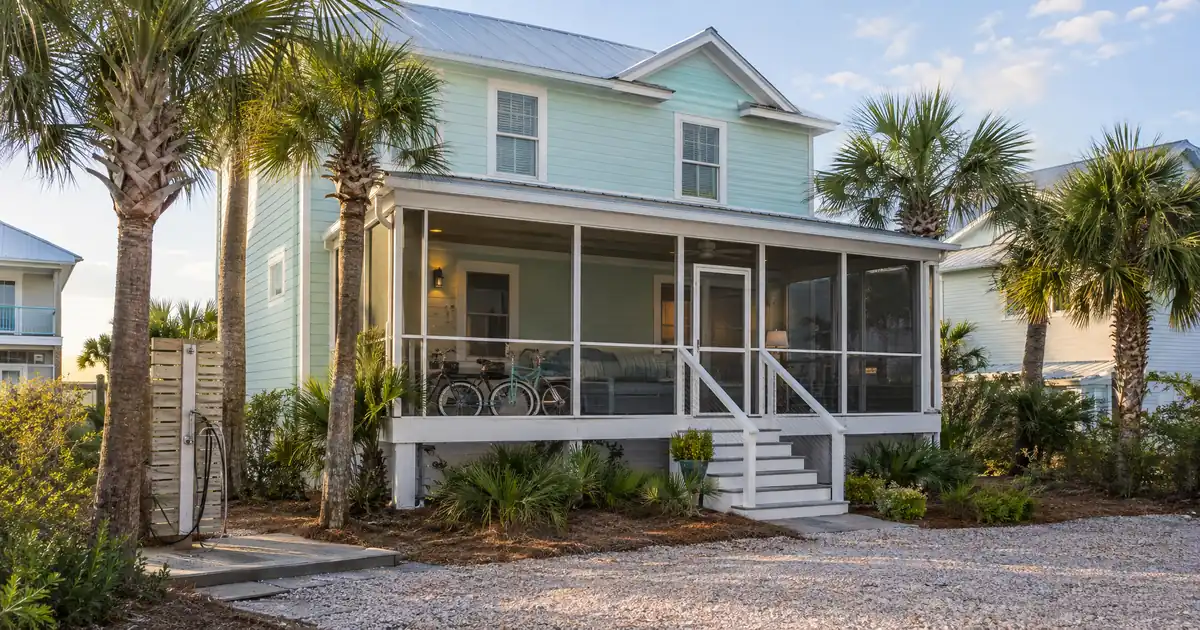
Short Term Rental DSCR Loans In New Jersey — The Quick Read: These loans let you qualify on the property’s rental income instead of your traditional personal-income documentation, which matters a lot when your income comes from a summer-heavy Airbnb calendar. Purchase leverage on short-term rental collateral tops out around 75% loan-to-value, cash-out refinances top out lower, and lenders want roughly 12 months of hosting history or a market-data projection to back up the number. The catch is that the standard rental appraisal form was never built to price a nightly rental, so how the file documents income decides the loan amount more than almost anything else. Shore towns and city condos get treated very differently underneath the same DSCR math.
Key Terms Defined
DSCR (debt-service coverage ratio): a comparison of the property’s monthly rental income against its full monthly housing payment — principal, interest, taxes, insurance, and any HOA dues, often shortened to PITIA. A ratio of 1.00 means the rent covers the payment exactly; above 1.00 means there’s cushion.
Short-Term Rental Calculator
Run the STR numbers in New Jersey
Rate source: Freddie Mac 30-yr average via FRED® — Federal Reserve Bank of St. Louis · effective Sep 24, 2026
Prefilled with local estimates — enter your nightly rate, occupancy, taxes, and insurance for a more accurate picture.
Short-term rental income is documented with a 12-month history or a market data report. Program parameters update from Lendmire’s centralized guideline source.
As of Sep 24, 2026 · General Freddie Mac market benchmark, not a Lendmire loan offer. Nightly rate, occupancy, taxes, and insurance are editable estimates. Qualifying income for short-term rentals varies by program — some use appraisal market rent, others use documented STR history or projections — and is confirmed in underwriting. Not a Loan Estimate, approval, or commitment to lend. Program availability and eligibility are subject to lender guidelines, credit approval, property review, and underwriting.
LTV (loan-to-value): the loan amount expressed as a percentage of the property’s appraised value. Lower LTV means more cash down and usually easier qualifying.
Business-purpose loan: a mortgage made to an investor buying or refinancing a rental, not a home to live in. These loans are underwritten differently than a loan on your primary residence.
Seasoning: the length of time you’ve owned or operated a property before a lender will count its cash flow or let you refinance out equity.
AirDNA projection: a third-party market report that estimates a property’s rental income based on comparable short-term listings in the same area, used when no operating history exists yet.
What DSCR Actually Means for an Airbnb Purchase
DSCR loans skip the personal income documentation entirely and qualify the deal on what the property earns. That’s the whole pitch, and it’s why these loans dominate short-term rental financing — a shore house doesn’t have a job, but it has a booking calendar, and the loan gets sized around that instead of a pay stub.
The math is simple once the income number is set: monthly rental income divided by the full monthly payment. Clear 1.00 and the rent covers the payment. Below 1.00 means the property doesn’t cover itself on paper, though that doesn’t automatically kill the deal — more on that below. What DSCR does not measure is whether you’ll actually turn a profit. It ignores repairs, vacancy gaps, cleaning and management fees, and utilities. A file that clears 1.20 on paper can still lose money in a slow shoulder season if those costs run high. Treat the ratio as a lending threshold, not a cash-flow guarantee.
Because it’s a business-purpose loan and not a loan on a home you live in, it’s reviewed differently than a standard owner-occupied mortgage — and it sits outside the consumer mortgage disclosure rules that apply to owner-occupied lending. That distinction is part of why these files move on property economics rather than personal debt-to-income. Lendmire’s complete DSCR loans guide walks through the qualification mechanics in more depth if you want the full picture beyond short-term rental collateral specifically.
How Underwriting Treats a Nightly Rental, Step by Step
Underwriting a short-term rental starts with picking which income number to trust, and that choice usually decides the loan size before anything else gets calculated. Three sources typically feed into that decision, and lenders generally weight them in this order.
Step one: documented operating history. If the property already runs as an Airbnb or Vrbo listing, 12 to 24 months of platform statements or bank deposits carries the most weight. Actual performance beats a projection every time a lender has the choice.
Step two: third-party market data. For a property with no track record — a new purchase, a conversion from long-term rental — lenders lean on market reports like AirDNA that pull comparable nightly listings in the area and back out an estimated annual figure that already accounts for typical vacancy.
Step three: the appraisal’s long-term rent as a fallback. This is where things get interesting, because the standard rental appraisal form — Form 1007 — was built for monthly leases, not nightly bookings. Fannie Mae has said this directly: the agency’s own guidance states the Selling Guide is silent on whether a short-term rental counts as rental income at all, and explains that STRs differ from a lease in almost every structural way — nightly terms instead of monthly, furniture and services bundled in, a terms-and-conditions agreement instead of a lease. Per Fannie Mae’s appraiser guidance, the form simply isn’t built to estimate a nightly rate, and appraisers who are pushed to force STR comps onto it are encouraged to decline rather than deliver a misleading number. A parallel version of that same guidance, hosted by a state regulator, makes the same point about appraiser scope on nightly-rental income.
In practice, a short-term rental file often gets its own STR income analysis. This comes as a narrative addendum, not a standard rent schedule. Sometimes a property has both a lease-style appraisal number and a market-data projection. When that happens, most programs in the network use a lower-of convention: whichever figure is smaller becomes the coverage figure. So a blowout AirDNA projection from a killer summer season doesn’t automatically win. If the appraiser’s conservative long-term comp comes in lower, that number rules instead. This convention is probably the most underappreciated variable in shore-property DSCR math. Understand it before you fall in love with a projected number.
The Structures and Variations That Exist
STR-specific DSCR programs across Lendmire’s wholesale network generally run purchase leverage up to roughly 75% loan-to-value on the strongest files, with cash-out refinances on short-term-rental collateral topping out lower, around 70%. Credit floors typically start near 640, and most programs want to see about 12 months of landlord or host experience behind the borrower before they’ll lean fully on operating history. Coverage floors on both purchase and refinance transactions generally sit around 1.00 on select programs — a floor for those programs, not a universal industry standard, and stronger ratios open up better leverage and pricing on most files.
Loan sizes across the standard programs generally run up to roughly $3,000,000, with smaller-balance deals routed through select lenders in the network rather than treated as an outlier. Reserve requirements vary by lender, leverage, and loan size — commonly landing around six months of the full housing payment, though conservative rate-and-term files at modest leverage can sometimes see reserves waived, and larger loans typically step up to a heavier reserve cushion.
Below 1.00 coverage isn’t automatically a dead end. Select lenders in the network still work these files, though leverage and terms adjust to compensate for the thinner margin — a shore property with a killer three-month season and a weak shoulder can sometimes land here. And a larger down payment helps your file two ways: it lowers the payment, which can lift your coverage ratio, and it reduces the lender’s exposure. But it never substitutes for a credit floor, a reserve requirement, or basic property eligibility — the strongest files clear both the equity test and the rental-coverage test, not just one. Terms vary by lender guidelines, property type, leverage, credit profile, and full file review.
One thing that never changes regardless of structure: manufactured homes, log homes, and barndominiums fall outside these DSCR programs entirely. If your shore search turns up one of those property types, it’s not a harder file — it’s simply not eligible here.
Where the General Rule Breaks: New Jersey’s Regulatory Patchwork
New Jersey doesn’t have one statewide Airbnb law. The state only handles taxation. Every individual municipality decides whether and how nightly rentals can operate at all. This local variation is the single biggest wildcard when underwriting a Jersey shore or city STR. Why? Because a property’s legal right to operate as a nightly rental changes the entire income conversation.
The state’s enabling statute lets towns license short-term rentals but doesn’t force any town to do so. Per the NJ Division of Local Government Services, the underlying law authorizes any municipality to license rentals “for a term less than 175 consecutive days” for someone with a permanent residence elsewhere — it’s permissive, not mandatory, and each town sets its own rules and fees from there.
Jersey City is the clearest example of a town that used that permission aggressively. Its permit program, run under the city’s own municipal code, only covers narrow configurations: an owner-occupied single-family home, one unit of a two-family where the owner lives in the other, up to two units of a three- or four-unit building with an owner present, a qualifying condo or co-op, or a small owner-occupied bed-and-breakfast setup. A landlord who doesn’t live on site is capped at 60 nights a year. That means a pure, non-owner-occupied investment condo generally can’t legally run as an unhosted nightly rental in Jersey City under this framework — and a deal like that typically needs to underwrite as a long-term rental instead, not a short-term one, regardless of what an AirDNA report might project.
Point Pleasant Beach takes a different but equally restrictive approach: rentals under a month are banned outright except for a seasonal carve-out permitting week-plus stays from mid-May through the end of September. That’s a real constraint on year-round nightly-rental income in that specific town, and it should factor into how conservatively you build your income file if you’re buying there.
None of this is meant as a substitute for checking the actual local ordinance before you buy — short-term rental rules can vary by city, county, HOA, and property type, so confirming the current local rules before relying on projected rental income is worth the phone call.
Shore Seasonality vs. City Steadiness — The Underwriting Difference
Shore markets concentrate the bulk of annual revenue into a handful of summer weeks, while urban New Jersey markets run flatter and more consistent year-round — and that shapes how conservatively a file gets built. A property that looks great on an annualized average can look thin the moment a lender checks its worst month.
DSCR vs. conventional financing
Two common ways to finance an investment property in this market. They qualify you differently — here’s how investors weigh them.
Why investors choose it
- Qualifies on the property’s rental income — no personal tax returns, W-2s, or pay stubs needed to document income.
- No personal debt-to-income ceiling to clear, so existing mortgages and obligations don’t cap your borrowing the same way.
- Can be closed in an LLC, keeping the property inside a business entity.
- Built for scaling — not held to the limit on number of financed properties that conventional financing applies.
- Underwriting centers on the deal: generally qualifies when the rent covers the payment, a 1.00x coverage ratio being a common baseline (confirmed in underwriting).
- Designed specifically for investment property, including long-term and, where the program allows, short-term rentals.
Where it’s strong
- Often the lowest ongoing financing cost for a buyer who fully qualifies on personal income — a fit for a first property or a cost-first purchase.
Trade-offs for investors
- Requires full personal income documentation and must fit within a debt-to-income limit — salary, existing debts, and other mortgages all count.
- Typically held in your personal name rather than a business entity.
- Caps how many financed properties you can carry, which can become a ceiling as a portfolio grows.
- Evaluates you as a borrower as much as the property, which usually means more paperwork.
How investors usually choose: a first or single property often optimizes for the lowest financing cost; portfolio builders often optimize for leverage, vesting in an LLC, and scaling past conventional caps. The right answer depends on your goals, the property, and current guidelines — both paths run through select lenders in Lendmire’s wholesale network, with eligibility and terms confirmed in underwriting.
Take Seaside Heights: market data shows an average annual revenue around $57,590 across 172 active listings, but occupancy averages just 24% — below the statewide average of 34% — because nearly all of that revenue lands in a tight summer window, with August alone averaging roughly $17,170 per listing. Asbury Park runs a similar pattern with higher premium rates, averaging about $68,466 in annual revenue across 64 listings. Some underwriters respond to this by stress-testing against the off-season specifically rather than trusting a smoothed annual number — because an annualized figure can hide a property that barely covers its payment for four months of the year.
Jersey City tells a different story. Seasonality data shows revenue peaking modestly from May through October, averaging in the high $3,000s to low $4,000s per month, with occupancy holding in the high-30s to low-40s percent range even through the softer winter months. That’s a flatter curve — less summer spike, but less winter collapse too, which can actually make the file easier to underwrite conservatively even with lower peak numbers.
A practitioner’s rule of thumb worth internalizing: build the income projection off the actual calendar, not an average. If you’re buying a shore property, map out your realistic peak weeks, your shoulder-season weekends, and whatever off-season activity is plausible, then subtract platform fees, cleaning, owner-paid utilities, occupancy taxes, and a real vacancy factor. A file built that way gives an underwriter more confidence than one that just shows the annual total.
Taxes and the “Professionally Managed” Threshold
New Jersey applies a state sales tax plus an occupancy fee to most transient rentals, and the combined burden gets heavier in specific shore towns — worth knowing before you model net income, even though tax planning itself sits outside the scope of this article. Per the NJ Division of Taxation, a baseline state sales tax applies statewide, and in the Wildwoods specifically, the combined sales tax, county tourism tax, tourism assessment, and state occupancy fee stack into a notably higher total than most other shore markets. Investors should treat these local surcharges as a real line item and confirm current figures directly with the state and municipality rather than relying on general estimates.
Here’s a key rule for anyone growing past one property. If you control three or more rental units in a calendar year — directly or indirectly — you’re classified as a “professionally managed unit.” This changes your tax treatment a lot compared to owning just one or two listings. If you’re building a small shore portfolio, buying that third property can flip your whole tax situation. Flag this with whoever handles your taxes. Tax treatment can depend on how you use your funds and how you hold the property. Keep clear records, and talk to a qualified tax professional before you rely on any deduction.
Choosing a Structure: A Practical Walkthrough
Picture two investors evaluating the same $450,000 duplex near the shore — one plans nightly Airbnb rental, the other plans a standard 12-month lease. The long-term lease investor gets a straightforward Form 1007 rent comp and qualifies against 75% loan-to-value with a coverage ratio pulled straight from that appraisal. The Airbnb investor’s file needs a market data projection or trailing operating history instead, generally caps closer to 75% LTV on purchase as well, and the appraiser likely delivers a narrative income addendum instead of a standard schedule.
If the shore investor’s AirDNA projection comes in strong but the appraiser’s fallback long-term rent comp is lower, the lower-of convention many programs apply means the conservative number often wins — which can mean less leverage than the projected summer income alone would suggest. That’s not a flaw in the system; it’s the system protecting against a property that looks fantastic in July and struggles in February.
Say you already own the shore property and want to pull out equity after a strong season. A cash-out refinance on short-term-rental collateral generally caps around 70% loan-to-value. That’s different from the roughly 75% purchase ceiling and the 75% cash-out ceiling for standard long-term rental collateral in the same network. Before you go shopping, check Lendmire’s guide on property eligibility for short-term rental financing. It covers which property types and setups tend to qualify cleanly.
Files with strong reserves, a credit profile in the high 600s or better, and 12 months of clean operating history tend to see the best leverage. Files without operating history — a first-time Airbnb purchase — lean more heavily on the market-data projection and the appraisal’s conservative fallback, and often land at slightly tighter leverage as a result.
Frequently Asked Questions
Can I get a DSCR loan on a Jersey Shore Airbnb with no rental history yet?
Yes — lenders commonly use a third-party market report like AirDNA to project income for a property without an operating track record. The appraisal’s long-term market rent typically serves as a conservative fallback if that projection can’t stand alone, and the lower of the two figures often becomes the coverage figure.
Does Jersey City allow unhosted Airbnb investment properties?
Generally not for a purely investor-owned unit with no owner living on site — the city’s permit framework covers owner-occupied configurations and caps unhosted rentals at 60 nights a year. A non-owner-occupied condo purchase there typically needs to underwrite as a long-term rental instead of a nightly one.
How does DSCR handle the summer-heavy income at the shore?
The property still is reviewed on its rental income, but the number that gets used matters more than the summer peak. Some underwriters stress-test against the slower months rather than accepting a smoothed annual average, since a shore listing can generate the bulk of its revenue in ten to twelve summer weeks.
Do I need to already own a short-term rental to qualify?
No, but most programs want around 12 months of landlord or host experience to lean fully on operating history; without it, expect the file to rely more on a market projection and the appraisal fallback, subject to lender guidelines.
Can I close a New Jersey short-term rental DSCR loan through an LLC?
Many lenders in the network allow LLC-titled purchases and refinances, subject to program eligibility and the specific lender’s requirements. Lendmire’s piece on operating vs. new listing short-term rentals across an LLC breaks down how that distinction affects documentation.
Are you weighing a shore purchase against an urban Airbnb conversion? Or trying to figure out how a lower-of income convention might affect your leverage? Either way, Lendmire can help. We’ll help you compare DSCR loan options based on the property’s income, your credit profile, the leverage you need, and the coverage ratio you’re aiming for.
Investors focused on short-term rentals can review DSCR loans for Airbnb and short-term rentals.
About Lendmire
Lendmire (NMLS# 2371349) is a mortgage brokerage focused on DSCR investor financing, helping arrange programs through wholesale and investor-lending channels in 41 markets, including Washington, D.C. DSCR loans are evaluated by the lender on property cash flow rather than personal income, subject to lender guidelines, supporting LLC closings and accommodating investors with four or more financed properties. Scotsman Guide Top Mortgage Workplace in both 2025 and 2026.
Get Started
Ready to find the right loan for you?
In about 30 seconds you can review financing options available for your home or investment property. No commitment required.
Informational only. Not a Loan Estimate, approval, or commitment to lend. Program availability and eligibility are subject to lender guidelines, credit approval, property review, and underwriting.
References
1. Fannie Mae Appraiser Update, June 2024
2. Fannie Mae Short-Term Rentals guidance (Nevada regulatory hosting)
This article is part of Lendmire’s short-term rental loan program — full qualification details, guidelines, and scenarios live on the program page.
Related reading: Luxury Rental DSCR Loans In New Jersey · Jersey Shore Vacation Rental Loans: DSCR Financing In Ocean City, Cape May And Long Beach Island · DSCR Cash-out Refinance In New Jersey: Pulling Equity From A Rental
Guides: Short-Term Rental Loans in New Jersey
Brandon Miller
Founder & CEO, Mortgage Loan Originator, Lendmire LLC
- Mortgage Loan Originator · NMLS# 1129696 · Verify on NMLS Consumer Access
- North Carolina Real Estate Broker · License# 343312 · Verify on NCREC
- North Carolina Insurance Producer · License# 19053198 · Property, Casualty, Life, Health · Verify on NAIC SBS
- Lendmire LLC · Firm NMLS# 2371349 · Verify firm licensure
Important disclosures. Lendmire (NMLS# 2371349) is a licensed mortgage brokerage. Lendmire is not a direct lender, depository institution, or financial advisor. All loan inquiries are subject to lender underwriting; this article does not constitute a commitment to lend. Rates, terms, and program guidelines are subject to change without notice and vary by borrower profile, property type, and state. Information in this article is general in nature and is not financial, legal, or tax advice. Equal Housing Opportunity. NMLS Consumer Access: nmlsconsumeraccess.org.