
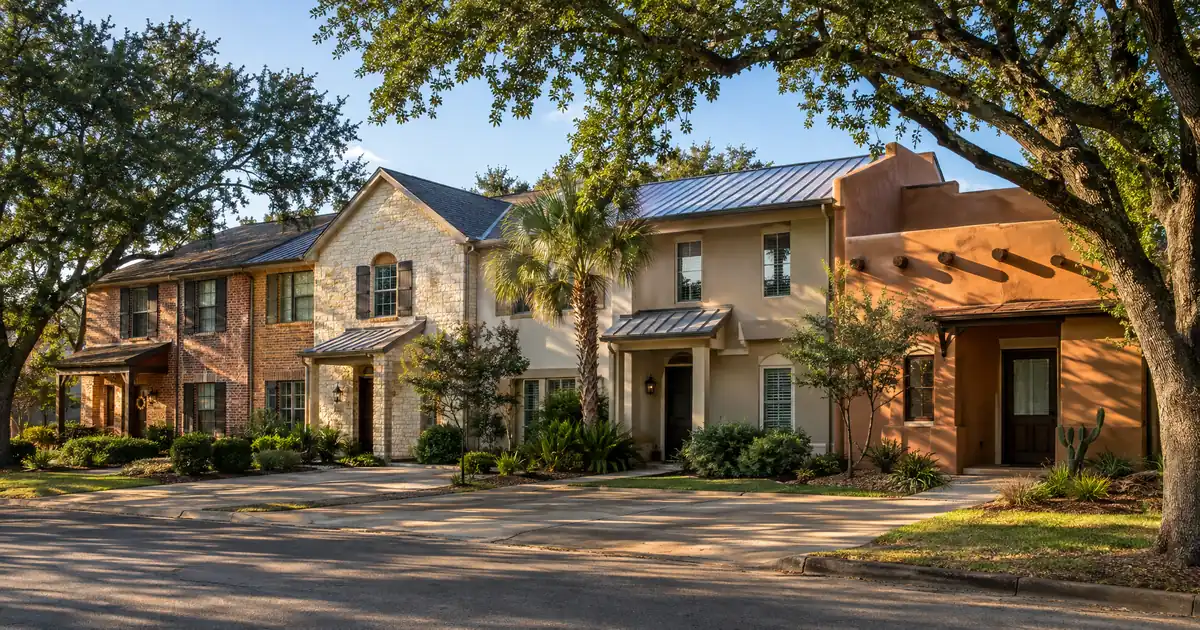
Picture an out-of-state investor scrolling Nacogdoches listings. The median home price sits near $285,000, up 4.6 percent year over year, while average rent was about $1,100 and down 5.2 percent, per Prop-Metrics ZIP-level data. Prices up, rents soft. That gap is what catches the eye, and it’s what gets missed until the appraisal and the coverage number land. Nacogdoches, Texas is one of the 41 markets — 40 states plus Washington, D.C. — where Lendmire places DSCR loans for investment-property borrowers (NMLS# 2371349). This piece is about pulling equity out of a property you already own here, not buying one.
DSCR Cash-Out Calculator
Run the cash-out numbers in Nacogdoches, TX
Rate source: Freddie Mac 30-yr average via FRED® — Federal Reserve Bank of St. Louis · effective Sep 24, 2026
Prefilled with starting assumptions — enter your property’s value, balance, taxes, and insurance for a more accurate picture.
Program parameters update from Lendmire’s centralized guideline source. Taxes and insurance are editable estimates.
As of Sep 24, 2026 · General Freddie Mac market benchmark, not a Lendmire loan offer. Property value, balance, taxes, and insurance are editable estimates. Maximum loan-to-value varies by lender, program, property type, and seasoning. Not a Loan Estimate, approval, or commitment to lend. Program availability and eligibility are subject to lender guidelines, credit approval, property review, and underwriting.
The Quick Read:
A DSCR cash-out refinance in Nacogdoches, Texas fits investors who already own a duplex or small multifamily near the SFA campus and hospital corridors. The file is underwritten primarily on the property’s rental income measured against its full monthly obligation, and single-family rents here leave thin coverage under the leverage ceiling.
- Cash-out caps at 75 percent LTV, with about six months of seasoning from title recording.
- Single-family at citywide rents tends to land below 1.00 once taxes and insurance are in.
- Two-unit and small multifamily stack rent against one loan and lift the number.
- Thin comps and slow sales make the appraisal the main variable.
Nacogdoches Market Snapshot
A quick read on the Nacogdoches investor landscape — figures come from the cited sources below. Confirm current property-level numbers before underwriting.
| Metric | Detail |
|---|---|
| Typical rents | $1,100 avg (Prop-Metrics (ZIP 75965)) |
| Cap rates | ~7.1% cap before capex (LoopNet 4301 Old Tyler Rd) |
| University enrollment | Total +7% (KTRE, SFA enrollment) |
| Population | 32,197 population (Census Reporter) |
Equity Here Is an Appraisal Question
Nacogdoches equity depends on what the appraiser can support, and comps are the weak spot. Listing medians disagree by source. Prop-Metrics shows $285,000, Movoto shows a listing median near $337,000, and the two figures rarely describe the same set of homes. Treat the lower one as the conservative planning anchor.
Market speed adds to the risk. Realtor.com median days on market was 65, up 24 percent from a year earlier, and Zillow’s one-year price projection is only 0.5 percent, a relatively flat market, per the same Prop-Metrics page. Flat projections and slower sales mean fewer clean comparables. Don’t assume a big value bump at refinance.
Here’s how it plays in the file. Cash-out on a DSCR loan is capped at 75 percent LTV, and the appraised value drives every dollar of proceeds. An investor who bought a rental some time ago and expects the value to reflect today’s asking prices can be disappointed. The practical fix is an appraisal reconsideration packet: recent closed sales in the same neighborhood, condition and unit-count adjustments, and rent documentation. It recovers value when the first pass comes in light. It doesn’t recover value that isn’t there.
Equity available is also not a promised figure. It depends on rent used for lender review, full PITIA, reserves, and the 75 percent ceiling, subject to lender guidelines and property review.
Why Single-Family Cash-Out Runs Thin
Single-family rentals in Nacogdoches carry modest rent-to-value ratios, and that shows up hard in the coverage math. Rent sources conflict. Prop-Metrics has average rent at $1,100, Zumper puts it at $950 and down 6 percent from a year earlier, and Apartments.com lists the average house at $1,513. Call it a $950 to $1,513 band depending on property type and source.
Run the numbers on a modeled single-family house appraising at $285,000, refinanced at 75 percent LTV. Using rent between $1,100 and $1,513, coverage lands roughly 0.6x to 0.8x once taxes and insurance are included in PITIA. That’s a modeled assumption, not a sourced market figure. It sits well under the 1.00 benchmark most standard programs are built around.
Sub-1.00 doesn’t end the conversation, but it changes it. Options a lender may review include a sub-1.00 DSCR program, an interest-only structure, or lower leverage with more cash left in the deal. Each carries different pricing and different documentation, and eligibility depends on credit profile, reserves, property review, and lender guidelines. Pulling a lot of cash out of a thin-coverage single-family house is the hardest version of this loan.
For a quick view of how the pieces fit, see how the DSCR math pencils for Texas files. For the mechanics of the ratio itself, the guide “What Is a DSCR Loan” covers it.
Two Doors Under One Roof
Duplexes and small multifamily are where Nacogdoches cash-out math works. Rent stacks against one loan, and the rent side is the easier side to move. Per Prop-Metrics, RentCast’s median rents run $771 for a one-bedroom, $1,030 for a two-bedroom, and $1,530 for a three-bedroom. Two three-bedroom sides at that median gross roughly $3,060 a month (simple arithmetic on the median).
Consider a scenario built on modeled assumptions: a duplex appraising at $360,000, refinanced at 75 percent LTV, two 3BR sides at $1,530 each. Including taxes and insurance, coverage comes out around 1.2x. Change the appraised value or the rent and that number moves. The point is the shape: the same 75 percent ceiling that leaves a single-family house near 0.7x can leave a two-unit property above 1.00.
DSCR files in markets like this one typically look like a split. Single-family files come in with strong equity on paper but thin coverage, while two-to-four-unit files clear coverage but face a thinner appraisal comp set. The clean ones carry a signed lease or rent roll for each unit, a rent schedule that matches what the appraiser’s rent comps show, and reserves documented before the file goes to review. Files that lean on a seller’s projected income instead of collected rent are the ones that get sent back for more support.
Listing evidence shows both the opportunity and the caution. Homes.com showed 13 multifamily listings priced from $189,500 to $1,605,556, with multifamily averaging 111 days listed. One fully renovated seven-unit near campus projected income of nearly $5,300 a month, about $750 a unit by simple division. That’s a projection, not a rent roll. Underwrite at proven rents.
One LoopNet listing for a fully occupied 3BR/2BA duplex just off the Loop 224 corridor states a cap rate of about 7.1 percent before capital expenditures, based on six months of income. That’s a seller-stated figure. Verify it against a rent roll. But it shows newer small multifamily near the Loop is a realistic hold and refinance candidate.
The Anchors That Hold Rents Up
Demand here rests on a few institutions, and they set which corridors matter for long-term tenants. Stephen F. Austin State University enrolls approximately 11,000 students, per UT Admissions. KTRE reported 2,800 first-time undergraduates, up 31 percent, with total enrollment up 7 percent in the most recent fall. The SFA newsroom called it the first total increase after a multiyear decline. Demand may be turning up from a low base. Call it a tailwind, not a trend line.
The city itself is small and flat. Census Bureau QuickFacts puts the population at 32,197 across 27.6 square miles. Per RentCafe, 63 percent of households, 7,807, are renter-occupied. That’s a deep tenant pool for a city this size, and it’s part of why small rentals hold occupancy even when rents don’t grow.
Employment is institutional. The largest employers by headcount are SFA, Nacogdoches ISD, and the county hospital district, followed by a medical center, retail, city and county government, and manufacturing. Pilgrim’s Pride is also described as a top employer, though no headcount was found. Employer counts on local brokerage pages are undated, so read them as rank order, not a measurement. Nacogdoches Memorial Hospital states that it operates the region’s only Level III trauma center, which anchors medical employment.
How that maps to corridors:
- Campus and University Drive corridor. Students, faculty, and staff. Purpose-built student complexes, including Legends at Nacogdoches per College Rentals, compete here, which caps what small landlords can charge students. A small multifamily near campus underwrites safest as workforce housing, with student demand as upside. No sourced vacancy rate exists, so treat this as a risk flag.
- Mound Street and the historic blocks near the hospital. Queen Anne and Stick-style houses line the east side of Mound Street. Likely tenants are hospital staff, faculty, and professionals. No verified price or rent data exists here.
- North Street and NE Stallings Drive. A retail-medical corridor with Nacogdoches Medical Center, Walmart, and apartment supply. Tenant profile is hospital, retail, and district staff, inferred from the anchors.
- East Main and East Starr. Workforce apartment corridors. Individual listings run roughly $895 to $1,095 for one- and two-bedroom units, which is listing-level data, not a submarket median.
- Downtown and Zion Hill. Small historic stock, shotgun houses, and upper-floor units. Lower basis, but confirm current local rules with the City of Nacogdoches before assuming any plan.
No neighborhood-level median price or rent source was found for any of these, so the corridor calls above are inference from anchors, not measured data.
What Derails These Files
Seasoning is the first check. Cash-out generally requires about six months of ownership, measured from title recording and documented by the settlement statement. Files that assume the requirement away get kicked back. A recent purchase with a renovation also needs the improvements documented, since the appraiser and lender will look at what changed and what it cost.
Second is the rent evidence. On a duplex or triplex, a lender wants a lease per unit, or a rent roll consistent with the appraiser’s rent schedule. Handwritten month-to-month rents with no deposits on record leave a preventable gap.
Third is reserves documentation. Expect about six months of PITIA, or about nine months on balances above $1,500,000, as guidance subject to program terms. Have statements showing seasoned funds ready, and remember cash-out proceeds don’t automatically count toward reserves on every program.
Fourth is entity paperwork. If the property sits in an LLC, operating agreement, certificate of good standing, and EIN letter should be in the file before submission, subject to lender program eligibility. Title also matters: an old deed, an unreleased lien, or an heirship gap on inherited East Texas property adds cleanup work before clearing title.
Two eligibility notes matter in this part of Texas. Manufactured homes, log homes, and barndominiums fall outside these DSCR programs. Credit tiers typically start at a 620 floor, with better positioning at 660, 680, and 700. Where other non-QM platforms often require 720+ FICO and 25 percent down, the wholesale network Lendmire works with reviews a wider range of profiles, subject to lender guidelines.
Where Does the Cash Go Next?
The proceeds are only useful if the next deal covers itself. Given the numbers above, the stronger play is usually to put Nacogdoches equity into two-to-four-unit product rather than another single-family house, though an investor who wants appreciation exposure in a flat-projected market could argue the other way. Others rotate the capital out of town entirely into a market with better rent-to-price ratios. Either is a legitimate use, and the loan doesn’t restrict where proceeds go.
Loan size matters at the small end too. Standard programs run up to $3,000,000, and smaller balances route through select lenders in the network. Nacogdoches balances often land in that smaller range.
DSCR vs. conventional financing
Two common ways to finance an investment property in Nacogdoches, TX. They qualify you differently — here’s how investors weigh them.
Why investors choose it
- Qualifies on the property’s rental income — no personal tax returns, W-2s, or pay stubs needed to document income.
- No personal debt-to-income ceiling to clear, so existing mortgages and obligations don’t cap your borrowing the same way.
- Can be closed in an LLC, keeping the property inside a business entity.
- Built for scaling — not held to the limit on number of financed properties that conventional financing applies.
- Underwriting centers on the deal: generally qualifies when the rent covers the payment, a 1.00x coverage ratio being a common baseline (confirmed in underwriting).
- Designed specifically for investment property, including long-term and, where the program allows, short-term rentals.
Where it’s strong
- Often the lowest ongoing financing cost for a buyer who fully qualifies on personal income — a fit for a first property or a cost-first purchase.
Trade-offs for investors
- Requires full personal income documentation and must fit within a debt-to-income limit — salary, existing debts, and other mortgages all count.
- Typically held in your personal name rather than a business entity.
- Caps how many financed properties you can carry, which can become a ceiling as a portfolio grows.
- Evaluates you as a borrower as much as the property, which usually means more paperwork.
How investors usually choose: a first or single property often optimizes for the lowest financing cost; portfolio builders often optimize for leverage, vesting in an LLC, and scaling past conventional caps. The right answer depends on your goals, the property, and current guidelines — both paths run through select lenders in Lendmire’s wholesale network, with eligibility and terms confirmed in underwriting.
For wider investor refinance options, see the guide “The Refi Options”. If you’re comparing this route against a bank loan, Lendmire’s comparison of DSCR and conventional loans lays out the tradeoffs. Investors weighing a Nacogdoches file can also review DSCR loan options for Texas investors or call 828-256-2183. Verify current local rental rules, taxes, and insurance with qualified local professionals before running final numbers.
Frequently Asked Questions
How do you qualify for a DSCR cash-out refinance in Nacogdoches, Texas?
Qualification centers on the property’s rent against its full PITIA, with 1.00 as the common benchmark. Beyond that, expect about six months of title seasoning, a 75 percent LTV ceiling, a credit floor of 620, and about six months of reserves. All of it is subject to lender guidelines, credit approval, and property review.
What are the requirements for an investment property loan in Nacogdoches, Texas?
For a cash-out, lenders typically look for a lease or rent roll per unit, an appraisal with a rent schedule, seasoned reserves, and entity documents if the property is in an LLC. Manufactured homes, log homes, and barndominiums are outside these programs. Requirements vary by borrower, property, and loan scenario.
Why does single-family coverage run so thin in Nacogdoches?
Rents sit well below the price level. Average rent runs roughly $950 to $1,513 depending on source and property type, against a median price near $285,000. Including taxes and insurance, modeled coverage on a single-family house lands well below 1.00, so lenders may review a sub-1.00 program or lower leverage.
Does SFA enrollment growth change the cash-out math?
It supports tenant demand near campus, but it doesn’t change appraisal values or rents on its own. Enrollment rose after a multiyear decline, which is encouraging, but rents were still soft in the sourced data. Underwrite at proven rents and treat student demand as upside.
What property types work best for DSCR cash-out in Nacogdoches?
Duplexes and small multifamily near the campus, hospital, and Loop 224 corridors tend to work best because stacked rents lift coverage. Lendmire places DSCR loans, with cash-out capped at 75 percent LTV. Single-family works when the price is well below average.
The Next Step
Before ordering anything, ask a local agent or appraiser for closed sales of comparable two-to-four-unit properties near SFA and the Loop 224 corridor over the past year, then compare their recorded rents against your own leases. In a market with 65-day median days on market, those comps decide how much equity is really there.
About Lendmire
Lendmire is a DSCR-focused mortgage brokerage, NMLS# 2371349, placing investor loans across 41 markets, including Washington, D.C. DSCR eligibility is generally reviewed by the lender on a property’s rental income rather than personal income documentation, which fits LLC-held rentals, self-employed investors, and portfolios scaling past conventional financed-property limits.
Get Started
Ready to find the right loan for you?
In about 30 seconds you can review financing options available for your investment property. No commitment required.
Informational only. Not a Loan Estimate, approval, or commitment to lend. Program availability and eligibility are subject to lender guidelines, credit approval, property review, and underwriting.
References
5. Movoto
6. Zumper
8. Homes.com
10. SFA newsroom, enrollment record
11. Census Reporter, Nacogdoches
13. Nacogdoches Memorial Hospital
14. College Rentals
16. 2025 Scotsman Guide Top Workplace
This article is part of Lendmire’s investment property cash-out refinance program — full qualification details, guidelines, and scenarios live on the program page.
Related reading: Cash Out Refinance on Investment Property in Nacogdoches TX · DSCR Cash Out Refinance Gainesville Texas Explained · DSCR Cash Out Refinance Benbrook Texas
Guides: Investment Property Cash-Out Refinance in Texas
Brandon Miller
Founder & CEO, Mortgage Loan Originator, Lendmire LLC
- Mortgage Loan Originator · NMLS# 1129696 · Verify on NMLS Consumer Access
- North Carolina Real Estate Broker · License# 343312 · Verify on NCREC
- North Carolina Insurance Producer · License# 19053198 · Property, Casualty, Life, Health · Verify on NAIC SBS
- Lendmire LLC · Firm NMLS# 2371349 · Verify firm licensure
Disclosures. The information presented in this article is general market commentary, not financial, legal, or tax advice. Lendmire is a mortgage brokerage (NMLS# 2371349) — not a direct lender or depository institution — and loan placement is subject to lender underwriting. Nothing in this content represents a commitment to lend. Loan terms, pricing, and program availability vary based on borrower qualifications, property characteristics, and state of subject property, and are subject to change at any time. Lendmire complies with Equal Housing Opportunity requirements. Consumer access: nmlsconsumeraccess.org.