
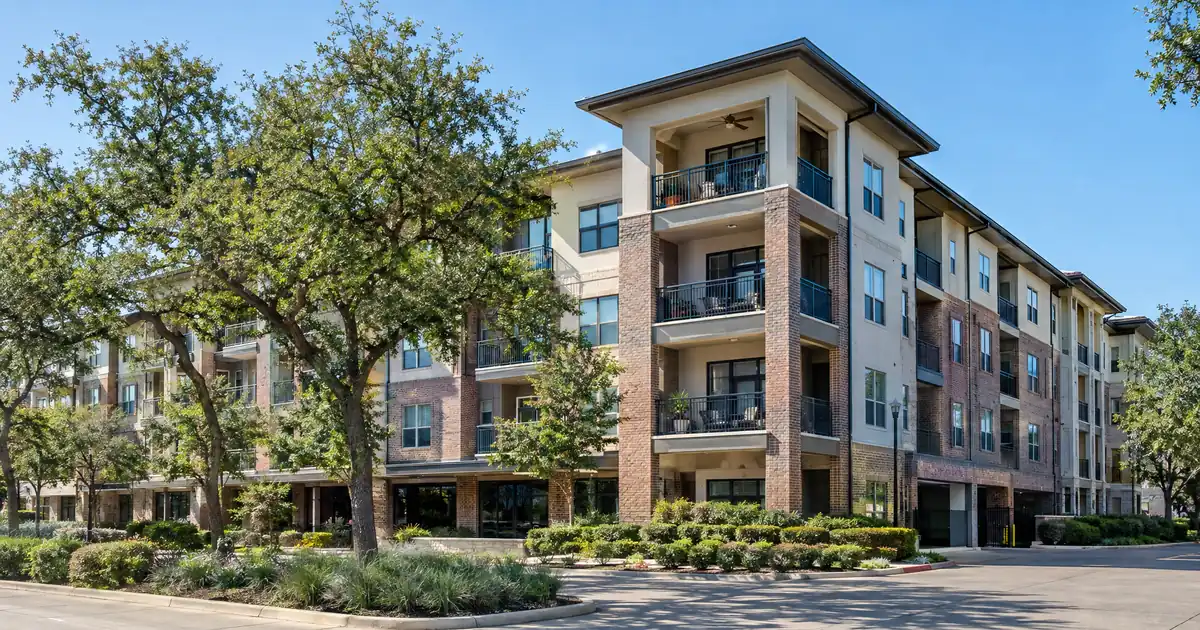
An out-of-state investor scrolling Keller listings sees the first problem right away. Zillow puts the average home value at $654,648, while Rentometer shows a 3BR average rent of $2,663. That works out to about 0.41% of value per month, an illustrative calculation from those two sources. It is the profile of an owner-occupied luxury suburb, not a cash-flow market. For an investor who already owns here and wants to pull equity out, the first question is how much of that equity the rent can support, not how much exists.
Lendmire, a DSCR-focused mortgage broker, arranges these refinances through wholesale and investor-lending channels, and Keller is one of the harder files to structure. The pricing is high, appreciation is flat and the rent spread is narrow. Coverage ratio, LTV and basis decide the outcome here, more than they do in cheaper DFW suburbs.
DSCR Cash-Out Calculator
Run the cash-out numbers in Keller, TX
Rate source: Freddie Mac 30-yr average via FRED® — Federal Reserve Bank of St. Louis · effective Sep 24, 2026
Prefilled with starting assumptions — enter your property’s value, balance, taxes, and insurance for a more accurate picture.
Program parameters update from Lendmire’s centralized guideline source. Taxes and insurance are editable estimates.
As of Sep 24, 2026 · General Freddie Mac market benchmark, not a Lendmire loan offer. Property value, balance, taxes, and insurance are editable estimates. Maximum loan-to-value varies by lender, program, property type, and seasoning. Not a Loan Estimate, approval, or commitment to lend. Program availability and eligibility are subject to lender guidelines, credit approval, property review, and underwriting.
The Short Version:
A DSCR cash-out refinance in Keller, Texas is underwritten primarily on the property’s rental income measured against its full monthly obligation. The file must show roughly 1.00 coverage after taxes and insurance, about six months of ownership, and a loan at or below 75% of appraised value, subject to lender guidelines.
- Zillow shows Keller values up only 1.3% year over year, so equity growth is not doing the work.
- The Rentometer 3BR average of $2,663 covers a full-leverage payment on very few Keller price points.
- Old Town’s $400K–$500K single-family band is the best relative fit in the city.
- Small multifamily is scarce, so single-family rent schedules set the coverage number.
Keller Market Snapshot
A quick read on the Keller investor landscape — figures come from the cited sources below. Confirm current property-level numbers before underwriting.
| Metric | Detail |
|---|---|
| Typical rents | $1,439 average (Apartments.com Keller) |
| Employment | 24,378 employees (Zip-Codes.com, Keller) |
Equity Is Available, Coverage Is the Constraint
Keller’s equity is real, but the rent supporting it is thin. At the 75% LTV ceiling, coverage on a typical Keller house runs below 1.00. Cash-out proceeds here are set by the rent test, not by how much value the appraiser finds. Exact terms depend on the lender’s guidelines, property type, leverage, and a full review of the borrower’s file.
Price sources disagree, so treat the market as a band of roughly $650K to $800K. Zillow’s average value of $654,648 is the primary figure here. Redfin reports a median sale price near $655K, down 1.1% year over year, at $240 per square foot. Movoto shows a higher April median sold price of $799,250, which reflects a different listing mix. Data USA reports a $594,300 median property value from owner-reported Census data. Different methods, same conclusion: Keller is expensive.
Appreciation is flat. Zillow shows +1.3% and Redfin shows -1.1%. No multi-year appreciation source turned up in the research, so an investor expecting a big equity jump from a recent purchase should model what the appraisal will likely say, not what Keller sold for two years ago.
How the Cash-Out Test Works, Step by Step
A cash-out file has to clear three gates in sequence, and the tightest one sets the proceeds.
Gate one is seasoning. The program looks for about six months of ownership measured from title recording. A property bought recently with cash or short-term money needs to clear that window before the refinance can proceed.
Gate two is the LTV ceiling. On a cash-out refinance, the loan cannot exceed 75% of appraised value. That cap is firm and sits below the 80% available on purchases. Whatever the appraiser says the property is worth, 75% of it is the ceiling, and the existing payoff comes out of that figure first.
Gate three is coverage. The standard benchmark is 1.00: rent used for lender review divided by the full monthly obligation of principal, interest, taxes, insurance and any HOA dues. Many programs are built around that baseline because rent covers the payment there. Some lenders review lower ratios, though usually with lower leverage, different pricing or more cash behind the file. The guide “What Is a DSCR Loan” covers the mechanics, and the equity-extraction mechanics walks through the proceeds side.
Then reserves: about six months of the full monthly obligation, rising to about nine months on loans above $1,500,000. Credit tiers run 620 (the floor), 660, 680 and 700, and standard programs go up to $3,000,000. All of this is subject to lender guidelines and varies by borrower, property and loan scenario.
In Keller, gate three is the one that bites. The 75% cap rarely binds first.
Three Keller Profiles, Modeled
Here is the modeled math. The prices come from the research, and the rents are assumptions applied to them. Coverage is rent divided by full monthly obligation including taxes and insurance, rounded down.
| Profile | Basis | Modeled rent | Coverage at 75% LTV | Break-even LTV |
|---|---|---|---|---|
| Citywide average home | $654,648 | $2,663 | about 0.6 | mid-30s% |
| Old Town entry | $450,000 | $2,663 | about 0.85 | about 60% |
| Hidden Lakes-type | $799,995 | $4,200 | about 0.75 | about 50% |
Modeled assumptions, not sourced market data. The $654,648 basis is Zillow’s average and the $2,663 rent is Rentometer’s 3BR average. The $450,000 Old Town figure is the midpoint of the $400K–$500K band. The $799,995 basis is the Hidden Lakes 12-month median. The $4,200 rent is an assumed high-end ask for a large home.
The pattern is clear. At maximum LTV, none of the three profiles reaches 1.00. The break-even column shows where each profile gets there: Old Town works at moderate LTV, while the citywide average needs the loan cut to roughly a third of value.
Below 1.00, the options are structural. An investor can take a lower LTV and a smaller payout, ask a lender to review a sub-1.00 program, or look at interest-only structuring. Each is a path a lender reviews, not an assumption, and eligibility review depends on credit approval, property review and program terms. Skip the idea of “the appraisal will bail it out.” Rent is the constraint here.
Where the Equity Actually Sits
Old Town Keller and Keller Town Center is the strongest relative rent-to-price candidate. 10 Federal Storage, a local business blog, puts some single-family homes at $400K–$500K, which makes it the most accessible entry point. Redfin’s Town Center page shows a $422K median, down 34.6% year over year. The sample is small and volatile, so read it as directional only. “Strongest” still means thin: even here the modeled number sits below 1.00 at full LTV.
Highland Oaks sits one tier up. Homes.com’s Keller guide puts typical suburban homes there at $500K–$600K and older, more modest stock in the $300,000s. Coverage improves as basis drops, and the older, smaller homes are where the math is easiest.
Hidden Lakes is the other end. Homes.com shows a 12-month median sale price of $799,995, up 3%, across roughly 1,800 homes in nine villages. It is owner-occupier territory with an HOA, and a poor DSCR fit. An investor holding a rental there can still refinance, but should expect modest proceeds. North Keller, with homes averaging about 6,000 square feet, is not a DSCR target at all.
No reliable neighborhood-level rent data turned up, so every neighborhood comparison above is price-based. Treat the coverage differences as directional.
The Rent Schedule Problem
Cash-out proceeds depend on the rent the appraiser’s schedule supports, not the rent on a listing. Keller’s rent evidence is scattered, and that is a risk to the number.
Three 3BR benchmarks bracket the range. Rentometer shows $2,663. RentHop shows a lower median of $2,200, down 1.05% year over year. HAR cites about $3,303 for a 3BR house in 76248, which also carries a $903,543 average price skewed high by luxury stock. Rents are flat to slightly down, and no vacancy rate was found for the city.
Newer apartments compete directly with single-family rentals. Redfin lists 3BR units at Eden Keller Ranch at asking rents that sit close to the single-family benchmarks above. Redfin’s Town Center listings show concessions of 4 to 10 weeks free at nearby Class A communities, including 8 weeks at Eden Keller Ranch. Those are snapshots, but they point one way. A landlord asking much more than the new-build apartment next door will face longer lease-up. That caps rent upside, and a DSCR of 1.00 has to come from a lower basis or lower LTV, not from growing rent.
Larger single-family homes show a wide spread of asking rents on listing portals, including some luxury outliers. Those are not reliable comps. An appraisal rent schedule can come in below what the listing implied, and that lowers proceeds.
Multi-Unit Doesn’t Rescue the Math
Keller has little small multifamily to buy. RentCafe shows 2,720 renter-occupied households against 13,742 owner-occupied, so about 17% of households rent. The purpose-built rental stock averages about 12 years old, all built since 2000, in low-rise garden-style communities. TCFG, a brokerage page, describes Keller as a built-out resale market with limited new development.
Where small units exist, the per-door rent is low. Redfin listings near Old Town show 2BR units from roughly $1,290 to $1,525. A duplex or townhome pair stacks to about the rent of one single-family 3BR. Multi-unit only helps if the purchase price sits well below the Old Town single-family band, and those deals are rare. Thin buyer depth also matters at exit: comps for a future sale or refinance are limited, so appraisal risk is higher than in deeper DFW submarkets.
Working DSCR brokers see a recurring pattern in high-price, low-yield suburbs: the equity looks large on paper, but the rent schedule caps the loan well below the LTV ceiling. Borrowers who walk in expecting 75% of value often leave planning for something closer to half. The files that work usually pair a lower basis or a reduced payout with a documented lease at market rent.
Demand Without a Local Anchor
Keller is a commuter market, and renter demand follows regional jobs. Texas Ally notes that most high-wage jobs require a drive to Fort Worth, Arlington or Dallas, and Data USA puts the average commute at 27.4 minutes. Resident employment skews toward professional/scientific/technical (3,110 people), manufacturing (2,959) and finance and insurance (2,318). Zip-Codes.com counts 2,346 business establishments employing about 24,378 people inside a metro of 7,807,555.
Keller ISD is the clear local employer anchor, though no verified headcount was found. No university or major hospital sits inside the city. Population is 45,776 at the 2020 census per Wikipedia, with City-Data estimating 46,643 more recently. Tenant demand here is real but regional, tied to DFW employment rather than a single campus or hospital.
What’s Next for the Proceeds?
The point of an equity extraction is the next deal, and Keller’s thin coverage shapes that plan. Proceeds from a lower-LTV Keller refinance are smaller than the headline cap suggests, so the redeployment target matters. Many Keller owners look to higher-yield DFW suburbs or other Texas markets, and the DSCR loans in Texas hub covers that side. The program-to-program comparison is useful for owners weighing a DSCR file against conventional options, and refinance details cover the broader refinance picture.
Investors should verify current local rental rules, taxes and insurance with qualified local professionals before sizing a file. For a Keller-specific structure, reach Lendmire at 828-256-2183 or request a scenario quote.
DSCR vs. conventional financing
There are two common ways to finance an investment property in Keller, TX, and they qualify you differently — here’s how investors weigh them.
Why investors choose it
- Qualifies on the property’s rental income — no personal tax returns, W-2s, or pay stubs needed to document income.
- No personal debt-to-income ceiling to clear, so existing mortgages and obligations don’t cap your borrowing the same way.
- Can be closed in an LLC, keeping the property inside a business entity.
- Built for scaling — not held to the limit on number of financed properties that conventional financing applies.
- Underwriting centers on the deal: generally qualifies when the rent covers the payment, a 1.00x coverage ratio being a common baseline (confirmed in underwriting).
- Designed specifically for investment property, including long-term and, where the program allows, short-term rentals.
Where it’s strong
- Often the lowest ongoing financing cost for a buyer who fully qualifies on personal income — a fit for a first property or a cost-first purchase.
Trade-offs for investors
- Requires full personal income documentation and must fit within a debt-to-income limit — salary, existing debts, and other mortgages all count.
- Typically held in your personal name rather than a business entity.
- Caps how many financed properties you can carry, which can become a ceiling as a portfolio grows.
- Evaluates you as a borrower as much as the property, which usually means more paperwork.
How investors usually choose: a first or single property often optimizes for the lowest financing cost; portfolio builders often optimize for leverage, vesting in an LLC, and scaling past conventional caps. The right answer depends on your goals, the property, and current guidelines — both paths run through select lenders in Lendmire’s wholesale network, with eligibility and terms confirmed in underwriting.
If your Keller rental covers its payment only at a fraction of its appraised value, is the equity worth extracting at that size, or does it work harder left in place?
Frequently Asked Questions
How do you qualify for a DSCR cash-out refinance in Keller, Texas?
The file is built around the property’s rent against its full monthly obligation, with 1.00 as the common benchmark. Pricing and available terms vary by lender, borrower profile, property type, and full underwriting review. Keller’s high prices mean the coverage test usually decides the outcome, subject to lender guidelines.
What are the requirements for an investment property cash-out refinance in Keller, Texas?
Requirements center on seasoning, LTV, coverage, credit and reserves. Standard programs go up to $3,000,000. Manufactured homes, log homes and barndominiums fall outside these programs. Keller is overwhelmingly single-family, so most files are single-family rentals with an appraisal rent schedule behind them.
How much equity can a Keller investor realistically pull out?
Less than the 75% ceiling implies in most cases. Modeled with full taxes and insurance, a house near Keller’s average value reaches 1.00 coverage only at a much lower LTV, while Old Town-priced homes get there at moderate LTV. Proceeds depend on the appraised value, the rent schedule and reserves, and are not a guaranteed figure.
Does flat appreciation change when a Keller owner should refinance?
It shifts the focus from timing to structure. With Zillow showing +1.3% and Redfin showing -1.1% year over year, waiting for a value jump is a weak plan. Owners who bought at a lower basis, especially near Old Town, have more equity to work with now than those who bought at peak prices.
For current guidelines and terms, see Lendmire’s DSCR loan programs page.
About Lendmire
Lendmire (NMLS# 2371349) is a DSCR-focused mortgage broker that helps arrange investor financing across 41 markets, including Washington, D.C., through wholesale and investor-lending channels. DSCR eligibility is generally reviewed by the lender on the property’s rental income rather than personal income documentation, subject to lender guidelines. That works for self-employed investors, LLC operators and portfolios above four financed properties. Scotsman Guide named Lendmire a Top Mortgage Workplace in both 2025 and 2026.
Get Started
Ready to find the right loan for you?
In about 30 seconds you can review financing options available for your investment property. No commitment required.
Informational only. Not a Loan Estimate, approval, or commitment to lend. Program availability and eligibility are subject to lender guidelines, credit approval, property review, and underwriting.
References
1. Zillow Home Value Index, Keller
5. Redfin, Keller housing market
6. Movoto, Keller market trends
11. RentHop
12. HAR
13. Redfin
15. RentCafe, Keller
16. RentCafe — Apartments for Rent Keller TX
17. TCFG
18. Texas Ally
19. Keller ISD
20. Wikipedia
21. City-Data
22. 2025
23. 2026
This article is part of Lendmire’s investment property cash-out refinance program — full qualification details, guidelines, and scenarios live on the program page.
Related reading: Cash Out Refinance Investment Property in Keller, Texas: Premium Prices and Thin Rent Coverage · DSCR Cash Out Refinance in Tyler, Texas: How Much Equity Investors Can Pull in Tyler · DSCR Cash Out Refinance in Bryan, Texas: Can Your Rent Cover a Bigger Loan After Pulling Equity?
Guides: Investment Property Cash-Out Refinance in Texas
Brandon Miller
Founder & CEO, Mortgage Loan Originator, Lendmire LLC
- Mortgage Loan Originator · NMLS# 1129696 · Verify on NMLS Consumer Access
- North Carolina Real Estate Broker · License# 343312 · Verify on NCREC
- North Carolina Insurance Producer · License# 19053198 · Property, Casualty, Life, Health · Verify on NAIC SBS
- Lendmire LLC · Firm NMLS# 2371349 · Verify firm licensure
Disclosure information. Lendmire is a state-licensed mortgage brokerage under NMLS# 2371349. Lendmire is not a depository institution, direct lender, or financial advisor — all loans referenced are placed through wholesale lender partners and are subject to each lender's underwriting standards. This article is provided for general informational purposes and is not a commitment to lend, nor does it constitute financial, legal, or tax advice. Loan programs, terms, rates, and qualification standards change without notice and depend on borrower profile, property type, and the state in which the subject property is located. Equal Housing Opportunity provider. NMLS Consumer Access: nmlsconsumeraccess.org.