
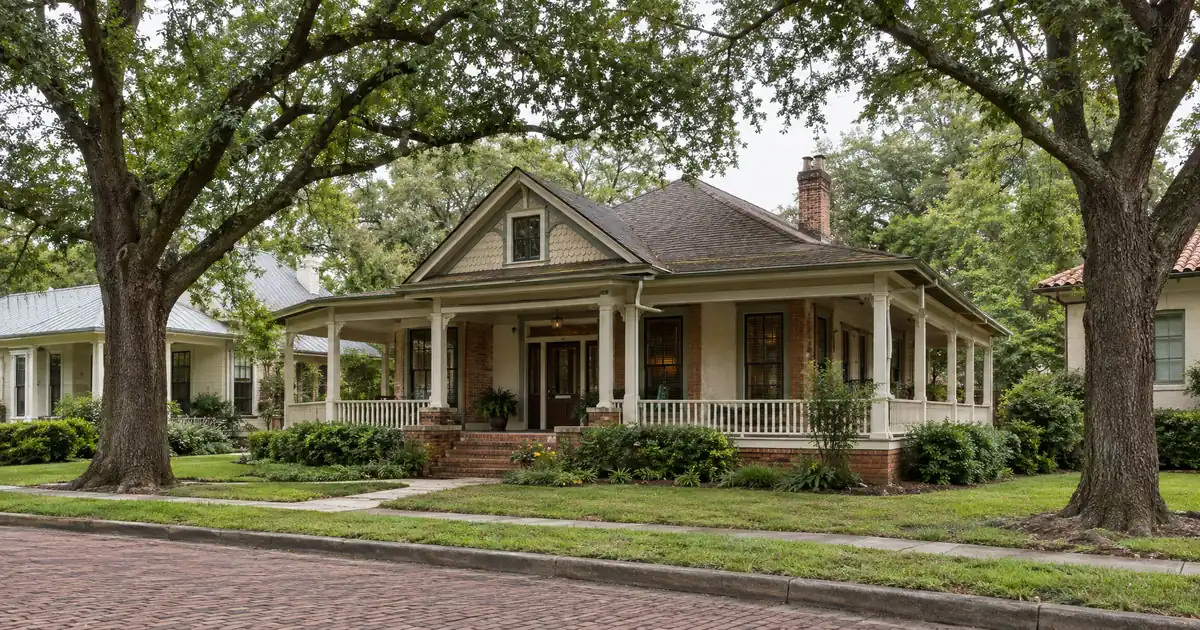
Most Duncanville owners assume a cash-out refinance works because values climbed. Here, values did not climb. Zillow puts the average Duncanville home value at $269,910, down 3.3 percent over the past year, and that changes what a cash-out file is really built on. The proceeds come from basis, meaning how little the owner paid relative to today’s appraisal, and from rent that covers the full monthly obligation. They do not come from momentum. Through Lendmire’s DSCR program footprint — 41 markets, including Washington, D.C. — lenders may review qualifying rental income subject to program guidelines for Duncanville, Texas investors. Lendmire (NMLS# 2371349) is a DSCR-focused mortgage broker that arranges these loans through wholesale lending channels, and lenders make the eligibility and approval decisions.
The Quick Read: A cash-out refinance on a Duncanville, Texas rental is underwritten primarily on the property’s rental income measured against its full monthly obligation. The deal works from appraisal and rent schedule through seasoning review and reserve verification to a proceeds figure limited by the loan-to-value ceiling.
DSCR Cash-Out Calculator
Run the cash-out numbers in Duncanville, TX
Rate source: Freddie Mac 30-yr average via FRED® — Federal Reserve Bank of St. Louis · effective Sep 24, 2026
Prefilled with starting assumptions — enter your property’s value, balance, taxes, and insurance for a more accurate picture.
Program parameters update from Lendmire’s centralized guideline source. Taxes and insurance are editable estimates.
As of Sep 24, 2026 · General Freddie Mac market benchmark, not a Lendmire loan offer. Property value, balance, taxes, and insurance are editable estimates. Maximum loan-to-value varies by lender, program, property type, and seasoning. Not a Loan Estimate, approval, or commitment to lend. Program availability and eligibility are subject to lender guidelines, credit approval, property review, and underwriting.
- Zillow shows a 3.3 percent one-year value decline, so equity must come from basis, not growth. (Zillow)
- Only 3.39 percent of housing units are duplexes or small buildings, which makes them scarce and comp-thin. (NeighborhoodScout)
- Modeled coverage on a typical three-bedroom house sits near the 1.00 line to the low 1.1s.
- The cash-out ceiling is 75 percent LTV, with about six months of seasoning from title recording.
Duncanville Market Snapshot
A quick read on the Duncanville investor landscape — figures come from the cited sources below. Confirm current property-level numbers before underwriting.
| Metric | Detail |
|---|---|
| Home prices | $255,500 median value (Data USA (Census ACS)) |
| University enrollment | 6,000+ enrollment (Wikipedia: Dallas College Cedar) |
| Population | 39.7K population (Data USA (Census ACS)) |
Why Appreciation Can’t Carry This File
Duncanville is a cash-flow market, not an appreciation market. The data points the same direction from several angles, though they disagree on magnitude. Zillow’s 3.3 percent decline measures average home value. Movoto reports a median list price of $375K, a 15 percent drop year over year. The two are not the same metric, since a list-price median swings with the mix of homes on the market. The Census ACS figure via Data USA sits lower at a $255,500 median value, reflecting survey methodology and a longer averaging window.
Pick one figure and stay consistent. For underwriting purposes it barely matters which, because the lender will order its own appraisal. What matters is the direction. Anyone sizing a refinance on last cycle’s value is sizing on a number that may not exist on appraisal day.
StateDemographics shows local housing costs about 10 percent below the Texas median of $283,800. That discount is the reason the city screens as a cash-flow play. It is also why the equity story depends on when and how the investor bought, not on what the neighborhood has done since. An owner with a low original basis and a balance well under half of current value has room under the 75 percent ceiling. An owner who bought near the top of the local range has almost none.
The Coverage Math on a Three-Bedroom House
Three-bedroom houses in Duncanville rent near the coverage line, not comfortably above it. Zillow’s rental listings for ZIP 75137 show asking rents of roughly $1,895 to $2,255 for three-bedroom, two-bath houses. Rentometer puts the typical three-bedroom house at about $2,000, two-bedroom homes in the $1,600s, and four-bedroom-plus homes approaching $2,700. These are asking rents from listing snapshots, not leased rents.
Run the numbers this way, using modeled assumptions and not sourced market facts. Take a $2,000 rent against a house appraising near the Data USA median of $255,500, at the 75 percent LTV ceiling. Measured against full PITIA, including taxes and insurance at Texas-average loads, the coverage number lands roughly between 1.05 and 1.15. Swap in Zillow’s higher average value and it slides toward the bottom of that band. A gross monthly rent-to-value ratio near 0.7 to 0.8 percent is the simple screen behind it. That is a rough ratio, not a market statistic.
Here’s the catch. The minimum DSCR on the program is 1.00, rent against PITIA. A 1.00 baseline is common because rent covers the payment at that level. Some lenders may review lower scenarios, but those usually require stronger compensating factors, lower leverage, or more cash in the deal. On a typical Duncanville three-bedroom, a cash-out at full 75 percent LTV can tip from comfortable to borderline with a modest rent miss or a bump in the insurance line.
The fix is usually leverage, not rent. Take a hypothetical owner sitting on a house worth $270,000 on the appraisal, with a balance near 40 percent of value. Borrowing to only 65 percent LTV, instead of the 75 percent cap, typically pushes coverage comfortably above 1.2 on the same rent. That costs the owner about ten points of value in proceeds and buys a cleaner file. Whether that trade makes sense depends on what the proceeds are for, which is the subject of a later section.
If a file does land under 1.00 on long-term rent alone, the paths lenders may review include lower leverage, a sub-1.00 program, or interest-only structuring. Qualification is subject to lender guidelines, credit approval, and property review. Nothing there is automatic.
For a broader look at how the ratio is calculated, Lendmire’s DSCR walkthrough covers the mechanics. Investors weighing this product against a conventional alternative can use the program-to-program comparison.
What Tenants Pay Versus What the Apartment Stock Charges
Houses rent at a premium to the apartment stock they compete with, and that premium is both the opportunity and the ceiling. ForRent lists $1,096 for a one-bedroom apartment, $1,395 for a two-bedroom, and $1,601 for a three-bedroom. RentCafe reports an average rent of $1,367, down 2.16 percent year over year, with three-bedroom units averaging $1,705. Asking rents on three-bedroom houses run roughly $300 to $700 a month above three-bedroom apartments.
Two things follow. First, there is no rent-growth story. RentCafe’s trend is flat to slightly down, and an investor underwriting 3 percent annual rent bumps is underwriting a market that isn’t there. Second, the gap between house and apartment rent shows where tenants trade down if a landlord pushes. Hold rents at market and the premium holds. Test the premium too hard and it erodes.
Tenure gives some support. About 35 percent of households rent, which is 4,643 renter households, and 36 percent of rentals are single-family. The renter pool is real but not enormous. Appraisers will lean on listings and a thin set of leases.
Where the Rent Holds Up Inside the City
No reliable neighborhood-level price or rent source exists for Duncanville. The submarket read below is qualitative, anchored on employment and access, not on invented per-street numbers.
The Wheatland Road corridor is the healthcare-tenant story. Methodist Charlton Medical Center is a 314-bed acute care teaching hospital serving Duncanville, Cedar Hill, DeSoto, and Lancaster, per Methodist Health System. It sits just outside the city line, and the Best Southwest Partnership notes it opened in 1975 and holds Magnet nursing designation. It has a Level III trauma center and a recent emergency department expansion. Health Care and Social Assistance is also the largest resident industry in the city, at 2,215 workers. A house near that corridor draws from a tenant base with stable, non-discretionary employment.
The I-20 and Hwy 67 corridor carries commuter access and most of the apartment stock. The City of Duncanville’s economic development page markets the location as minutes from downtown Dallas and under 20 minutes from Fort Worth, which is promotional language but consistent with the 25.5-minute average commute in the Data USA profile. Retail Trade (1,666 residents) and Accommodation and Food Services (1,582) fill out the resident job base. Those are hourly wage tenants, and the $1,900-to-$2,250 house rent is a meaningful share of a paycheck. Watch for that in the coverage assumption.
The Main Street and Fieldhouse area carries event traffic. The Duncanville Fieldhouse is an 111,000 square foot indoor venue with six basketball courts. It supports local foot traffic, not long-term rental demand in any measurable way. Treat it as a neighborhood amenity, nothing more.
Downtown Duncanville and the historic West End appear in listing copy for duplexes, along with the Woodhaven area. The data here is thin, and Rentometer’s description of the West End is auto-generated and low confidence. Older streets, older stock, and more deferred maintenance risk.
The Duplex Lever
Small multifamily is the most realistic way to lift coverage in this city, and it is scarce. NeighborhoodScout shows 73.69 percent of housing units are single-family detached, 19.13 percent are in large complexes, and only 3.39 percent are duplexes or small buildings. Flyhomes showed just two multifamily homes and duplexes for sale in the city, including a duplex marketed for cash flow with three-bedroom, two-bath units.
Stack the asking rents. Two three-bedroom units at the house rents above gross about $3,800 to $4,500 a month combined, against a single purchase price and a single PITIA. That is modeled arithmetic, not a listing rent roll, and no sale price exists to compute an actual ratio. The structure is the point. One mortgage, two rent streams, and coverage that can run meaningfully above what a single house produces.
The trade-off is comp scarcity. Appraisers have few duplex sales to work from, and a lender may treat each unit’s market rent separately. This one’s a genuine toss-up for an owner choosing between refinancing a house they already hold or using equity to hunt a duplex: the duplex math favors the hunt, but the thin inventory means the hunt could take a while.
One property-type note. Manufactured homes, log homes, and barndominiums fall outside the network’s DSCR programs, and Duncanville’s stock skews toward mid-century brick and frame, so this rarely arises. It is worth stating plainly for anyone with an unusual holding.
Seasoning, the Leverage Cap, and Where the Proceeds Go
The cash-out ceiling is 75 percent LTV, and it is a hard cap, separate from the 80 percent figure sometimes quoted on purchases. Seasoning runs about six months of ownership, measured from title recording. Minimum DSCR is 1.00, with credit tiers starting at a 620 floor and stepping through 660, 680, and 700. Reserves run about six months of PITIA. All of this is typical guideline territory, varies by borrower, property, and loan scenario, and is not a commitment to lend.
The loan amount guide runs up to $3,000,000 on standard programs. Duncanville balances sit far below that, and smaller balances route through select lenders in the network. Equity available depends on rent used for lender review, PITIA, reserves, and the 75 percent ceiling. It is not a guaranteed cash figure. The calculator converts percentages to dollars for an actual file, and investors can review my scenario to see where a specific house lands.
Run the mechanics on a hypothetical. An investor owns a three-bedroom for well beyond the seasoning window. Appraised value comes in near the local median. Current debt is about half of value. The 75 percent cap opens 25 points of value to extract, less whatever the coverage number forces the owner to leave in. If full-cap coverage lands near 1.05, the file may pass, but a fresh insurance quote that moves the wrong direction can push it under. Dropping to 70 percent buys cushion.
Then there is the question of where proceeds go. In a market with no appreciation tailwind, cash out of Duncanville is best pointed elsewhere or at the property itself. Older stock is the reason. City-Data’s housing profile shows a median house build year of 1976 and a median apartment build year of 1982, and the site disclaims accuracy on ACS-derived data. Renovation spending can lift rent into the upper part of the $1,900-to-$2,250 range, which improves coverage on the next refinance. Alternatively, proceeds can fund a down payment on a second asset, ideally in a market with rent growth. Lendmire’s DSCR cash-out refinance page walks through how proceeds are sized, and its overview of investment property refinance options compares rate-and-term against cash-out structures.
Investors in other markets across the state can see how this compares through DSCR loans in Texas.
Low Turnover and Thin Comps
Working DSCR brokers see a recurring pattern in mature, built-out inner-ring suburbs like this one: appraisals come in tight because there are few recent sales to anchor on, and the file’s strength ends up resting on the rent schedule instead. Investors who arrive with a signed lease, a rent comp set of three to five houses, and a renovation scope already documented tend to have fewer surprises than those who lean on the appraiser to find the number. The appraisal is the single variable an owner cannot control, so everything else on the file should be clean.
The turnover data explains why comps run thin. Per City-Data, owners moved in about 18 years ago on average, and 92.6 percent of residents lived in the same house a year earlier. Few houses trade. New construction is not filling the gap either: RentCafe says all apartment buildings in the city are two-story garden-style, with no mid-sized buildings or high-rises. New apartments average $1,727 against the $1,410 overall average per ApartmentHomeLiving, a small sample of 12 listings. Treat that premium as a ceiling to test against, not a benchmark.
DSCR vs. conventional financing
Two common ways to finance an investment property in Duncanville, TX. They qualify you differently — here’s how investors weigh them.
Why investors choose it
- Qualifies on the property’s rental income — no personal tax returns, W-2s, or pay stubs needed to document income.
- No personal debt-to-income ceiling to clear, so existing mortgages and obligations don’t cap your borrowing the same way.
- Can be closed in an LLC, keeping the property inside a business entity.
- Built for scaling — not held to the limit on number of financed properties that conventional financing applies.
- Underwriting centers on the deal: generally qualifies when the rent covers the payment, a 1.00x coverage ratio being a common baseline (confirmed in underwriting).
- Designed specifically for investment property, including long-term and, where the program allows, short-term rentals.
Where it’s strong
- Often the lowest ongoing financing cost for a buyer who fully qualifies on personal income — a fit for a first property or a cost-first purchase.
Trade-offs for investors
- Requires full personal income documentation and must fit within a debt-to-income limit — salary, existing debts, and other mortgages all count.
- Typically held in your personal name rather than a business entity.
- Caps how many financed properties you can carry, which can become a ceiling as a portfolio grows.
- Evaluates you as a borrower as much as the property, which usually means more paperwork.
How investors usually choose: a first or single property often optimizes for the lowest financing cost; portfolio builders often optimize for leverage, vesting in an LLC, and scaling past conventional caps. The right answer depends on your goals, the property, and current guidelines — both paths run through select lenders in Lendmire’s wholesale network, with eligibility and terms confirmed in underwriting.
Data gaps matter here. There is no published vacancy rate for Duncanville, and no submarket-level price or rent splits beyond ZIP 75137. Investors should say so in their own underwriting instead of assuming a number. Verify current local rental rules, taxes, and insurance with qualified local professionals before committing.
What a Local Appraiser Would Say
The honest read on Duncanville: rents are steady, values are soft, and the equity that exists belongs to whoever bought low and held. Nobody is getting rescued by the market. The investors who pull cash out successfully here keep the ask below the cap, document the rent, and treat the proceeds as capital for the next asset, not as a reward for waiting.
Frequently Asked Questions
How do you qualify for a DSCR cash-out refinance in Duncanville?
Eligibility is reviewed around the property’s rental income measured against its full PITIA, with a minimum DSCR of 1.00 on the program. Typical guidelines include about six months of seasoning, a credit score floor of 620, and reserves near six months of PITIA. Final eligibility depends on lender guidelines, credit profile, reserves, and property review.
What are the requirements for an investment property loan in Duncanville, Texas?
Expect a rent schedule or lease, an appraisal, proof of reserves, and an entity or individual vesting decision, subject to program terms. Leverage on a cash-out caps at 75 percent LTV. Manufactured homes, log homes, and barndominiums fall outside the network’s DSCR programs. Loan guidelines vary by borrower, property, and scenario, and nothing here is a commitment to lend.
Does falling home value in Duncanville shut off cash-out refinancing?
Not shut off, but it shrinks the proceeds. Zillow shows average values down 3.3 percent over the past year, and the lender sizes the loan on the appraisal, not on the owner’s original expectation. Owners with a low basis may still have room under the 75 percent ceiling, while those who bought near the top of the local range may find little or none.
Is a duplex or a single-family house the better cash-out candidate in Duncanville?
A duplex generally stacks more rent against one PITIA and can lift coverage, but inventory is thin. NeighborhoodScout shows only 3.39 percent of units are duplexes or small buildings, so comps are scarce and appraisals can be harder to support. A single-family house is easier to appraise and rent but sits closer to the 1.00 line.
Can a self-employed investor buying in Duncanville be reviewed for DSCR financing?
Yes, DSCR eligibility is generally reviewed around the property’s rental income instead of personal income documentation, which fits self-employed borrowers. Lendmire arranges DSCR investor loans and LLC vesting may be available subject to lender program eligibility.
For current guidelines and terms, see Lendmire’s DSCR loan programs page.
About Lendmire
Lendmire is a DSCR-focused mortgage brokerage, NMLS# 2371349, placing investor loans across 41 markets, including Washington, D.C. Lenders generally review DSCR eligibility around a property’s rental income rather than personal income documentation, which suits LLC-held rentals, self-employed investors, and portfolios growing past conventional financed-property limits. The firm is recognized as a 2026 Scotsman Guide Top Mortgage Workplace and a top-ranked workplace in 2025. Investors can reach the team at 828-256-2183.
Get Started
Ready to find the right loan for you?
In about 30 seconds you can review financing options available for your investment property. No commitment required.
Informational only. Not a Loan Estimate, approval, or commitment to lend. Program availability and eligibility are subject to lender guidelines, credit approval, property review, and underwriting.
References
1. Zillow Home Values, Duncanville
2. NeighborhoodScout, Duncanville Real Estate
4. Wikipedia: Dallas College Cedar
5. Movoto
6. StateDemographics, Duncanville
7. Zillow’s rental listings for ZIP 75137
9. ForRent
10. RentCafe, Duncanville Average Rent
12. Best Southwest Partnership, Methodist Charlton
13. City of Duncanville’s economic development page
15. City-Data, Duncanville Housing
17. a 2026 Scotsman Guide Top Mortgage Workplace
18. Scotsman Guide — Top Workplaces 2025
This article is part of Lendmire’s investment property cash-out refinance program — full qualification details, guidelines, and scenarios live on the program page.
Related reading: DSCR Cash Out Refinance in Duncanville, Texas: Can Your Rent Cover the New Loan Payment? · Cash Out Refinance Investment Property in Cedar Hill, Texas: How the Rent Math Clears at 75% LTV · Cash Out Refinance Investment Property in Coppell, Texas: How Much Equity Can I Pull Out?
Guides: Investment Property Cash-Out Refinance in Texas
Brandon Miller
Founder & CEO, Mortgage Loan Originator, Lendmire LLC
- Mortgage Loan Originator · NMLS# 1129696 · Verify on NMLS Consumer Access
- North Carolina Real Estate Broker · License# 343312 · Verify on NCREC
- North Carolina Insurance Producer · License# 19053198 · Property, Casualty, Life, Health · Verify on NAIC SBS
- Lendmire LLC · Firm NMLS# 2371349 · Verify firm licensure
Disclosures. The information presented in this article is general market commentary, not financial, legal, or tax advice. Lendmire is a mortgage brokerage (NMLS# 2371349) — not a direct lender or depository institution — and loan placement is subject to lender underwriting. Nothing in this content represents a commitment to lend. Loan terms, pricing, and program availability vary based on borrower qualifications, property characteristics, and state of subject property, and are subject to change at any time. Lendmire complies with Equal Housing Opportunity requirements. Consumer access: nmlsconsumeraccess.org.