
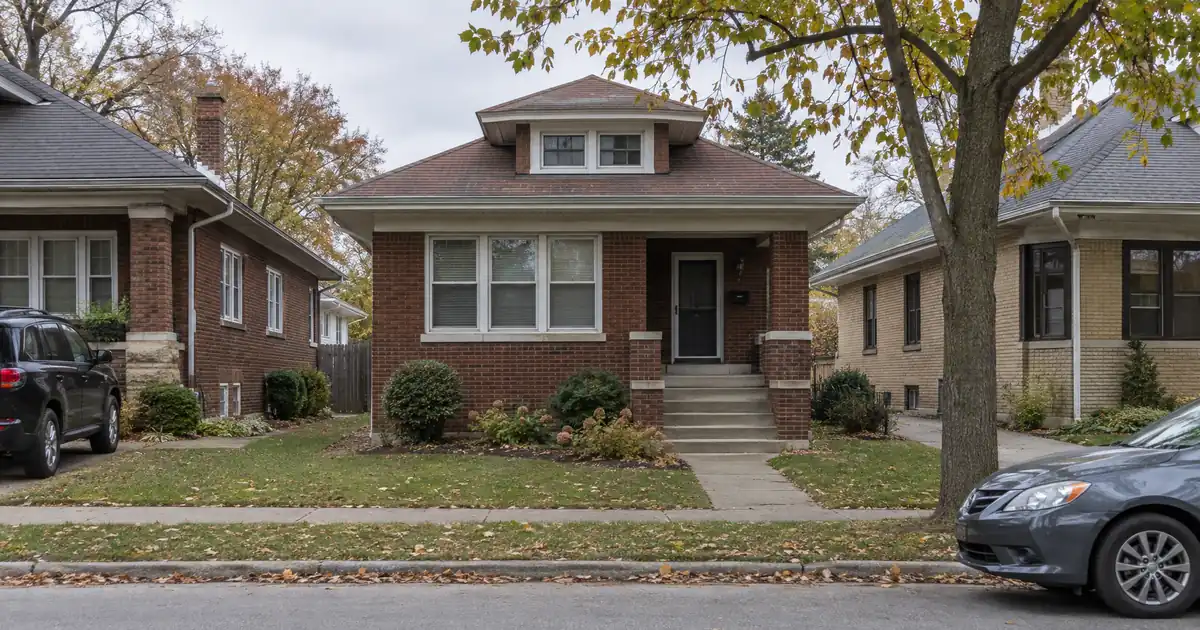
Zillow’s Home Value Index puts Danville’s typical home value at $71,990, up 11.5% over the past year — Zillow reports that appreciation rate as one of the sharper year-over-year moves in the region. That single number is the whole story for anyone sitting on a Danville rental right now: the basis was already low, and the equity built on top of it is starting to add up fast enough to matter.
Investors in Danville, Illinois work with Lendmire to place DSCR financing through wholesale lenders, and Danville’s low-basis housing stock makes the cash-out math worth running for anyone who’s owned a rental here for six months or longer.
DSCR Cash-Out Calculator
Run the cash-out numbers in Danville, IL
Rate source: Freddie Mac 30-yr average via FRED® — Federal Reserve Bank of St. Louis · effective Sep 17, 2026
Prefilled with starting assumptions — enter your property’s value, balance, taxes, and insurance for a more accurate picture.
Program parameters update from Lendmire’s centralized guideline source. Taxes and insurance are editable estimates.
As of Sep 17, 2026 · General Freddie Mac market benchmark, not a Lendmire loan offer. Property value, balance, taxes, and insurance are editable estimates. Maximum loan-to-value varies by lender, program, property type, and seasoning. Not a Loan Estimate, approval, or commitment to lend. Program availability and eligibility are subject to lender guidelines, credit approval, property review, and underwriting.
The Quick Read: In Danville, Illinois, cash-out DSCR refinancing is underwritten primarily on the property’s rental income measured against its full monthly obligation, with Illinois cash-out loans capped near 70% loan-to-value rather than the network’s standard 75% ceiling — a distinction that shapes how much equity a seasoned Danville rental can actually release.
- Zillow’s ZHVI places typical value at $71,990, up 11.5% year-over-year (Zillow).
- Redfin’s transaction-based median sits lower, at $122,000, down 2.4% YoY on just 14 sales (Redfin)
- Illinois overlay caps cash-out LTV near 70%, tighter than the network’s standard 75% ceiling
- Seasoning generally runs about 6 months from title recording before cash-out proceeds are considered
- Small multifamily makes up 5.9% of Danville’s housing stock, supporting duplex and triplex refinance plays
Danville Market Snapshot
A quick read on the Danville investor landscape — figures come from the cited sources below. Confirm current property-level numbers before underwriting.
| Metric | Detail |
|---|---|
| Home prices | $122,000 median sale price (Redfin) |
| Typical rents | $822 avg (Apartments.com) |
| Recent appreciation | +11.5% yoy (Zillow Home Value Index) |
| University enrollment | 5,247 total students (Danville Area Community College) |
| Population | 28,595 population (Census Reporter) |
| Employment | 1,001-5,000 employees (LinkedIn) |
The Seasoning Clock and Why It Matters Here
Six months of ownership, measured from the date title records, is generally the seasoning line before a Danville rental becomes eligible for cash-out proceeds under most DSCR programs. That clock doesn’t start over with a refinance — it starts at closing on the original purchase.
Why this matters more in Danville than in a hotter market: appreciation here is genuinely happening, but it’s happening on a thin transaction base. Redfin logged just 14 sales in its most recent reporting window for the city, with a median sale price of $122,000, down 2.4% year-over-year. Zillow’s smoothed index tells a different story entirely — up 11.5% over the same period, to a typical value of $71,990. Both are legitimate reads of the same market; they diverge because a handful of higher-value closings can swing a median when sales volume is this small.
For a cash-out file, that divergence is the practical risk. An appraiser pulling comps in a market with 14-21 closings a month has thin, sometimes volatile data to work with. Investors refinancing here should expect appraisers to widen the comp radius beyond the immediate block, and should be ready for an appraisal reconsideration request if the first value comes in low relative to what the ZHVI trend implies. That’s not a red flag on the file — it’s routine in a market this size.
The Illinois Overlay: 70%, Not 75%
Danville cash-out refinances run into a state-level ceiling before they run into the property. Illinois carries a lender geographic overlay that caps cash-out loan-to-value near 70%, tighter than the 75% ceiling used across most of the wholesale network’s other footprint. That five-point gap sounds small on paper. On a $115,000 valuation, it’s the difference between a file that clears comfortably and one that needs a stronger DSCR to offset the lower leverage.
Run the numbers on a seasoned Danville duplex carrying rent near $1,000 per month — a figure consistent with RentCafe’s 2-bedroom house average of $725 blended upward toward the higher end of the 2BR apartment range Apartment Finder and Rentometer both report. Modeling a 70% LTV cash-out against that rent, in a rate environment where note pricing sits in a moderate range and Illinois-typical property tax and insurance loading is factored in, the full monthly obligation — principal, interest, taxes, and insurance together — lands low enough that rent covers it comfortably. That’s a workable coverage ratio, not a stretch, and it’s the kind of cushion Danville’s ultra-low basis makes achievable even at the tighter state cap. Exact terms depend on the lender’s guidelines, property type, leverage, and a full review of the borrower’s file.
Contrast that with a small multifamily property. Consider an investor holding a seven-unit building near downtown Danville, fully leased with combined rent around $3,300 a month against a basis in the $180,000 range — figures drawn from an actual listing profile reviewed via Coldwell Banker and confirmed on Redfin’s ZIP 61832 data. Modeled the same way — 70% LTV, full PITIA including taxes and insurance — that property’s income stacking pushes coverage close to 2.7x. Multi-unit income stacking is the single biggest lever a Danville investor has for clearing DSCR minimums with room to spare, and it’s why the small-multifamily share of this market (5.9% of total housing stock, per NeighborhoodScout) deserves more attention than its size suggests. Every figure here varies by lender and program — guidelines, property type, leverage, and credit profile all apply.
Where the Equity Actually Sits
Downtown Historic District, Ellsworth Park, and the Lake Vermilion corridor. This zone carries the highest concentration of older duplex and small-multifamily conversions in the city — the housing stock investors want when the strategy is income stacking rather than single-tenant coverage. A duplex bought two years ago at Danville’s then-typical value and refinanced today captures real upside from the appreciation swing NeighborhoodScout flagged as outpacing 90% of Illinois cities in recent quarters.
The VA / East Main Street corridor. Anchored by the VA Illiana Health Care System — a campus with roots back to 1898 as a National Home for Disabled Volunteer Soldiers, per the National Park Service — this corridor draws a stable tenant base tied to a federal employer sized in the 1,001-5,000 employee range. That’s a rare four-figure federal payroll for a city this size, and it supports durable long-term lease demand near the campus even though a small round of probationary staff reductions made local news last year. Investors leaning on this anchor should size the thesis around steady demand, not unlimited growth — VA staffing moves with federal budget cycles, not local market conditions.
Rabbittown. The historic near-southside pocket of small, older 2-bedroom, 1-bath homes fits the workforce single-family model cleanly. Basis is low, rents track the citywide averages, and turnover tends to run slower than in newer subdivisions because the housing stock skews toward long-term occupants rather than transient renters.
North Danville. Ranch-style single-family homes on larger lots, drawing a family tenant base distinct from the denser historic core. Less duplex inventory here, more straightforward single-family coverage math.
Highland Park / DACC corridor. Proximity to Danville Area Community College, which reported 5,247 total students and 3,385 credit students for the most recent fiscal year on its own student profile page, supports modest rental demand from students, staff, and workforce tenants layered on top of the general residential base.
One employment note worth flagging for anyone leaning on East Danville’s commuter base: Blue Cross Blue Shield of Illinois is closing its call center on East Main Street, a facility that once employed more than 400 people, with remaining staff shifting to remote work rather than commuting. That removes one of the few private white-collar daily-presence employers in the area — investors targeting that corridor should weight tenant demand toward VA, DACC, and manufacturing/logistics workers instead of assuming continued office-commuter demand.
Working DSCR brokers see a recurring pattern in ultra-low-basis Midwest markets like Danville: the coverage math looks almost too easy on paper because rent-to-price ratios are so favorable, but the files that stall are the ones where the appraisal comes in soft against a thin sales pool, or where the small-multifamily unit mix on the title doesn’t match what the rent roll claims. Clean unit-count documentation and a wide comp set going into the file head off most of that friction before it becomes a stall.
What the Cash-Out Actually Buys
DSCR lender review here works the same way it does anywhere: the guide “What Is a DSCR Loan” covers the mechanics, but the short version is that the property’s rent, not the borrower’s pay stub, carries the file. That’s a meaningful structural difference from a conventional cash-out refinance, and the guide “Where DSCR and Conventional Diverge” is worth a look if this is a first DSCR file.
For Danville specifically, the appeal of pulling equity with a DSCR cash-out is less about a single big number and more about recycling capital in a market where the entry price for the next deal is still under $125,000 on a median basis. An investor who bought a Rabbittown single-family at a low basis, seasoned it for six months, and watches the ZHVI trend climb has a real shot at pulling proceeds that fund a down payment on a second property — without touching outside capital.
Reserve requirements factor into how much of that equity is actually available. Most DSCR cash-out files call for roughly six months of PITIA in reserves (closer to nine months on larger loan balances above $1,500,000, which is a non-issue at Danville’s price points). Credit tiers in the wholesale network generally start around a 620 floor, with pricing and leverage improving at 660, 680, and 700. None of these are guarantees — every file gets reviewed on its own credit, property, and reserve profile — but they’re the framework a Danville investor should plan around before requesting a payoff quote.
Lendmire’s wholesale refi programs and DSCR loan options for Illinois investors cover the statewide parameters in more depth. Investors with a specific Danville property in mind can request a scenario quote or call 828-256-2183 to walk through the seasoning date, current rent roll, and the 70% Illinois cap against a specific valuation.
Manufactured homes, log homes, and barndominiums fall outside these DSCR programs entirely — worth flagging since Vermilion County’s rural edges carry some of that housing stock, even though it’s not common inside city limits.
Frequently Asked Questions
How do you qualify for a DSCR cash-out refinance in Danville, Illinois?
Qualification centers on the property’s rent measured against its full monthly obligation — taxes and insurance included — rather than the borrower’s personal income. Most lenders in the network look for a DSCR of 1.00 or higher, a credit score at or above a 620 floor, and roughly six months of reserves, with the exact terms depending on the specific lender and file.
What are the requirements for an investment property cash-out loan in Danville, Illinois?
Beyond the DSCR and credit floor, Illinois carries a state-level cash-out LTV cap near 70%, tighter than the standard 75% ceiling used in most other markets. Seasoning of about six months from the title-recording date is typically required before cash-out proceeds are available, and reserve documentation showing roughly six months of PITIA is standard on most files.
DSCR vs. conventional financing
Two common ways to finance an investment property in Danville, IL. They qualify you differently — here’s how investors weigh them.
Why investors choose it
- Qualifies on the property’s rental income — no personal tax returns, W-2s, or pay stubs needed to document income.
- No personal debt-to-income ceiling to clear, so existing mortgages and obligations don’t cap your borrowing the same way.
- Can be closed in an LLC, keeping the property inside a business entity.
- Built for scaling — not held to the limit on number of financed properties that conventional financing applies.
- Underwriting centers on the deal: generally qualifies when the rent covers the payment, a 1.00x coverage ratio being a common baseline (confirmed in underwriting).
- Designed specifically for investment property, including long-term and, where the program allows, short-term rentals.
Where it’s strong
- Often the lowest ongoing financing cost for a buyer who fully qualifies on personal income — a fit for a first property or a cost-first purchase.
Trade-offs for investors
- Requires full personal income documentation and must fit within a debt-to-income limit — salary, existing debts, and other mortgages all count.
- Typically held in your personal name rather than a business entity.
- Caps how many financed properties you can carry, which can become a ceiling as a portfolio grows.
- Evaluates you as a borrower as much as the property, which usually means more paperwork.
How investors usually choose: a first or single property often optimizes for the lowest financing cost; portfolio builders often optimize for leverage, vesting in an LLC, and scaling past conventional caps. The right answer depends on your goals, the property, and current guidelines — both paths run through select lenders in Lendmire’s wholesale network, with eligibility and terms confirmed in underwriting.
Why do Zillow and Redfin show different numbers for Danville home values?
Zillow’s ZHVI is a smoothed index built to track a broad mix of homes, while Redfin’s median reflects actual closed sales — and Danville only logs 14-21 sales in a typical month. That small sample lets a handful of higher-value closings swing the raw median in either direction, which is why the two sources can point opposite ways in the same period.
Does owning a small multifamily property in Danville change the cash-out math?
Yes, meaningfully. Duplex and small multifamily stock makes up about 5.9% of Danville’s housing units, and income stacking across multiple leases tends to produce stronger DSCR coverage than a single-family rental carrying the same loan balance, since more rent rolls up against one monthly obligation.
Can a self-employed investor buying in Danville be reviewed for DSCR financing?
Yes — DSCR programs are built specifically around property income rather than traditional personal-income documentation or pay stubs, which is why they work well for self-employed borrowers. Lendmire arranges these loans through wholesale lenders, and qualification is based primarily on the rent-to-obligation ratio rather than employment documentation, subject to lender program eligibility.
Does the VA hospital or the correctional facility affect rental demand near East Main Street?
The VA Illiana Health Care System is sized at 1,001-5,000 employees and has continued operating through recent national VA staffing adjustments, supporting steady tenant demand in the surrounding corridor. The Danville Correctional Center, a 1,854-capacity state facility five miles east of the core, is a separate stable state-employment anchor but sits outside the immediate rental corridors most investors target.
The biggest blind spot for a Danville cash-out file isn’t the loan program — it’s the appraisal. With sales volume this thin, a single outlier comp can pull a valuation in either direction, and an investor who assumes the Zillow trend line will hold up under a formal appraisal is taking on more risk than the headline appreciation number suggests. Anyone refinancing here should pull their own comp set before ordering the appraisal, not after.
About Lendmire
Lendmire is a DSCR-focused mortgage brokerage, NMLS# 2371349, placing investor loans across 41 markets, including Washington, D.C. DSCR eligibility is generally reviewed by the lender on a property’s rental income rather than personal income documentation, which fits LLC-held rentals, self-employed investors, and portfolios scaling past conventional financed-property limits.
Get Started
Ready to find the right loan for you?
In about 30 seconds you can review financing options available for your investment property. No commitment required.
Informational only. Not a Loan Estimate, approval, or commitment to lend. Program availability and eligibility are subject to lender guidelines, credit approval, property review, and underwriting.
References
1. Zillow Home Value Index – Danville, IL
2. Redfin – Danville, IL Housing Market
4. Danville Area Community College – Student Profile
6. LinkedIn
7. RentCafe – 2-Bedroom Houses for Rent, Danville
9. NeighborhoodScout Danville Real Estate
10. VA Illiana Health Care System
11. National Park Service – Danville Branch Historic District
12. Danville Area Community College
13. a 2026 Scotsman Guide Top Mortgage Workplace
14. a 2025 Scotsman Guide Top Mortgage Workplace
This article is part of Lendmire’s investment property cash-out refinance program — full qualification details, guidelines, and scenarios live on the program page.
Related reading: Cash Out Refinance Investment Property in Danville, Illinois · DSCR Cash Out Refinance Danville Kentucky · Cash Out Refinance Investment Property Danville Kentucky
Guides: Investment Property Cash-Out Refinance in Illinois
Brandon Miller
Founder & CEO, Mortgage Loan Originator, Lendmire LLC
- Mortgage Loan Originator · NMLS# 1129696 · Verify on NMLS Consumer Access
- North Carolina Real Estate Broker · License# 343312 · Verify on NCREC
- North Carolina Insurance Producer · License# 19053198 · Property, Casualty, Life, Health · Verify on NAIC SBS
- Lendmire LLC · Firm NMLS# 2371349 · Verify firm licensure
Disclosure information. Lendmire is a state-licensed mortgage brokerage under NMLS# 2371349. Lendmire is not a depository institution, direct lender, or financial advisor — all loans referenced are placed through wholesale lender partners and are subject to each lender's underwriting standards. This article is provided for general informational purposes and is not a commitment to lend, nor does it constitute financial, legal, or tax advice. Loan programs, terms, rates, and qualification standards change without notice and depend on borrower profile, property type, and the state in which the subject property is located. Equal Housing Opportunity provider. NMLS Consumer Access: nmlsconsumeraccess.org.