
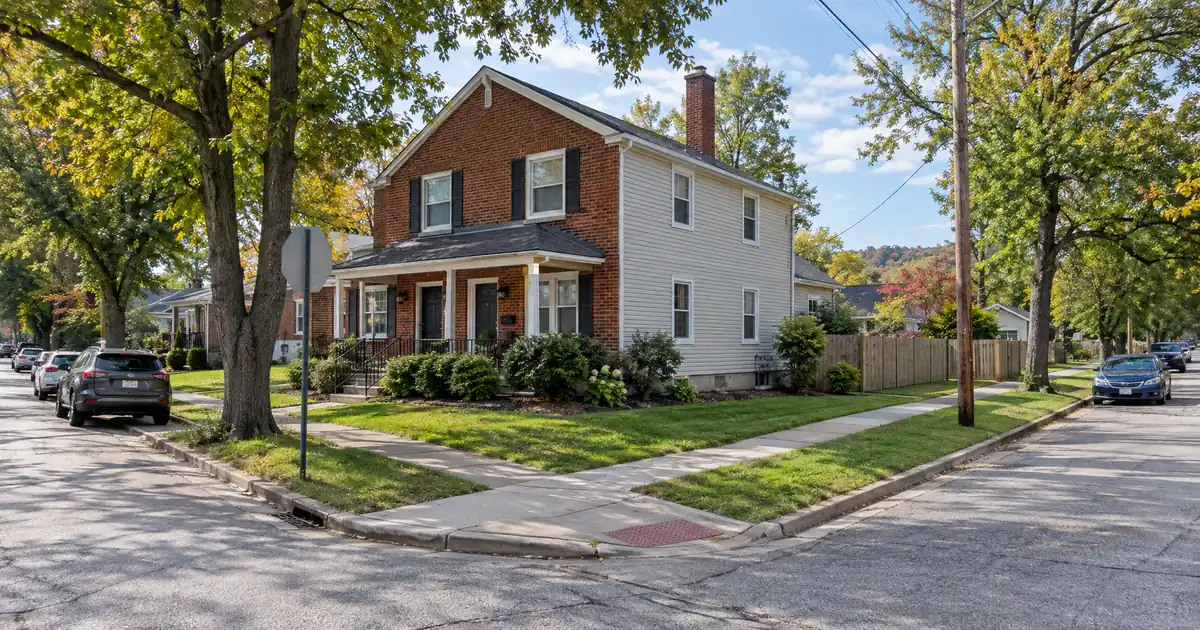
In Overland West, NeighborhoodScout’s profile pairs a median home price of $125,113 with average rent of $1,433 and a 6.7% vacancy rate. The housing there is mostly small-to-medium single-family homes, many built between 1940 and 1969, plus a few small apartment buildings. For anyone weighing a DSCR cash out refinance in Overland, Missouri, that pairing is the whole story: a low basis, rent that looks strong against it, and equity that will have to be earned through cash flow rather than market momentum.
At a Glance: A cash-out refinance on an Overland, Missouri rental is underwritten primarily on the property’s rental income measured against its full monthly obligation, with the appraised value and a 75% loan-to-value ceiling setting how much equity can come out. Seasoning, reserves and credit then determine whether the file is eligible.
DSCR Cash-Out Calculator
Run the cash-out numbers in Overland, MO
Rate source: Freddie Mac 30-yr average via FRED® — Federal Reserve Bank of St. Louis · effective Sep 24, 2026
Prefilled with starting assumptions — enter your property’s value, balance, taxes, and insurance for a more accurate picture.
Program parameters update from Lendmire’s centralized guideline source. Taxes and insurance are editable estimates.
As of Sep 24, 2026 · General Freddie Mac market benchmark, not a Lendmire loan offer. Property value, balance, taxes, and insurance are editable estimates. Maximum loan-to-value varies by lender, program, property type, and seasoning. Not a Loan Estimate, approval, or commitment to lend. Program availability and eligibility are subject to lender guidelines, credit approval, property review, and underwriting.
- Overland West median price is $125,113 against $1,433 average rent, per NeighborhoodScout.
- Single-family detached homes are 87.32% of units, so cash-out candidates are mostly houses (NeighborhoodScout).
- Cash-out LTV tops out at 75%, with about 6 months of seasoning from title recording.
- Rent sources here conflict widely, so lease comps matter more than any model.
- Listing prices are softening, so size proceeds without counting on appreciation.
Lendmire (NMLS# 2371349) is a DSCR-focused mortgage broker, and Lendmire’s DSCR program footprint covers Overland, Missouri as part of a 41-market reach that includes Washington, D.C. A broker doesn’t lend. It arranges these loans through wholesale and investor channels, and the lender decides eligibility. This article assumes the reader already owns the rental and wants to know what the equity is worth, what it costs to extract, and where the proceeds should go.
Overland Market Snapshot
A quick read on the Overland investor landscape — figures come from the cited sources below. Confirm current property-level numbers before underwriting.
| Metric | Detail |
|---|---|
| Home prices | $150,186 median (NeighborhoodScout, Overland) |
| Typical rents | $1,433 avg (NeighborhoodScout, Overland West) |
| Employment | 500+ jobs (Missouri DED (Boeing)) |
| Vacancy | 7.9% rental (Wikipedia (2020 Census summary)) |
What Does a Cash-Out Actually Pull in a $125K-to-$150K Market?
Less than most investors expect. Overland is a low-basis suburb, and a 75% LTV ceiling on a low appraised value produces a modest gross number before payoff and costs. The equity story here is about disciplined redeployment of small, repeatable draws, not a single large withdrawal. Terms vary by lender guidelines, property type, leverage, credit profile, and full file review.
NeighborhoodScout’s citywide figures put the median home value at $150,186. Overland West sits lower at $125,113. At those levels, an owner with a long-held house and a payoff well under 50% of value can pull meaningful equity relative to the property. The dollar amount is another matter, and the calculator handles that conversion. Standard programs reach up to $3,000,000. Smaller balances, which many Overland files will be, route through select lenders in the network rather than the standard lane, so a very small loan is a real consideration worth raising before the application starts.
The math has three moving parts:
- Appraised value. The lender’s appraiser sets it, not a listing site.
- Payoff plus costs. The existing balance and closing costs come off the top.
- The 75% ceiling. On a cash-out, 75% is a hard cap. The 80% figure that applies to purchases does not carry over.
Take an owner whose payoff sits at roughly 55% of appraised value. The usable gap is about 20 points of value, before costs and before the reserve requirement is considered. That requirement is typically about 6 months of PITIA held in liquid reserves. The reserves are separate from the proceeds, and they surprise people. Equity available is never a guaranteed figure, and the lender sets it after reviewing the rent schedule, credit tier and property.
Overland West Versus the Citywide Median
Overland West carries the better rent-to-value ratio, and the citywide median carries the more defensible appraisal base. The table below models both, plus a lower-rent case, so the sensitivity to the rent number is visible. These are modeled assumptions for illustration, not cited market coverage.
| Modeled scenario | Value | Rent | Coverage at 75% LTV |
|---|---|---|---|
| Overland West, model rent | $125,113 | $1,433 | Above 1.7x |
| Citywide median, Zumper rent | $150,186 | $1,297 | About 1.4x |
| Citywide, 3-bed listing rent | $150,186 | $1,250 | About 1.3x |
| Citywide, Redfin rent | $150,186 | $850 | Just under 1.0x |
The coverage figures are computed on full PITIA, including taxes and insurance, using Missouri-average tax and insurance loads. Coverage runs higher at lower leverage. Sources: NeighborhoodScout, Zumper and Redfin.
The spread is the point. Most DSCR programs are built around a 1.00x benchmark because rent covers the full monthly obligation at that level. Some lenders may review lower scenarios, but those usually need lower leverage, stronger credit, more reserves or different pricing. A house at the Redfin-level rent sits right at that edge, while the same house at a documented $1,300 clears it with cushion. Same building, same value. The rent evidence decides the outcome. Eligibility depends on lender guidelines, credit profile, reserves and property review.
One more flag. NeighborhoodScout’s $1,433 is a modeled figure and runs above listing-based sources. Underwrite to actual leases.
Why Appreciation Won’t Do the Heavy Lifting
Overland’s long-run appreciation is solid, but the recent signals point to a flat-to-soft market. NeighborhoodScout reports ten-year cumulative appreciation of 101.88%, about 7.28% a year, with the latest twelve months at 3.26%. Movoto’s listing data shows a median list price near $159K, with list prices down about 5% and price per square foot down about 10% year over year. List data isn’t sold data, so the two sets of numbers don’t contradict each other. They do describe different things, and a cash-out lives or dies on the appraisal.
The practical read is that Overland is a cash-flow-led submarket, not an appreciation-led one. An investor who bought several years ago has probably banked most of the gain already, and the next leg of equity is more likely to come from debt paydown and rent growth than from a rising comp set. Zumper’s rent research is available for the area, but it rests on limited data and carries its own caveats, so it’s best to treat any rent trend as directional and confirm it with documented rent comps on the specific property.
Whether to wait or refinance now is a genuine toss-up for owners who sit near the seasoning line. Waiting a few more months could add equity if values hold. But if listing prices keep slipping, waiting could shrink the appraised value just as easily. For a house that already clears coverage comfortably, the stronger play might be to refinance on documented rent comps now. Investors who believe the soft-price trend is temporary could reasonably argue for patience.
Which Rent Number Do You Trust?
None of them on its own. Overland’s published rent figures run from roughly $850 to $1,433, and the spread comes from methodology. These are the sources, each with its caveat:
- NeighborhoodScout: $1,433 average, a modeled figure.
- Zumper: $1,297 median apartment rent, flagged by the site as limited data.
- RentCafe: $909 average, up 5.28% over the past year, covering only buildings of 50 or more units.
- Redfin: $850 average, a low outlier on the page’s own update.
RentCafe’s sample is large complexes, which are only 2.47% of Overland’s housing units. That makes it a poor proxy for a single-family rental. A sampling of live Zillow listings in 63114 is more useful for house rents: a 3-bedroom of about 960 square feet listed at $1,250, a 4-bedroom of about 1,710 square feet at $1,350, and a 2-bedroom house at $1,045. It’s a small, anecdotal sample, but it points to something practical.
A 4-bedroom asking only $100 more than a 3-bedroom suggests extra square footage adds little rent. Paying up for an added bedroom, or for a bigger house when buying the next property with the proceeds, may not lift coverage much. Price per rentable dollar matters more than bedroom count.
The lender’s appraiser will produce a rent schedule, and that is the number that counts. An owner who walks in with signed leases and a payment history, rather than a listing-site average, tends to have a cleaner file.
Single-Family First, Duplex If You Can Find One
Workforce single-family rentals are the core product here, and small multi-unit buildings are the scarce exception. Single-family detached homes are 87.32% of Overland’s housing units. Duplexes and small buildings are 8.70%, and large complexes are 2.47%.
For a cash-out, that mix has two consequences. First, the comp set for houses is deep, which helps appraisal support. Second, the comp set for small multi-unit is thin, which can make the value harder to defend.
An investor holding a duplex has a real structural edge on coverage. Two rent streams under one roof can often beat what a single house produces, though that depends on the actual rents in the specific submarket. Apartments.com publishes apartment rent trends for the area, so treat those as apartment-only reference points rather than a duplex benchmark. The tradeoff is exit liquidity and appraisal depth. If the plan is to refinance once and hold, the duplex wins on coverage. If the plan is to keep options open for a sale, the house wins on buyer pool.
Manufactured homes, log homes and barndominiums fall outside these DSCR programs. Anything in that category won’t work as collateral here.
The Demand Backstop Next to the Airport
Overland is small at 4.4 square miles, and its tenant base draws on a regional economy that is larger than the city itself. Census Bureau QuickFacts puts the population at 15,695, about 3,576 people per square mile, with per capita income of $31,778. The count is essentially flat against the prior decennial figure of 15,955, per Wikipedia’s Census summary. Flat population means no demand surge to bank on. It also means no obvious oversupply pressure. The same source shows a rental vacancy rate of 7.9%.
The demand drivers are regional and sit close by. The St. Louis region’s aerospace industry is anchored by Boeing Defense, Space & Security. The Missouri Department of Economic Development announced state support for a planned expansion, and the release title cites a $1.8 billion project and more than 500 new jobs. The St. Louis Regional Freightway says the MQ-25 Stingray facility was scheduled to initially employ about 150 mechanics, engineers and support staff, and that Lambert International Airport served just under 16 million passengers in the most recent annual count.
That’s an employment base of airport, aerospace and logistics workers within a short commute of St. Charles Rock Road, I-170 and Page Avenue. None of it is in Overland’s own boundaries. It is a demand story that supports long-term lease renewal for workforce housing, though it doesn’t guarantee any individual property’s performance.
Where the Cash Goes Next
Proceeds should go to a property whose coverage works at documented rent, not to a market where the math only pencils at modeled rent. The cash-out is a tool, and the next purchase is the test.
Two sensible paths exist inside Overland and its neighbors. One is a second low-basis house in the Overland West price band, where coverage has the most cushion. The other is a rare duplex, where stacking two units can produce stronger coverage than a house but with thinner comps. Both stay close to a market where the investor already knows lease comps. The riskier path is deploying equity into a market where the numbers only work at a leverage or rent level the investor hasn’t verified. That deserves a stress test before committing.
Run the numbers on a second property purchased at a price well below the median, with rent supported by listings in the 63114 sample rather than the model. If coverage holds near 1.2x or better on full PITIA at the leverage the lender allows, the redeployment case is straightforward. If it only clears at the most optimistic rent in the table above, that signals the target, not the loan structure, needs rethinking.
Lendmire’s deal desk sees a recurring pattern in low-basis suburban markets like this one. The friction point is rarely the ratio itself. It tends to be a thin balance, which narrows the lender field, combined with a rent schedule built from a listing-site average rather than signed leases. The cleaner files, from a documentation standpoint, usually arrive with lease agreements, proof of rent deposits, a recorded title date confirming the seasoning clock, and reserves already verified. Getting those in order before the application starts tends to matter more than shopping the structure.
DSCR vs. conventional financing
There are two common ways to finance an investment property in Overland, MO, and they qualify you differently — here’s how investors weigh them.
Why investors choose it
- Qualifies on the property’s rental income — no personal tax returns, W-2s, or pay stubs needed to document income.
- No personal debt-to-income ceiling to clear, so existing mortgages and obligations don’t cap your borrowing the same way.
- Can be closed in an LLC, keeping the property inside a business entity.
- Built for scaling — not held to the limit on number of financed properties that conventional financing applies.
- Underwriting centers on the deal: generally qualifies when the rent covers the payment, a 1.00x coverage ratio being a common baseline (confirmed in underwriting).
- Designed specifically for investment property, including long-term and, where the program allows, short-term rentals.
Where it’s strong
- Often the lowest ongoing financing cost for a buyer who fully qualifies on personal income — a fit for a first property or a cost-first purchase.
Trade-offs for investors
- Requires full personal income documentation and must fit within a debt-to-income limit — salary, existing debts, and other mortgages all count.
- Typically held in your personal name rather than a business entity.
- Caps how many financed properties you can carry, which can become a ceiling as a portfolio grows.
- Evaluates you as a borrower as much as the property, which usually means more paperwork.
How investors usually choose: a first or single property often optimizes for the lowest financing cost; portfolio builders often optimize for leverage, vesting in an LLC, and scaling past conventional caps. The right answer depends on your goals, the property, and current guidelines — both paths run through select lenders in Lendmire’s wholesale network, with eligibility and terms confirmed in underwriting.
For the mechanics, DSCR cash-out refi mechanics walks through how the 75% ceiling interacts with payoff and costs, and the refinance details page covers the broader refinance options. For the basics of how the ratio is calculated, Lendmire’s DSCR walkthrough covers it. The side-by-side comparison is worth a read for the W-2 investor with one or two rentals, where conventional financing may cost less and the non-QM route isn’t needed. DSCR becomes the practical lane for entity-held portfolios (subject to lender program eligibility), for investors past four financed properties, or for anyone whose traditional personal-income documentation doesn’t show the rental income cleanly. Broader state context lives on the Missouri DSCR financing page.
To test a specific property, see how the math pencils out or call 828-256-2183. Verify current local rental rules, taxes and insurance with qualified local professionals before committing. Program details change, and every figure here is subject to lender guidelines.
Frequently Asked Questions
How long do I have to own an Overland rental before a cash-out refinance?
About 6 months, measured from the date the title was recorded, on most programs. An investor who bought a house in Overland West and renovated it will want to confirm that date before planning the refinance. Some lenders layer additional conditions on top of that, so the timing depends on the specific program.
Can falling listing prices in Overland reduce how much I can pull out?
Yes. The lender’s appraisal sets the value, and the 75% ceiling applies to that figure, not to what the property cost or what a listing site shows. Movoto’s list data shows prices softening, though list data isn’t sold data. An owner near the margin should assume little appreciation and size the cash-out on the appraisal and documented rent.
Does a duplex in Overland qualify better than a single-family house?
Often the coverage is stronger, because two units of roughly $850 to $1,000 stack to more rent than one house. The catch is that duplexes are only 8.70% of Overland’s units, so appraisal comps are thin. Whether that tradeoff favors the duplex depends on how much the lender’s appraiser can support.
What rent should I use for a house in 63114 when sources disagree?
Signed leases, ahead of anything else. Published figures run from $850 to $1,433 depending on source and method, and RentCafe’s number only covers large complexes. A lender’s rent schedule will anchor to the appraisal, so documented tenant payments make the cleanest case.
Is a small loan balance a problem for DSCR cash-out in a market this size?
It can narrow the lender field. Standard programs run up to $3,000,000, and smaller balances route through select lenders in the network. Many Overland files will fall in that smaller category, so it helps to raise the balance early rather than at application.
The Choice in Front of an Overland Owner
An owner with seasoned equity faces a fork. One path is to refinance now on documented rent, accept a modest draw sized to the 75% ceiling, and redeploy into another low-basis house where coverage holds without leaning on the model. The other is to hold and wait for a softer comp set to recover, giving up flexibility today in exchange for a possibly larger appraisal later. In a suburb where cash flow, not appreciation, has carried the numbers, the first path is built on the figures Overland has actually produced.
For current guidelines and terms, see Lendmire’s DSCR loan programs page.
About Lendmire
Lendmire (NMLS# 2371349) is a mortgage brokerage focused on DSCR investor financing, helping arrange programs through wholesale and investor-lending channels in 41 markets, including Washington, D.C. DSCR loans are evaluated by the lender on property cash flow rather than personal income, subject to lender guidelines, supporting LLC closings and accommodating investors with four or more financed properties. Scotsman Guide named Lendmire a Top Mortgage Workplace in both 2025 and 2026.
Get Started
Ready to find the right loan for you?
In about 30 seconds you can review financing options available for your investment property. No commitment required.
Informational only. Not a Loan Estimate, approval, or commitment to lend. Program availability and eligibility are subject to lender guidelines, credit approval, property review, and underwriting.
References
1. NeighborhoodScout: Overland West
2. NeighborhoodScout: Overland real estate
3. Missouri Department of Economic Development: Boeing expansion
4. Wikipedia (2020 Census summary)
5. Zumper
6. Redfin
8. RentCafe
10. Apartments.com
11. Wikipedia’s Census summary
12. Missouri Partnership: St. Louis Region
13. St. Louis Regional Freightway: Aerospace and aviation
14. 2025
15. 2026
This article is part of Lendmire’s investment property cash-out refinance program — full qualification details, guidelines, and scenarios live on the program page.
Related reading: Luxury Rental DSCR Loans In New Jersey · Jersey Shore Vacation Rental Loans: DSCR Financing In Ocean City, Cape May And Long Beach Island · DSCR Cash-out Refinance In New Jersey: Pulling Equity From A Rental
Guides: Investment Property Cash-Out Refinance in Missouri
Brandon Miller
Founder & CEO, Mortgage Loan Originator, Lendmire LLC
- Mortgage Loan Originator · NMLS# 1129696 · Verify on NMLS Consumer Access
- North Carolina Real Estate Broker · License# 343312 · Verify on NCREC
- North Carolina Insurance Producer · License# 19053198 · Property, Casualty, Life, Health · Verify on NAIC SBS
- Lendmire LLC · Firm NMLS# 2371349 · Verify firm licensure
Disclosures. The information presented in this article is general market commentary, not financial, legal, or tax advice. Lendmire is a mortgage brokerage (NMLS# 2371349) — not a direct lender or depository institution — and loan placement is subject to lender underwriting. Nothing in this content represents a commitment to lend. Loan terms, pricing, and program availability vary based on borrower qualifications, property characteristics, and state of subject property, and are subject to change at any time. Lendmire complies with Equal Housing Opportunity requirements. Consumer access: nmlsconsumeraccess.org.