
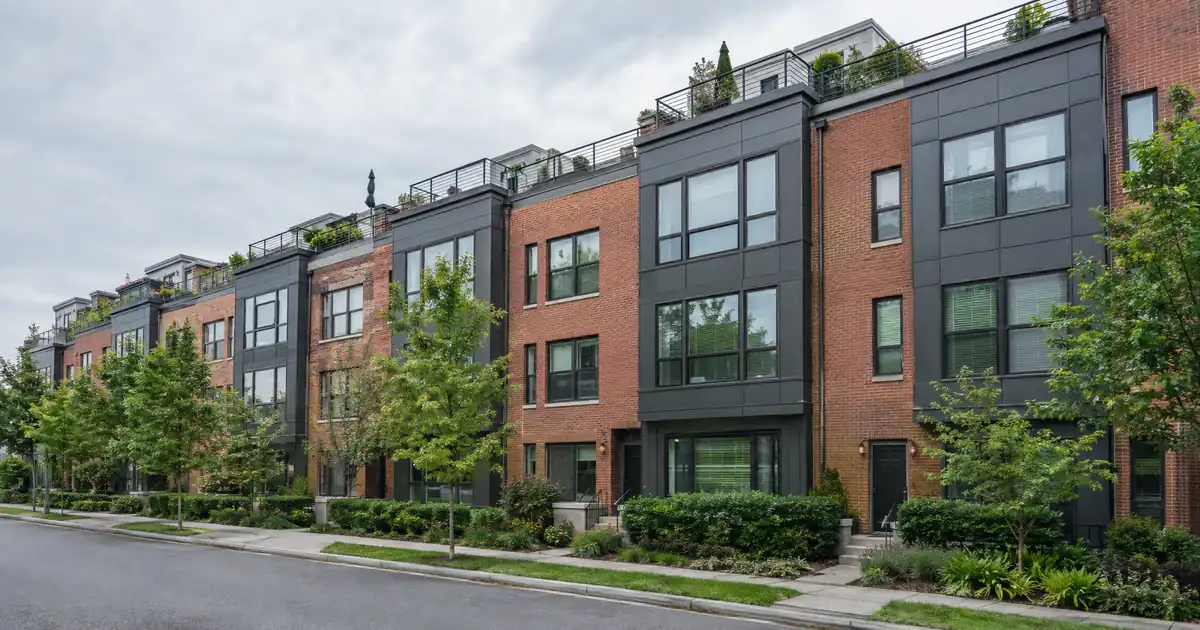
Refinance A Condo — The Quick Read: Yes, you can, but the lender qualifies two things: you and the building. Your credit, income and equity get reviewed the way they would on any house. Then the lender looks at the association’s finances, repairs, lawsuits and ownership mix. A strong borrower in a troubled building can still be stopped, and that is the part most owners never see coming.
Key Takeaways
- A refinance is a new loan, so the building gets a fresh look. Only a few narrow cases shrink or skip that look.
- The building can fail while you and your unit look strong. Major unfunded repairs, lawsuits, an evacuation order or a failed inspection are the usual causes.
- The appraisal reports building facts. It does not decide whether the building is eligible.
- Existing government-backed loans often get the lightest building review. Whether yours does depends on the loan you hold and the one you want.
- Association dues are not part of the mortgage payment, but they count in your budget.
Why Does the Building Get Its Own Underwriting?
The loan is secured by your unit, but your unit’s value and safety depend on the whole property. If the roof, balconies or foundation need major work, every owner can get hit with a bill. That risk lands on the lender too, so the building is underwritten alongside you.
Across the wholesale programs Lendmire places files with, this is where condo refinances most often stall. The borrower’s file is clean. The delay or decline comes from the building’s paperwork, or from something the association never told its owners. Lendmire’s refinance programs cover conventional, FHA, VA and jumbo loans, and each treats the building a little differently.
Most people expect the opposite. They figure that if they already own the unit and make the payments, the refinance is a formality. It isn’t. Your current loan was approved on the building as it looked then. The new loan is approved on the building as it looks now.
Key Terms Defined
Project review: The lender’s check of the building and association, separate from your personal qualification.
Full review: The standard path. The lender looks at the building’s financials, insurance, ownership mix and condition.
Special assessment: A one-time charge the association levies on owners, usually to pay for a big repair or a shortfall.
Critical repair: A repair to something that affects safety, soundness or livability, such as a structural element, elevator, balcony, waterproofing or electrical system.
Streamline refinance: A simplified refinance of an existing FHA or VA loan with reduced paperwork. The FHA version needs no new appraisal and takes no cash out.
Site (detached) condo: A condo where your unit shares no walls, floors or ceilings with another unit. Think of a stand-alone house in a condo-style association.
Net tangible benefit: A requirement on government streamlines. The new loan has to leave you measurably better off, such as a lower payment or a more stable loan structure.
How Does the Building Review Work, Step by Step?
The review runs in a set order. Knowing it helps you see where a file can get stuck.
1. The lender confirms it is a condo. The title and legal description show whether the building was declared or filed as a condominium. That triggers condo-specific loan documents and an appraisal form built for condo units.
2. The lender looks up the building’s status. Conventional lenders check whether the project is flagged in the databases the two big mortgage agencies keep. FHA lenders check the list of FHA-approved condos. VA lenders check VA’s condo report.
3. The lender picks a review type. It might be a full review, an exemption, acceptance of another agency’s approval, or a one-unit approval. Your loan type and the building’s size decide which applies.
4. The lender asks the association for documents. Expect meeting minutes, financial statements, the current budget and any engineer’s reports. The association or its management company controls how quickly those arrive.
5. The appraiser values your unit. Condo units are appraised on a form that also asks about the project: whether one owner holds a big share of units, whether it was converted from apartments, whether there is commercial space, the building’s condition, and what the dues and special assessments are.
6. The lender screens for critical repairs and special assessments. The lender must read each special assessment and decide whether it pays for a critical repair.
7. The lender checks insurance and legal status. That includes pending lawsuits against the association.
8. The building and the borrower get decided separately. Either one can sink the loan.
The review also has a shelf life. Freddie Mac says an established-project review has to be done within one year before the note date, and the loan must be delivered within a set window after that. Freddie Mac’s Seller/Servicer Guide spells out the review types and timing. If your file drags, the lender may have to refresh the review.
What Does the Lender Actually Look For in the Building?
The reviewer wants an established, finished, owner-controlled building with no active safety or legal trouble. Fannie Mae’s Selling Guide defines an established project as one where nearly all units are sold to buyers, construction is 100% complete, no further phases are possible, and owners control the association.
Then come the red flags. Some projects are ineligible outright for conventional loans:
- Critical repairs. The agency’s examples include sea walls, elevators, waterproofing, stairwells, balconies, foundations, electrical systems and parking structures.
- Evacuation orders. A partial or total evacuation order over an unsafe condition makes the project ineligible until the building is repaired and deemed safe.
- Failed inspections. A building that fails a state, county or local safety, soundness or habitability inspection is not eligible.
- Litigation. Active or pre-litigation activity involving the association is a red flag.
- Single-entity ownership. One owner holding too large a share of the units concerns lenders.
- Hotel-like operations, timeshares and insolvency. These are out for conventional loans. If your property works like a resort unit, the resort condo versus beach house comparison is worth a read.
Don’t panic if your building has a repair project. Fannie Mae’s project standards FAQ says damage or deferred maintenance limited to one or a few units, without affecting the building’s overall safety, soundness or habitability, doesn’t trigger the rule. A routine repair paid out of the operating budget isn’t a critical-repair problem either. The question is what the money is for.
Fannie Mae’s own reasoning is plain. Buildings needing critical repairs can mean evacuations and uninhabitable homes, and large special assessments can cause financial hardship that raises default risk. That’s why the lender looks past your unit.
Which Refinances Skip or Shrink the Building Review?
Only a few. Here is how the main paths compare:
| Refinance path | Building review | The catch |
|---|---|---|
| Standard conventional | Full review | Building must be eligible |
| Existing agency-owned loan, limited cash-out | Project review waived | Still screened for repairs and evacuation |
| Freddie Mac-owned loan, no cash out | Exempt from project review | General eligibility still applies |
| FHA to FHA streamline | Questionnaire not required | Confirm current FHA rules |
| Moving into FHA from another loan | Approved project or one-unit approval | Needs a project that qualifies |
| VA IRRRL | Ask your lender | Do not assume either way |
Let’s go through the two-sentence versions.
Conventional waiver. Fannie Mae waives project review for units whose existing loan Fannie Mae owns and that are refinanced as a limited cash-out refinance at a modest leverage limit. Per the project standards FAQ, those loans still get screened for critical repairs and evacuation orders. That applies to projects with eleven or more attached units, or five to ten units inside a larger development or master association. Detached units and two-to-four-unit projects are outside that screen.
Freddie Mac exemptions. Per Freddie Mac’s condo fact sheet, exempt cases include two-to-four-unit projects, detached condo units and Freddie Mac-owned no-cash-out refinances. Hotels, timeshares and projects in insolvency stay ineligible even when exempt.
FHA streamline. HUD’s own help pages say the condo questionnaire isn’t required on a FHA-to-FHA streamline, and older HUD guidance says units in a building that later lost FHA approval stay eligible for that streamline. Those materials are older, so your lender confirms them against current FHA rules before you count on it.
One more catch: you can’t assume you hold the loan type that gets the shortcut. Plenty of owners have a conventional loan and want to move into FHA, or the reverse. That is a new loan with a full building look.
What Does Each Program Mean for You?
Conventional rate-and-term. Across the wholesale programs Lendmire places files with, a rate-and-term refinance on a one-unit principal residence reaches 95% loan-to-value (LTV). LTV is the loan amount as a share of your home’s value. It reaches 97% where the existing loan is agency-owned and the first-time-buyer program allows it. The new loan pays off the existing first mortgage and closing costs. Only incidental cash comes back. Mortgage insurance applies above 80% LTV, and you can request cancellation at 80% of the original value, subject to payment history and no decline in value. It terminates automatically at 78%. All of this is subject to lender guidelines and full file review.
FHA Streamline. If you hold an FHA loan, the streamline usually means no appraisal, a limited credit review and a net tangible benefit test. That is the lightest path for the right borrower. An FHA rate-and-term with an appraisal reaches 97.75% LTV, and it brings the building questions back. FHA project rules also cap how many units in a building can carry FHA loans. The brokerage sees this limit mostly in smaller buildings, where a few FHA loans can fill the quota.
VA IRRRL. For an existing VA loan, the IRRRL carries a 0.5% funding fee unless you’re exempt, no VA appraisal, a net tangible benefit test, and seasoning of the later of 210 days and six payments. VA says condos must be approved to carry a VA guaranty, and VA stopped accepting FHA project approvals in place of its own review years ago. Whether your specific IRRRL requires active VA approval of the building is something your lender confirms. Don’t assume. The primary VA sources don’t spell it out.
Jumbo. Above the conforming limit, the jumbo lanes take over. They have a higher decision score, and the lender still reviews the project. Some lenders are stricter on condos than on houses, so the building matters here too.
Occupancy. If the condo is a second home rather than your primary residence, leverage limits drop. Occupancy decides the leverage.
Where Does the General Rule Break?
Condos come in more shapes than the rules assume. These are the odd ones.
- Detached or “site” condos. Project review is waived on the conventional side, but the property still has to be safe, sound and structurally secure. Fannie Mae can also flag a project as unavailable in its project database, and loans there aren’t eligible for sale.
- Small buildings. Two-to-four-unit projects often escape the critical-repair review. On the other hand, a small building can’t absorb a big special assessment, and the FHA unit-count limit can hit sooner.
- A building that lost FHA approval. An existing FHA borrower may still use the FHA streamline. A borrower trying to move into FHA from another loan type can’t rely on that.
- FHA one-unit approval. For a building that isn’t FHA-approved, HUD offers Single-Unit Approval. The project must be complete, ready for occupancy and have at least five dwelling units.
- Switching agencies. Freddie Mac accepts project approvals from Fannie Mae and FHA. FHA approval doesn’t carry over to VA.
- Ground leases and manufactured-home projects. Ground-lease condos get special guidance, and Freddie Mac generally excludes manufactured-home condo projects.
- Cities with building-inspection regimes. A project that fails a local mandatory inspection isn’t eligible until the problem is fixed.
Honestly, this is a toss-up for borrowers who hold an older FHA loan. The streamline may be easy, but it only helps if lower payments or a better loan structure justify the refinance in the first place.
What Happens If the Building Fails?
The lender can wait, route you to a different program, or decline. That’s it. You can’t fix the building’s status from your unit.
Waiting makes sense when the problem is temporary. Fannie Mae says loans in projects needing critical repairs aren’t eligible for sale until the required repairs are made. If the association is mid-repair, a refinance later may be possible. Routing makes sense when another program has different building rules. A building that fails one program’s test might pass another’s. And sometimes the right answer is to skip the refinance and keep the loan you have.
Picture an owner with strong credit and plenty of equity. The association has just voted on a large special assessment to fix a failing garage structure. That structure is on the critical-repair list. The unit hasn’t changed and the borrower hasn’t changed, but the refinance can’t move forward conventionally until the repair is made. A different loan type might have different rules, and your loan officer is the one to test that.
Where Does the Money Side Get Tricky?
Dues come first. According to the CFPB, condo fees and HOA dues are usually paid straight to the association, not the mortgage servicer. A few servicers will include them in escrow if you ask, but that’s uncommon. Either way, the CFPB says to factor dues into whether you can afford the loan. A lower mortgage payment can be erased by rising dues.
Special assessments are the separate risk. They arrive on the association’s schedule, not yours.
Third-party fees for HOA documents and questionnaires also vary, and no official source sets a standard amount. Ask your loan officer to flag those early. Charges paid at closing show up on your Closing Disclosure.
Tax treatment can depend on your situation; borrowers should speak with a qualified tax professional before relying on any deduction or credit.
Five Condo Refinance Myths
“My loan is already on this unit, so a refinance is automatic.” It’s a new loan with a new review. The exceptions are narrow.
“The appraisal covers the building.” The appraiser reports project facts, but the appraisal may not disclose critical repairs. Eligibility is a separate call.
“Any approval works everywhere.” FHA approval doesn’t satisfy VA. Freddie Mac does accept Fannie Mae and FHA approvals.
“A special assessment kills the loan.” It depends on what it pays for. A routine repair is different from a critical one.
“Streamline means no building review.” That holds for FHA-to-FHA streamlines, based on HUD’s materials. It doesn’t extend to other refinance types.
What Should You Do Before You Apply?
Call the association or management company first. Ask whether there are pending lawsuits, special assessments or required repairs, and whether any inspection or engineering report has flagged problems. Ask for the current budget and recent meeting minutes. That conversation can save you an application that was never going to clear.
Then check what loan you hold. An existing FHA or VA loan opens streamline options that can shrink the building review. A conventional loan generally means a full look, unless it’s one of the narrow agency-owned cases. Finally, ask your loan officer which program the building actually fits before you pick one.
Frequently Asked Questions
Can I refinance a condo if the building isn’t approved?
It depends on the building and the program. A building that fails one program’s test may still fit another. An existing FHA borrower may still use a FHA-to-FHA streamline, and FHA has a separate single-unit approval for buildings with at least five units. Conventional loans in an unavailable project aren’t eligible for sale to Fannie Mae. Everything here is subject to lender guidelines and full file review, and nothing here is a commitment to lend.
Does a special assessment stop a condo refinance?
Not automatically. The lender must review each assessment and decide whether it pays for a critical repair. A routine repair funded from the operating budget isn’t treated the same as a major structural fix. If the assessment pays for a critical repair, a conventional refinance can stall until the work is finished.
Will the appraisal tell me if my building passes?
No. The appraiser reports project facts such as dues, special assessments, ownership concentration and condition. But the lender decides eligibility separately, and Fannie Mae notes that an appraisal may not disclose critical repairs.
Are HOA dues included in my mortgage payment?
Usually not. Dues typically go directly to the association. A servicer may agree to escrow them on request, but that’s uncommon, and the dues still belong in your affordability math.
Can a refinance skip the building review entirely?
Rarely, and only in narrow cases. Examples include a Freddie Mac-owned no-cash-out refinance and a FHA-to-FHA streamline. Even then, general eligibility rules apply, and a hotel-like or insolvent project stays out.
Ready to Compare Your Options?
If you are weighing a refinance and want the break-even run on your own numbers, Lendmire can help you compare the programs on the same home. Call 828-256-2183 or request a refinance quote and ask what your building will need.
A condo refinance succeeds or stalls on facts about the building that you can usually learn before you apply, so make that one call to your association first.
For the program’s current guidelines, see a scenario review with Lendmire.
About Lendmire
Lendmire (NMLS# 2371349) is a mortgage brokerage serving home buyers in 16 states. Down payment assistance programs are arranged with FHA, USDA and HUD-184 first liens through wholesale lending channels; Lendmire brokers the financing and the lender underwrites each application. Scotsman Guide named Lendmire a Top Mortgage Workplace in both 2025 and 2026.
Get Started
Ready to find the right loan for you?
In about 30 seconds you can review financing options available for your home or investment property. No commitment required.
Informational only. Not a Loan Estimate, approval, or commitment to lend. Program availability and eligibility are subject to lender guidelines, credit approval, property review, and underwriting.
References
1. Freddie Mac Seller/Servicer Guide, Section 5701.2
2. Fannie Mae Selling Guide: General Information on Project Standards
3. Fannie Mae: Project Standards FAQ
4. Freddie Mac: Condominium Mortgages and Project Reviews Fact Sheet
This article is part of Lendmire’s Refinance series — every loan program’s qualification details, guidelines, and scenarios live on the loan options page.
Related reading: Cash Out Refinance Investment Property in Los Angeles · Cash Out Refinance Investment Property in Muncie, Indiana: The 2026 DSCR Guide to Old West End · Cash Out Refinance Investment Property in Muncie, Indiana: The 2026 DSCR Cash-Out Guide for Muncie Investors
Brandon Miller
Founder & CEO, Mortgage Loan Originator, Lendmire LLC
- Mortgage Loan Originator · NMLS# 1129696 · Verify on NMLS Consumer Access
- North Carolina Real Estate Broker · License# 343312 · Verify on NCREC
- North Carolina Insurance Producer · License# 19053198 · Property, Casualty, Life, Health · Verify on NAIC SBS
- Lendmire LLC · Firm NMLS# 2371349 · Verify firm licensure
Disclosure information. Lendmire is a state-licensed mortgage brokerage under NMLS# 2371349. Lendmire is not a depository institution, direct lender, or financial advisor — all loans referenced are placed through wholesale lender partners and are subject to each lender's underwriting standards. This article is provided for general informational purposes and is not a commitment to lend, nor does it constitute financial, legal, or tax advice. Loan programs, terms, rates, and qualification standards change without notice and depend on borrower profile, property type, and the state in which the subject property is located. Equal Housing Opportunity provider. NMLS Consumer Access: nmlsconsumeraccess.org.