
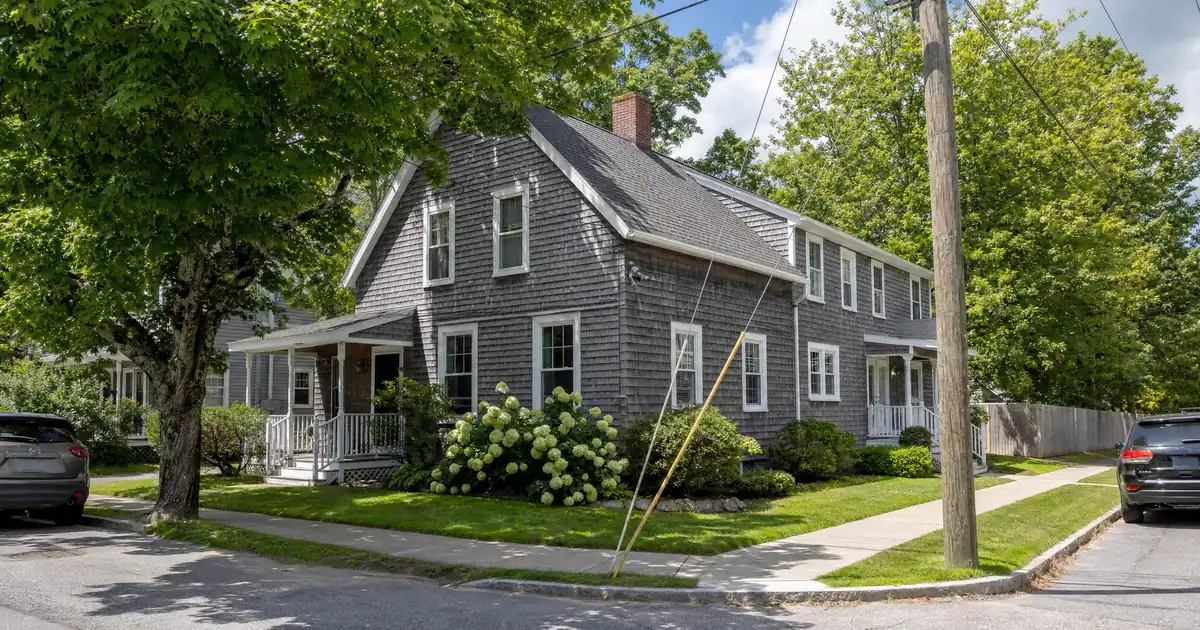
DSCR investment property loans in North Conway cover a market where vacation condos dominate the headlines but workforce rentals often carry the stronger coverage math. Most investors who look at North Conway see a ski condo and start pricing an Airbnb. That’s the wrong property, and the wrong math. The stronger debt-coverage story in this market runs through duplexes near the hospital and workforce apartments in Redstone, not chalets a quarter-mile from the Cranmore lift.
Here’s why that matters: North Conway is a census-designated place of roughly 2,116 residents as of the most recent decennial count, according to Wikipedia’s Census-sourced profile, and it is overwhelmingly a second-home market. Nearly a third of its housing stock — 31.8 percent of 1,536 total units — sat vacant at the 2020 census, driven by vacation ownership rather than distress. That single statistic reshapes how investment property loans should be underwritten here.
DSCR Calculator
Run the numbers in your market
Rate source: Freddie Mac 30-yr average via FRED® — Federal Reserve Bank of St. Louis · effective Jul 30, 2026
Prefilled with starting assumptions — enter your own rent or nightly figures, taxes, insurance, and HOA for a more accurate picture.
Program parameters update from Lendmire’s centralized guideline source. Taxes and insurance are editable estimates.
As of Jul 30, 2026 · General Freddie Mac market benchmark, not a Lendmire loan offer. Rent, nightly rate, occupancy, taxes, and insurance are editable estimates. Short-term rental figures are estimates only and vary significantly by season, property type, management approach, and local short-term-rental rules — confirm local regulations before relying on them. Qualifying income for short-term rentals varies by program — some use appraisal market rent, others use documented STR history or projections — and is confirmed in underwriting. Not a Loan Estimate, approval, or commitment to lend. Program availability and eligibility are subject to lender guidelines, credit approval, property review, and underwriting.
The Short Version: Investment property financing in North Conway, New Hampshire is underwritten primarily on a property’s rental income measured against its full monthly obligation, which fits the small multifamily and workforce single-family stock that dominates this market far better than the vacation condos most out-of-state buyers assume they’re supposed to buy.
- 31.8 percent of North Conway’s 1,536 housing units sit vacant — mostly second homes, not distressed inventory.
- Zero percent of local rentals sit in buildings over 50 units; 74 percent are small-scale complexes, 21 percent single-family.
- Carroll County posted the smallest home-price gain of any New Hampshire county last measured period, just 1.1 percent.
- Two-bedroom rents span roughly $1,100 to $2,637 depending on source and unit type.
- Carroll County’s rental vacancy rate runs above 2 percent — looser than most of the state.
North Conway Market Snapshot
A quick read on the North Conway investor landscape — figures come from the cited sources below. Confirm current property-level numbers before underwriting.
| Metric | Detail |
|---|---|
| Home prices | $540K median sale price (Redfin) |
| Typical rents | Rents capped at $1,500 (Rhode Island Current) |
| Recent appreciation | +1.1% yoy (Zillow) |
| Population | Population 2,116 (2020 census) (Wikipedia) |
| Employment | Memorial hospital 350 employees (2002) (Wikipedia) |
The Median Price Nobody Should Trust
Pricing data for North Conway CDP is genuinely unreliable, and that instability is itself useful information for underwriting. Redfin puts the North Conway median sale price at $540,000, up 40.3 percent year over year, per Redfin’s North Conway housing data. That is not a typo, and it is not a real trend — it is a low-volume, high-seasonality market where a handful of luxury sales or fixer-uppers swing the median month to month.
The broader town of Conway, which shares zoning and school infrastructure with North Conway, tells a calmer story: a $405,000 median sale price, up 3.1 percent year over year, according to the same platform’s Conway-town data. Zillow’s home value index for Conway lands a bit higher, at $456,920, up 1.1 percent over the past year. New Hampshire statewide sits at a $533,106 median. None of these numbers agree, and none of them should be quoted as gospel for a specific North Conway street.
The more telling figure is income. Median household income in North Conway sits at $71,198 according to Census Reporter’s ACS profile, roughly three-quarters of the statewide figure of $99,031. A $540,000 median sale price against a $71,198 median household income is not a market that supports itself on local wage-based homeownership. It’s a market propped up by second-home buyers with income earned elsewhere — which is precisely why DSCR-based investment property loans, underwritten on the property’s rental income rather than the borrower’s personal earnings, fit this market’s structure better than a conventional mortgage ever could. The DSCR fundamentals are worth understanding before shopping this market, and for anyone comparing structures, conventional vs DSCR on investor loans lays out the mechanical difference.
Skip the Village Core for Straight Rentals
North Conway Village (ZIP 03860) is the commercial heart of the Mount Washington Valley — Settlers Green outlets, the downtown restaurant strip, the Weather Discovery Center — and it is the worst place in this market to buy a straight long-term rental. Run the numbers on a single-family home here and the math gets uncomfortable fast.
Model a purchase near the North Conway CDP median of $540,000, financed at 75 percent loan-to-value, rented as a single-family long-term lease at $2,637 a month — the reported average two-bedroom rent from Apartment Finder’s North Conway listings. Fold in the full monthly obligation — principal, interest, property tax, and insurance, not principal and interest alone — and the coverage ratio lands around 0.72x. That’s sub-1.00 territory on long-term rent assumptions alone.
It doesn’t mean the deal is dead. It means the file needs a different structure: a larger down payment to compress the payment, a sub-1.00 DSCR program some lenders review for stronger-credit borrowers, or blended income that layers in furnished/extended-stay rent alongside the base lease — reviewed case by case, subject to lender guidelines, credit profile, and property-level underwriting. What it doesn’t support is a straight 25-percent-down, 12-month-lease purchase at village-core pricing. Buyers chasing the postcard address pay a premium the rent roll can’t cover.
The Real Play: Conway Village, Redstone, and Center Conway
Rent-to-price math works better outside the tourist core, in the year-round village districts that carry less vacation-home premium. Conway Village, Redstone, and Center Conway house the workforce that actually staffs the hospital, the resort, and the school district — and their acquisition basis runs meaningfully below North Conway Village proper.
Model a small multifamily purchase here, priced near the broader Conway-town median of $405,000, financed at 75 percent LTV, and rented as a duplex with two units at $1,750 a month each — the reported average two-bedroom rent for Conway per Zumper’s rent research. Combined rent of $3,500 against the full monthly obligation, taxes and insurance included, produces a coverage ratio near 1.27x — a meaningfully different file than the village-core single-family scenario above, and the difference comes entirely from spreading income across two leases instead of one.
A licensed 6-unit example currently trading in Carroll County — five 2-bedroom, 2-bath townhouse-style units plus one larger 3-bedroom unit, spread across three acres with river frontage, per Homes.com’s Carroll County multifamily listings — illustrates the unit mix that clears these ratios: five-to-six doors of two-bedroom product, not a single luxury chalet.
Kearsarge, Intervale, and the Ski-Season Overlay
Kearsarge Road sits across from Cranmore Mountain, close enough to walk to the lifts in winter and the mountain-bike trails in summer, which makes it the strongest submarket for mid-term and shoulder-season rental demand tied directly to resort employment. Intervale, shared between Conway and neighboring Bartlett, skews toward family-tourism and newer luxury construction near Story Land, a different buyer profile entirely — second-home purchasers chasing amenity access, not cash-flow investors.
One property on Kearsarge Road makes the strongest case for a non-traditional rental model in this corridor: the historic Isaac Merrill House, built in 1773 and a former bed-and-breakfast, now configured as extended-stay housing generating over $212,000 in annual gross income across 17 rooms. That’s a proof point, not a template every buyer can replicate — but it demonstrates that adaptive-reuse, multi-room extended-stay housing has a real, revenue-generating track record in this exact submarket, serving traveling clinicians, ski-season staff, and construction crews who need weeks-to-months housing rather than a 12-month lease or a two-night Airbnb stay.
West Side Road, near Cathedral Ledge — a 500-foot cliff and nationally known rock-climbing destination inside Echo Lake State Park — pulls a similar seasonal-recreation tenant base but on a smaller, more residential scale. Bartlett, the adjacent town, gets frequent mention from local brokers as the “value” corner of the valley thanks to a lower property tax rate, though investors buying there should treat it as a distinct market with its own comps, not an extension of Conway’s.
What Actually Rents Here
North Conway’s rental stock isn’t built for institutional apartment buyers, and that’s the point. Zero percent of local rentals sit in buildings over 50 units; 74 percent are small-scale complexes under 50 units, and 21 percent are single-family homes, according to RentCafe’s North Conway rental data. Fifty-three percent of residents rent versus 47 percent who own — a renter-majority town wrapped inside a vacation-property headline.
That combination — renter-majority population, zero large-scale apartment competition, structural vacancy driven by second-home ownership rather than oversupply — is exactly the profile DSCR loans were built to finance: two-to-four unit properties and single-family rentals that a conventional lender’s income-based underwriting often struggles to size correctly, especially for buyers who don’t want their personal debt-to-income ratio tested against a vacation-town price tag. Investors evaluating loan amounts against this stock can review the investor loan platform or request review my scenario before locking in a specific property.
A pattern shows up consistently on files from small, second-home-heavy resort markets structured like this one: the cleaner submissions come with a current, signed 12-month lease and a documented rent roll rather than a Zillow rent estimate, because appraisers pulling comparable rents in a thin market like North Conway often land on wide ranges — the same $1,100-to-$2,637 spread seen across RentCafe, Zumper, and Apartment Finder data reflects that reality. Files that lead with an actual lease tend to move through underwriting with fewer follow-up questions than files leaning on a projected rent alone.
The Employment Base Behind the Rent Roll
Tourism drives North Conway’s economy, but three anchors give the long-term rental market something steadier than seasonal foot traffic. MaineHealth Memorial Hospital is a 25-bed critical access hospital that also hosts the Merriman House, a 45-bed nursing home specializing in memory care, on the same campus — a healthcare-plus-long-term-care cluster that employs nurses, techs, and CNAs who need year-round housing, not vacation rentals. Cranmore Mountain Resort runs roughly 201 employees as of the most recent count and is mid-redevelopment on a $60 million base-area project expected to add a second-home community alongside expanded year-round operations. The Echo Group, an electronic health record software developer, is the region’s largest technology employer, adding a white-collar layer to a workforce otherwise concentrated in retail, hospitality, and healthcare.
Per Data USA’s Conway profile, the largest resident employment sectors are Health Care & Social Assistance at 467 workers, Retail Trade at 227, and Construction at 199 — a workforce that skews toward hourly, service-sector jobs. That matters for rent-setting: this isn’t a market where tenant incomes support runaway rent growth, and the wage structure keeps the workforce rental band anchored closer to $1,100-$1,800 than the higher furnished-unit averages closer to $2,600.
A newer development south of the village underscores that institutional players are already underwriting this exact tenant base. A local assisted-living project added 46 skilled nursing units and 20 memory-care units alongside 17 “first step” one-bedroom cottages, 15 of which carry rents capped near $1,500 a month specifically to house staff needed to run the facility, according to Rhode Island Current’s reporting. That’s a direct signal: developers see durable, non-seasonal rental demand here, not just second-home buyers chasing ski-season resale value.
Appreciation Is Not the Thesis
Carroll County — the county containing North Conway — posted the smallest home-price gain of any county in New Hampshire in the most recent year measured, just 1.1 percent, according to the New Hampshire Fiscal Policy Institute. Compare that to the 40.3 percent one-year swing Redfin reported for North Conway CDP specifically, and the disconnect is obvious: the CDP-level number reflects a handful of thin-volume, mix-shifted sales, not genuine market-wide price momentum.
This one’s a real judgment call. An investor buying for cash flow should treat the county’s 1.1 percent figure as the honest baseline and underwrite accordingly — this is not an appreciation play. An investor who already owns pre-2020 stock, however, has a different picture: local assessment data documented by the New Hampshire Community Development Finance Authority’s Bluebird Project shows single-family home assessments in Conway jumping 125 percent since the last revaluation cycle, turning a formerly $200,000 starter home into a $450,000 assessed property. That’s genuine embedded equity for longer-term holders — but it’s a distinct thesis from buying fresh today expecting the same trajectory to repeat.
Vacancy adds another wrinkle worth sizing before assuming instant lease-up. Carroll and Coos counties are the only two in New Hampshire where two-bedroom and overall rental vacancy sit above 2 percent — every other county in the state runs below 1 percent, per an NH Business Review recap of the state’s rental survey. Investors comparing North Conway to Manchester or Portsmouth on turnover speed are comparing the wrong markets. This one leases up slower, and underwriting should reflect that rather than assume the tight absorption seen elsewhere in the state.
Frequently Asked Questions
How do you qualify for a DSCR loan in North Conway, New Hampshire?
Qualification centers on the property’s rental income measured against its full monthly payment obligation rather than the borrower’s traditional personal-income documentation. Most standard programs are built around a 1.00x baseline coverage ratio, since rent covers the payment at that level, though the exact threshold, leverage, and required down payment depend on credit tier, reserves, and the specific property under review, subject to lender guidelines.
What are the requirements for an investment property loan in North Conway, New Hampshire?
Typical purchase financing runs 75 to 80 percent loan-to-value on most files, with some strongest-file scenarios reaching up to 85 percent when program guidelines allow. Credit tiers commonly referenced across the wholesale channel run from a 620 floor up through 700 for the highest-leverage options, and reserve requirements generally run around six months of the full monthly obligation, rising toward nine months on larger loan balances — all subject to program eligibility and lender review.
DSCR vs. conventional financing
Two common ways to finance an investment property in North Conway, NH. They qualify you differently — here’s how investors weigh them.
Why investors choose it
- Qualifies on the property’s rental income — no personal tax returns, W-2s, or pay stubs needed to document income.
- No personal debt-to-income ceiling to clear, so existing mortgages and obligations don’t cap your borrowing the same way.
- Can be closed in an LLC, keeping the property inside a business entity.
- Built for scaling — not held to the limit on number of financed properties that conventional financing applies.
- Underwriting centers on the deal: generally qualifies when the rent covers the payment, a 1.00x coverage ratio being a common baseline (confirmed in underwriting).
- Designed specifically for investment property, including long-term and, where the program allows, short-term rentals.
Where it’s strong
- Often the lowest ongoing financing cost for a buyer who fully qualifies on personal income — a fit for a first property or a cost-first purchase.
Trade-offs for investors
- Requires full personal income documentation and must fit within a debt-to-income limit — salary, existing debts, and other mortgages all count.
- Typically held in your personal name rather than a business entity.
- Caps how many financed properties you can carry, which can become a ceiling as a portfolio grows.
- Evaluates you as a borrower as much as the property, which usually means more paperwork.
How investors usually choose: a first or single property often optimizes for the lowest financing cost; portfolio builders often optimize for leverage, vesting in an LLC, and scaling past conventional caps. The right answer depends on your goals, the property, and current guidelines — both paths run through select lenders in Lendmire’s wholesale network, with eligibility and terms confirmed in underwriting.
Does a North Conway vacation condo qualify for DSCR financing the same way a workforce rental does?
Not on the same terms. A furnished vacation condo priced at village-core levels and rented short-term needs a different rent assumption than a long-term workforce lease, and the coverage math can shift meaningfully depending on whether the file relies on nightly rental income or a signed 12-month lease. Investors should confirm current local rental permitting and zoning before assuming a specific rental model qualifies.
Why do North Conway home prices swing so much month to month?
Low transaction volume. North Conway CDP sees relatively few sales in any given month, so a single luxury sale or a distressed fixer-upper can move the reported median by double digits, which is why Redfin’s North Conway figure and its Conway-town figure can diverge by well over $100,000 in the same reporting period. Broader town or county data tends to smooth that volatility.
How does DSCR lender review differ from a bank’s approach in North Conway?
A conventional bank leans on the borrower’s personal income and debt-to-income ratio; a DSCR loan leans on the property’s rent. Lendmire — NMLS# 2371349 — arranges these investor loans through wholesale lending channels across 41 markets, including Washington, D.C., which matters for buyers who own the vacation-heavy inventory here through an LLC or hold multiple financed properties, subject to program eligibility.
Is a single-family home in North Conway Village a good DSCR purchase?
Generally, no, on straight long-term-lease math at village-core pricing — the modeled coverage ratio runs sub-1.00 on a single unit at that price band. Small multifamily in Conway Village, Redstone, or Center Conway, or a mid-term/extended-stay conversion in the Kearsarge corridor, tends to clear a stronger ratio for the same capital.
Files coming out of markets shaped like North Conway — thin transaction volume, heavy second-home concentration, a workforce tenant base layered underneath a tourism headline — tend to run into the same friction point: the appraiser’s rent comparable and the listing agent’s rent estimate rarely match, because so few true long-term-lease comps exist outside Conway Village and Redstone. The stronger submissions anchor to an actual signed lease rather than a market-rent projection, which shortens the back-and-forth once the file reaches underwriting.
As a DSCR and non-QM mortgage broker, Lendmire connects investors with wholesale lending channels. Rental income drives the underwriting conversation here, not the borrower’s traditional personal-income documentation, which tends to work in favor of self-employed operators and portfolio investors holding more than four financed properties. Investors weighing a purchase against North Conway’s rental stock can reach Lendmire at 828-256-2183 or review the New Hampshire DSCR investor loans page for program specifics tied to this state.
Ask a local appraiser what they actually see on the North Conway comp sheet and the answer is blunt: the postcard address rarely rents for what it costs, and the plain vinyl-sided duplex two streets back from Main Street almost always covers its payment better than the trailhead-view chalet everyone assumes is the smart buy.
About Lendmire
As a DSCR and non-QM mortgage broker, Lendmire — NMLS# 2371349 — connects investors with wholesale lending channels across 41 markets, including Washington, D.C. The property’s rental income, not the borrower’s tax returns, is central to lender review, an approach that suits self-employed operators and portfolios beyond four financed properties. Scotsman Guide named Lendmire a Top Mortgage Workplace in both 2025 and 2026.
Get Started
Ready to find the right loan for you?
In about 30 seconds you can review financing options available for your investment property. No commitment required.
Informational only. Not a Loan Estimate, approval, or commitment to lend. Program availability and eligibility are subject to lender guidelines, credit approval, property review, and underwriting.
References
1. Redfin — North Conway Housing Market
3. Zillow
4. Wikipedia — North Conway, New Hampshire
5. Wikipedia
6. Apartment Finder — North Conway Apartments
7. Zumper — Conway NH Rent Research
8. Homes.com — Carroll County Multifamily Listings
9. RentCafe — North Conway Apartments
10. MaineHealth Memorial Hospital
11. Data USA — Conway, NH Profile
12. New Hampshire Fiscal Policy Institute
13. NH Community Development Finance Authority — Bluebird Project
15. Scotsman Guide as a 2026 Top Workplace
This article is part of Lendmire’s DSCR loan program — full qualification details, guidelines, and scenarios live on the program page.
Related reading: DSCR Cash Out Refinance in Conway, South Carolina: Campus Corridor Equity Strategy · DSCR Loans Myrtle Beach: Investor Financing for North Myrtle Beach, Surfside, Pawleys Island, Conway & Real Estate Investors · DSCR Investment Property Loans in Myrtle Beach, SC: The 2026 DSCR Financing Guide
Guides: DSCR Loans in North Conway, NH · DSCR Loans in New Hampshire
Brandon Miller
Founder & CEO, Mortgage Loan Originator, Lendmire LLC
- Mortgage Loan Originator · NMLS# 1129696 · Verify on NMLS Consumer Access
- North Carolina Real Estate Broker · License# 343312 · Verify on NCREC
- North Carolina Insurance Producer · License# 19053198 · Property, Casualty, Life, Health · Verify on NAIC SBS
- Lendmire LLC · Firm NMLS# 2371349 · Verify firm licensure
Compliance and disclosures. Lendmire (NMLS# 2371349) is a licensed mortgage broker and is not a direct lender, depository institution, financial advisor, or tax professional. Content in this article is general market analysis and educational information — not financial, legal, or tax advice for any specific situation. Lendmire does not guarantee loan approval; every transaction is subject to underwriting by the funding lender. Mortgage pricing and loan program guidelines are subject to change at any time without notice and vary by borrower characteristics, property type, and state regulations. Lendmire complies with Equal Housing Opportunity. Licensure verification: NMLS Consumer Access.