
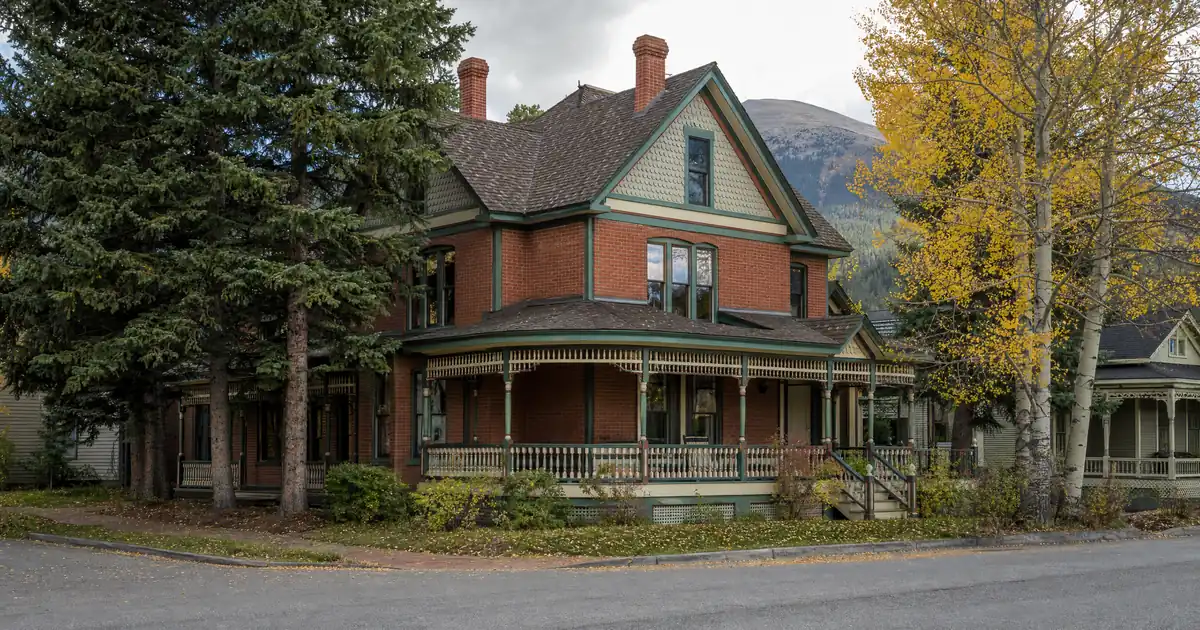
DSCR investment property loans in Breckenridge help investors finance rentals based on the property’s cash flow rather than personal income. Per Census Reporter’s American Community Survey five-year estimate, Breckenridge’s median household income sits well above the national median. That gap alone resets the baseline for how an investor should think about rent assumptions here. This is not a market where a duplex leases to a household squeezing by on a regional average wage. It’s a market where the resident renter pool skews high-income, the tenant base is split between resort workers and hospital or county staff, and the biggest constraint on rent isn’t demand — it’s how few units of the right type actually exist to absorb it.
The Short Version: Financing an investment property in Breckenridge, Colorado starts with a signed purchase contract, moves through an appraisal drawing on a comparable-sales pool that a market source describes as running well below its longer-term average, and closes once a lender confirms the property’s rental income covers its full monthly carrying cost.
DSCR Calculator
Run the numbers in your market
Rate source: Freddie Mac 30-yr average via FRED® — Federal Reserve Bank of St. Louis · effective Jul 30, 2026
Prefilled with starting assumptions — enter your own rent or nightly figures, taxes, insurance, and HOA for a more accurate picture.
Program parameters update from Lendmire’s centralized guideline source. Taxes and insurance are editable estimates.
As of Jul 30, 2026 · General Freddie Mac market benchmark, not a Lendmire loan offer. Rent, nightly rate, occupancy, taxes, and insurance are editable estimates. Short-term rental figures are estimates only and vary significantly by season, property type, management approach, and local short-term-rental rules — confirm local regulations before relying on them. Qualifying income for short-term rentals varies by program — some use appraisal market rent, others use documented STR history or projections — and is confirmed in underwriting. Not a Loan Estimate, approval, or commitment to lend. Program availability and eligibility are subject to lender guidelines, credit approval, property review, and underwriting.
- Warriors Mark holds nearly all of the town’s duplex and triplex stock, a small slice of a much larger overall unit count dominated by condos.
- Median household income runs well above the national figure, reshaping realistic rent assumptions for the market.
- The Resort Properties Zone carries no STR cap, with a substantial and active pool of licenses already in circulation.
- County-wide inventory sits near historic lows, running well under its longer-term average.
- Compliant ADUs carry county-set rent ceilings that add a meaningful second income stream to a single-family purchase.
Breckenridge Market Snapshot
A quick read on the Breckenridge investor landscape — figures come from the cited sources below. Confirm current property-level numbers before underwriting.
| Metric | Detail |
|---|---|
| Home prices | $1.1M median (Redfin) |
| Population | 4,959 population (Census Reporter) |
| Employment | 10.1% job growth (Data USA) |
An Employer That Also Builds the Housing Its Workers Rent
A major local employer, the publicly traded parent of Breckenridge Ski Resort, employs a large workforce across dozens of resorts nationally, and Breckenridge is one of its flagship properties. Entry-level positions start with an hourly wage plus benefits through the company’s Epic Service training program — a real, if modest, wage floor that shapes what a chunk of the local renter pool can actually afford.
What makes Breckenridge structurally different from a typical resort town is that its dominant employer doesn’t just hire the workforce — it co-develops the housing that workforce lives in. A major local employer made land available for the Wintergreen workforce housing project, built in partnership with Summit County and the Summit Combined Housing Authority. That means the town’s biggest employer is also, functionally, a landlord competitor and partner in the same rental market DSCR investors are underwriting into. Few Colorado mountain towns have this dynamic at this scale, and it matters for how an investor reads vacancy risk: government and employer-sponsored units soak up a meaningful slice of the lowest-income renter tier, leaving market-rate long-term rentals to compete for the mid-to-upper tenant pool — the nurses, the resort managers, the county administrators.
That tenant pool is deeper than the resident population number suggests. Breckenridge’s own resident population is modest, but Data USA reports employment in town grew notably in a single recent year, and daytime population swells substantially once commuters and visitors arrive. A town of only a few thousand residents functions, during business hours, more like a much larger one. That gap between resident population and daytime demand is exactly the kind of thing rent-roll assumptions need to account for, and it’s a big part of why apartment vacancy here runs tight enough that the county keeps building its own rental stock just to keep up.
Where the Financed Buyer Actually Competes
Breckenridge runs two separate real estate markets stacked on top of each other, and only one of them is realistic DSCR territory. The luxury single-family tier trades at prices well beyond typical financed purchases, and has continued climbing at a brisk pace, per a market source — a segment driven by cash buyers diversifying wealth, not by anyone running coverage-ratio math. That tier isn’t where a DSCR file belongs; the price-to-rent spread simply doesn’t close.
The financed tier is different. Town-wide, Redfin puts typical sale pricing in a range that has ticked modestly higher year-over-year, based on the most recent month reported. Zillow’s estimate runs differently — showing a recent pullback in average home value over the past year — and that divergence between two major data platforms is itself a signal: this is a small-sample, low-volume luxury micro-market where month-to-month swings are normal, not a red flag. An investor should expect the Redfin and Zillow numbers to disagree and should treat both as directional rather than precise.
Local brokers are candid about what that means for cash flow. One longtime Summit County broker’s own commentary states plainly that on many Breckenridge and county properties, buyers only realize cash flow with a substantial down payment — and even then, the property may just break even, with equity building through amortization rather than monthly income. That’s not marketing language designed to sell a listing. It’s a structural admission that Breckenridge is, for most buyers, an equity-and-appreciation play layered on top of modest or neutral day-one cash flow. The DSCR pitch here has to be honest about that framing rather than pretending every property clears strong coverage on paper.
Warriors Mark: The Only Real Multi-Unit Play in Town
Warriors Mark is Breckenridge’s strongest DSCR income-stacking neighborhood, and it isn’t close. It’s the one submarket in town with meaningful multi-unit stock, including a mix of single-family homes, townhomes, a small but notable pocket of duplex and triplex units, and a large share of condos, per a market source. That duplex/triplex concentration matters because Breckenridge, broadly, is a condo-and-single-family market. Straight small multifamily is scarce outside this one hillside pocket south of downtown, where many homes also sit within walk-to-lift access to Peak 9.
Run the numbers on a hypothetical duplex here, priced near the lower end of Warriors Mark’s typical range. Using a modeled long-term fixed loan in a period of elevated but not extreme rates, plus typical Colorado-level property tax and insurance costs, financed at a standard purchase leverage point, the full monthly carrying cost lands meaningfully above what two units renting at the neighborhood’s typical two-bedroom rate would produce combined. Long-term rent alone, on that model, pencils to just under full coverage — modeled math, not a cited market fact.
That’s not a dead end; it’s the “substantial down payment” reality the local broker commentary describes in mechanical form. Pushing the same duplex to a meaningfully larger down payment instead of a standard one — well within program guidelines, just a more conservative leverage choice — cuts the monthly carrying cost enough to lift modeled coverage comfortably above 1.00x on the same rent assumptions. Investors working this neighborhood should expect the deal to hinge on how much equity they’re willing to put down, not on finding a magic low price. For buyers who want to keep leverage higher, blending long-term rent with the STR income option matters: Warriors Mark sits largely within the Town’s Resort Properties Zone, which as of the most recent reporting carries no cap and no waitlist, with a substantial and active pool of licenses already in circulation and new owners able to apply immediately after closing, according to a local market report. That’s meaningfully different from Zone 2 and Zone 3, both of which sit at or over cap with active waitlists — a distinction worth confirming directly with the Town before underwriting any blended-income scenario.
Wellington and the Workforce Belt
Wellington is the most rent-efficient neighborhood in Breckenridge for a straightforward long-term rental play, though most of its stock isn’t available to a standard investor. Per the Summit Combined Housing Authority, Wellington’s mix of single-family, duplex, and triplex product includes a large share of deed-restricted units alongside a much smaller pool of market-rate units, targeted at households within a defined area-median-income band who work at least a set minimum number of hours a week in Summit County. The deed restrictions cap appreciation and resale in exchange for stable, income-qualified tenancy — meaningfully different underwriting math than a market-rate purchase, and something investors need to verify unit-by-unit before assuming a property qualifies as unrestricted investment stock.
The more broadly useful lever in this corridor is the county’s Accessory Dwelling Unit Assistance Program, which reimburses a portion of ADU construction costs and caps monthly rents according to unit size, per Summit County. Consider a scenario where an investor buys a single-family home near the town’s typical price point and adds a compliant one-bedroom ADU. Modeled at a standard purchase leverage, a period-typical loan rate, and typical Colorado tax and insurance loads, the main home’s long-term rent — comparable to local three-bedroom averages — plus the ADU’s capped rent combine to produce coverage that clears above 1.00x against the modeled full carrying cost. The ADU itself remains workforce-deed-restricted rather than open-market, but it converts a single-family purchase into a de facto duplex-income asset for coverage-ratio purposes — one of the cleaner structural advantages available to a Breckenridge buyer right now.
Working DSCR brokers see a recurring pattern in ski-town resort markets like this one: the file that clears easiest isn’t the one with the highest rent, it’s the one with a second, code-legal income stream layered onto a single asset — an ADU, a lock-off unit, a documented STR history alongside the long-term lease. Files built on a single rent line, at the top of the market’s price range, are the ones that come back for a second look from underwriting.
Peak 7 and the Commuter Corridor
Peak 7 is a workforce-commuter submarket, not a tourist-facing one, and that distinction matters for how an investor should model tenant turnover. Families here choose the neighborhood partly because the drive to Frisco, Copper Mountain, Keystone, or Vail is more convenient than from other parts of town — meaning tenants tend to be year-round working households rather than seasonal resort staff or short-term visitors. Longer average tenancy generally means less turnover cost and fewer vacancy gaps between leases, even if the rent ceiling here runs closer to Breckenridge’s blended average than to Main Street’s premium.
What About the Luxury Tier?
Skip it, for DSCR purposes. Shock Hill, The Highlands, and the Four O’Clock corridor reach deep into multi-million-dollar territory for ski-in/ski-out chalets and high-end condos — primarily second-home and STR product bought by cash buyers, not by anyone trying to clear a coverage ratio. The price-to-rent math simply doesn’t support standard long-term-rental DSCR underwriting at those price points, and this is the segment driving the luxury-tier appreciation trend cited earlier. It’s a real market; it’s just not this article’s market.
File Mechanics: What Actually Trips These Up
Three friction points show up repeatedly on Breckenridge DSCR files, and none of them are exotic. The first is appraisal support: with county-wide inventory running well below its longer-term average, appraisers working a purchase file here have a thinner pool of directly comparable closed sales to lean on than in a higher-volume market. That doesn’t kill a file, but it means an appraisal reconsideration request — backed by recent in-neighborhood sales and condition adjustments — should be treated as a routine possibility, not a surprise.
The second is condo HOA documentation. With condos making up the majority unit type in nearly every neighborhood in town, HOA questionnaire completeness and resale certificate turnaround are common bottlenecks, and HOA-heavy cost structures compress DSCR math in ways a bare purchase price doesn’t reveal. The third is deed-restriction verification on anything touching Wellington or similar workforce-housing stock — confirming whether a specific unit carries an AMI restriction, and what that restriction does to resale and rent ceilings, needs to happen before the file goes to underwriting, not after.
None of this changes the core DSCR mechanics described in the DSCR lender review: the lender is underwriting the property’s rental income against its full monthly obligation, not the borrower’s traditional personal-income documentation. It just means the paperwork trail in a resort-condo, deed-restriction-adjacent market takes more legwork to assemble cleanly. Investors weighing this loan type against a conventional mortgage can find the broader tradeoffs laid out in the conventional-vs-DSCR tradeoffs, and entities purchasing under an LLC should confirm eligibility directly, since program terms for entity-titled borrowers vary subject to lender program eligibility.
A Ceiling Worth Knowing Before Underwriting the Top of the Range
Even amid a genuine housing shortage, rent has a ceiling here, and that ceiling has already been tested. A large workforce-housing complex, targeting renters within a defined area-median-income band, was unable to fill some of its higher-priced units — three-bedroom apartments priced at the top of its target range — and eventually offered discounts and waived work requirements just to get them leased, according to Summit Daily. That’s the clearest local evidence that pushing family-sized-unit rent much past a certain point runs into real local income-capacity limits, even in a county that otherwise can’t build housing fast enough. It’s worth stress-testing any DSCR scenario that assumes uncapped rent growth against that data point directly.
On the flip side, demand at the lower end is not theoretical. A rental complex built through a Breckenridge–Summit County partnership drew an overwhelming wave of applications when it opened, and separately, Summit County’s master-leased Alpine Inn drew a similarly large volume of inquiries for basic worker housing, while another Breckenridge project required a lottery after applicant demand far outpaced available units, per Summit County government. Multiple independent leasing events, years apart, all showing dramatic oversubscription, is about as strong a signal as a rental market gives that legally compliant, reasonably priced long-term units lease up fast and stay leased.
The Appreciation Angle, Briefly
Breckenridge homes have appreciated at a notably faster clip than the national rate, per BestPlaces. That faster pace shortens the practical equity-building period compared to an average U.S. market — relevant mainly for investors thinking ahead to a future cash-out refinance, a topic covered in more depth elsewhere, but worth noting here because it reinforces the equity-first framing local brokers describe: buy for appreciation, let long-term rent cover carrying costs where it can, and treat day-one neutral cash flow as an acceptable outcome rather than a failed deal.
Program Notes for a Purchase File Here
Most Breckenridge purchase files fit within typical DSCR parameters: 75 to 80 percent LTV on standard programs, with select high-leverage files reaching up to 85 percent when the file is strong and guidelines allow it, a minimum DSCR floor that select programs set as low as around 1.00 — not a standard requirement across the board, since many programs price better at higher coverage — and credit tiers commonly starting near 620 with better pricing and leverage available above 660, 680, and 700. Reserve requirements typically run around six months of PITIA, stepping up toward nine months on loan amounts above $1.5 million — relevant given Breckenridge’s price points. None of these figures are guarantees; review details are subject to lender overlays, borrower credit profile, and property review. Colorado DSCR investor loans arranged through Lendmire’s network route through wholesale channels rather than a single fixed rate sheet, so exact terms depend on the specific file.
DSCR vs. conventional financing
Two common ways to finance an investment property in Breckenridge, CO. They qualify you differently — here’s how investors weigh them.
Why investors choose it
- Qualifies on the property’s rental income — no personal tax returns, W-2s, or pay stubs needed to document income.
- No personal debt-to-income ceiling to clear, so existing mortgages and obligations don’t cap your borrowing the same way.
- Can be closed in an LLC, keeping the property inside a business entity.
- Built for scaling — not held to the limit on number of financed properties that conventional financing applies.
- Underwriting centers on the deal: generally qualifies when the rent covers the payment, a 1.00x coverage ratio being a common baseline (confirmed in underwriting).
- Designed specifically for investment property, including long-term and, where the program allows, short-term rentals.
Where it’s strong
- Often the lowest ongoing financing cost for a buyer who fully qualifies on personal income — a fit for a first property or a cost-first purchase.
Trade-offs for investors
- Requires full personal income documentation and must fit within a debt-to-income limit — salary, existing debts, and other mortgages all count.
- Typically held in your personal name rather than a business entity.
- Caps how many financed properties you can carry, which can become a ceiling as a portfolio grows.
- Evaluates you as a borrower as much as the property, which usually means more paperwork.
How investors usually choose: a first or single property often optimizes for the lowest financing cost; portfolio builders often optimize for leverage, vesting in an LLC, and scaling past conventional caps. The right answer depends on your goals, the property, and current guidelines — both paths run through select lenders in Lendmire’s wholesale network, with eligibility and terms confirmed in underwriting.
Breckenridge, Colorado rental property investors can tap DSCR programs that Lendmire (NMLS# 2371349) arranges, available across 41 markets, including Washington, D.C. Investors comparing this loan type against a standard investment mortgage can review the DSCR investor loan platform for the broader mechanics, and those weighing Colorado specifically can start with Colorado DSCR investor loans for state-level context. Investors with questions about a specific file can reach the team at 828-256-2183.
As a DSCR and non-QM mortgage broker, Lendmire connects investors with wholesale lending channels. The property’s rental income, not the borrower’s traditional personal-income documentation, is central to lender review, an approach that suits self-employed operators and portfolios beyond four financed properties.
Three things are worth tracking over the next quarter before committing capital here: whether county-wide inventory starts climbing back toward its longer-term average, which would ease appraisal-comp thinness on purchase files; whether the Resort Properties Zone’s uncapped STR licensing status holds or moves toward the waitlist conditions already in place in Zones 2 and 3; and whether the workforce-housing absorption struggles described above repeat elsewhere in the county, which would confirm the ceiling on how far a long-term rent assumption can realistically be pushed.
Frequently Asked Questions
How do you qualify for a DSCR loan in Breckenridge, Colorado?
Qualification centers on the property’s rental income relative to its full monthly obligation, not personal income or traditional personal-income documentation. Lenders typically look for a credit profile in the mid-600s or better, standard purchase leverage in the 75–80 percent range on most programs, and reserves equal to several months of principal, interest, taxes, insurance, and dues. Because Breckenridge is a resort-adjacent, condo-heavy market, HOA documentation and any deed-restriction status on the property are usually reviewed closely as part of that qualification process.
What credit score do I need for a DSCR loan in Breckenridge?
Most programs available through Lendmire’s network start considering files with credit scores near the low 600s, with meaningfully better pricing and higher leverage generally available as scores move into the mid-600s, high-600s, and 700s. Exact thresholds depend on the specific lender and file, so a borrower near the edge of a tier should expect terms to vary program to program.
Can short-term rental income count toward DSCR coverage on a Breckenridge property?
In zones without a short-term rental cap, such as the Town’s Resort Properties Zone, documented or projected STR income can sometimes be blended with long-term rent assumptions, subject to lender guidelines. Properties in zones at or over the Town’s STR licensing cap need that status verified directly with the Town before any blended-income scenario is underwritten.
Do accessory dwelling units help a Breckenridge property qualify for DSCR financing?
A compliant ADU can add a second, code-legal income stream to a single-family purchase, which often helps a file clear coverage that a single rent line alone would not reach. Because many ADUs in Summit County carry a county-set rent ceiling and workforce eligibility requirements, that restricted status needs to be confirmed and documented as part of the file rather than assumed.
How much down payment is typically needed for an investment property loan in Breckenridge?
Most DSCR purchases here follow standard program leverage, generally in the 75–80 percent range, with select high-leverage files reaching further under strong guidelines. Given how tightly rent and price interact in Breckenridge’s financed tier, some buyers choose a larger-than-minimum down payment specifically to strengthen coverage on paper, which local brokers describe as a common and reasonable strategy in this market rather than a sign of a weak deal.
About Lendmire
As a DSCR and non-QM mortgage broker, Lendmire — NMLS# 2371349 — connects investors with wholesale lending channels across 41 markets, including Washington, D.C. The property’s rental income, not the borrower’s tax returns, is central to lender review, an approach that suits self-employed operators and portfolios beyond four financed properties. Scotsman Guide named Lendmire a Top Mortgage Workplace in both 2025 and 2026.
Get Started
Ready to find the right loan for you?
In about 30 seconds you can review financing options available for your investment property. No commitment required.
Informational only. Not a Loan Estimate, approval, or commitment to lend. Program availability and eligibility are subject to lender guidelines, credit approval, property review, and underwriting.
References
1. Redfin
3. Data USA
4. Highrockieshomes.com — Breckenridge Summit County Real Estate Market Report
5. Summit Combined Housing Authority
7. Summit Daily
9. BestPlaces
10. a 2026 Scotsman Guide Top Workplace
This article is part of Lendmire’s DSCR loan program — full qualification details, guidelines, and scenarios live on the program page.
Related reading: Luxury Rental DSCR Loans In Breckenridge: What The Rent Must Cover · Remote Workers Buying Rental Property Where It Cash Flows · Investment Property Loans in Vail, CO: The 2026 DSCR Financing Guide to Vail Village
Guides: DSCR Loans in Breckenridge, CO · DSCR Loans in Colorado
Brandon Miller
Founder & CEO, Mortgage Loan Originator, Lendmire LLC
- Mortgage Loan Originator · NMLS# 1129696 · Verify on NMLS Consumer Access
- North Carolina Real Estate Broker · License# 343312 · Verify on NCREC
- North Carolina Insurance Producer · License# 19053198 · Property, Casualty, Life, Health · Verify on NAIC SBS
- Lendmire LLC · Firm NMLS# 2371349 · Verify firm licensure
Disclosure information. Lendmire is a state-licensed mortgage brokerage under NMLS# 2371349. Lendmire is not a depository institution, direct lender, or financial advisor — all loans referenced are placed through wholesale lender partners and are subject to each lender's underwriting standards. This article is provided for general informational purposes and is not a commitment to lend, nor does it constitute financial, legal, or tax advice. Loan programs, terms, rates, and qualification standards change without notice and depend on borrower profile, property type, and the state in which the subject property is located. Equal Housing Opportunity provider. NMLS Consumer Access: nmlsconsumeraccess.org.