
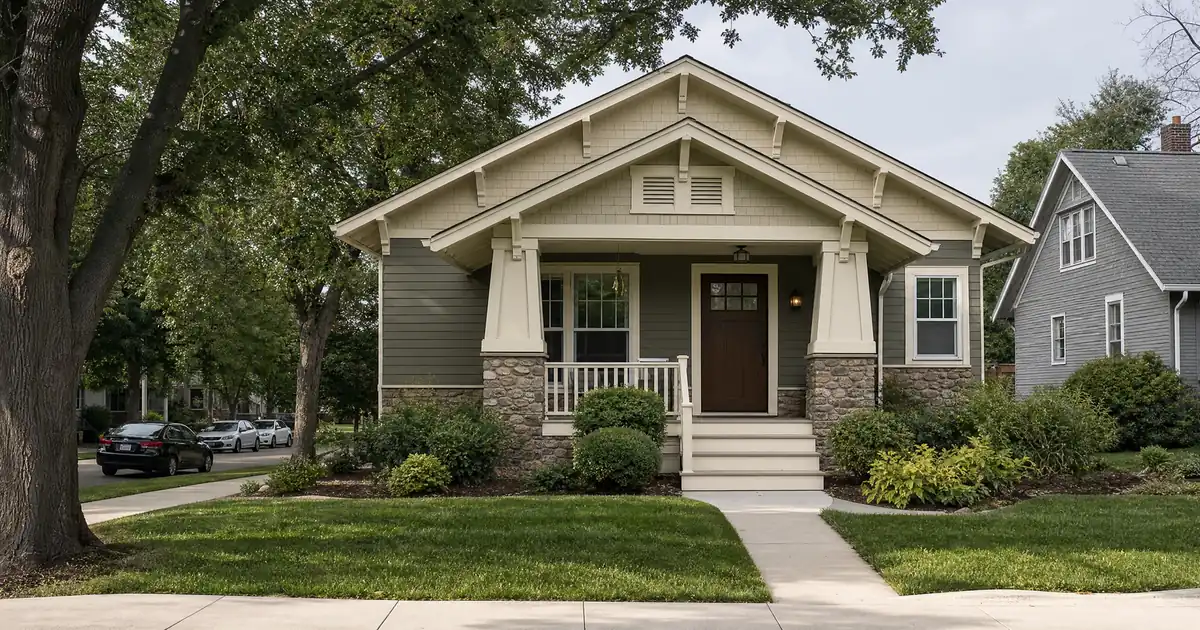
The Quick Read: An investment property loan broker shops your rental purchase or refinance across multiple wholesale lenders instead of offering just one bank’s guidelines. For rental property financing, that matters because underwriting runs on the property’s rent-to-payment math, not your W-2s, and different lenders in a broker’s network price and structure that math very differently. The broker’s job is matching your file — credit, leverage, property type, loan size — to the lender whose guidelines fit best, then managing the file through closing.
DSCR Calculator
Run the numbers in your market
Rate source: Freddie Mac 30-yr average via FRED® — Federal Reserve Bank of St. Louis · effective Jul 30, 2026
Prefilled with starting assumptions — enter your own rent or nightly figures, taxes, insurance, and HOA for a more accurate picture.
Program parameters update from Lendmire’s centralized guideline source. Taxes and insurance are editable estimates.
As of Jul 30, 2026 · General Freddie Mac market benchmark, not a Lendmire loan offer. Rent, nightly rate, occupancy, taxes, and insurance are editable estimates. Short-term rental figures are estimates only and vary significantly by season, property type, management approach, and local short-term-rental rules — confirm local regulations before relying on them. Qualifying income for short-term rentals varies by program — some use appraisal market rent, others use documented STR history or projections — and is confirmed in underwriting. Not a Loan Estimate, approval, or commitment to lend. Program availability and eligibility are subject to lender guidelines, credit approval, property review, and underwriting.
What Does an Investment Property Loan Broker Actually Do?
A broker doesn’t fund your loan. That’s the single fact most first-time investors miss. A broker originates the file and places it with a wholesale lender who actually supplies the capital — the broker’s value is in matching the deal to the right lender’s guidelines, not writing the check.
For a primary residence, that distinction barely matters because most conforming loans look alike. For a rental property, it matters enormously. One lender’s guidelines might allow a duplex purchase at higher leverage with a lighter credit floor. Another might cap loan size on a fourplex, or refuse a certain property type outright. A broker who works across dozens of investor-focused lenders sees these differences daily and routes the file accordingly — something a single bank’s loan officer, tied to one rate sheet and one set of overlays, simply cannot do.
This is especially true in the non-QM space, where DSCR loans — mortgages that qualify on a property’s rent-to-debt ratio instead of your personal income — live. Fannie Mae and Freddie Mac don’t buy these loans, so they trade in a separate secondary market with dozens of active investors, each with its own appetite. HousingWire reports non-QM originations are projected to climb to $175 billion, up from $108 billion the year before, with DSCR and investor products now making up roughly half of all non-QM collateral. That’s a lot of lenders competing for the same borrower — and a broker’s job is knowing which ones actually want your deal.
Key Terms Defined
DSCR (debt-service coverage ratio) — a ratio comparing the property’s rent to its full monthly obligation (principal, interest, taxes, insurance, and any HOA dues); a 1.00 ratio means rent exactly covers that payment.
LTV (loan-to-value) — the loan amount expressed as a percentage of the property’s value or purchase price; lower LTV means more money down and less borrowed.
Non-QM — short for “non-qualified mortgage,” meaning a loan that doesn’t fit the standard box Fannie Mae and Freddie Mac buy; DSCR loans are a type of non-QM product.
Seasoning — the waiting period a lender wants between buying a property and pulling equity back out through a cash-out refinance.
Business-purpose loan — a mortgage made for a rental or investment property rather than a home you live in, which changes how the loan gets reviewed.
Wholesale lender — the capital source a broker places your loan with; it funds the deal but never interacts with you directly the way a retail bank loan officer would.
How Underwriting Actually Treats an Investor Loan
Underwriting on a rental property purchase looks at the property first and the borrower second — the opposite order of a typical home loan. Most DSCR programs want the rent to clear a 1.00 coverage floor at minimum, though that’s a starting point on select programs, not a universal rule, and stronger ratios generally unlock better leverage.
Here’s the sequence a file typically moves through:
Step one — classification. DSCR loans are designed for non-owner-occupied investment properties. Because they are business-purpose investor loans, they are reviewed differently from a standard owner-occupied mortgage. That’s why the process feels different from the residential mortgage a lot of investors already went through on their own home — no tax transcripts, no pay-stub review, no debt-to-income calculation against personal earnings.
Step two — the broker sources the file. With qualification resting on the property rather than the person, a broker’s ability to shop the same file across several lenders becomes the real leverage point. One lender’s guidelines might favor a strong-credit, moderate-leverage borrower; another might specialize in higher-leverage purchases with a thinner credit file. This is the core value proposition explained in Lendmire’s complete DSCR loans guide — matching guidelines to the deal, not forcing the deal to fit one lender’s box.
Step three — the numbers get tested. Purchase leverage across most of the network runs 75%-80% loan-to-value, meaning roughly 20%-25% down on most files. A handful of high-leverage programs reach 85% LTV — 15% down — but that tier generally wants a credit score around 700 or better. Credit floors vary too: some lenders in the network go as low as 620, most sit closer to 660, and the strongest leverage tiers want 700-plus.
Step four — reserves and documentation. Reserve requirements — the extra months of PITIA a lender wants sitting in reserve after closing — vary by lender, leverage, loan size, and transaction type. A conservative rate-and-term refinance at modest leverage under $1,500,000 can sometimes see reserves waived entirely; loans above that size typically step up toward roughly 9 months. Somewhere in the middle, 6 months of PITIA is a common expectation. None of this is fixed — it moves with the specific file.
Step five — entity vesting. Many investors title rental property in an LLC. That doesn’t remove personal accountability; lenders in the network typically still require a personal guaranty from the majority owner, subject to program eligibility. A broker who’s placed files this way before knows which lenders want extra entity paperwork upfront versus which ones handle it at closing.
One thing worth saying plainly: clearing a 1.00 coverage ratio is not the same thing as positive cash flow. DSCR compares rent only to the mortgage payment — principal, interest, taxes, insurance, HOA. Repairs, vacancy, property management, utilities, and capital expenses all sit outside that number. A property clearing 1.10 on paper can still run thin once real operating costs hit the ledger.
Broker vs. Direct Lender vs. Hard Money Lender
| Factor | Broker | Direct/Bank Lender | Hard Money Lender |
|---|---|---|---|
| Lenders shopped | Multiple wholesale sources | One institution’s guidelines | Usually one private capital source |
| review basis | Property income (DSCR) or bank-side options | Personal income, W-2s, traditional personal-income documentation | Property/exit strategy focused |
| Best fit | Rental purchases, LLC-titled deals | Owner-occupied, conforming buyers | Short-term fix-and-flip or bridge needs |
| Leverage flexibility | Varies by lender network | Fixed to one bank’s box | Often lower leverage, higher cost |
The direct-lender column is where most first-time investors start, out of habit more than strategy. It works fine for a primary residence. For a rental purchase, it means you’re betting your entire deal on one lender’s overlay — no second opinion if that lender’s guidelines don’t fit your credit profile, your leverage need, or your property type.
The Structures a Broker Can Actually Reach
The 30-year fixed is the spine of most investor loan programs, and it is often a strong option. Select lenders in the network offer 40-year terms and interest-only periods for investors managing cash flow more aggressively, and adjustable-rate structures exist for those who want them. Loan sizes across the network typically run up to roughly $3,000,000 on standard programs, with smaller-balance deals routed through select lenders that specialize in that range. Above roughly $2,500,000, the network generally holds to 30-year fixed structures only — the extended-term and interest-only options thin out at that size.
Short-term rental financing is its own lane. Purchase leverage on STR properties typically tops out around 75% LTV, with refinance and cash-out both landing closer to 70%. Lenders generally want a credit score around 640, roughly 12 months of hosting history, and coverage that clears a 1.00 floor using STR income rather than a long-term-lease comparable. Short-term rental rules can also vary by city, county, HOA, and property type, so investors should confirm local rules before relying on projected rental income in the underwriting file.
Investors comparing this against other paths for tapping property value sometimes look at a home equity loan on an investment property instead of a full cash-out refinance — a broker can walk through both structures side by side rather than presenting only one.
Where the General Rule Breaks
A few situations sit outside the standard framework, and a good broker will say so plainly rather than dance around it.
State overlays. Purchases in Connecticut, Florida, Illinois, New Jersey, and New York generally cap near 75% LTV rather than the higher end of the typical range, and overlay-state deals commonly cap around $2,000,000 in loan size.
Property type exclusions. Manufactured homes — single- or double-wide — log homes, and barndominiums are not offered through DSCR programs in the network. That’s not a “harder to finance” situation; it’s a flat exclusion on these programs. Investors eyeing these property types need a different loan category entirely.
Cash-out seasoning. Pulling equity back out generally requires around 6 months of ownership seasoning first, and cash-out leverage across most of the network tops out near 75% LTV — lower than purchase leverage, which is a distinction investors often overlook when planning a refinance. Lendmire’s investment property refinance guide walks through that seasoning and leverage math in more detail.
Occupancy-based programs don’t apply here. Loans like FHA or VA financing are built around owner-occupancy, with rules that let a buyer occupy one unit of a small multifamily and rent the rest. Lendmire’s breakdowns of how FHA loans treat investment property and how VA occupancy requirements apply to rental purchases cover how that works. Once an investor is buying a pure rental with no intent to occupy any unit, those programs generally fall away and DSCR becomes the practical path.
A larger down payment lowers the monthly obligation and can lift the coverage ratio — but it never erases a leverage cap, a credit floor, a reserve requirement, or a property exclusion. The strongest files clear both tests at once: enough equity in the deal and enough rent to cover the payment comfortably. Terms vary by lender guidelines, property type, leverage, credit profile, and full file review.
How Brokers Get Paid
Brokers are typically compensated by the wholesale lender, not by charging the borrower a hidden markup tied to the loan’s terms. Under Federal Reserve guidance implementing federal loan-originator compensation rules, a broker cannot legally be paid more for steering a borrower toward a higher rate or a particular lender — compensation tied to loan terms is prohibited. That rule exists precisely because, before it was in place, some borrowers paid an upfront broker fee without realizing the lender was also paying a commission that increased with the cost of the loan.
Every individual broker also has to be licensed through the Nationwide Mortgage Licensing System under the SAFE Act, which requires 20 hours of pre-licensing education — including ethics and nontraditional product training — and passing a national exam, per California’s Department of Real Estate SAFE Act guidance. That licensing status is publicly checkable, which is worth doing before signing anything.
Vetting a Broker: What to Actually Ask
A few questions separate a broker who occasionally touches investor loans from one who works them daily:
- How many DSCR or investor-purpose lenders does your network actually include?
- What credit score and leverage combinations have you closed recently on rental purchases?
- Do you handle LLC-titled purchases, and what documentation does that typically require?
- What happens if my property type or my target leverage doesn’t fit your first-choice lender?
- Are you licensed, and can I verify that through NMLS?
A broker who answers these with specifics — not vague reassurance — is generally the one who’s actually placed files like yours before.
The Decision, in Practice
Picture two investors evaluating the same fourplex. One goes straight to their personal bank, which offers a single conforming-style product that doesn’t fit a non-owner-occupied purchase at that unit count. The other works with a broker who checks the file against several DSCR-focused lenders and finds one whose guidelines fit the leverage and credit profile in play. Same property, two very different outcomes — not because one investor was smarter, but because one had access to more than one lender’s guidelines.
Frequently Asked Questions
Can I get an investment property loan?
Most investors can, as long as the property’s rent supports the payment and the borrower profile fits at least one lender’s guidelines somewhere in the network. Coverage ratio, credit score, leverage, and loan size all factor in together, and no single number guarantees an outcome — a broker’s job is finding which lender’s box the file actually fits.
How do I get an investment property loan?
Start by getting a realistic rent estimate for the property and a clear picture of your credit and available down payment. From there, a broker compares that file against multiple DSCR-focused lenders rather than relying on one bank’s single product, which is usually the fastest way to find a fit for a rental purchase.
How do you get an investment property loan on a property with mixed or newer rental history?
Lenders generally want a market rent estimate even on a property without an existing lease, using a comparable-rent approach rather than requiring months of landlord history. Newer investors without a rental track record can often still qualify on the property’s projected income, subject to lender guidelines and property review.
How to get an investment property loan through an LLC?
Titling the purchase in an LLC is common and generally allowed subject to program eligibility, but it doesn’t remove personal accountability — most lenders in the network still require a personal guaranty from the majority owner. A broker who’s closed entity-titled deals before can flag which lenders want that paperwork early versus late in the process.
What’s the real advantage of a broker over going straight to a lender for a rental purchase?
The advantage is options. A single lender offers one set of guidelines; a broker checks the file against several, which matters more on investment property than on a primary home because DSCR guidelines vary widely by lender on leverage, credit floors, and property type.
About Lendmire
That access is really what a broker sells. Lendmire, NMLS# 2371349, arranges DSCR investor loan financing through select lenders across a 41-market wholesale footprint spanning 40 states and Washington, D.C., which means the shopping process described above happens across a genuinely wide lender bench rather than one institution’s overlay. Scotsman Guide named Lendmire a Top Mortgage Workplace in both 2025 and 2026.
Tax treatment can depend on how loan proceeds are used and how the property is held; investors should keep clear records and talk to a qualified tax professional before relying on any deduction tied to a rental purchase or refinance.
Loan approval is never guaranteed, and nothing here is a commitment to lend. Every scenario described here is subject to lender approval and to borrower, property, and program guidelines that can change. This article is general information, not financial, legal, or tax advice.
If you’re buying or refinancing a rental property and want to see how the numbers actually work, Lendmire can help compare DSCR loan options based on the property’s income, your credit profile, target leverage, and overall investor goals — reach the team at 828-256-2183 or request a quote directly.
Get Started
Ready to find the right loan for you?
In about 30 seconds you can review financing options available for your investment property. No commitment required.
Informational only. Not a Loan Estimate, approval, or commitment to lend. Program availability and eligibility are subject to lender guidelines, credit approval, property review, and underwriting.
References
1. HousingWire — Non-QM Originations Projected to $175B in 2026
2. Federal Reserve Board — Regulation Z Compliance Guide
3. California Department of Real Estate — SAFE Act FAQ on NMLS Pre-Licensing Education
This article is part of Lendmire’s DSCR loan program — full qualification details, guidelines, and scenarios live on the program page.
Related reading: Hard Money Brokers · Refinance Investment Property Requirements · DSCR Loans Under 75K Explained
Brandon Miller
Founder & CEO, Mortgage Loan Originator, Lendmire LLC
- Mortgage Loan Originator · NMLS# 1129696 · Verify on NMLS Consumer Access
- North Carolina Real Estate Broker · License# 343312 · Verify on NCREC
- North Carolina Insurance Producer · License# 19053198 · Property, Casualty, Life, Health · Verify on NAIC SBS
- Lendmire LLC · Firm NMLS# 2371349 · Verify firm licensure
Important disclosures. Lendmire (NMLS# 2371349) is a licensed mortgage brokerage. Lendmire is not a direct lender, depository institution, or financial advisor. All loan inquiries are subject to lender underwriting; this article does not constitute a commitment to lend. Rates, terms, and program guidelines are subject to change without notice and vary by borrower profile, property type, and state. Information in this article is general in nature and is not financial, legal, or tax advice. Equal Housing Opportunity. NMLS Consumer Access: nmlsconsumeraccess.org.