
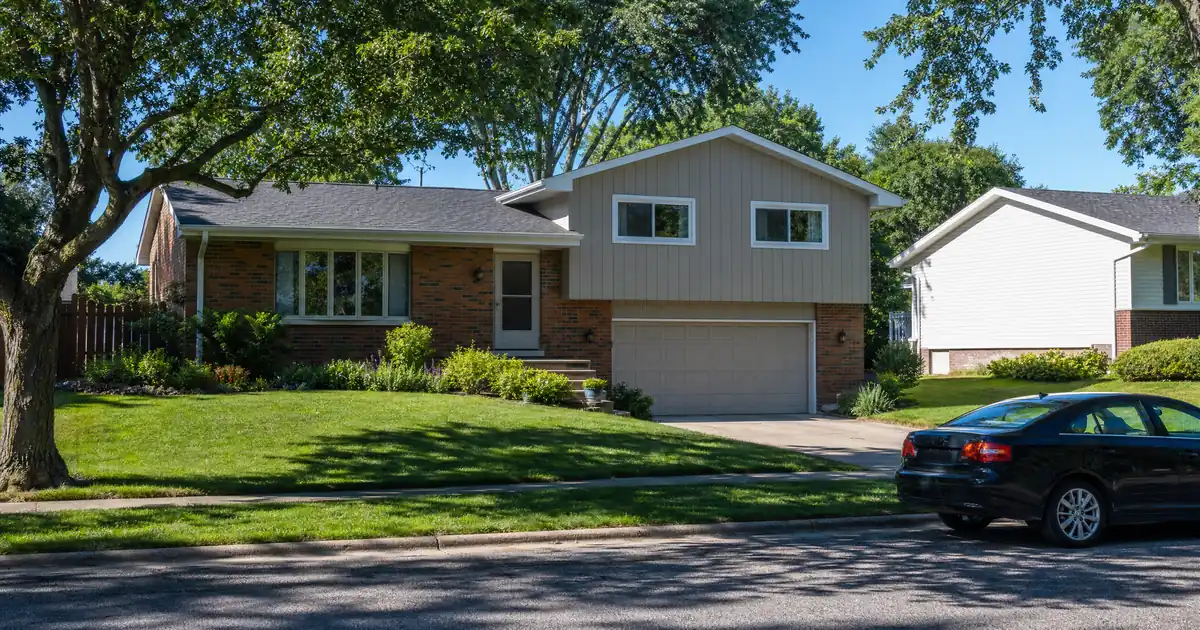
The Quick Read: Investment property loans come in two basic types. Conventional loans qualify you based on your personal income and debt-to-income ratio. DSCR (debt-service coverage ratio) loans qualify the property based on its own rent. Beyond those two, you’ll find hard money and bridge loans for short-hold projects. You’ll also find blanket or portfolio loans for investors financing multiple properties under one note. The right fit depends on your credit, how many properties you already hold, and whether the property’s rent — not your paycheck — can cover the payment.
DSCR Calculator
Run the numbers in your market
Rate source: Freddie Mac 30-yr average via FRED® — Federal Reserve Bank of St. Louis · effective Jul 30, 2026
Prefilled with starting assumptions — enter your own rent or nightly figures, taxes, insurance, and HOA for a more accurate picture.
Program parameters update from Lendmire’s centralized guideline source. Taxes and insurance are editable estimates.
As of Jul 30, 2026 · General Freddie Mac market benchmark, not a Lendmire loan offer. Rent, nightly rate, occupancy, taxes, and insurance are editable estimates. Short-term rental figures are estimates only and vary significantly by season, property type, management approach, and local short-term-rental rules — confirm local regulations before relying on them. Qualifying income for short-term rentals varies by program — some use appraisal market rent, others use documented STR history or projections — and is confirmed in underwriting. Not a Loan Estimate, approval, or commitment to lend. Program availability and eligibility are subject to lender guidelines, credit approval, property review, and underwriting.
Key Terms Defined
DSCR stands for debt-service coverage ratio. It’s the property’s monthly rent divided by its full monthly housing bill. It tells a lender whether the rent covers that bill.
LTV (loan-to-value) is the percentage of the property’s price or appraised value that the loan covers. You cover the rest with your down payment or existing equity.
PITIA is the full monthly bill a lender checks against rent. It includes principal, interest, taxes, insurance, and association dues if there are any.
Non-QM (“non-qualified mortgage”) means a loan built outside the standard agency rulebook. DSCR loans are the most common non-QM product for rental property.
Business-purpose loan is a loan made to fund a business activity, like buying or holding a rental. It’s not for financing where you personally live.
Seasoning is the waiting period a lender wants between one event and the next. Most often, it’s the wait between buying a property and pulling cash out of it later.
Reserves are extra months of PITIA a lender wants sitting in your bank account, untouched. It’s a cushion in case the rent ever stops coming in.
The Two Financing Worlds, Side by Side
Every investment property loan comes down to one basic question. Does the lender look at you, or does it look at the property? That single question decides what paperwork you need. It also decides how many properties you can hold and how the loan gets titled.
Conventional loans run on your income documents, W-2s, and personal debt-to-income math. DSCR loans skip all that. They ask one question instead: does the rent cover the payment? Everything else — hard money, bridge, portfolio, blanket — grows out of one of those two roots.
| Loan Type | is reviewed on | Typical Leverage | Best For | Key Limitation |
|---|---|---|---|---|
| Conventional | Personal income & DTI | Up to 80% purchase | Strong W-2 or tax-return income | Capped at 1-4 units; financed-property limits |
| DSCR / non-QM | Property rent vs. PITIA | Typically 75%-80%, up to 85% on select files | Self-employed, multi-property, LLC-titled investors | Not offered on manufactured, log, or barndominium homes |
| FHA / VA | Owner-occupancy required | High leverage while occupying | House-hacking a 2-4 unit | Must live in the property; not for pure rentals |
| Hard money / bridge | Collateral / asset value | Lower LTV than long-term loans | Short-hold flips, transitional deals | Short term, higher cost, not a long-term hold structure |
| Blanket / portfolio | Combined portfolio income | Varies by lender | Investors holding several properties | One default can expose every property on the note |
Conventional Loans: Qualified on Your Income, Not the Property’s
A conventional investment property loan looks at you first. It looks at the property second. Lenders pull your income documents, calculate your debt-to-income ratio, and treat rental income as a helper — not the main factor.
Fannie Mae’s own selling guide limits this whole category to one-to-four-unit residential properties. Fannie Mae’s general property eligibility standard draws that line clearly. Cross into a 5-unit building and you leave residential financing behind. That’s commercial territory. Commercial deals get appraised by income math instead of comparable sales, and they come with shorter loan terms and balloon payments instead of a clean 30-year fixed loan.
Conventional financing also caps how many properties one person can carry. Fannie Mae counts every financed property across all borrowers together. Once you cross four financed properties, the agency’s multiple-financed-properties rule adds extra reserve requirements. Most conventional borrowers hit a hard ceiling around ten financed properties. That ceiling is exactly why so many growing portfolios eventually move to DSCR, blanket, or portfolio financing. Those products underwrite the property or the portfolio, not your personal count of financed properties.
DSCR Loans: The Property Carries the Loan
DSCR loans flip the question completely. Instead of asking what you earn, the lender asks whether the rent covers the payment. Divide the property’s monthly rent by its full PITIA bill, and that ratio is the DSCR.
A coverage ratio of 1.00 means the rent exactly covers the payment. Nothing more. Commercial lending broadly treats something closer to 1.25 as a stronger number. Even the Small Business Administration’s general guidance points to figures in that range for business loans. Residential DSCR programs for investment property run leaner. Across the wholesale network Lendmire places files through, select programs start qualifying files right around a 1.00 floor. That’s a starting point on specific programs, not a universal industry standard. Stronger ratios above that open better leverage and pricing tiers.
Here’s one thing worth saying plainly: clearing 1.00 is not the same as making money. DSCR measures rent against PITIA only. Repairs, vacancy stretches, property management fees, utilities, and capital expenses all sit outside that ratio. A file that clears 1.00 can still lose money in a bad month. The ratio tells a lender the loan can be paid. It doesn’t tell you the investment is profitable.
DSCR loans finance rental property that you don’t live in, closed for investment purposes. Because of that, they get reviewed as business-purpose loans rather than standard owner-occupied mortgages. That’s also what lets many of these files close directly in an LLC, subject to lender program eligibility. Lendmire covers this in more depth in its complete DSCR loans guide. You can also see the practical difference between this approach and conventional underwriting in a side-by-side DSCR vs. conventional comparison.
Across the network Lendmire works with, purchase leverage on DSCR files typically lands at 75%-80% LTV. A handful of high-leverage programs reach 85% for borrowers around a 700 credit score. Credit floors go as low as 620 in parts of the network, though most programs want closer to 660. The strongest leverage tiers open up around 700 and above. Loan sizes generally run from moderate balances up through roughly $3,000,000 on standard programs. Anything above $2,500,000 typically gets routed to 30-year fixed structures rather than shorter-term options. Reserve requirements vary by lender, leverage, and loan size. They commonly run around six months of PITIA. Sometimes reserves get waived on conservative, lower-leverage rate-and-term files under $1,500,000. They typically step up toward nine months on larger loan amounts.
FHA, VA, and the House-Hacking Exception
Government-backed loans require you to live in the property. That’s the trade for the high leverage they offer. FHA and VA financing was built for owner-occupants, not landlords. That’s why a straight rental purchase generally can’t use either program.
The practical exception is house-hacking. You buy a 2-4 unit property, live in one unit yourself, and rent out the rest. That structure lets the other units’ rent count toward qualifying, while you satisfy the requirement to live there. It’s a genuinely useful way into a first multi-unit purchase. Lendmire’s breakdown of an owner-occupied investment property loan walks through how that works in more detail. Veterans weighing entitlement and unit-count questions can start with Lendmire’s overview of VA loans for investment property.
Once the occupancy requirement lapses — you move out, or you never planned to live there — the property functions like any other rental. Refinancing or future purchases typically pivot to DSCR financing at that point, since a pure rental purchase generally isn’t eligible for FHA or VA terms from the start.
Hard Money, Bridge, and Fix-and-Flip Financing
Hard money and bridge loans qualify on the deal, not the borrower or the rent roll. Collateral value is what matters, and the timeline is short by design. These loans exist for situations where fast access to capital matters more than long-term cost. Think purchase offers, auction deals, or a property mid-renovation that won’t qualify for permanent financing yet.
Leverage runs meaningfully lower than long-term loans. There’s no such thing as full-value financing in this category. Lenders always want a real down payment or existing equity cushion. The line between “bridge” and “hard money” is mostly about framing, not mechanics. Bridge financing usually describes a property in transition toward stabilized, permanent financing. Hard money more often means an asset-based loan tied to a distressed situation, or a borrower who doesn’t yet qualify elsewhere. Either way, this is transitional capital. It’s not built to hold a property for years.
Blanket and Portfolio Loans: One Note, Multiple Properties
A blanket loan wraps multiple properties under a single mortgage. That simplifies servicing, but it concentrates risk. Default on the note, and every property on it is exposed — not just one. Investors scaling past a handful of properties often move here for a specific reason: it sidesteps the underwriting friction of financing each address separately.
The release clause is what makes selling one property possible without unwinding the whole loan. Pay down a set amount of principal, and you can release that one property while keeping the mortgage on the rest. That’s very different from just owing “your share” of the debt at sale. The release price and cross-collateralization terms govern what you owe — not the sale price of the property leaving the pool. Investors carrying several rentals who are considering this kind of consolidated financing can look at investment property refinance options as a starting point for that conversation.
Short-Term Rentals and Other Non-QM Variants
Short-term rental income doesn’t fit neatly into standard rent-schedule appraisal forms. That’s why STR files get underwritten differently than a long-term lease property. The standard rent-comparison form used across residential lending was built to estimate market rent, not nightly platform income. Appraisal-industry guidance is clear that assessing that kind of business income sits outside what the form covers. That gap is why STR-focused DSCR files typically lean on trailing twelve-month platform revenue history or projection tools instead.
Across the network, STR-specific DSCR programs generally cap purchase leverage around 75% LTV. Refinance and cash-out both run closer to 70%. Expect a credit profile around 640, roughly twelve months of hosting history, and a 1.00 coverage floor on most STR files. Short-term rental rules can also vary by city, county, HOA, and property type. Confirming local rules before relying on projected rental income matters just as much as the loan structure itself.
Self-employed investors often have income documents that don’t reflect their real cash flow. That’s a common result of legitimate depreciation and business write-offs. These borrowers are exactly the profile DSCR financing was built around, since qualification runs on the property’s income rather than personal income documents.
Where the Property Eligibility Line Actually Sits
Not every structure is DSCR-eligible. It’s worth being direct about that rather than vague. Manufactured homes — both single- and double-wide — log homes, and barndominiums are not offered through the DSCR programs across Lendmire’s wholesale network. That’s a plain eligibility line, not a “harder to finance” gray area. It’s worth confirming a property type before you get attached to a specific deal.
State overlays matter too. Purchases in Connecticut, Florida, Illinois, New Jersey, and New York generally cap leverage closer to 75% LTV. Loan amounts in those overlay states are commonly capped around $2,000,000, rather than the higher ceilings available elsewhere in the network.
Which Loan Type Actually Fits Your Deal?
If you’re buying your first small multi-unit and plan to live in it, price out house-hacking through FHA or VA before anything else. The leverage is hard to beat while you occupy it. If you’re buying a pure rental and your income documents run light on paper income, DSCR is generally the more workable path, since it never touches your personal DTI. If you’re mid-renovation on a property that won’t qualify for permanent financing yet, bridge or hard money bridges that gap. And if you’re past four or five financed properties and tired of underwriting each one separately, blanket or portfolio structures start to make sense.
Investor purchase activity gives a sense of how many buyers face this exact decision. Redfin reports that investors bought 17% of U.S. homes sold in the third quarter. That share sits far above where it stood a decade or two ago. It’s a big part of why non-agency financing options exist at the scale they do today.
If you’re buying or refinancing a rental property and want to see how the numbers actually work, Lendmire can help. Lendmire is a multi-state mortgage broker (NMLS# 2371349) that arranges DSCR financing through select lenders across a 41-market footprint spanning 40 states and Washington, D.C. Lendmire can help you compare loan options based on the property’s income, your credit profile, available leverage, and your investment goals. Reach Lendmire at 828-256-2183 or request a quote directly through the mortgage quote form.
Loan approval is never guaranteed, and nothing here is a commitment to lend. Every scenario described here depends on lender approval and on the specific borrower, property, and program guidelines in effect at the time of application. This article is general information only, not financial, legal, or tax advice. Speak with a qualified professional before making a financing decision.
Frequently Asked Questions
What type of loan is best for investment property?
There’s no single best answer. It depends on your income documents, credit, and how many properties you already own. If your income documents don’t reflect your real cash flow, DSCR financing generally fits better than a conventional loan, since it qualifies you on the property’s rent rather than your personal income.
What type of loan do I need to buy an investment property?
Most pure rental purchases end up financed through either a conventional loan (if your DTI and income documents support it) or a DSCR loan (if the property’s rent covers the payment on its own). FHA and VA only apply if you’ll occupy part of the property yourself.
Can I get an investment property loan?
Generally, yes — through one of several paths depending on your profile. Use conventional if your income and DTI qualify. Use DSCR if the property’s rent carries the payment. Use hard money if you’re financing a short-hold renovation project. Each path has its own credit, leverage, and reserve expectations.
How do I get an investment property loan?
Start by figuring out whether you’ll qualify on personal income or property income. That decision points you toward conventional or DSCR financing. From there, a lender or broker reviews your credit, the property’s rent and expenses, and available reserves to figure out leverage and program fit.
How many financed properties can I hold before conventional loans stop working?
Conventional financing generally caps out around ten financed properties per borrower. Extra reserve requirements kick in once you cross four. That ceiling is a major reason growing portfolios shift toward DSCR, blanket, or portfolio-style financing. Those products underwrite the property or portfolio instead of counting against a personal financed-property limit.
About Lendmire
As a DSCR and non-QM mortgage broker, Lendmire — NMLS# 2371349 — connects investors with wholesale lending channels across 41 markets, including Washington, D.C. The property’s rental income, not the borrower’s tax returns, is central to lender review. This works well for self-employed operators and for portfolios beyond four financed properties. Scotsman Guide named Lendmire a Top Mortgage Workplace in both 2025 and 2026.
Get Started
Ready to find the right loan for you?
In about 30 seconds you can review financing options available for your investment property. No commitment required.
Informational only. Not a Loan Estimate, approval, or commitment to lend. Program availability and eligibility are subject to lender guidelines, credit approval, property review, and underwriting.
References
1. Fannie Mae Selling Guide — General Property Eligibility
2. Fannie Mae Selling Guide — Multiple Financed Properties
3. Chase — What Is the Debt Service Coverage Ratio
4. McKissock — Form 1007 and Short-Term Rental Appraisals
5. Redfin — Investor Home Purchases Q3 2025
This article is part of Lendmire’s DSCR loan program — full qualification details, guidelines, and scenarios live on the program page.
Related reading: FHA Investment Property Loans Explained · Does Rent Payment History Help You Buy A Rental Property? · What Is Better Than a DSCR Loan?
Brandon Miller
Founder & CEO, Mortgage Loan Originator, Lendmire LLC
- Mortgage Loan Originator · NMLS# 1129696 · Verify on NMLS Consumer Access
- North Carolina Real Estate Broker · License# 343312 · Verify on NCREC
- North Carolina Insurance Producer · License# 19053198 · Property, Casualty, Life, Health · Verify on NAIC SBS
- Lendmire LLC · Firm NMLS# 2371349 · Verify firm licensure
Important disclosures. Lendmire (NMLS# 2371349) is a licensed mortgage brokerage. Lendmire is not a direct lender, depository institution, or financial advisor. All loan inquiries are subject to lender underwriting; this article does not constitute a commitment to lend. Rates, terms, and program guidelines are subject to change without notice and vary by borrower profile, property type, and state. Information in this article is general in nature and is not financial, legal, or tax advice. Equal Housing Opportunity. NMLS Consumer Access: nmlsconsumeraccess.org.