
The Quick Read: Yes — investors regularly pull equity out of a commercial or small multifamily rental property. They do this through a cash-out refinance. This means replacing the existing loan with a bigger one and pocketing the difference. Across Lendmire’s wholesale network, most cash-out programs cap leverage at 75% loan-to-value. They also expect roughly six months of ownership before they’ll consider the file. And they qualify the loan against the property’s rent rather than the owner’s personal income. The math and the paperwork both shift once a building crosses five units or falls into an ineligible property category. These details trip up more investors than the basic mechanics ever do. All of this is subject to lender guidelines and a full review of property, leverage, and credit.
DSCR Cash-Out Calculator
Run the cash-out numbers in your market
Rate source: Freddie Mac 30-yr average via FRED® — Federal Reserve Bank of St. Louis · effective Jul 30, 2026
Prefilled with starting assumptions — enter your property’s value, balance, taxes, and insurance for a more accurate picture.
Program parameters update from Lendmire’s centralized guideline source. Taxes and insurance are editable estimates.
As of Jul 30, 2026 · General Freddie Mac market benchmark, not a Lendmire loan offer. Property value, balance, taxes, and insurance are editable estimates. Maximum loan-to-value varies by lender, program, property type, and seasoning. Not a Loan Estimate, approval, or commitment to lend. Program availability and eligibility are subject to lender guidelines, credit approval, property review, and underwriting.
What You Need to Know First
Before the details, here’s the shape of the whole transaction:
- A cash-out refinance pays off the existing loan and hands the investor the remaining equity in cash — it’s a new loan, not new income.
- Most programs in Lendmire’s network cap cash-out leverage at 75% loan-to-value, a hard ceiling well below the up-to-85% leverage some purchase programs allow.
- Qualification runs primarily on the property’s own rent covering its payment — a debt-service coverage ratio, or DSCR — not the borrower’s traditional personal-income documentation or W-2s.
- Roughly six months of ownership seasoning is the common bar before a lender will consider a cash-out request.
- Five-plus-unit buildings, non-stabilized income, and certain property types (manufactured homes, log homes, barndominiums) don’t play by the same rulebook — some don’t play at all.
What Actually Counts as “Commercial” Here?
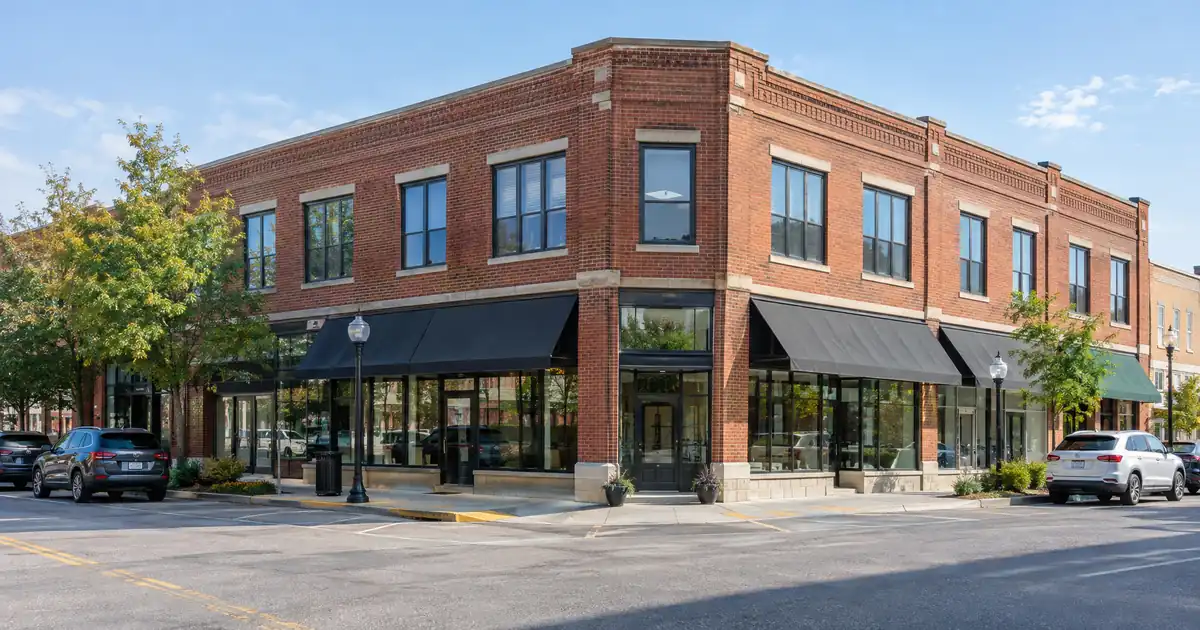
Most investors asking about “commercial” cash-out refinancing don’t own an office tower. They own a duplex, triplex, or small apartment building. In lending, the word “commercial” usually describes the loan’s purpose. It’s not about the shape of the building.
Here’s the key idea: a loan on a rental property is treated as a business-purpose loan. This happens even when the property looks exactly like the house next door. Why? Because it’s held for income, not as a primary residence. That one label changes everything downstream — different documentation, different underwriting logic, different closing paperwork.
Separately, federal housing-finance rules draw a hard line at five units. Properties with five or more units — each with its own full kitchen and bath — fall under a genuinely commercial multifamily framework. HUD’s Section 207/223(f) program is built around that framework. Below the five-unit line, a rental property generally moves through residential-style forms and underwriting. It’s still a business-purpose loan — just processed differently. Above the line, the appraisal, the income analysis, and the whole closing process change shape.
So here’s the split worth understanding before shopping for a cash-out refinance. Is this a business-purpose loan on a residential-style rental — 1 to 4 units, sometimes stretching into small multifamily? Or is it a true 5-plus unit commercial asset that needs a different kind of lender entirely? Lendmire’s DSCR programs are built for the first category: investment property held for rental income, financed on the strength of that income.
Key Terms Defined
DSCR (debt-service coverage ratio): This number compares the property’s monthly rent to its full monthly obligation. That obligation includes principal, interest, taxes, insurance, and any HOA dues — often shortened to PITIA. A ratio at or above 1.00 means the rent covers that payment. It says nothing about repairs, vacancy, or other costs outside the calculation.
LTV (loan-to-value): This is the loan amount expressed as a percentage of the property’s appraised value. Lower LTV means more equity cushion. It generally means easier approval too.
PITIA: This stands for principal, interest, taxes, insurance, and association dues. It’s the full monthly housing obligation a DSCR loan measures rent against.
Seasoning: This is the minimum length of time a lender wants an investor to have owned a property before considering a cash-out refinance. It exists so the appraised value reflects real ownership. It’s not a same-day flip of an inflated number.
Business-purpose loan: This is a loan made for investment or rental purposes rather than to buy a primary home. DSCR loans fall in this category. That’s why they’re reviewed differently from a standard owner-occupied mortgage.
How the Cash-Out Refinance Works, Step by Step
The mechanics stay the same whether the property is a fourplex or a stabilized apartment building. Only the depth of the underwriting changes.
Step one — classification. The lender decides whether the loan is business-purpose. For an investor, it almost always is. The lender also decides whether the property sits below or above the five-unit line. That decision drives everything downstream: which appraisal form gets ordered, what documentation gets requested, and which underwriting lens applies.
Step two — appraisal. For 1-4 unit rental property, appraisers typically lean on the industry-standard Form 1025 Small Residential Income Property Appraisal Report, paired with a rent schedule to establish market rent. Once a property crosses into five-plus units, the appraisal generally shifts to a different set of tools. That might mean a form-based commercial report for smaller loan amounts, or a full narrative appraisal for larger or more complex properties. This follows the standard breakdown used across the appraisal industry (Mountainseed’s appraisal-form overview puts the dividing line for the heavier form-based commercial report around $750,000 in loan amount). That’s a meaningfully bigger documentation lift than a duplex file.
Step three — income underwriting. On DSCR files, the lender divides rent used for lender review by the full monthly obligation. Rental income gets reviewed instead of personal-income documentation. There’s no personal debt-to-income math involved. Qualification runs primarily on property-level rental income covering the payment, subject to lender guidelines. On true 5+ unit commercial assets, the analysis usually shifts to trailing operating statements and net-operating-income reconstruction. That’s a heavier lift than a simple rent-over-payment shortcut.
Step four — sizing the loan. The appraised value sets the ceiling. The program’s maximum cash-out LTV sets the rest. Across Lendmire’s wholesale network, cash-out programs generally cap out around 75% loan-to-value. This is consistently lower than the leverage available on a purchase, because pulling equity out carries more risk to the lender than simply repricing existing debt.
Step five — documents and closing. Expect the appraisal, a payoff statement on the existing loan, title work, lease documentation or market-rent support, and entity paperwork if the property sits inside an LLC. That means articles of organization, an operating agreement, and an EIN letter, subject to program eligibility. Here’s a structural difference worth knowing: because these are business-purpose loans, they’re exempt from the consumer disclosure timeline (Loan Estimate, Closing Disclosure) that governs an owner-occupied mortgage. That matters if the last refinance an investor did was on a primary residence.
How Much Cash Can Actually Come Out?
Two ceilings work at the same time on every cash-out file: the leverage cap and the coverage ratio. A property has to clear both. A bigger down payment on the original purchase doesn’t erase either one.
Most programs in Lendmire’s network hold cash-out leverage to 75% LTV. That’s a firm ceiling — not a starting point that flexes upward with a strong file. On top of that, a minimum DSCR (rent divided by PITIA) around 1.00 is where select programs start. It’s a floor for those specific programs, not a universal rule. Stronger coverage ratios typically open better pricing and higher leverage tiers. Credit matters too: a 620 floor exists in parts of the network, but most programs want something closer to 660. A score of 700 or better tends to unlock the strongest leverage available.
Reserves — liquid funds set aside after closing — commonly run around six months of PITIA. That steps up toward nine months on loans above roughly $1.5 million. Loan sizes on standard cash-out programs generally run up to about $3 million. Above roughly $2.5 million, the network typically holds to 30-year fixed structures rather than shorter or adjustable terms. A handful of states — including Connecticut, Florida, Illinois, and New Jersey — carry additional overlays that can cap leverage or loan size below the network’s usual maximums. A file that pencils cleanly in one state may need adjusting in another.
Across files Lendmire places, the properties that clear both tests — enough equity and enough rental coverage — are consistently the ones that move through underwriting with the fewest surprises. Picture a property with plenty of equity but rent that barely covers the payment, or the reverse situation. Either one tends to generate conditions and back-and-forth, no matter how strong the other number looks.
Where the Standard Playbook Breaks Down
The five-unit line, HUD-insured multifamily programs, and a short list of ineligible property types are where the general rule stops applying cleanly.
HUD-insured multifamily cash-out moves slower and smaller than most investors expect. Within HUD’s own insured framework for 5+ unit properties, cash-out is permitted. But it’s capped below the program’s acquisition leverage, and the property generally needs a stabilized operating history first. That’s a different posture than the DSCR side of the business. There, cash-out is often considered within months of purchase rather than after years of seasoned operations.
Non-stabilized and mixed-use properties don’t fit the simple rent-over-payment model. A property with below-market occupancy, one still in lease-up, or one combining residential and commercial space usually can’t be underwritten on a straightforward income shortcut. The lender has to reconstruct achievable market rent and factor in vacancy. That typically means lower leverage or stronger reserves until the property stabilizes.
Sub-1.00 coverage doesn’t mean a dead file — but it does mean a different structure. Programs below 1.00 DSCR are available through select lenders in Lendmire’s network, though leverage and terms adjust to compensate for the thinner coverage. A no-ratio option is available for DSCR below 1.00 with stronger credit or higher down payment; qualification on that path rests on credit and equity rather than a rent-coverage calculation.
Certain property types simply aren’t offered on DSCR cash-out, full stop. Manufactured homes (single- and double-wide), log homes, and barndominiums fall outside these programs across the network. That’s not “harder to finance” — it’s not offered at all. An investor holding one of these should plan on a different financing path from the start.
Softening rental fundamentals can also compress how much cash a property supports. Nationally, asking rents for professionally managed apartments slipped 0.6% year-over-year in the fourth quarter of the most recent reporting period. Vacancy ticked up to 5.2% as demand cooled faster than new supply arrived, according to the Harvard Joint Center for Housing Studies. A softer market rent figure on the appraisal can shrink the qualifying DSCR — and the loan amount it supports — compared to what the same property would have carried a year or two earlier.
Is a Cash-Out Refinance the Right Move Right Now?
This one’s genuinely situational. A property with strong appreciation and rent that clears coverage comfortably is usually a straightforward candidate. A property that’s barely seasoned, sitting on thin coverage, or mid-lease-up is a harder sell. Not impossible — just a different conversation about leverage and terms.
Run through these before approaching a lender:
| Question | Why it matters |
|---|---|
| Has the property been owned roughly six months or longer? | Seasoning is the common bar before cash-out gets considered. |
| Does current rent clear the payment with room to spare? | Coverage above 1.00 generally opens better leverage and pricing tiers. |
| Is the credit profile at 660 or better? | Most programs are built around that range; 700+ unlocks stronger leverage. |
| Are six-plus months of reserves available after closing? | Reserve requirements scale with loan size and leverage. |
| Is the property a standard 1-4 unit or small multifamily rental? | Manufactured housing, log homes, and barndominiums aren’t offered on these programs. |
Investors running a buy-renovate-refinance strategy often treat this exact mechanism as the whole point of the cycle. They recycle equity out of a stabilized rental to fund the next acquisition. Lendmire’s guide on using a cash-out refinance to buy the next investment property walks through that specific play in more depth. The broader DSCR cash-out refinance overview covers the program mechanics from the ground up.
Tax treatment can depend on how the funds are used and how the property is held. Investors should keep clear records and speak with a qualified tax professional before relying on any deduction.
Common Mistakes Investors Make
The most frequent misstep isn’t a paperwork problem. It’s assuming purchase-day leverage carries over to a refinance. Cash-out ceilings sit lower than purchase ceilings across virtually every program in the network. Treating them as interchangeable leads to a disappointing conversation with the appraisal in hand.
A close second: confusing DSCR clearing 1.00 with the property actually generating positive cash flow. The ratio only measures rent against PITIA. It says nothing about vacancy, repairs, property management, or capital expenditures sitting outside that calculation. A property can clear 1.00 on paper and still run tight once real operating costs hit the ledger.
Third, investors sometimes assume seasoning is negotiable if the appraisal comes back strong. It generally isn’t. The roughly six-month expectation exists independent of how much value the property has gained. Pushing a file before that window closes usually just means a declined submission rather than an exception.
Investors weighing this move can request a quote directly from Lendmire or reach the team at 828-256-2183 to compare how leverage, coverage, and reserves line up on a specific property. Lendmire (NMLS# 2371349) arranges DSCR investor loans through a wholesale network spanning 40 states plus Washington, D.C. — 41 markets total. Its complete DSCR loans guide is a solid next stop for anyone still deciding whether this program fits their property.
Loan approval is never guaranteed, and nothing here is a commitment to lend. Every scenario described here is subject to lender approval and to the borrower’s, property’s, and program’s underwriting guidelines, which can change without notice. This content is general information, not financial, legal, or tax advice.
Frequently Asked Questions
Can you do a cash-out refinance on an investment property?
Yes — cash-out refinancing on rental and investment property is a routine transaction, not a special exception. Most programs in Lendmire’s network qualify the loan against the property’s own rent rather than personal income. They typically cap leverage around 75% LTV and expect roughly six months of ownership before considering the request.
How do you cash-out refinance an investment property?
Start with an appraisal to establish current value. Then a lender compares rent used for lender review against the full monthly obligation to calculate DSCR. If the coverage ratio, credit profile, and equity position all clear the program’s guidelines, the new loan pays off the existing balance. The remaining equity — up to the program’s LTV ceiling — comes back to the investor in cash.
How do you qualify for a cash-out refinance on an investment property?
Qualification runs primarily on the property’s rental income covering its payment, subject to lender guidelines. Most programs want a credit score around 660 or better, roughly six months of reserves, and about six months of ownership seasoning. Stronger credit, in the 700-plus range, tends to unlock the highest leverage tiers available.
Which companies offer cash-out refinance for investment properties?
Availability runs across a mix of banks, credit unions, and non-QM lenders that specialize in DSCR and other business-purpose programs. Guidelines and leverage vary widely between them. Lendmire is a mortgage broker that arranges these loans by placing files with select lenders across its wholesale network rather than lending directly.
Can I cash-out refinance a DSCR loan?
Yes — refinancing an existing DSCR loan into a new cash-out DSCR loan is one of the more common refinance scenarios in the space. The same rules apply as any DSCR cash-out: roughly 75% LTV ceiling, a coverage ratio typically starting near 1.00 on qualifying programs, and the standard seasoning and credit expectations. All of it stays subject to lender guidelines.
Lendmire is a mortgage broker and does not directly fund or underwrite loans. All programs, terms, and eligibility are set by individual lenders and subject to change without notice. This article is for general informational purposes only and does not constitute financial, legal, or tax advice.
About Lendmire
As a non-QM mortgage broker (NMLS# 2371349), Lendmire facilitates DSCR investor loans across 41 markets, including Washington, D.C. DSCR eligibility is generally reviewed around property-level rental income instead of personal income documentation, subject to lender guidelines. Lendmire serves LLC-structured portfolios and self-employed borrowers who don’t fit conventional boxes. It’s a two-time Scotsman Guide Top Mortgage Workplace (2025, 2026).
Get Started
Ready to find the right loan for you?
In about 30 seconds you can review financing options available for your investment property. No commitment required.
Informational only. Not a Loan Estimate, approval, or commitment to lend. Program availability and eligibility are subject to lender guidelines, credit approval, property review, and underwriting.
References
1. Fannie Mae — Form 1025 Small Residential Income Property Appraisal Report
2. Mountainseed Knowledge Base — Appraisal Form Types
3. Harvard Joint Center for Housing Studies — America’s Rental Housing 2026
This article is part of Lendmire’s investment property cash-out refinance program — full qualification details, guidelines, and scenarios live on the program page.
Related reading: Commercial Cash Out Refinance Lenders? · Commercial Investment Property Loans · Building A Multifamily Home, How Do I Cash Out Refinance
Brandon Miller
Founder & CEO, Mortgage Loan Originator, Lendmire LLC
- Mortgage Loan Originator · NMLS# 1129696 · Verify on NMLS Consumer Access
- North Carolina Real Estate Broker · License# 343312 · Verify on NCREC
- North Carolina Insurance Producer · License# 19053198 · Property, Casualty, Life, Health · Verify on NAIC SBS
- Lendmire LLC · Firm NMLS# 2371349 · Verify firm licensure
Legal disclosures. Lendmire (NMLS# 2371349) is a state-licensed mortgage brokerage that arranges financing through wholesale lender relationships. Lendmire is not a direct lender, depository institution, or registered financial advisor. The discussion above is general informational content about real estate financing — it is not financial, legal, or tax advice, and readers should consult licensed professionals for guidance on their individual circumstances. Loan inquiries are subject to lender underwriting; this article does not represent a commitment to lend. Loan terms, rates, and qualification standards vary by borrower, property, and state, and are subject to change at any time. Equal Housing Opportunity. NMLS Consumer Access: nmlsconsumeraccess.org.