
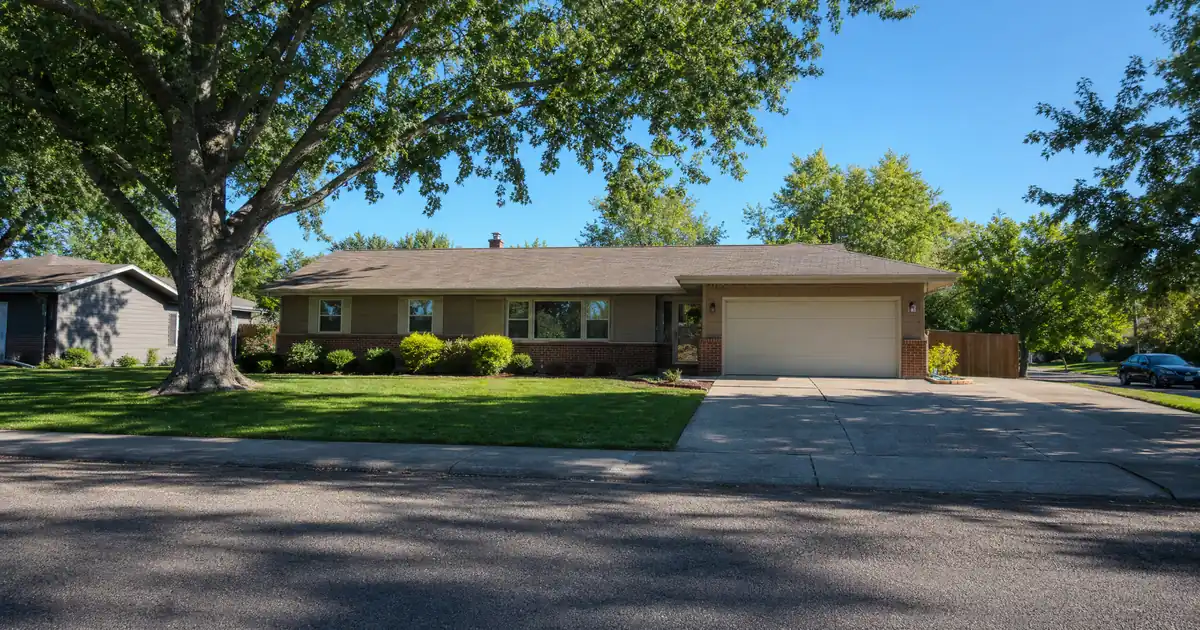
The Quick Read: These are not two flavors of the same refinance. They are two different loan universes. A second home refinance is a personal-income deal. The borrower qualifies with traditional personal-income documentation, W-2s, and debt-to-income math. The loan stays in their personal name. An investment property refinance, especially through a DSCR loan, works differently. It gets reviewed on the rent the property generates instead of the owner’s paycheck. It commonly closes in an LLC. The property’s occupancy — not its size, style, or price — decides which path applies.
DSCR Calculator
Run the numbers in your market
Rate source: Freddie Mac 30-yr average via FRED® — Federal Reserve Bank of St. Louis · effective Jul 30, 2026
Prefilled with starting assumptions — enter your own rent or nightly figures, taxes, insurance, and HOA for a more accurate picture.
Program parameters update from Lendmire’s centralized guideline source. Taxes and insurance are editable estimates.
As of Jul 30, 2026 · General Freddie Mac market benchmark, not a Lendmire loan offer. Rent, nightly rate, occupancy, taxes, and insurance are editable estimates. Short-term rental figures are estimates only and vary significantly by season, property type, management approach, and local short-term-rental rules — confirm local regulations before relying on them. Qualifying income for short-term rentals varies by program — some use appraisal market rent, others use documented STR history or projections — and is confirmed in underwriting. Not a Loan Estimate, approval, or commitment to lend. Program availability and eligibility are subject to lender guidelines, credit approval, property review, and underwriting.
Here’s the honest split. Do you actually use the property yourself for real chunks of the year? Do you avoid leaning on rental income to make the loan work? If yes, a second home refinance through a conventional program is the right lane. Often it’s the only lane. Is the property a pure rental instead — no personal use, income-producing, maybe titled to an entity? Then an investment property refinance built around debt-service coverage (DSCR) usually fits better. It skips personal income documentation and looks at the rent instead. Picking the wrong lane doesn’t just slow the file down. It can trigger an occupancy-fraud problem. Both loan types require the borrower to certify, in writing, how the property is actually used.
Key Terms Defined
DSCR (debt-service coverage ratio): This is one number. It equals monthly rent divided by the property’s full monthly obligation — principal, interest, taxes, insurance, and HOA dues, together called PITIA. It tells a lender whether the rent covers the payment. A 1.00 ratio means rent and PITIA are equal.
PITIA: This is the complete monthly housing obligation used in DSCR math. It combines principal, interest, taxes, insurance, and association dues into one figure.
LTV (loan-to-value): This is the loan amount shown as a percentage of the property’s appraised value. Lower LTV means more equity in the deal. It typically means a stronger file too.
Business-purpose loan: This is a loan made for investment or rental purposes, not personal use. This classification is why DSCR loans get underwritten and disclosed differently than a loan on a home you live in.
Seasoning: This is the waiting period a lender wants between buying (or last refinancing) a property and pulling cash out of it again. Most DSCR cash-out files in Lendmire’s wholesale network want around six months of ownership before considering a cash-out refinance.
Non-QM: This is short for “non-qualified mortgage.” It’s a loan that skips the standard agency income-and-DTI underwriting box. DSCR loans are the most common non-QM product built for rental property investors.
Occupancy affidavit: This is the signed statement at closing where the borrower certifies how the property is actually used. On a DSCR file, this typically means confirming the borrower doesn’t occupy the property and won’t while the loan is outstanding.
Side-by-Side
| Factor | Second Home Refinance | Investment Property Refinance (DSCR) |
|---|---|---|
| Review basis | Personal income, credit, and DTI | Property’s rent measured against PITIA |
| Documentation | Traditional personal-income documentation, W-2s/1099s, occupancy certification | Lease or market-rent schedule, reserve verification, business-purpose affidavit |
| Rental income use | Generally excluded from qualifying | Central to qualifying — it is the DSCR |
| Entity vesting | Personal name only | Often LLC, corporation, or trust, subject to program eligibility |
| Typical LTV / equity | Set by conventional guidelines | Purchase commonly 75%-80%; cash-out generally capped near 75% |
| Reserve expectations | Set by conventional guidelines, varies by lender | Roughly 6 months of PITIA on most files; often stepping to about 9 months above $1,500,000 |
| Disclosure framework | Full consumer-credit disclosure process | Business-purpose file, reviewed outside standard consumer-mortgage disclosure rules |
| Property count limits | Agency-style caps on financed properties | Generally no ceiling tied to the borrower |
Notice what’s missing from that table: rate, points, and payment. DSCR loans are business-purpose financing. They don’t come packaged with the same consumer-disclosure paperwork used on a personal mortgage. So pricing details don’t get presented the way they would on a personal loan estimate. The structural differences above are what actually decide which lane fits. That holds true regardless of where pricing lands on any given file.
When a Second Home Refinance Is the Right Move
Do you genuinely occupy the property for meaningful stretches of the year? Does your own income comfortably support the payment? If so, conventional second-home financing is usually the better path. Often it’s the only legitimate one. Fannie Mae’s occupancy guidance is specific here. The property has to stay under the borrower’s exclusive control. If the lender identifies rental income from it, the loan stays second-home eligible only if that income isn’t used to qualify, “and all other requirements for second homes are met” (Fannie Mae Selling Guide). That’s a narrow exception. It’s not a workaround.
This lane makes sense when:
- You use the property personally for real portions of the year, not just to check a box.
- Your personal income and credit already qualify you comfortably — you don’t need the property’s rent to carry any of the weight.
- You want the property titled in your own name, not an LLC, because conventional guidelines are built around personal-name borrowers.
- You’re not planning to hand booking control to a management company or rental pool. That’s one of the fastest ways a second home slides into investment-property territory under agency rules.
Here’s the tradeoff. You can’t lean on rental income, even if you occasionally list the place short-term when you’re not there. If the math doesn’t work on your own income and debt load, this door stays closed. That’s true no matter how strong the rental potential looks on paper.
When an Investment Property (DSCR) Refinance Is the Right Move
DSCR refinancing fits when the property is a real rental. It fits when you’d rather qualify on the rent than on your own W-2s. The lender skips traditional personal-income documentation and DTI math. Instead, it looks at what the property collects against what it costs to carry. DSCR loans are built around exactly that math. That’s why an investor with strong rental income but messy or self-employed personal income can often still get a refinance done.
This lane tends to make sense when:
- The property has no personal use at all, and the rent is real and documentable through a lease or a market-rent appraisal schedule.
- You want the loan closed in an LLC, corporation, or trust for liability separation. Conventional second-home guidelines won’t allow this, but many DSCR programs will, subject to lender program eligibility and standard entity documentation.
- You’ve already got several financed properties and are running into agency-style caps on how many loans can carry your name. DSCR programs generally don’t apply that same ceiling.
- You want to pull cash out for another purchase and would rather the file get judged on the rent roll than on your personal debt load. Cash-out DSCR refinancing generally caps around 75% LTV across most of the network. It expects roughly six months of ownership seasoning before the lender will consider it.
- Your credit sits in the 660-700+ range. That tends to unlock the stronger leverage tiers. A 620 floor exists on parts of the network, but most programs want something closer to 660 and above.
One thing DSCR math will never tell you: whether the deal actually makes money after repairs, vacancy, management fees, and capital expenditures. Clearing a 1.00 coverage ratio just means rent equals PITIA. It says nothing about whether you’re pocketing cash after everything else the property costs to run. Don’t confuse a clean DSCR number with genuine positive cash flow.
Short-term rentals get their own version of this lane. It generally runs to around 75% LTV on a purchase and closer to 70% on a refinance or cash-out. Lenders typically want roughly 12 months of hosting history and a 1.00 coverage floor before they’ll count the income. And a handful of property types simply don’t fit anywhere in DSCR programs. Manufactured housing (single- or double-wide), log homes, and barndominiums are not offered through the network. Full stop, regardless of how strong the rent looks.
What Happens When the Property’s Use Has Changed
A property doesn’t have to be purpose-built as a rental to end up needing an investment-property refinance. Plenty of DSCR files start life as somebody’s actual home. This is one of the more common scenarios that gets skipped in generic refinance advice. It deserves a straight answer.
Say you bought a house, lived in it, then moved into a new primary residence and started renting the old one out. That’s a recognized transition, not a red flag. DSCR guidelines typically want a lease in place. They also want proof you’ve settled into the new primary home before the departing property’s rent counts toward qualifying.
The reverse move is riskier. Maybe a second home has quietly turned into a de facto rental. Maybe a management company controls the bookings, or the owner has started leaning on the rental income to make ends meet. That property has functionally become an investment property, whether or not the loan paperwork says so. Lenders generally treat their own occupancy determination as final. Even a change as simple as unit count can force a reclassification, regardless of how the property was originally described at closing. Refinancing that property honestly means refinancing it as what it’s actually become, not what it was labeled at purchase. The occupancy affidavit at closing is a certification, not a formality, and lenders build acceleration language specifically to police it.
Here’s something worth flagging separately. The IRS’s rules on personal-use days and a lender’s occupancy rules are not the same test. The IRS lets an owner rent a property for a limited stretch without even reporting the income. DSCR lenders often draw a stricter line. Some won’t allow any owner occupancy at all on the loan, even within limits the tax code would tolerate (Scotsman Guide). Being fine with the IRS doesn’t automatically mean you’re fine with the loan’s occupancy certification.
A Worked Look at the Coverage Math
Picture a duplex valued at $380,000 that’s fully rented, with no personal use at all. It gets refinanced through a DSCR cash-out program at 75% LTV. If the combined rent from both units comfortably clears the property’s full monthly obligation, the file might land somewhere around a 1.20x coverage ratio. That means the rent runs about 20% above what it costs to carry the property each month. Every figure here varies by lender and program. Guidelines, property type, leverage, and credit profile all apply.
Now compare that to a fourplex where rents run softer relative to the property’s price. Same 75% LTV, but the coverage ratio might sit closer to 1.05x. That’s still above the 1.00 floor several programs use as a starting point, but the cushion is thinner. That thinner file might still get placed. But it’s more likely to land with a lender that wants a stronger credit score, a smaller loan size, or additional reserves to offset the tighter margin. Reserve math on the network side generally runs around six months of PITIA on standard files. It steps up to roughly nine months once the loan size crosses $1,500,000. Conservative rate-and-term deals at modest leverage under that threshold can sometimes see reserves waived entirely. None of these figures are guaranteed on any individual file. They’re typical ranges pulled from what shows up across select lenders in Lendmire’s wholesale network, and every scenario still runs through underwriting.
Neither of these examples is a second-home scenario at all. As soon as rental income is doing the qualifying work, the loan has left second-home territory. It has become an investment-property file, DSCR or otherwise.
Appraisers determining rent for these files typically rely on two Fannie Mae forms. Form 1007 covers single-unit rent comparables. Form 1025 covers two-to-four-unit income properties (Fannie Mae Selling Guide). DSCR loans themselves don’t follow agency underwriting, but appraisers still use these forms. That form works cleanly for long-term monthly leases. It’s a weaker fit for short-term rental income, since it’s built around monthly comparables rather than nightly rates or booking-platform revenue (McKissock). That’s one reason STR files often lean on hosting-history data alongside the appraisal.
The Balanced Verdict
Neither loan type is objectively “better.” They answer different questions. Second-home refinancing answers “can I, personally, afford this payment,” using your income and credit as the yardstick. Investment-property refinancing answers “does this property pay for itself,” using the rent as the yardstick. Are you genuinely torn between the two because your usage pattern is mixed — some personal time, some rental income? That ambiguity is itself the signal. You need an honest conversation about which category the property actually falls into before you pick a refinance strategy, not after.
DSCR loans are designed for non-owner-occupied investment properties. Because they are business-purpose investor loans, they get reviewed differently from a standard owner-occupied mortgage. That’s exactly why they can qualify on rent instead of pay stubs.
Some investors weigh this decision alongside a primary-residence refinance. Others wonder whether a streamline refinance applies to a rental at all. Others simply ask whether refinancing their investment property makes sense right now. All of them are often running the exact same classification question in a different context. The answer usually comes down to the same test: what is the property actually being used for, and whose income is doing the work to qualify it?
Lendmire (NMLS# 2371349) arranges DSCR investor loan programs through a wholesale network spanning 40 states plus Washington, D.C. — 41 markets total. The team works these classification questions daily across purchase, rate-and-term, and cash-out files. Are you comparing a second home refinance against a DSCR investment-property refinance? Not sure which one your property actually qualifies for? Lendmire can help you compare options based on the property’s income, your credit profile, available leverage, and your goals as an investor. Reach the team at 828-256-2183 or request a quote directly.
Loan approval is never guaranteed, and nothing here is a commitment to lend. Every scenario described here is general information, not financial, legal, or tax advice. Every file is subject to lender approval along with borrower, property, and program guidelines that can change. Tax treatment can depend on how the funds are used and how the property is held. Investors should keep clear records and speak with a qualified tax professional before relying on any deduction.
Non-QM origination has grown fast. DSCR products now make up a large and growing share of that market. Trade coverage frames this as structural rather than temporary, tied to lenders’ increasing appetite for rental-income-based underwriting rather than personal-income files (Scotsman Guide). That shift is exactly why getting the occupancy classification right at the start of a refinance matters more now than it did when DSCR was a niche product.
Frequently Asked Questions
Can you refinance an investment property?
Yes. Investment properties refinance through both agency-style conventional programs (if the borrower’s personal income and DTI support it) and through DSCR programs, which qualify on the property’s rent instead. DSCR is the more common path for investors whose personal income doesn’t carry the debt load on its own, or who want the loan closed in an LLC.
How to refinance investment property?
Start by confirming the property has no personal-use component and that a lease or reliable rent figure exists. From there, a DSCR refinance typically runs on the rent-to-PITIA ratio, LTV (commonly up to about 75% on a cash-out), credit profile, and reserves rather than traditional personal-income documentation or W-2s. All of this is subject to lender program guidelines and underwriting review.
How soon can you refinance an investment property?
For a cash-out refinance, many programs in Lendmire’s wholesale network look for around six months of ownership seasoning before considering the request. Rate-and-term refinances may see somewhat more flexibility in some cases. But seasoning rules vary by lender and program and remain subject to change.
Can I refinance my second home as an investment property?
Only if the property’s actual use has changed — no more personal occupancy, and the rent is now real and documentable. If a management company controls bookings or you’re leaning on the rental income to qualify, the property has likely already crossed into investment-property territory under standard occupancy definitions. The refinance should reflect that.
Does refinancing change how a property is classified?
Not by itself. The refinance simply forces you to certify, in writing, what the classification already is. If the certification doesn’t match reality, that’s an occupancy misrepresentation issue, no matter which loan type you use. That’s why getting the classification right before applying matters more than picking the “easier” box to check.
About Lendmire
Lendmire, NMLS# 2371349, is a non-QM mortgage broker serving real estate investors in 41 markets, including Washington, D.C., through DSCR investor loan programs. Qualification is generally reviewed around the subject property’s rental income, not the borrower’s W-2 history. That’s a practical fit for LLC-titled portfolios and self-employed investors. All scenarios remain subject to lender review and program guidelines. Lendmire has earned two consecutive Scotsman Guide Top Mortgage Workplace recognitions (2025, 2026).
Get Started
Ready to find the right loan for you?
In about 30 seconds you can review financing options available for your investment property. No commitment required.
Informational only. Not a Loan Estimate, approval, or commitment to lend. Program availability and eligibility are subject to lender guidelines, credit approval, property review, and underwriting.
References
1. Fannie Mae Selling Guide — B2-1.1-01, Occupancy Types
2. Scotsman Guide — Reach Real Estate Investors by Becoming an Expert in These Loans
3. Fannie Mae Selling Guide — B3-3.8-01, Rental Income
4. McKissock Learning — Form 1007 & Its Impact on Short-Term Rental Appraisals
This article is part of Lendmire’s DSCR loan program — full qualification details, guidelines, and scenarios live on the program page.
Related reading: Short-term Rental DSCR For A Trust Buyer Vs Long-term · Bank Statement Vs DSCR For A Luxury Short-term Rental Operator · Refinance Investment Property vs Primary Residence
Brandon Miller
Founder & CEO, Mortgage Loan Originator, Lendmire LLC
- Mortgage Loan Originator · NMLS# 1129696 · Verify on NMLS Consumer Access
- North Carolina Real Estate Broker · License# 343312 · Verify on NCREC
- North Carolina Insurance Producer · License# 19053198 · Property, Casualty, Life, Health · Verify on NAIC SBS
- Lendmire LLC · Firm NMLS# 2371349 · Verify firm licensure
Disclosure information. Lendmire is a state-licensed mortgage brokerage under NMLS# 2371349. Lendmire is not a depository institution, direct lender, or financial advisor — all loans referenced are placed through wholesale lender partners and are subject to each lender's underwriting standards. This article is provided for general informational purposes and is not a commitment to lend, nor does it constitute financial, legal, or tax advice. Loan programs, terms, rates, and qualification standards change without notice and depend on borrower profile, property type, and the state in which the subject property is located. Equal Housing Opportunity provider. NMLS Consumer Access: nmlsconsumeraccess.org.