
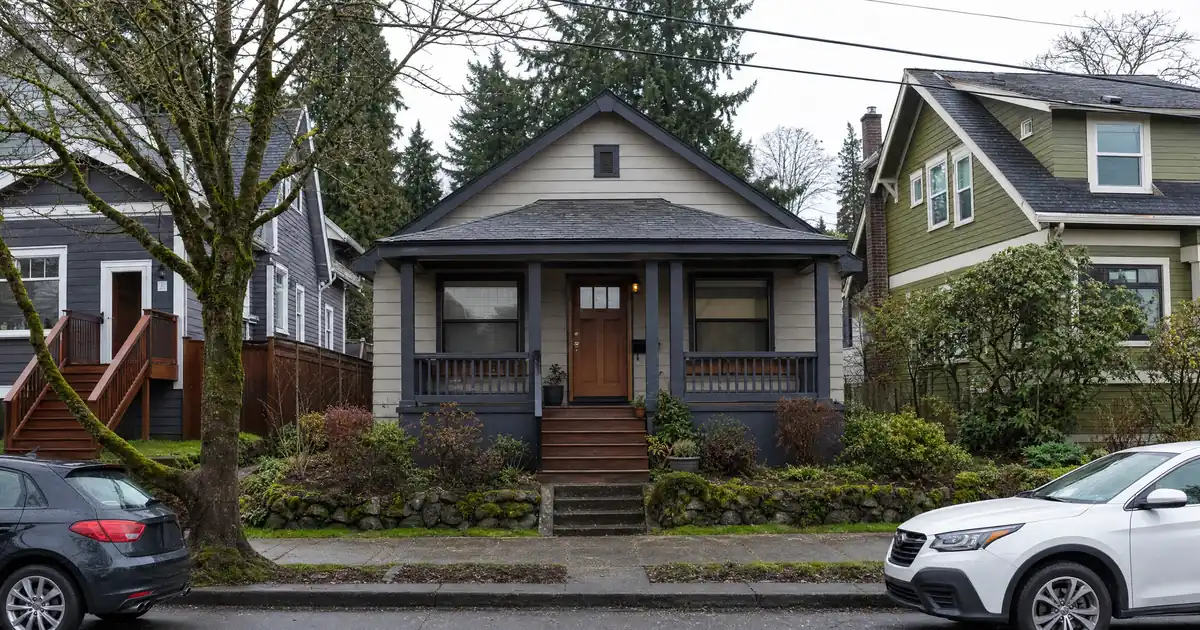
Investors pricing investment property loans in Seattle from Los Angeles or New York see two things first: a median sale price that remains among the highest in the Pacific Northwest, per Redfin, and a state with no income tax. Put those together and the appeal is obvious — capital gains, rental income, and eventual exit proceeds all land tax-free at the state level. What that same investor often misses is that Seattle’s home-price correction and its rental market are moving in opposite directions at the same time. Prices are softening. Rents, after a rough stretch of new supply, are showing signs of firming back up. That gap is where the DSCR math either works or doesn’t.
Seattle homes are sitting on the market longer than they were a year ago, with sales volume still fairly brisk for a market this expensive — inventory that’s climbed to levels not seen in roughly a decade, by some broker accounts. Meanwhile, Kidder Mathews reports that new apartment deliveries across the region fell sharply year-over-year, a supply shock that tends to push rents the opposite direction from home prices. That combination — softer acquisition prices, firmer rents — is exactly the setup that improves rent-to-price ratios for a DSCR investor, provided the property type and submarket are chosen carefully.
DSCR Calculator
Run the numbers in your market
Rate source: Freddie Mac 30-yr average via FRED® — Federal Reserve Bank of St. Louis · effective Jul 30, 2026
Prefilled with starting assumptions — enter your own rent or nightly figures, taxes, insurance, and HOA for a more accurate picture.
Program parameters update from Lendmire’s centralized guideline source. Taxes and insurance are editable estimates.
As of Jul 30, 2026 · General Freddie Mac market benchmark, not a Lendmire loan offer. Rent, nightly rate, occupancy, taxes, and insurance are editable estimates. Short-term rental figures are estimates only and vary significantly by season, property type, management approach, and local short-term-rental rules — confirm local regulations before relying on them. Qualifying income for short-term rentals varies by program — some use appraisal market rent, others use documented STR history or projections — and is confirmed in underwriting. Not a Loan Estimate, approval, or commitment to lend. Program availability and eligibility are subject to lender guidelines, credit approval, property review, and underwriting.
The Quick Read: In Seattle, Washington, DSCR investment property loans are underwritten primarily on the property’s rental income measured against its full monthly obligation, not the borrower’s traditional personal-income documentation, which matters given a citywide median sale price that remains among the higher end of the Pacific Northwest, per Redfin.
- Citywide median sale prices have softened year-over-year across every source tracking the market, per Redfin.
- A modeled fourplex scenario in the 98146 corridor can clear coverage comfortably above the 1.00x floor used on select DSCR programs; a comparable single-family home often lands meaningfully short of that mark on the same underwriting assumptions.
- Apartment deliveries fell sharply year-over-year, tightening the rental floor across existing stock.
- University District student housing near UW has leased continuously for more than a decade at a rent roll well above what typical single-family comps produce.
- East King County vacancy runs meaningfully tighter than North King County, which is still absorbing recent heavy deliveries.
Seattle Market Snapshot
A quick read on the Seattle investor landscape — figures come from the cited sources below. Confirm current property-level numbers before underwriting.
| Metric | Detail |
|---|---|
| Home prices | $879K median (3-mo avg ending May 2026) (Redfin Seattle Housing Market) |
| Typical rents | $2,112 avg (Kidder Mathews Q2 2026 Seattle) |
| Cap rates | 5.7% cap rate (Kidder Mathews Q2 2026 Seattle) |
| Population | 780,992 population (Census Reporter) |
| Employment | 632,813 jobs in Seattle (Seattle OPCD) |
| Vacancy | 7.1-7.3% (Kidder Mathews Q2 2026 Seattle) |
The Correction Nobody Priced In
Seattle’s home-price data is genuinely messy across sources right now, and that’s worth addressing directly rather than glossing over. Redfin, Zillow, and separate broker reports citing NWMLS data all land on somewhat different figures, but the direction is the same everywhere: prices down year-over-year, inventory up, and homes sitting on the market longer than they were twelve months ago. This article treats Redfin’s data as its consistent reference point going forward, since it reflects the most current rolling window; readers checking other sources should expect the picture to shift somewhat depending on the month sampled.
What’s consistent across every source is direction: prices down, inventory up, days on market up. Active inventory has climbed noticeably year-over-year, reaching levels not seen in roughly a decade by some broker accounts. That’s a buyer’s market by almost any definition — more selection, more negotiating room, less urgency to overbid.
Underneath the price correction sits a structural renter base that isn’t going anywhere. Per DataUSA, Seattle’s homeownership rate sits well below the national norm, meaning well over half the city rents by necessity, not preference. That’s the demand floor DSCR investors are underwriting against — a floor that doesn’t move much with a two- or three-month price swing on the for-sale side.
Why the Multi-Unit Math Wins Over Single-Family
At current prices, single-family acquisitions in Seattle proper often fall short of the 1.00x coverage floor used on select DSCR programs when measured against long-term rent alone. Small multifamily — duplex through fourplex — is where the DSCR math tends to work, and the gap between the two property types is wide enough that it should reshape how out-of-state buyers shop this market.
Consider a modeled fourplex scenario in the West Seattle/Delridge-adjacent 98146 corridor, priced favorably relative to the broader downtown market, with all four two-bedroom units leased to stable long-term tenants at rents consistent with the surrounding corridor, per Redfin’s West Seattle listings data. Modeling a purchase using leverage typical for the area — and factoring in an assumed long-term amortizing structure plus Washington-typical property tax and insurance loads, discussed only qualitatively here — the property models out to a coverage ratio comfortably above the 1.00x floor available on select DSCR programs, since rent fully covers the payment at that level. Terms vary by lender guidelines, property type, leverage, credit profile, and full file review.
Now run a single-family home through the same exercise. At the citywide median, generating rent typical of three-bedroom workforce single-family rentals in the area — rents that have been trending upward year-over-year — the same leverage structure models to a coverage ratio meaningfully below that 1.00x floor. That’s a property a lender would need to look at differently: a file that doesn’t clear coverage on its own typically gets reviewed under a different structure, whether that’s a lower-leverage purchase, additional reserves, an interest-only option some programs allow, or added rental income from a second unit on the lot. None of that is a guarantee of approval — it’s a set of paths a lender would evaluate, subject to credit profile, property condition, and program guidelines.
That gap has a structural explanation. Recent zoning changes tied to Washington’s statewide middle housing law raised the maximum lot coverage for lots supporting multiple units in many Seattle residential zones, and most residential lots can now support up to four homes by right, per HouseHack Seattle’s analysis. A single-family lot that couldn’t previously support a meaningful second unit now can — turning a coverage ratio that doesn’t clear the 1.00x floor into one that does, once a second structure is added and leased.
Lendmire (NMLS# 2371349) works with investors buying or refinancing in Seattle, Washington, helping place DSCR financing across 41 markets, including Washington, D.C. Multi-unit acquisitions like the 98146 fourplex example are the property type where the firm’s DSCR programs tend to see the strongest coverage math in this specific city, since qualification is based on the property’s rent roll rather than the borrower’s personal income documentation. Investors can call 828-256-2183 or request a scenario review to model a specific address against current program parameters. For a deeper explanation of how the qualification math works generally, the guide “What Is a DSCR Loan” covers the mechanics.
The Transit Corridor Investors Keep Underpricing
Columbia City, Beacon Hill, and the broader Rainier Valley corridor post meaningfully lower rents than the city’s premium neighborhoods — but acquisition prices in these submarkets trail even further, which is exactly the imbalance a DSCR investor wants. Per Apartment List’s Seattle rent map, Beacon Hill/Georgetown and Columbia City carry noticeably lower one-bedroom rents than a premium corridor like Belltown. On paper, that looks like weaker rental performance. In practice, home prices along this southern corridor have historically lagged the rent gap by an even wider margin, which tends to produce stronger gross rent-to-price ratios than the flashier, higher-priced neighborhoods closer to downtown.
The corridor’s transit story adds a durability angle worth tracking. Sound Transit’s Link light rail now runs a continuous spine connecting these southern neighborhoods through downtown, carrying a substantial and steadily growing rider base with strong weekday boardings. Station-adjacent submarkets along that line — Rainier Valley, Beacon Hill, Columbia City, Othello, Rainier Beach — benefit from commuter demand that isn’t tied to any single employer’s hiring cycle. That matters in a metro where the tech sector’s hiring swings can otherwise dominate the rental narrative.
The thinking-out-loud version of this: the southern transit corridor probably offers the better cash-flow entry point for a first-time Seattle DSCR investor, while the University District (below) probably offers the better income ceiling for an investor willing to manage a room-by-room rental. Both work. They’re different bets on the same city.
University District: Room-by-Room Income Stacking
The University of Washington drives one of the most durable rental micro-markets in the city, and it’s worth treating separately from citywide medians. Per University of Washington News, enrollment continues to climb across all three UW campuses, with the large majority of students based on the Seattle campus and a mix of undergraduate and graduate or professional students. The University of Washington is also the state’s flagship research institution and a member of the Association of American Universities, with research spending that places it among the top research universities nationally.
The University District itself carries the highest single-neighborhood population figure in Seattle, a density driven largely by student housing demand. That demand can produce rent rolls that look nothing like a standard single-family comp. One large investment property a few blocks from campus has maintained continuous student leasing for more than a decade, currently leased and pre-leased for the coming academic year at a rent roll well above what a typical single-family comp would suggest, across ten bedrooms, with tenants covering their own utilities, per Homes.com’s Seattle multifamily listings. That’s the kind of room-by-room income stacking that generic “median rent” data completely obscures — a coverage ratio built off a citywide one-bedroom rent figure would never capture what a well-run student rental near campus actually produces.
The catch: this model requires active management, higher turnover risk between academic years, and underwriting that treats the property more like a small operating business than a passive single-family hold. It isn’t the right fit for every investor, but for one comfortable with that operating model, it’s a rent-to-value profile few other Seattle submarkets can match.
Downtown, Capitol Hill, and the Condo Trap
Downtown Seattle and the Central Seattle/Capitol Hill area sit on opposite ends of the price-momentum spectrum right now, and that divergence matters for anyone assuming “downtown” is a single market. Downtown condos and high-rise units have posted a falling median sale price over the trailing months. Central Seattle, by contrast, has held essentially flat year-over-year — and flat looks a lot better than falling in this environment.
Condos specifically deserve a caution flag for DSCR investors. Traditional condos citywide have posted a meaningfully lower median sale price than the broader single-family market — a lower entry price that looks attractive on paper but comes paired with softer appreciation, softer rent growth relative to single-family and small multifamily stock, and frequent non-warrantable status that some non-QM lenders handle through separate underwriting paths rather than standard programs. It’s not that condos can’t work; it’s that the entry price advantage often gets offset by weaker rent-to-value performance and added underwriting friction. The guide “Where DSCR and Conventional Diverge” covers some of that distinction in more detail.
South Lake Union deserves a mention here too, even though it’s not a value play. Amazon’s headquarters campus there sprawls across dozens of buildings, and rents in the immediate district rank among the most expensive in the city. It’s a corridor for investors chasing corporate-adjacent rental demand at premium price points, not for anyone underwriting to a coverage-floor entry-level acquisition.
What the Rental Fundamentals Say About the Next Two Years
The next 6 to 24 months in Seattle look like a market where home prices keep drifting sideways to slightly down while rents firm back up — a combination that should keep improving DSCR math for buyers who wait rather than rush. That’s the read from the two datasets that matter most right now: inventory levels and the construction pipeline.
Citywide rent has held roughly flat over the trailing year with a modest recent uptick month-over-month, per Apartment List, ranking Seattle among the more expensive large U.S. cities nationally, though still below many coastal peers on the priciest end. Kidder Mathews’ commercial data shows average rents running slightly above the residential-market figure, with vacancy holding in a moderate range citywide. That vacancy figure isn’t uniform, though — East King County runs meaningfully tighter than North King County, which is still absorbing the tail end of recent heavy deliveries. An investor buying in North Seattle apartment corridors should stress-test vacancy assumptions more conservatively than one buying in East King or the tighter southern submarkets.
The trend that should matter most to anyone underwriting a 24-month hold: new apartment construction deliveries fell sharply year-over-year in the most recent quarter tracked, per Kidder Mathews — a sharply thinned development pipeline after years of heavy new supply. Multifamily pricing, meanwhile, has held fairly steady, with per-unit values stabilizing rather than sliding further. A working DSCR broker sees this pattern repeat across markets that just finished absorbing a supply wave: files that looked marginal on trailing rent comps a year ago start clearing coverage more comfortably as fewer new units compete for the same tenant pool, and the cleanest files from a documentation standpoint tend to be the ones where the current rent roll, not a projected post-renovation rent, already supports the ratio.
Employment underneath all of this remains genuinely diversified, which matters for anyone worried about single-employer risk. Amazon has surpassed Boeing as Washington’s largest private employer, with Boeing still maintaining large-scale manufacturing operations in Renton, Everett, and Auburn, and Microsoft anchoring a substantial regional presence from its Redmond headquarters. The metro is home to a notable cluster of Fortune 500 companies — Amazon, Costco, Microsoft, Starbucks, PACCAR, Nordstrom, Weyerhaeuser, Expeditors International, Alaska Airlines, and Expedia — and the Port of Seattle ranks among the largest container ports in North America by volume, a logistics anchor that has nothing to do with tech hiring cycles. Total covered employment in the city remains broad and diversified, per the Seattle Office of Planning and Community Development, with household income levels that sit comfortably above the national median, per Census Bureau QuickFacts data. Population growth continues at a meaningful clip annually, per U.S. Census Bureau QuickFacts, against a metro population that ranks among the twenty largest in the country, per USAFacts. That’s a lot of renter demand arriving every year against a construction pipeline that just cut itself sharply.
The health care sector adds another layer of demand stability. Seattle’s hospital market is genuinely dense — UW Medicine operates the region’s only Level I trauma center at Harborview, serving patients from across Washington, Alaska, Idaho, and Montana, while a regional health system runs a large acute care hospital on First Hill, a neighborhood nicknamed “Pill Hill” for its concentration of medical facilities. That density of hospital employment supports steady rental demand in the neighborhoods closest to First Hill and downtown, independent of the tech sector entirely.
Frequently Asked Questions
How do you qualify for a DSCR loan in Seattle?
Qualification centers on whether the property’s rental income covers its full monthly obligation, generally benchmarked against a ratio at or above 1.00x — a floor available on select programs, with many standard programs looking for coverage above that level — rather than the borrower’s personal income documentation. Lenders generally look for 75% to 80% loan-to-value on standard purchase files, with higher leverage up to 85% available on stronger files where guidelines allow. Credit tiers commonly run from a 620 floor up to 700 for the highest-leverage programs, and reserve requirements typically run around six months of the full monthly payment, rising to around nine months on larger loan amounts — all subject to lender overlays and program eligibility.
DSCR vs. conventional financing
Two common ways to finance an investment property in Seattle, WA. They qualify you differently — here’s how investors weigh them.
Why investors choose it
- Qualifies on the property’s rental income — no personal tax returns, W-2s, or pay stubs needed to document income.
- No personal debt-to-income ceiling to clear, so existing mortgages and obligations don’t cap your borrowing the same way.
- Can be closed in an LLC, keeping the property inside a business entity.
- Built for scaling — not held to the limit on number of financed properties that conventional financing applies.
- Underwriting centers on the deal: generally qualifies when the rent covers the payment, a 1.00x coverage ratio being a common baseline (confirmed in underwriting).
- Designed specifically for investment property, including long-term and, where the program allows, short-term rentals.
Where it’s strong
- Often the lowest ongoing financing cost for a buyer who fully qualifies on personal income — a fit for a first property or a cost-first purchase.
Trade-offs for investors
- Requires full personal income documentation and must fit within a debt-to-income limit — salary, existing debts, and other mortgages all count.
- Typically held in your personal name rather than a business entity.
- Caps how many financed properties you can carry, which can become a ceiling as a portfolio grows.
- Evaluates you as a borrower as much as the property, which usually means more paperwork.
How investors usually choose: a first or single property often optimizes for the lowest financing cost; portfolio builders often optimize for leverage, vesting in an LLC, and scaling past conventional caps. The right answer depends on your goals, the property, and current guidelines — both paths run through select lenders in Lendmire’s wholesale network, with eligibility and terms confirmed in underwriting.
What are the requirements for an investment property loan in Seattle, Washington?
Requirements generally include a qualifying DSCR ratio at or near the program’s coverage floor, a down payment typically in the 20% to 25% range, and credit and reserve minimums that vary by loan size and program tier. Properties titled to an LLC are commonly financed through DSCR programs as well, subject to lender program eligibility. Exact terms depend on the specific property, submarket, and borrower file, so a scenario review against current program parameters is the fastest way to get a real answer.
Can Lendmire help arrange DSCR financing for investment properties in Seattle?
Yes. Lendmire’s programs qualify investors primarily on a property’s rental income rather than traditional personal-income documentation, which fits Seattle’s small multifamily and workforce rental stock particularly well given current price-to-rent dynamics.
Does Seattle’s median home price make DSCR lender review harder than in other West Coast cities?
It makes single-family qualification harder in some cases, but not multi-unit qualification. At the current citywide median, a single-family home generating typical three-bedroom rent often falls short of the 1.00x coverage floor on standard leverage, while a fourplex at a similar price point with four leased units can clear that threshold with room to spare. Property type matters more than city-level price in this market.
Are condos a good fit for DSCR financing in Seattle?
They can work, but they carry more friction than single-family or small multifamily stock. Seattle condos have posted a meaningfully lower median sale price than the broader market recently, and often carry non-warrantable status that some lenders handle through separate underwriting tracks. The lower entry price is real, but softer rent growth and appreciation trends make the coverage math less favorable than duplex-to-fourplex product in most submarkets.
How does Washington’s lack of state income tax affect DSCR investors?
It removes one layer of state-level taxation on rental income and eventual sale proceeds, which is a real advantage for capital moving in from higher-tax states like California or New York. It doesn’t change DSCR lender review mechanics — coverage is still measured against the property’s rent versus its full monthly obligation — but it does improve the net return profile for an out-of-state investor comparing Seattle against other West Coast markets.
About Lendmire
As a non-QM mortgage broker holding NMLS# 2371349, Lendmire facilitates DSCR investor loans across 41 markets nationwide, including Washington, D.C. Eligibility is generally reviewed against the property’s rental income rather than a borrower’s personal tax documentation, subject to lender guidelines, which tends to serve LLC-structured portfolios and self-employed investors who don’t fit a conventional underwriting box particularly well. The firm has been recognized as a Scotsman Guide Top Mortgage Workplace in recent years. Investors evaluating a specific Seattle property can review DSCR loan options for Washington investors, call 828-256-2183, or request a scenario review directly.
All scenarios and coverage ratios discussed here are illustrative examples only, subject to full underwriting review, property appraisal, lender guidelines, and program eligibility. They are not a guarantee of approval or specific loan terms. Leverage limits, credit and reserve requirements, and program availability vary by lender and borrower file; investors should confirm current terms directly with a licensed loan originator before making a purchase or refinance decision.
Get Started
Ready to find the right loan for you?
In about 30 seconds you can review financing options available for your investment property. No commitment required.
Informational only. Not a Loan Estimate, approval, or commitment to lend. Program availability and eligibility are subject to lender guidelines, credit approval, property review, and underwriting.
References
1. Redfin
4. Seattle Office of Planning and Community Development
5. DataUSA
6. Redfin’s West Seattle listings data
7. HouseHack Seattle’s analysis
8. Apartment List’s Seattle rent map
9. University of Washington News
10. The University of Washington
11. Homes.com’s Seattle multifamily listings
12. U.S. Census Bureau QuickFacts
13. USAFacts
14. a Scotsman Guide Top Mortgage Workplace
This article is part of Lendmire’s DSCR loan program — full qualification details, guidelines, and scenarios live on the program page.
Related reading: Cash Out Refinance Investment Property in Los Angeles · DSCR Investment Property Loans in Old Saybrook, CT: Where the Rail Line Beats the Waterfront · DSCR Investment Property Loans in Asheville, NC: What It Takes to Qualify on Local Rent
Guides: DSCR Loans in Seattle, WA · DSCR Loans in Washington
Brandon Miller
Founder & CEO, Mortgage Loan Originator, Lendmire LLC
- Mortgage Loan Originator · NMLS# 1129696 · Verify on NMLS Consumer Access
- North Carolina Real Estate Broker · License# 343312 · Verify on NCREC
- North Carolina Insurance Producer · License# 19053198 · Property, Casualty, Life, Health · Verify on NAIC SBS
- Lendmire LLC · Firm NMLS# 2371349 · Verify firm licensure
Legal disclosures. Lendmire (NMLS# 2371349) is a state-licensed mortgage brokerage that arranges financing through wholesale lender relationships. Lendmire is not a direct lender, depository institution, or registered financial advisor. The discussion above is general informational content about real estate financing — it is not financial, legal, or tax advice, and readers should consult licensed professionals for guidance on their individual circumstances. Loan inquiries are subject to lender underwriting; this article does not represent a commitment to lend. Loan terms, rates, and qualification standards vary by borrower, property, and state, and are subject to change at any time. Equal Housing Opportunity. NMLS Consumer Access: nmlsconsumeraccess.org.