
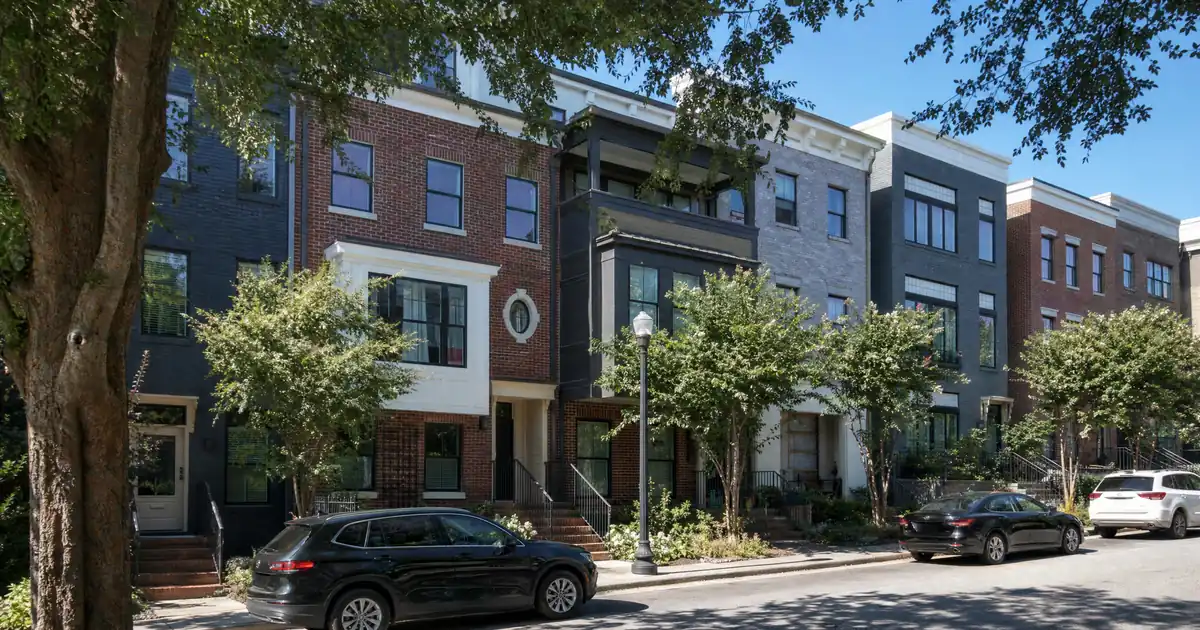
Investment property loans in Charlotte hinge on the appraisal file, and that is where a lot of purchases start to wobble. An appraiser pulls three rent comps from within a mile of the subject property, but in a metro where a majority of submarkets logged rent cuts in the past year while a couple of others are still absorbing large volumes of new units, a comp pulled from the wrong side of that line can undercut the rent schedule attached to the appraisal in a way that matters. That gap shows up directly in the coverage ratio a lender uses to size the loan. It’s the first thing an operator checks on a Charlotte file before touching anything else.
The Short Version: An investment property loan in Charlotte, North Carolina is underwritten primarily on the subject property’s market rent measured against its full monthly obligation — taxes, insurance and principal and interest combined — rather than the borrower’s personal income, with the appraiser’s rent schedule and the submarket’s supply cycle both feeding directly into that number.
DSCR Calculator
Run the numbers in your market
Rate source: Freddie Mac 30-yr average via FRED® — Federal Reserve Bank of St. Louis · effective Jul 30, 2026
Prefilled with starting assumptions — enter your own rent or nightly figures, taxes, insurance, and HOA for a more accurate picture.
Program parameters update from Lendmire’s centralized guideline source. Taxes and insurance are editable estimates.
As of Jul 30, 2026 · General Freddie Mac market benchmark, not a Lendmire loan offer. Rent, nightly rate, occupancy, taxes, and insurance are editable estimates. Short-term rental figures are estimates only and vary significantly by season, property type, management approach, and local short-term-rental rules — confirm local regulations before relying on them. Qualifying income for short-term rentals varies by program — some use appraisal market rent, others use documented STR history or projections — and is confirmed in underwriting. Not a Loan Estimate, approval, or commitment to lend. Program availability and eligibility are subject to lender guidelines, credit approval, property review, and underwriting.
- Metro vacancy has ticked up as new apartment supply gets absorbed, per Matthews’ Q1 multifamily report
- Ten of fifteen submarkets cut asking rents in the past year, per Hoodline’s reporting on RealPage data
- Workforce-tier 3-bedroom SFRs near University City and North Charlotte rent within a moderate, attainable band relative to the rest of the metro
- Duplex per-unit rents in Westside sit toward the affordable end of the market, narrowing the coverage gap on small multifamily
- Standard purchase leverage runs 75%-80% LTV on most files, with an 85% ceiling on the strongest ones
Charlotte Market Snapshot
A quick read on the Charlotte investor landscape — figures come from the cited sources below. Confirm current property-level numbers before underwriting.
| Metric | Detail |
|---|---|
| Home prices | $435K median (Redfin Charlotte Housing Market) |
| Typical rents | $1,675 average (RentCafe Charlotte Rent Trends) |
| Recent appreciation | +41%/+38%/+36%/+34%/+33% (ListRE Group) |
| Cap rates | 5.0% cap rate (Matthews Charlotte Multifamily) |
| University enrollment | 32,207 total (UNC Charlotte Enrollment News) |
| Population | +289,331 residents 2020-2025 (Charlotte Urban Institute) |
The Employment Base Behind the Rent Roll
Charlotte’s tenant pool skews toward stable, credit-strong employment, which is a real underwriting advantage even though it doesn’t show up as a line item on the loan file. UNC Charlotte’s Urban Institute points to a substantial five-year population gain across the 14-county region — that’s sustained in-migration feeding rental demand across every price tier, not a one-year spike.
The employer base is unusually concentrated in high-wage, recession-resistant sectors. Bank of America is headquartered Uptown and maintains a sizable local workforce; Wells Fargo runs its East Coast operations hub here with a large regional employee base. Duke Energy is headquartered in Charlotte and serves a multi-state retail electric customer base across six states. On the healthcare side, Atrium Health — based in Charlotte and now part of Advocate Health — runs an extensive multi-state hospital and care-location network with a sizable workforce, while Novant Health operates a large flagship hospital here as part of a system with a substantial regional team. Amazon maintains a meaningful local employment presence as well. Add in Charlotte Douglas International Airport, American Airlines’ second-largest hub after Dallas-Fort Worth with nonstop service reaching a wide range of domestic and international destinations, and Charlotte has an employment mix no comparably-sized Southeastern peer really matches. That’s the tenant-quality argument for Charlotte DSCR paper — it just doesn’t guarantee the rent-to-price math pencils on every address, which is the part investors skip.
Where the Cash-Flow Math Actually Clears
The mid-tier established neighborhoods produce the strongest coverage, not the trendy ones and not the luxury ones. Plaza Midwood and NoDa both post the strongest modeled returns among established neighborhoods, per neighborhood-level ROI analysis. That’s the tier where rent actually supports the price paid.
Emerging neighborhoods — Optimist Park and LoSo — can run hotter on paper, but that yield comes with more vacancy risk and more capital expenditure exposure on older housing stock. That’s a real tradeoff, not free money. On the other end, Myers Park, Eastover and SouthPark run well below the citywide norm on a cap-rate basis. Investors buying there are paying for long-term appreciation, not current income — worth saying plainly, because a DSCR investor underwriting on rent alone in those zip codes is often underwriting a deal that structurally can’t clear 1.00x without a large down payment.
Don’t Chase Appreciation Into a Rent Cut
South End posted the strongest five-year appreciation in the metro, with Dilworth, Plaza Midwood, NoDa and Myers Park close behind. Those are strong numbers on paper. Here’s the catch: Uptown, South End and Myers Park were also among the hardest-hit neighborhoods for rent cuts in the past year, according to RealPage data reported by Hoodline. Prices went up while asking rents came down in the same neighborhoods — that’s the appreciation-versus-cash-flow tension in a single sentence.
For a DSCR purchase, that combination matters. A South End condo bought today at a premium price point relative to the rest of the metro, with fast-moving inventory, is a bet on continued price growth and a future refinance, not on current rent covering the note. Investors chasing that thesis should model the deal around forced appreciation and equity building — see how the DSCR math pencils on the actual current rent, not the neighborhood’s five-year chart, before assuming the number clears.
Stacking units in Westside and Lincoln Heights tells a different story. Multifamily listings in Westside show pricing well below South End’s, with an example multi-unit property renting two-bedroom and one-bedroom units at workforce-tier rates. Run that math on a duplex: at a modeled purchase price and 75% LTV, two units renting near the top of that range lands the modeled coverage ratio in the high-0.9x range once full monthly obligation (taxes, insurance, principal and interest) is included. Not quite there. Drop leverage to 70% LTV on the same rent assumption, or document slightly stronger in-place rents, and the modeled ratio clears just over 1.0x. Lincoln Heights shows a similar structure — a 3-bedroom/1-bath duplex marketed as an “investor alert and house-hacking opportunity,” two units on one lot, one purchase price and one loan balance carrying two rent checks. That’s the mechanical reason a duplex or triplex often clears coverage where a comparable-priced single-family home in the same submarket doesn’t: two modest rents stack against one note.
Working DSCR brokers see this pattern across a lot of appreciation-driven metros, not just Charlotte: files built on a single SFR at a premium acquisition price frequently come in tight on rent-to-debt math, while the same capital deployed into a duplex or small multi in an adjacent, less-hyped submarket clears with more room. The stronger file isn’t always the flashier address.
Is University City Still Oversupplied?
Not for much longer, based on the pipeline data. University City’s apartment construction pipeline has fallen sharply from its peak a few years ago, per Northmarq’s Q1 asking-rents research. That kind of pipeline pullback tends to support both rent-growth recovery and stronger future appraisal comps — the opposite risk profile of a submarket where competing supply is still climbing.
UNC Charlotte anchors this submarket directly. The university enrolled a record student body for the fall semester, according to official university communications — the third-largest campus in the UNC System. That’s durable near-campus rental demand. It also means individual DSCR investors are competing with well-capitalized corporate landlords, who’ve been concentrating single-family and small multifamily acquisitions specifically near universities and transit corridors over the past decade, per Queens News Service reporting on Mecklenburg County housing patterns. Expect bidding pressure on the same workforce inventory a DSCR investor wants.
Running the modeled purchase math on a University City-area SFR near the city’s typical sale price (Canopy MLS data via Opendoor) — Zillow’s home value index reflects a somewhat different figure, a gap that comes down to average-versus-median methodology — with market rent modeled at the middle of the neighborhood’s rent band, standard 75% LTV lands the modeled coverage ratio in the high-0.9x range once full PITIA is factored in. That’s sub-1.00. It’s not a dead file, but it needs a plan: a larger down payment to bring leverage down, documentation of stronger comparable rents through the appraiser’s Form 1007, or review under a sub-1.00 coverage program some lenders offer for stronger-credit borrowers. None of that is automatic — it’s a conversation to have before the file goes to underwriting, not after. Terms vary by lender guidelines, property type, leverage, credit profile, and full file review.
The Affordable Entry Tier Nobody Talks About
Montclaire South, Windsor Park and Toddville Road are Charlotte’s most affordable rental submarkets, per Rent.com data. These aren’t glamorous zip codes and nobody’s writing feature pieces about them. For a DSCR investor, though, they’re often the tier where entry price and rent are closest to proportional — the exact opposite problem from South End or Myers Park, where price has run well ahead of rent. Charlotte also launched a forgivable financing program in the fall offering up to $80,000 in interest-free funds to add an accessory dwelling unit, capped at 1,000 square feet for a detached unit and one per lot, available to non-occupant property owners as well as owner-occupants, per Axios Charlotte’s reporting. Rent on the ADU unit is capped below market under the program’s AMI rules, so it’s a coverage-boosting tool on an existing hold rather than a max-yield play — worth knowing about if a workforce-tier acquisition today becomes a future investor refinance candidate down the line.
What Actually Qualifies on a Charlotte File
Most standard DSCR programs are built around a 1.00x benchmark because that’s the point at which rent covers the full monthly obligation — though qualification for lower or no-ratio scenarios can be reviewed on stronger files, usually with more reserves, lower leverage, or a stronger credit profile, subject to lender guidelines. Typical purchase leverage on Charlotte deals runs 75%-80% LTV, with an 85% ceiling reserved for the strongest files where guidelines allow. Credit tiers commonly referenced across the network run from a 620 floor up through 660, 680 and a 700 overlay tier tied to the highest leverage. Reserve requirements generally run around six months of PITIA, stepping up near nine months on larger loan balances. Entities can typically title these loans through an LLC, subject to program terms, and the guide “Where DSCR and Conventional Diverge” explains that the differences from a conventional investment loan mostly come down to that property-income basis instead of traditional personal-income review. Review details are subject to lender overlays and should be confirmed on a per-file basis — the parameters above are guidelines, not commitments.
For a broader look at how the investor loan platform works across the rest of the state, North Carolina DSCR investor loans covers program mechanics that apply beyond Charlotte’s city limits. Investors can also reach Lendmire directly at 828-256-2183 to talk through a specific address.
Frequently Asked Questions
How do you qualify for a DSCR loan in Charlotte, North Carolina?
Qualification centers on the subject property’s market rent measured against its full monthly obligation, not the borrower’s personal income documentation. A lender typically orders an appraisal with a rent schedule (Form 1007), reviews the resulting coverage ratio against program minimums, and layers in credit score, reserves and leverage — all subject to lender guidelines and program overlays.
What are the requirements for an investment property loan in Charlotte, North Carolina?
Most files need a signed or projected lease (or appraiser rent estimate), reserves generally around six months of PITIA, a credit profile that clears the program’s floor, and a down payment sized to the leverage tier requested. Because several Charlotte submarkets are mid-supply-cycle, lenders and appraisers pay particular attention to how current the rent comps are relative to recent submarket rent trends.
DSCR vs. conventional financing
Two common ways to finance an investment property in Charlotte, NC. They qualify you differently — here’s how investors weigh them.
Why investors choose it
- Qualifies on the property’s rental income — no personal tax returns, W-2s, or pay stubs needed to document income.
- No personal debt-to-income ceiling to clear, so existing mortgages and obligations don’t cap your borrowing the same way.
- Can be closed in an LLC, keeping the property inside a business entity.
- Built for scaling — not held to the limit on number of financed properties that conventional financing applies.
- Underwriting centers on the deal: generally qualifies when the rent covers the payment, a 1.00x coverage ratio being a common baseline (confirmed in underwriting).
- Designed specifically for investment property, including long-term and, where the program allows, short-term rentals.
Where it’s strong
- Often the lowest ongoing financing cost for a buyer who fully qualifies on personal income — a fit for a first property or a cost-first purchase.
Trade-offs for investors
- Requires full personal income documentation and must fit within a debt-to-income limit — salary, existing debts, and other mortgages all count.
- Typically held in your personal name rather than a business entity.
- Caps how many financed properties you can carry, which can become a ceiling as a portfolio grows.
- Evaluates you as a borrower as much as the property, which usually means more paperwork.
How investors usually choose: a first or single property often optimizes for the lowest financing cost; portfolio builders often optimize for leverage, vesting in an LLC, and scaling past conventional caps. The right answer depends on your goals, the property, and current guidelines — both paths run through select lenders in Lendmire’s wholesale network, with eligibility and terms confirmed in underwriting.
Can Lendmire help structure DSCR financing for small multifamily investment properties in Charlotte?
Yes — Lendmire arranges DSCR financing for duplex, triplex and fourplex acquisitions in North Carolina, with eligibility reviewed on combined unit rents against the property’s monthly obligation rather than the borrower’s traditional personal-income documentation, subject to lender guidelines.
Why do rents in Myers Park and South End keep falling if home values are rising?
New apartment supply has hit those neighborhoods hardest, softening asking rents even as resale prices climb on scarcity and demand for the address itself. The two trends aren’t contradictory — one reflects a for-sale market with tight resale inventory citywide, the other reflects lease-up competition from new multifamily deliveries in the same submarkets.
Is a duplex in Westside or Lincoln Heights a better DSCR play than a single-family home in University City?
Often yes, on a rent-to-price basis, because two units renting at the workforce end of the local range each stack more combined rent against one purchase price than a single 3-bedroom SFR does. It depends on the specific rents and price on the property in question — the comparison should be run individually, not assumed from neighborhood averages.
Does Charlotte’s new ADU financing program help with DSCR lender review?
It can help on a future refinance more than an initial purchase, since the forgivable financing adds a second rented unit to an existing lot at low upfront cost. Rent on the ADU is capped below market under the program’s income rules, so it strengthens coverage more than it maximizes yield.
The single biggest blind spot for Charlotte DSCR investors right now isn’t the loan structure — it’s assuming last year’s asking rent holds through today’s underwriting. Multifamily asking rents in the metro have posted a long stretch of annual declines, and ten of fifteen submarkets cut rents in the past year alone. Underwrite off the current rent schedule, not the neighborhood’s appreciation chart, and stress-test the model before betting on the rent-growth recovery Matthews projects for 2027 actually arriving on schedule.
About Lendmire
A DSCR-focused mortgage broker, Lendmire (NMLS# 2371349) places investor financing across 41 markets — 40 states plus Washington, D.C — with DSCR eligibility generally reviewed by the lender on property cash flow instead of tax returns, subject to lender guidelines. Scotsman Guide named Lendmire a Top Mortgage Workplace in 2025 and 2026.
Get Started
Ready to find the right loan for you?
In about 30 seconds you can review financing options available for your investment property. No commitment required.
Informational only. Not a Loan Estimate, approval, or commitment to lend. Program availability and eligibility are subject to lender guidelines, credit approval, property review, and underwriting.
References
1. Matthews’ Q1 multifamily report
2. Redfin Charlotte Housing Market
3. RentCafe Charlotte Rent Trends
4. ListRE Group
5. inside.charlotte.edu — UNC Charlottes Enrollment Surge Sets Another Record
6. UNC Charlotte’s Urban Institute
7. Canopy MLS data via Opendoor
8. Axios Charlotte’s reporting
9. Scotsman Guide 2025 Top Mortgage Workplace
10. Scotsman Guide 2026 Top Mortgage Workplace
This article is part of Lendmire’s DSCR loan program — full qualification details, guidelines, and scenarios live on the program page.
Related reading: DSCR Loans Charlotte: Investor Financing for South End, NoDa, Lake Norman, Uptown & Real Estate Investors · Cash Out Refinance Investment Property in Davidson, North Carolina: How Rent Math Clears at 75% LTV Here · Cash Out Refinance Investment Property in Wilson, North Carolina
Guides: DSCR Loans in Charlotte, NC · DSCR Loans in North Carolina
Brandon Miller
Founder & CEO, Mortgage Loan Originator, Lendmire LLC
- Mortgage Loan Originator · NMLS# 1129696 · Verify on NMLS Consumer Access
- North Carolina Real Estate Broker · License# 343312 · Verify on NCREC
- North Carolina Insurance Producer · License# 19053198 · Property, Casualty, Life, Health · Verify on NAIC SBS
- Lendmire LLC · Firm NMLS# 2371349 · Verify firm licensure
Disclosures. The information presented in this article is general market commentary, not financial, legal, or tax advice. Lendmire is a mortgage brokerage (NMLS# 2371349) — not a direct lender or depository institution — and loan placement is subject to lender underwriting. Nothing in this content represents a commitment to lend. Loan terms, pricing, and program availability vary based on borrower qualifications, property characteristics, and state of subject property, and are subject to change at any time. Lendmire complies with Equal Housing Opportunity requirements. Consumer access: nmlsconsumeraccess.org.