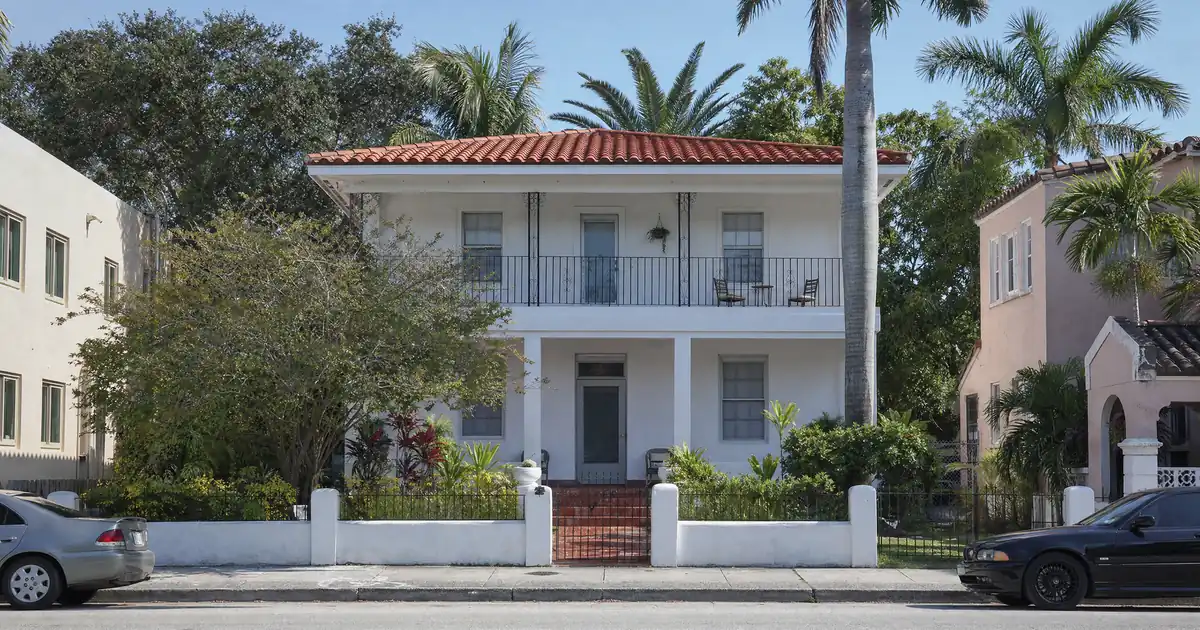
Investors chasing Miami’s skyline are underwriting the wrong asset. Cap rates in Greater Downtown’s condo towers run remarkably thin by some analyses, and Miami Beach’s vintage condo stock runs thinner still — arithmetic that has almost nothing to do with rent and everything to do with betting on appreciation (MILLION Luxury). Twenty miles west, single-family and small multifamily product in the Doral-to-Hialeah corridor clears the coverage floor that many DSCR programs are built around far more consistently. Same metro. Two entirely different loans.
The Short Version: An investment property loan in Miami, Florida is underwritten primarily on the subject property’s rental income measured against its full monthly obligation — taxes and insurance included — rather than the borrower’s pay stubs. Many DSCR programs apply a 1.00x coverage floor, and that threshold shows up as a select-program benchmark that Doral and Hialeah clear more consistently than downtown condo towers, where resale supply has stretched into a multi-year overhang in some counts (MILLION Luxury).
DSCR Calculator
Run the numbers in your market
Rate source: Freddie Mac 30-yr average via FRED® — Federal Reserve Bank of St. Louis · effective Jul 30, 2026
Prefilled with local estimates — enter your own rent or nightly figures, taxes, insurance, and HOA for a more accurate picture.
Program parameters update from Lendmire’s centralized guideline source. Taxes and insurance are editable estimates.
As of Jul 30, 2026 · General Freddie Mac market benchmark, not a Lendmire loan offer. Rent, nightly rate, occupancy, taxes, and insurance are editable estimates. Short-term rental figures are estimates only and vary significantly by season, property type, management approach, and local short-term-rental rules — confirm local regulations before relying on them. Qualifying income for short-term rentals varies by program — some use appraisal market rent, others use documented STR history or projections — and is confirmed in underwriting. Not a Loan Estimate, approval, or commitment to lend. Program availability and eligibility are subject to lender guidelines, credit approval, property review, and underwriting.
- Doral and Hialeah single-family homes and townhomes sit in an accessible entry-price band with rents that comfortably support debt service in many cases.
- Brickell rents run well above the corridor’s rent levels, yet Greater Downtown carries a heavy overhang of unsold and resale condo inventory.
- A modeled North Beach fourplex financed at Lendmire’s standard purchase-side leverage can clear a coverage ratio meaningfully above the coverage threshold.
- Florida stands apart from other states in requiring a materially higher down payment on limited-review condo purchases when a building’s reserves fall short.
- Florida International University’s large student body anchors renter demand inside the Doral-Hialeah-Westchester corridor.
Miami Market Snapshot
A qualitative read on the Miami investor landscape — details come from the cited sources below. Confirm current property-level specifics before underwriting.
| Metric | Detail |
|---|---|
| Home prices | Entry medians run $420K (Doral) to $450K (North Miami) vs premium coastal tiers (Redfin Housing Market, Miami FL) |
Miami’s Economy Isn’t a Tourism Story
Miami’s economy runs on international finance and Latin American corporate presence, not just beaches and cruise ships — and that distinction is exactly what makes certain neighborhoods better DSCR bets than others. The city proper’s population, per the most recent census count, sits well below the broader metro’s total, which has grown into one of the largest metropolitan areas in the country (U.S. Census Bureau). Labor force participation in the metro runs above both the national rate and the statewide rate, with unemployment recently measured near multi-year lows, according to the Miami-Dade Beacon Council.
What makes Miami structurally different from Tampa, Orlando, or Jacksonville is Brickell Avenue’s status as home to the largest concentration of international banks in the United States, sitting atop a metro that hosts the U.S. headquarters of Latin American operations for a large number of multinational corporations. That corporate density is the reason Venezuelan, Colombian, Brazilian, and Ecuadorian business owners keep building operations here — and it’s precisely why the western corridor, not the waterfront, produces Miami’s most reliable rental demand. Add Baptist Health South Florida, a major regional hospital system with a large physician network across multiple facilities (Baptist Health), Jackson Health System’s academic medical network, and American Airlines’ substantial hub presence at Miami International, and the tenant base for workforce rentals looks less like a tourist-town cycle and more like a diversified, employer-anchored economy.
The Doral-Hialeah-Westchester Corridor Clears the DSCR Floor
Terms vary by lender guidelines, property type, leverage, credit profile, and full file review.
This corridor is where purchase-side coverage ratios in Miami consistently clear the 1.00x floor used by select DSCR programs, because renter demand here is structural, not seasonal. Doral single-family homes and townhomes sit at an accessible entry-price point relative to rents, driven by a market of business owners, employees, and contractors tied to the Latin American corporate presence described above.
Run a modeled scenario at a standard 75 percent purchase-side LTV: a Doral single-family home near its $420,000 entry price point, renting near the $3,486 Doral single-family average, with a modeled principal, tax, and insurance obligation calculated using Florida-typical assumptions, computes to coverage modestly above the coverage threshold — comfortably inside select-program territory. That’s a modeled assumption, not a published market fact, but it illustrates the mechanics: at roughly 25 percent down, the loan-to-value math and the rent-to-obligation math both work in the same direction.
Hialeah, immediately east of Doral, produces a lower entry price point with rent levels comparable to Doral’s — occasionally producing even tighter coverage than Doral itself. And this corridor gets an unusual reinforcement most investors miss: Florida International University’s main campus sits in University Park, inside the census-designated place of Westchester — the same geography already anchoring workforce demand. FIU enrolls a large student body, including a substantial undergraduate and graduate population, with a recent freshman class described as the largest in the university’s history (CollegeTuitionCompare, IPEDS data). That’s a sizable renter pool — students, staff, faculty, and graduate families — sitting on top of an already-strong business-driven rental base. Few submarkets anywhere pair a university this size directly with a corporate-immigrant business corridor.
Working DSCR brokers see a recurring pattern in metros with this kind of dual-anchor demand: files from workforce corridors tend to come in with cleaner trailing rent rolls and fewer surprises at appraisal, while files from luxury condo towers require far more scrutiny of comparable sales because the “market rent” and the “market price” have quietly disconnected from each other.
North Beach and the Case for Multiple Doors
Multi-unit properties beat single-family homes on a rent-to-basis test almost everywhere in Miami-Dade, and North Beach is the clearest illustration. A modeled fourplex financed at 75 percent LTV, with four units each renting near a comparable market level for a healthy combined gross rent, factors to coverage comfortably above the coverage threshold once full PITIA is included. That’s a meaningfully wider margin than a comparable single-family home at the same basis, which would need a materially higher per-door rent to hit the same ratio with one rent check instead of four.
The same logic shows up in value-add plays further inland. Small multifamily properties in the 2-to-4-unit range trade across a wide price band across Miami-Dade, with cap rates that run notably tighter for Class A product in Brickell and Downtown and notably wider for Class C workforce housing in Homestead and South Dade — a meaningful spread that has nothing to do with location prestige and everything to do with basis (Supreme Commercial Real Estate). In Hialeah and Little Havana specifically, value-add cap rates run wider still, built around buying properties with below-market legacy rents and repositioning them. One documented case involved a Little Havana multifamily acquisition, a substantial renovation budget, and a significant post-renovation rent increase (Realtor007 value-add analysis). That kind of NOI lift is exactly what can move a marginal file into select-program territory before an investor ever pulls equity back out — the buy, renovate, and requalify sequence works because the corridor’s underlying rent floor is real, not speculative.
Little Havana, Allapattah, and Little Haiti all post average rents well below the citywide average (RentCafe/Yardi Matrix), making all three lower-basis entry points into the same workforce-rental thesis. Allapattah in particular benefits from proximity to the Jackson Health and University of Miami medical campus, giving it a built-in employment anchor beyond the general immigrant workforce base.
Skip the Downtown Condo Cash-Flow Story
Buying a Brickell or Downtown condo for cash flow is a bet against the data. Brickell rents run well above the corridor average (RentCafe/Yardi Matrix), which sounds strong until it’s measured against condo prices and construction pipeline. Miami’s CBD, including Miami Worldcenter, has a large volume of new condo units under construction relative to existing inventory — pushing that submarket toward what one analyst calls a “distressed buyers market” threshold (Peter Zalewski, Miami Condo Investing Club). Greater Downtown carried a heavy overhang of condo inventory in a recent count, with Brickell’s own absorption pace running slow and average listing discounts notable.
Layer on Miami-Dade’s condo-financing quirk: only a small fraction of South Florida condo buildings are approved for FHA financing, and Florida is the only state in the country that requires a materially higher down payment for a limited review when a condo building’s reserves fall short, compared with the lower threshold required elsewhere (MIAMI Association of Realtors). That combination — a financing bottleneck stacked on top of years of supply overhang — is why an appraisal-dependent cash-out or purchase file on a Brickell condo faces real downside risk versus the tighter workforce corridor to the west. This doesn’t mean condos never work; it means the underwriting thesis has to be appreciation and long-term equity, not monthly rent coverage. For context, Miami-Dade condo prices have risen substantially over the past decade, and existing condo prices have held even or increased for many consecutive years — genuine long-term resilience, just not the same thing as cash flow today.
Single-family homes have appreciated even further over the same stretch, with the region posting one of its longest streaks of consecutive monthly appreciation on record (MIAMI Association of Realtors). Citywide sale prices and home values, per Redfin and Zillow respectively, sit meaningfully above what a Doral acquisition typically requires — worth knowing before comparing a Doral purchase against a citywide average that skews higher.
Where the Tenant Base Is Thinning at the Edges
The workforce-rental thesis is real, but it may carry more risk than it first appears. Occupancy in upper-tier Miami-Dade rental housing has been trending up while occupancy in lower-tier workforce rentals has been softening, tied to a demographic shift: professional, business, finance, and legal in-migrants are arriving while lower-wage workers in retail, hospitality, and construction are leaving the metro (MIAMI Association of Realtors, Broward analysis). This is a real underwriting nuance for anyone buying in Doral or Hialeah purely on the assumption of automatic renewal — verified tenant income and stable employer histories can matter more here than in a market where rents are simply rising across every tier.
The offsetting good news: single-family rental asking rents have held up more firmly than multifamily asking rents across Miami-Dade, while vacancy on large apartment buildings (10-plus units) has climbed noticeably (MIAMI Association of Realtors Rental Report) — meaning the concession wars hitting big Class A towers haven’t hit small SFR and duplex-to-fourplex product nearly as hard. There’s also a maturity wall building behind the scenes: industry estimates point to a substantial and rapidly growing volume of multifamily loan maturities nationally, as owners who locked in favorable terms years ago face refinancing that often requires fresh equity (Gabriel Moyers, Miami cap rate outlook). For buyers, that wave should mean more motivated sellers unable to recapitalize — worth watching in the Doral and Hialeah corridor specifically.
What Qualifies Here
Most standard investment property loan programs in Florida qualify on the property’s rental income rather than the borrower’s personal income documentation, which is the core mechanism behind how DSCR lender review works — a structure worth understanding before comparing it against the side-by-side comparison with a conventional loan. On the purchase side, program guidelines generally call for up to 75 percent loan-to-value, or roughly 25 percent down, with a minimum coverage ratio around 1.00x — a floor associated with select DSCR programs rather than a universal standard — measured against rent used for lender review versus full PITIA. Credit tiers commonly reviewed run from a 620 floor up through 660, 680, and 700, with reserve requirements typically around six months of PITIA — rising to roughly nine months on loan amounts above $1.5 million, which matters for a North Beach fourplex purchase in that price range. Standard-program loan amounts generally run up to $3 million, with smaller balances routed through specific lenders in the network. LLC-titled acquisitions are common in this market, subject to program terms, and Lendmire’s DSCR platform reaches investors across Florida DSCR investor loans and other markets nationally.
Investors should also weigh flood exposure as a general risk factor before underwriting: hazard data cited by Redfin points to a large share of Miami properties carrying meaningful flood risk over a multi-decade horizon, a trend rising faster than the national pace. This piece stays out of specific tax and insurance figures — those vary by county, building age, and flood zone, and should be confirmed with a qualified local professional before finalizing any purchase.
Investors can reach Lendmire at 828-256-2183 to review a specific Doral, Hialeah, or North Beach scenario, or to compare a purchase against the refinance pathway for investor properties for an existing Miami-Dade holding.
If Miami’s condo core is fighting a heavy resale overhang and thin cap rates in its priciest towers, Broward County — one county north — is being flagged in the same research as an emerging top multifamily investment market, with occupancy holding up better across price tiers. For an investor deciding between the two right now, the math favors staying inland in Miami-Dade’s Doral-Hialeah-Westchester corridor over chasing the coastline — but if that corridor gets bid up, Broward is the next place the same workforce-rental logic should get tested.
DSCR vs. conventional financing
Two common ways to finance an investment property in Miami, FL. They qualify you differently — here’s how investors weigh them.
Why investors choose it
- Qualifies on the property’s rental income — no personal tax returns, W-2s, or pay stubs needed to document income.
- No personal debt-to-income ceiling to clear, so existing mortgages and obligations don’t cap your borrowing the same way.
- Can be closed in an LLC, keeping the property inside a business entity.
- Built for scaling — not held to the limit on number of financed properties that conventional financing applies.
- Underwriting centers on the deal: generally qualifies when the rent covers the payment, a 1.00x coverage ratio being a common baseline (confirmed in underwriting).
- Designed specifically for investment property, including long-term and, where the program allows, short-term rentals.
Where it’s strong
- Often the lowest ongoing financing cost for a buyer who fully qualifies on personal income — a fit for a first property or a cost-first purchase.
Trade-offs for investors
- Requires full personal income documentation and must fit within a debt-to-income limit — salary, existing debts, and other mortgages all count.
- Typically held in your personal name rather than a business entity.
- Caps how many financed properties you can carry, which can become a ceiling as a portfolio grows.
- Evaluates you as a borrower as much as the property, which usually means more paperwork.
How investors usually choose: a first or single property often optimizes for the lowest financing cost; portfolio builders often optimize for leverage, vesting in an LLC, and scaling past conventional caps. The right answer depends on your goals, the property, and current guidelines — both paths run through select lenders in Lendmire’s wholesale network, with eligibility and terms confirmed in underwriting.
Frequently Asked Questions
How do you qualify for a DSCR loan in Miami?
Qualification centers on the subject property’s rental income relative to its full monthly obligation, rather than the borrower’s personal income documentation. Lenders typically review the property’s coverage ratio against a floor used in select programs, alongside credit tier, reserves, and leverage, subject to full underwriting and lender guidelines.
What DSCR loan down payment should investors expect in Miami neighborhoods like Doral and Hialeah?
Purchase-side programs generally call for up to 75 percent loan-to-value, meaning roughly 25 percent down, though the exact figure depends on credit tier, property type, and lender guidelines. Condo purchases can carry a higher down payment requirement when a building’s reserves fall short of standard thresholds.
Do Miami condos qualify for DSCR investment loans the same way single-family homes do?
Condos can qualify, but financing carries additional considerations tied to building reserves, FHA-approval status, and resale supply. Because rent coverage on many downtown condo units runs thinner than in workforce corridors like Doral and Hialeah, investors often need a stronger overall file to clear the same coverage floor.
Why do Doral and Hialeah tend to clear DSCR coverage more easily than Brickell or Downtown Miami?
Rents in the Doral-Hialeah-Westchester corridor sit closer to acquisition cost than they do in Brickell or Downtown, where condo prices have outpaced rents. That gap between price and rent is what drives coverage ratios higher in the workforce corridor and thinner along the coastline.
What credit score and reserve requirements apply to a DSCR loan on a Miami investment property?
Programs commonly reviewed run from a 620 credit floor up through higher tiers such as 660, 680, and 700, with reserve requirements typically around six months of PITIA, rising to roughly nine months on loan amounts above $1.5 million. Exact terms vary by lender guidelines, property type, and full file review.
About Lendmire
Lendmire (NMLS# 2371349), a non-QM mortgage broker serving investors in 40 markets including Washington, D.C., helps structure DSCR scenarios commonly evaluated around a property’s rental income rather than personal income paperwork, subject to lender guidelines. Recognized as a 2025 Scotsman Guide Top Mortgage Workplace and a 2026 Scotsman Guide Top Mortgage Workplace, Lendmire places loans through wholesale investor lenders and is not a direct lender.
Get Started
Ready to find the right loan for you?
In about 30 seconds you can review financing options available for your home or investment property. No commitment required.
Informational only. Not a Loan Estimate, approval, or commitment to lend. Program availability and eligibility are subject to lender guidelines, credit approval, property review, and underwriting.
References
1. MILLION Luxury — Condo Oversupply Analysis
2. Redfin Housing Market, Miami FL
3. MIAMI Association of Realtors — 14 Consecutive Years of Condo Appreciation
5. MIAMI Association of Realtors — Broward County Emerging Market
6. U.S. Census Bureau QuickFacts, Miami city
7. Baptist Health South Florida
8. CollegeTuitionCompare — FIU Enrollment (IPEDS data)
9. Supreme Commercial Real Estate
10. Realtor007 Value-Add Guide
11. RentCafe / Yardi Matrix — Miami Neighborhood Table
12. RentCafe / Yardi Matrix — Brickell
13. Peter Zalewski, Miami Condo Investing Club
14. MIAMI Association of Realtors — Rental Report
15. Gabriel Moyers — Miami Cap Rate Outlook
16. 2025 Scotsman Guide Top Mortgage Workplace
17. 2026 Scotsman Guide Top Mortgage Workplace
Brandon Miller
Founder & CEO, Mortgage Loan Originator, Lendmire LLC
- Mortgage Loan Originator · NMLS# 1129696 · Verify on NMLS Consumer Access
- North Carolina Real Estate Broker · License# 343312 · Verify on NCREC
- North Carolina Insurance Producer · License# 19053198 · Property, Casualty, Life, Health · Verify on NAIC SBS
- Lendmire LLC · Firm NMLS# 2371349 · Verify firm licensure
Disclosures. The information presented in this article is general market commentary, not financial, legal, or tax advice. Lendmire is a mortgage brokerage (NMLS# 2371349) — not a direct lender or depository institution — and loan placement is subject to lender underwriting. Nothing in this content represents a commitment to lend. Loan terms, pricing, and program availability vary based on borrower qualifications, property characteristics, and state of subject property, and are subject to change at any time. Lendmire complies with Equal Housing Opportunity requirements. Consumer access: nmlsconsumeraccess.org.