
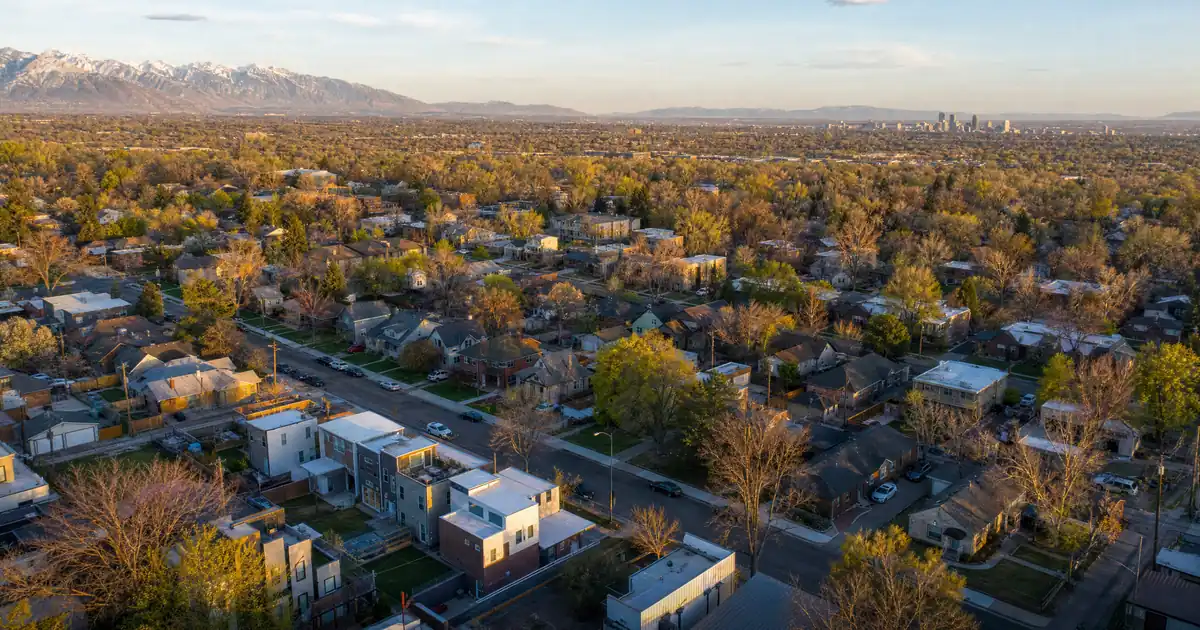
Pull up any Denver rent comp report right now and the vacancy number staring back at you is elevated — the highest the metro has seen in years, driven by a wave of newly delivered apartment units after developers added significant supply over the past decade, according to The Colorado Sun. That number is real. It’s also almost useless for underwriting a single-family rental or a fourplex, because it describes a different asset class entirely. Investors chasing investment property loans in Denver, Colorado need to know which vacancy number applies to their collateral — and it isn’t the one making headlines.
The Quick Read: In Denver, Colorado, DSCR lender review is based primarily on a property’s monthly rent measured against its full monthly obligation, and single-family vacancy running well below the apartment-driven citywide headline (Keyrenter Denver) makes that math meaningfully friendlier for houses and small multifamily than the headlines suggest.
DSCR Calculator
Run the numbers in your market
Rate source: Freddie Mac 30-yr average via FRED® — Federal Reserve Bank of St. Louis · effective Jul 30, 2026
Prefilled with starting assumptions — enter your own rent or nightly figures, taxes, insurance, and HOA for a more accurate picture.
Program parameters update from Lendmire’s centralized guideline source. Taxes and insurance are editable estimates.
As of Jul 30, 2026 · General Freddie Mac market benchmark, not a Lendmire loan offer. Rent, nightly rate, occupancy, taxes, and insurance are editable estimates. Short-term rental figures are estimates only and vary significantly by season, property type, management approach, and local short-term-rental rules — confirm local regulations before relying on them. Qualifying income for short-term rentals varies by program — some use appraisal market rent, others use documented STR history or projections — and is confirmed in underwriting. Not a Loan Estimate, approval, or commitment to lend. Program availability and eligibility are subject to lender guidelines, credit approval, property review, and underwriting.
- Single-family vacancy runs well below the citywide apartment vacancy rate, which is elevated due to a recent wave of new large multifamily supply.
- Chaffee Park and Hampden offer moderate entry pricing with rents that hold up well against comparable submarkets.
- Small multifamily priced at a modest per-unit basis tends to clear coverage most reliably.
- Light rail-adjacent listings tend to command a meaningful rent premium over comparable units farther from transit.
- Five Points has appreciated meaningfully over the past decade — a different play than cash flow.
Denver Market Snapshot
A quick read on the Denver investor landscape — figures come from the cited sources below. Confirm current property-level numbers before underwriting.
| Metric | Detail |
|---|---|
| Home prices | $558,705 average home value (Zillow Denver Home Values page) |
| Recent appreciation | 78% over the decade (The Rueth Team) |
| Cap rates | 5.5% cap rate Montbello/gvr (Denver Living Homes) |
| University enrollment | 4,500+ students (CU Anschutz Medical Campus) |
| Population | 740,613 population (U.S. Census Bureau QuickFacts) |
| Employment | 14,000+ colorado employees (Lockheed Martin Colorado) |
The Vacancy Split Nobody’s Pricing Correctly
Two vacancy rates exist in Denver right now, and they tell opposite stories. The elevated apartment figure reflects a supply glut in large multifamily — Class-A towers built during the recent development wave that the metro is still absorbing. Single-family rentals are running at a notably lower vacancy rate, per Keyrenter Denver’s mid-year review — well under the apartment rate, and almost no new SFR inventory came online during that same building cycle.
That gap matters for anyone financing a house, duplex, or fourplex. Appraisers and lenders pulling market rent surveys sometimes default to citywide averages that lean apartment-heavy, understating what a single-family or small multifamily property can actually command. Investors underwriting DSCR deals here should insist on rent comps pulled from comparable property types, not blended metro averages. Rents on a typical two-bedroom apartment citywide sit in a moderate range, and most local property managers project modest rent growth for the year ahead in suburban and mid-tier neighborhoods — stable, with inner-ring areas like Congress Park, Berkeley, and Whittier holding up best.
Where the Fourplex Math Actually Clears
Small multifamily priced at a modest per-unit basis tends to clear DSCR coverage more reliably than trendy single-family right now — the per-unit basis matters more than the total price tag. A larger multi-unit property can look expensive until you divide the price by the number of doors; a smaller duplex can be the weaker deal if the per-unit price runs higher.
Local small-multifamily listings currently span a wide range, with some updated duplexes and better-located properties pricing out at a notably lower per-unit basis, per The Denver Experts. Staying under that lower per-door basis is where 2-4 unit rent stacking is most likely to clear coverage under current financing conditions.
Consider a modeled fourplex priced at a per-door basis under that threshold, financed at standard leverage. Using a modeled comparable rent assumption, combined gross rent from four units comfortably outpaces the property’s full monthly obligation — principal, interest, taxes, and insurance — landing the file in a healthy coverage position. Compare that to a single-family home in a trendier corridor at a higher price point renting for meaningfully less per month relative to its price: that scenario tends to fall well short of the coverage floor some select DSCR programs use. Terms vary by lender guidelines, property type, leverage, credit profile, and full file review.
Neighborhoods such as Denver’s LoDo and Capitol Hill tend to have the 2-4 unit stock this math favors, and DSCR underwriting generally treats 2-10 unit residential properties as standard collateral when residential rent is the primary income source — not a specialty carve-out. Lendmire’s DSCR walkthrough covers how that qualification works in more detail, and the guide “Where DSCR and Conventional Diverge” explains how it differs from a conventional file.
DSCR files in markets with a bifurcated apartment-versus-small-property supply picture like Denver’s typically show a familiar pattern: the file looks weak on citywide rent surveys and much stronger once the broker pulls comps specific to the subject’s actual property type and submarket. The stronger files here are the ones where the borrower or broker did that legwork before the appraisal was ordered, not after.
Skip These for Cash Flow — Buy Them for Equity
Highlands and LoHi don’t cash flow at today’s prices, and pretending otherwise wastes underwriting time. Pricing there sits well above the value submarkets, with rents that don’t scale proportionally — a coverage ratio that falls well short of the floor some select DSCR programs use, at standard leverage. That’s an appreciation trade, not a rental-income trade. Wash Park and Cherry Creek, both priced at the higher end of the metro and still climbing, sit in the same category: strong tenant demand, low vacancy, terrible day-one coverage math.
Five Points and RiNo split the difference and lean the same direction. Pricing and rents there produce a coverage ratio that’s meaningfully better than the Highlands but still short of that same floor. What Five Points does offer is appreciation: values there have risen substantially over the past decade, per The Rueth Team, though trailing the citywide pace. An investor buying here today is underwriting future equity and a later cash-out refinance more than acquisition-day cash flow — a strategy worth pairing with Lendmire’s cash-out refinance program down the road once seasoning and rent growth close the gap.
Capitol Hill sits closer to the workable end of that spectrum. Pricing there reflects dense condo and small-multifamily stock with consistent long-term rental demand from downtown-adjacent tenants. It won’t put up Chaffee Park’s numbers, but it’s a more defensible entry point than the trophy neighborhoods above it.
Value Submarkets: Chaffee Park, Hampden, and West Barnum
Chaffee Park, Hampden, and West Barnum currently offer Denver’s best price-to-rent ratios for a cash-flow-focused DSCR purchase — the tradeoff is a workforce tenant base rather than the downtown professional renter pool. Chaffee Park and Hampden offer moderate entry pricing with rents that hold up well relative to price, per property-level reporting cited by The Rueth Team. Barnum, southwest of downtown, tends to sell noticeably faster than the citywide average, per Denver’s Property Manager. Faster absorption there signals a workforce tenant pool that fills vacancies without much friction.
Even in these submarkets, a single-family purchase priced at market rent and financed at standard leverage often lands close to, but frequently just short of, the coverage floor some select DSCR programs use on long-term rent alone at today’s financing costs. That’s not a dealbreaker. A file that falls short of that floor can still get reviewed under a reduced-leverage structure, an interest-only payment structure, or with stronger reserves and credit compensating for the gap — those paths get evaluated case by case, subject to lender guidelines and credit approval, not guaranteed outright. It’s exactly why the small multifamily math in the section above tends to outperform single-family in these same submarkets: stacking two, three, or four units of rent against one loan closes that gap far more reliably than hoping a single house’s rent catches up.
The Airport Corridor: Montbello and Green Valley Ranch
Montbello and Green Valley Ranch trade at a discount to the city median, according to Denver Living Homes — a workforce tenant base drawn by proximity to Denver International Airport, a major regional employer across airline operations, security, and customer service roles. Lower entry prices paired with steady blue-collar and logistics-sector renters make this corridor one of the more reliable acquisition-day plays in the metro, even if it doesn’t carry the brand recognition of RiNo or the Highlands.
What’s Anchoring Tenant Demand Here?
Denver’s rental demand doesn’t depend on one industry, and that diversification is what keeps vacancy from swinging hard in either direction. CU Anschutz Medical Campus alone represents a sizable economic footprint and draws a large patient population across its nationally ranked hospitals — a healthcare and research employment base that isn’t tied to tech-sector layoff cycles. Denver Health runs a hospital and safety-net system that’s operated continuously since 1860. Lockheed Martin maintains a significant statewide workforce, including a satellite manufacturing campus in Jefferson County. Add MSU Denver’s student population on the Auraria Campus downtown, and Denver’s tenant pool spans aerospace engineers, medical residents, government workers, and students — a mix that keeps demand distributed across price points rather than concentrated in one bubble that pops when one employer stumbles.
Light Rail as a Rent Filter
Proximity to RTD’s light rail system is a screenable rent filter — not a subjective neighborhood narrative. The system spans a wide network of stations across the metro, and properties within a short distance of a station reportedly command a meaningful rent premium over comparable units farther out, per The Rueth Team’s analysis (a secondary-source figure worth treating as directional rather than exact). For a DSCR investor trying to close the gap between a borderline coverage ratio and the floor some select programs use, checking a listing’s distance to the nearest A-Line, W-Line, or E/F/H-Line stop is a faster underwriting filter than chasing “up-and-coming” branding.
| Submarket | Price Point | Cash-Flow Fit |
|---|---|---|
| Chaffee Park / Hampden | Moderate entry pricing | Strongest for rent-to-value |
| West Barnum | Modest average pricing | Fast absorption, workforce tenants |
| Montbello / Green Valley Ranch | Below city median | Solid rental performance |
| Five Points / RiNo | Near city median | Appreciation-led, not cash flow |
| Highlands / LoHi | Higher price tier | Weakest cash-flow math |
Typical purchase financing on these deals runs at standard leverage levels, with a coverage ratio around 1.00 serving as the floor certain select DSCR programs will go down to — many standard programs still look for stronger coverage above that line, and some files with strong credit, larger reserves, or lower leverage may get reviewed near that floor, subject to lender guidelines. Reserve requirements generally run around six months of PITIA, and properties titled to an LLC are common in this space, subject to lender program eligibility. Review details are subject to lender overlays and should be confirmed before an offer goes in. Investors weighing entity structure, leverage, and reserve strength can start a conversation through Lendmire’s Colorado DSCR loan programs or reach the team directly at 828-256-2183.
The Denver Population Base Behind All This
Denver’s population has grown steadily according to the most recent U.S. Census Bureau estimates, with median household income running above the national figure — a metro adding renters at a pace that outstrips most peer Mountain West markets, inside a state that recently crossed a population milestone for the first time, per the Colorado Governor’s Office. That growth, combined with the geographic ceiling the Rocky Mountains put on new land supply, is a big part of why long-run appreciation has stayed elevated — even as forward forecasts settle into a more modest, single-digit annual pace.
Denver isn’t a market where every neighborhood works the same way, and that’s the honest takeaway. The trendy corridors sell equity growth; the value submarkets sell coverage; the small multifamily stock sells both if the per-door basis is right. DSCR files can be structured around exactly that kind of property-type distinction rather than a single citywide script, and investors can start a quote once they’ve settled on which side of that split their target property falls.
Before writing an offer on anything in this market, the single most useful next step is pulling rent comps specific to the property type — single-family, duplex, or 2-4 unit — rather than relying on a citywide vacancy or rent average that’s currently skewed by the apartment glut. That one diligence step separates the deals that clear coverage from the ones that only look like they do.
DSCR vs. conventional financing
Two common ways to finance an investment property in Denver, CO. They qualify you differently — here’s how investors weigh them.
Why investors choose it
- Qualifies on the property’s rental income — no personal tax returns, W-2s, or pay stubs needed to document income.
- No personal debt-to-income ceiling to clear, so existing mortgages and obligations don’t cap your borrowing the same way.
- Can be closed in an LLC, keeping the property inside a business entity.
- Built for scaling — not held to the limit on number of financed properties that conventional financing applies.
- Underwriting centers on the deal: generally qualifies when the rent covers the payment, a 1.00x coverage ratio being a common baseline (confirmed in underwriting).
- Designed specifically for investment property, including long-term and, where the program allows, short-term rentals.
Where it’s strong
- Often the lowest ongoing financing cost for a buyer who fully qualifies on personal income — a fit for a first property or a cost-first purchase.
Trade-offs for investors
- Requires full personal income documentation and must fit within a debt-to-income limit — salary, existing debts, and other mortgages all count.
- Typically held in your personal name rather than a business entity.
- Caps how many financed properties you can carry, which can become a ceiling as a portfolio grows.
- Evaluates you as a borrower as much as the property, which usually means more paperwork.
How investors usually choose: a first or single property often optimizes for the lowest financing cost; portfolio builders often optimize for leverage, vesting in an LLC, and scaling past conventional caps. The right answer depends on your goals, the property, and current guidelines — both paths run through select lenders in Lendmire’s wholesale network, with eligibility and terms confirmed in underwriting.
Frequently Asked Questions
How do you qualify for a DSCR loan in Denver, Colorado?
Qualification centers on the subject property’s monthly rent measured against its full monthly obligation (principal, interest, taxes, insurance, and any association dues), rather than on the borrower’s personal income or traditional personal-income documentation. Lenders also weigh credit profile, available reserves, leverage requested, and property type, with rent comps pulled from comparable Denver property types rather than blended citywide averages — subject to lender guidelines and full file review.
What are the requirements for a DSCR loan on a Denver rental property?
Typical requirements include a qualifying coverage ratio (with a lower floor available on certain select programs), reserves generally around six months of PITIA, a defined leverage range, and documentation of the property’s market or in-place rent. Entity title, such as an LLC, is common but subject to lender program eligibility. Exact requirements vary by lender and should be confirmed before making an offer.
Can I use a DSCR loan to finance a small multifamily property in Denver?
Yes — 2-10 unit residential properties are generally treated as standard DSCR collateral when residential rent is the primary income source, not as a specialty carve-out. In Denver specifically, small multifamily priced at a modest per-unit basis often clears coverage more consistently than comparable single-family purchases, since rent from multiple units stacks against one loan.
Do Denver DSCR loans require a personal income verification?
No — DSCR loans are qualified primarily on the property’s rental income relative to its debt obligation rather than on personal income, traditional personal-income documentation, or employment verification, which is what distinguishes them from a conventional mortgage. Credit, reserves, and leverage still factor into the file.
Which Denver neighborhoods work best for DSCR cash flow versus appreciation?
Submarkets such as Chaffee Park, Hampden, and West Barnum tend to offer stronger rent-to-price ratios suited to cash-flow-focused DSCR purchases, while corridors like the Highlands, LoHi, Wash Park, and Cherry Creek generally price in more for appreciation than day-one coverage. Five Points and RiNo sit in between, offering meaningful long-term appreciation potential rather than cash flow.
About Lendmire
Lendmire is a non-QM DSCR mortgage broker (NMLS# 2371349) arranging DSCR investor loans in 41 markets, including Washington, D.C., through wholesale and investor-lending channels — the firm arranges financing but does not fund or underwrite loans directly. DSCR loans are evaluated by the lender on rental income rather than personal income, subject to lender guidelines — a fit for LLC-owned portfolios, self-employed investors, and operators scaling beyond conventional loan caps. Recognized as a Scotsman Guide Top Mortgage Workplace in 2025 (2025 Scotsman Guide Top Workplace) and 2026 (Scotsman Guide 2026 Top Mortgage Workplace).
Get Started
Ready to find the right loan for you?
In about 30 seconds you can review financing options available for your investment property. No commitment required.
Informational only. Not a Loan Estimate, approval, or commitment to lend. Program availability and eligibility are subject to lender guidelines, credit approval, property review, and underwriting.
References
1. The Colorado Sun — Apartment Vacancy Report
2. Keyrenter Denver — Mid-Year Rental Market Review
3. Zillow Denver Home Values page
4. The Rueth Team — Top Denver Rental Property Neighborhoods
5. Denver Living Homes — Investing Guide
7. U.S. Census Bureau QuickFacts: Denver city, Colorado
8. Lockheed Martin Colorado Careers
9. The Denver Experts — Small Multifamily Investing in Denver
10. Denver’s Property Manager — Affordable Neighborhoods
11. Denver Health
12. MSU Denver Enrollment Announcement
13. The Rueth Team — Analyzing Denver Neighborhoods for Investment Property Potential
14. Colorado Governor’s Office
15. 2025 Scotsman Guide Top Workplace
16. Scotsman Guide 2026 Top Mortgage Workplace
This article is part of Lendmire’s DSCR loan program — full qualification details, guidelines, and scenarios live on the program page.
Related reading: DSCR Loan Denver CO Rental Property Refinance · Super Jumbo DSCR Loans In Colorado: Complete Guide · Cash Out Refinance Investment Property Colorado
Guides: DSCR Loans in Denver, CO · DSCR Loans in Colorado
Brandon Miller
Founder & CEO, Mortgage Loan Originator, Lendmire LLC
- Mortgage Loan Originator · NMLS# 1129696 · Verify on NMLS Consumer Access
- North Carolina Real Estate Broker · License# 343312 · Verify on NCREC
- North Carolina Insurance Producer · License# 19053198 · Property, Casualty, Life, Health · Verify on NAIC SBS
- Lendmire LLC · Firm NMLS# 2371349 · Verify firm licensure
Legal disclosures. Lendmire (NMLS# 2371349) is a state-licensed mortgage brokerage that arranges financing through wholesale lender relationships. Lendmire is not a direct lender, depository institution, or registered financial advisor. The discussion above is general informational content about real estate financing — it is not financial, legal, or tax advice, and readers should consult licensed professionals for guidance on their individual circumstances. Loan inquiries are subject to lender underwriting; this article does not represent a commitment to lend. Loan terms, rates, and qualification standards vary by borrower, property, and state, and are subject to change at any time. Equal Housing Opportunity. NMLS Consumer Access: nmlsconsumeraccess.org.