
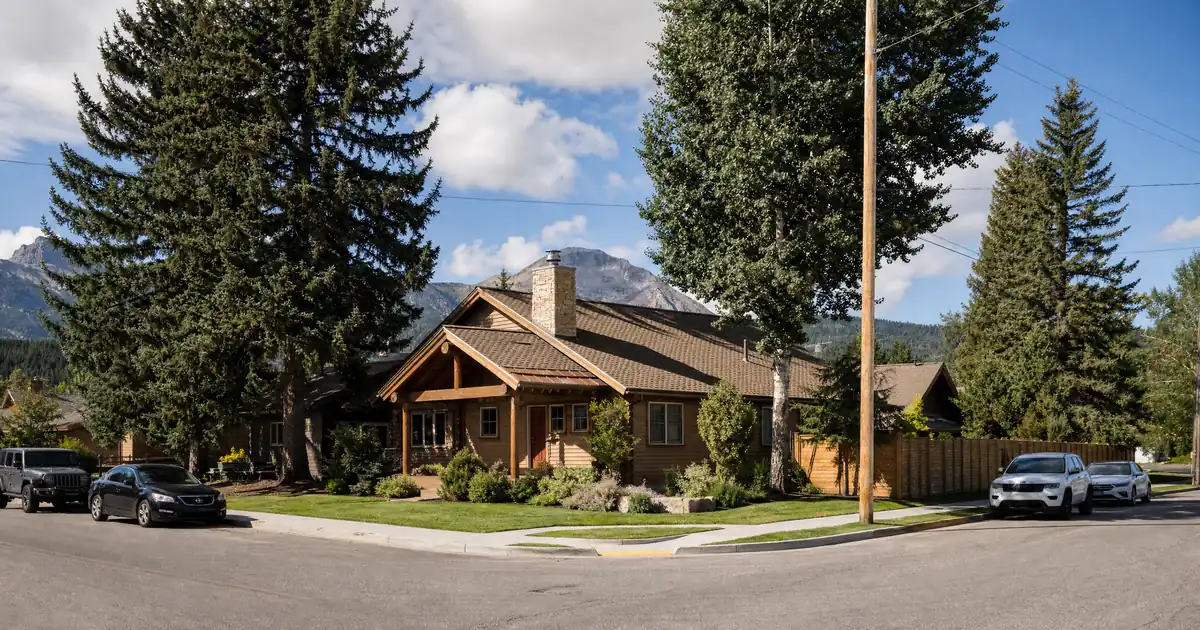
If you’re pricing investment property loans in Big Sky, Montana, here’s the number that should give you pause before any other: the market’s own housing nonprofit describes long-term rental vacancy here as effectively zero, and yet a straightforward debt-coverage calculation on most single-family purchases still comes up short. Bottomless tenant demand paired with rent levels that can’t keep pace with acquisition cost — that’s the paradox sitting at the center of every DSCR file written on this mountain.
At a Glance: In Big Sky, Montana, DSCR lender review runs primarily on the property’s documented rental income measured against its full monthly obligation of principal, interest, taxes, and insurance — a calculation this market’s price-to-rent gap makes unusually hard to clear on a single-family purchase, per Big Sky Community Housing Trust pricing data.
DSCR Calculator
Run the numbers in your market
Rate source: Freddie Mac 30-yr average via FRED® — Federal Reserve Bank of St. Louis · effective Jul 30, 2026
Prefilled with starting assumptions — enter your own rent or nightly figures, taxes, insurance, and HOA for a more accurate picture.
Program parameters update from Lendmire’s centralized guideline source. Taxes and insurance are editable estimates.
As of Jul 30, 2026 · General Freddie Mac market benchmark, not a Lendmire loan offer. Rent, nightly rate, occupancy, taxes, and insurance are editable estimates. Short-term rental figures are estimates only and vary significantly by season, property type, management approach, and local short-term-rental rules — confirm local regulations before relying on them. Qualifying income for short-term rentals varies by program — some use appraisal market rent, others use documented STR history or projections — and is confirmed in underwriting. Not a Loan Estimate, approval, or commitment to lend. Program availability and eligibility are subject to lender guidelines, credit approval, property review, and underwriting.
- Long-term rental vacancy sits at effectively zero, per Big Sky Community Housing Trust.
- Median single-family price reached $2.775 million, up from $960,000 six years earlier.
- Roughly 29 percent of existing housing stock is already duplex, triplex, or larger multi-unit, per NeighborhoodScout.
- Eighty percent of the local workforce commutes in from outside Big Sky, per HUD research.
- Home-price-to-income ratio runs 17.2, versus 11.7 in Whitefish and 8.8 in Bozeman.
Big Sky Market Snapshot
A quick read on the Big Sky investor landscape — figures come from the cited sources below. Confirm current property-level numbers before underwriting.
| Metric | Detail |
|---|---|
| Home prices | $2.4M median sale price (Redfin Big Sky Housing Market) |
| Typical rents | $1,750 market 1br (Big Sky Resort employee housing) |
| Recent appreciation | +4.5% yoy (Redfin Big Sky Housing Market) |
| Population | Population 2,445 (Census Reporter: Big Sky, MT) |
| Employment | ~90 employees (Bozeman Health Big Sky Medical) |
| Vacancy | 64.9% (Treasure State Big Sky Housing) |
The Price-to-Rent Problem Nobody’s Pricing In
Three separate data sources describe Big Sky’s home values, and they disagree by close to a million dollars — which tells you something about how thin and lopsided this market really is. Redfin puts the recent median sale price at $2.4 million, up 4.5 percent year over year, a figure driven by a small handful of monthly closings in a luxury-skewed market. The longer-run, MLS-based series from Big Sky Community Housing Trust — which excludes the ultra-private Yellowstone Club entirely — anchors the median single-family sale price at $2.775 million, up from $960,000 six years prior. That’s roughly 189 percent appreciation on single-family homes and 126 percent on condos (from $429,613 to $970,000 over the same stretch). Zillow’s Zestimate-based “typical home value,” by contrast, sits at $1,643,261 and has actually fallen 6.8 percent over the past year — a number pulled down by broader stock beyond recent closings.
None of that price growth has been matched by rent growth. Big Sky Resort’s own workforce-housing materials cite the market-rate rent for a one-bedroom unit at $1,750 a month. Set that against a median single-family price north of $2.7 million and the rent-to-price ratio collapses to a fraction of what conventional DSCR underwriting wants to see. Treasure State quantifies just how far out of line this is with a home-price-to-income ratio of 17.2 for Big Sky — compared with 11.7 in Whitefish and 8.8 in Bozeman. Local household income, meanwhile, isn’t low: Census Reporter data puts median household income at $138,805, about 1.5 times the Bozeman metro figure of $93,528. Big Sky values aren’t being set by local wages or local rents. They’re being set by outside wealth chasing a finite supply of mountain real estate, and that has direct implications for how an investor should model return.
Meadow Village Carries the Workforce
Not every submarket in Big Sky faces the same math. Meadow Village and the surrounding Big Sky Town Center corridor — the closest thing this unincorporated community has to a downtown — is where most year-round residents actually live, and it’s a submarket where a traditional 12-month-lease DSCR thesis has real footing. Proximity matters here: the hospital, the grocery store, and the bulk of local employers sit within this corridor, which is why it draws commuting workforce tenants rather than vacation guests.
That workforce tenant base is larger and more durable than it might look. HUD’s research on Big Sky’s housing affordability crisis found that 80 percent of the area’s workforce currently lives outside the area, some commuting two hours or more. Every one of those workers is a latent tenant the moment a qualifying unit opens up — which is a very different demand profile than a resort town relying on discretionary vacation traffic. Add Bozeman Health Big Sky Medical Center, an eight-bed critical access hospital with roughly 90 employees and providers running 24/7 emergency care out of a 35,000-square-foot facility, and Meadow Village has a genuine year-round employment anchor that isn’t tied to ski season. Nurses and techs need housing in July the same as they do in January. That’s rare in a market this seasonal.
Where the Ski-In/Ski-Out Money Actually Lives
Mountain Village, Moonlight Basin, and Spanish Peaks Mountain Club are not workforce-rental plays, and pretending otherwise is where a lot of first-time Big Sky investors get burned. Mountain Village sits directly against Big Sky Resort’s base, offering true ski-in/ski-out access — the shortest walk to the lifts anywhere in town — which drives premium pricing that a 12-month lease simply can’t service. Moonlight Basin, spanning roughly 8,000 acres on the north side of Lone Mountain and home to the One&Only Moonlight Basin resort and The Reserve golf course, is squarely a luxury second-home and short-term-vacation-rental submarket. Spanish Peaks Mountain Club, requiring at least a social club membership to own, is even further removed from a long-term-rental thesis.
Here’s the honest caveat on the short-term side: no reliable third-party nightly-rate or occupancy data exists specifically for Big Sky in the research supporting this article. General apartment-listing aggregators show one-bedroom units ranging anywhere from $1,110 to a jaw-dropping $22,106 a month, averaging $2,117 — a spread so wide it confirms these figures blend workforce housing with furnished luxury short-term listings in the same category. That’s not a usable comp set for underwriting. Any DSCR file leaning on short-term rental income in Mountain Village or Moonlight Basin will need property-specific booking history, not a market average, and lenders reviewing that income typically apply a substantial haircut to gross nightly revenue rather than taking it at face value.
Yellowstone Club deserves a separate note entirely: sales there are private and excluded from public MLS reporting altogether, which means there’s no reliable comp data to underwrite against in the first place. Skip it for DSCR purposes. Not a workable data set, not a workable strategy.
Gallatin Canyon: The Cheaper, Messier Alternative
Running along Highway 191 between Bozeman and Big Sky proper, Gallatin Canyon offers a materially lower entry point than the core Big Sky submarkets — a mix of river-adjacent homes and forested mountain properties with a more rural, less resort-branded character. It’s not glamorous, and it won’t show up in any Big Sky Town Center marketing brochure. But for an investor prioritizing rent-to-price math over ski-in convenience, it’s worth a serious look precisely because it sits outside the private-club price umbrella that inflates the rest of the market. The tenant mix here skews toward long-term local housing blended with some seasonal and fishing-lodge demand — a workable profile for a straightforward lease-driven DSCR file.
Running the Modeled Math on a Small Multifamily Purchase
Here’s where the theory meets the number. Model a two-unit purchase priced near Big Sky Community Housing Trust’s condo median of $970,000, financed at 75 percent loan-to-value with each unit renting near the documented $1,750 one-bedroom market rate. Gross rent of $3,500 a month against the full monthly obligation — principal, interest, taxes, and insurance, using typical financing-cost assumptions for a property this size — covers roughly 0.6x of that obligation. Not close.
Push the down payment well past the program’s standard range and the picture improves, but not as much as you’d hope. Model that same duplex at 50 percent down instead of 25 percent, and coverage still lands under 0.9x. Getting a modeled scenario like this one to clear 1.0x on rental income alone typically requires a down payment well beyond what a standard purchase program assumes — somewhere closer to 60 percent of the purchase price, which is a fundamentally different capital structure than most DSCR investors plan for going in.
This is the honest read: at current price levels, a straight long-term-rental DSCR thesis in Big Sky is structurally difficult almost everywhere, not just in the ski-in neighborhoods. When a file lands below 1.0x on long-term rent alone, the paths available for lender review typically include a sub-1.00 DSCR program, an interest-only structure to ease the qualifying ratio, or a blended income approach that factors in documented short-term rental history where it exists — all subject to lender guidelines, credit approval, reserves, and full property review, not a guarantee of qualification. The guide “What Is a DSCR Loan” is worth a read before running your own numbers.
Deal files from markets structurally similar to Big Sky — thin inventory, luxury pricing, heavy second-home concentration — tend to follow a pattern. The rental income line comes in stressed, particularly on single luxury homes, and the cleaner files pair conservative rent comps with reserves well above the program minimum rather than leaning on appreciation to carry a tight ratio. Given that most Big Sky purchases sit well above the $1.5 million reserve threshold, expect reserve requirements to run closer to nine months of the full monthly obligation rather than the standard six-month floor, with credit-tier considerations starting around 620 and higher-leverage structures generally reserved for stronger files. The standard loan amount ceiling on most programs tops out around $3 million — enough to cover a large share of Big Sky’s condo and small-multifamily stock, though the market’s median single-family price of $2.775 million puts many full-size home purchases right at that edge, which is worth knowing before you get attached to a specific listing.
The Institutional Money Agrees Multi-Unit Is the Play
This isn’t just a lending thesis — it’s already been validated at scale by a much bigger balance sheet than any individual investor’s. Lone Mountain Land Company, identified by HUD’s research as one of Big Sky’s largest employers, put $65 million into the market-rate portion of its RiverView Place development: two buildings of long-term rental apartments — 24 units across one-, two-, and three-bedroom configurations — plus 36 shared suites for seasonal workers. That’s a private developer betting real capital on purpose-built long-term rentals, not vacation condos, which is a strong signal the small-scale multifamily thesis holds up beyond theory.
The structural shortage backing that bet is well documented. Explore Big Sky reports the community’s housing needs assessment calls for roughly 1,300 additional units over the coming years, and voters have already responded — approving the 389-unit Cold Smoke workforce housing project funded through the local resort-tax district, with residents expected to move in by the decade’s end. NeighborhoodScout data shows roughly 29 percent of Big Sky’s existing housing stock is already duplex, triplex, converted, or larger apartment product — meaning the multi-unit inventory an investor needs already exists, in real comp-able numbers, rather than requiring new construction.
One governance quirk worth flagging before anyone gets too deep into a purchase contract: Big Sky has no mayor, no city council, and no unified municipal government. It’s an unincorporated census-designated place split across Gallatin and Madison counties, per Wikipedia’s Census-sourced profile, with the Big Sky Chamber of Commerce describing local governance as a patchwork of seven special districts, hundreds of homeowners associations, and assorted nonprofits. No other Montana resort town of comparable size operates quite this way, and it’s a genuine reason to verify current zoning, permitting, tax treatment, and insurance requirements with qualified local professionals before underwriting a specific parcel — those specifics vary by county and by district, and this research doesn’t compile them.
DSCR vs. conventional financing
Two common ways to finance an investment property in Big Sky, MT. They qualify you differently — here’s how investors weigh them.
Why investors choose it
- Qualifies on the property’s rental income — no personal tax returns, W-2s, or pay stubs needed to document income.
- No personal debt-to-income ceiling to clear, so existing mortgages and obligations don’t cap your borrowing the same way.
- Can be closed in an LLC, keeping the property inside a business entity.
- Built for scaling — not held to the limit on number of financed properties that conventional financing applies.
- Underwriting centers on the deal: generally qualifies when the rent covers the payment, a 1.00x coverage ratio being a common baseline (confirmed in underwriting).
- Designed specifically for investment property, including long-term and, where the program allows, short-term rentals.
Where it’s strong
- Often the lowest ongoing financing cost for a buyer who fully qualifies on personal income — a fit for a first property or a cost-first purchase.
Trade-offs for investors
- Requires full personal income documentation and must fit within a debt-to-income limit — salary, existing debts, and other mortgages all count.
- Typically held in your personal name rather than a business entity.
- Caps how many financed properties you can carry, which can become a ceiling as a portfolio grows.
- Evaluates you as a borrower as much as the property, which usually means more paperwork.
How investors usually choose: a first or single property often optimizes for the lowest financing cost; portfolio builders often optimize for leverage, vesting in an LLC, and scaling past conventional caps. The right answer depends on your goals, the property, and current guidelines — both paths run through select lenders in Lendmire’s wholesale network, with eligibility and terms confirmed in underwriting.
Frequently Asked Questions
Does a duplex or triplex actually cash flow better than a single-family home in Big Sky?
Better, yes — enough to fully solve the problem, not necessarily. Stacking rent across two or three units improves the ratio compared with a single luxury home carrying $1,750 to $2,500 a month against a purchase price north of $2 million, but modeled math on typical acquisition costs still often lands below 1.0x on long-term rent alone. It’s the strongest available structure in this market, not a guaranteed fix.
Why do Zillow and Redfin show such different home values for Big Sky?
They’re measuring different things. Redfin’s figure reflects a trailing median of actual closed sales, which swings hard in a thin luxury market where a few high-end transactions dominate the count. Zillow’s typical value is a broader algorithmic estimate across more of the housing stock, which is why it currently sits lower and is trending down while Redfin’s sale-based median is trending up.
Is Gallatin Canyon a meaningfully cheaper entry point than core Big Sky?
Yes, directionally — it sits along the Highway 191 corridor with a lower price profile and more rural housing stock than Meadow Village or the resort-adjacent neighborhoods, though no MLS-verified price range specific to the corridor was available for this research. The tenant mix leans more toward long-term local housing than short-term vacation demand, which suits a lease-driven DSCR structure better than the ski-in neighborhoods do.
Does Big Sky’s lack of a city government affect how a purchase gets financed?
It doesn’t change how DSCR lender review works, but it does add a diligence step most investors skip. Because Big Sky spans two counties with no unified municipal authority, zoning consistency and permitting can vary block to block depending on which special district or homeowners association governs a given parcel — something worth confirming with local counsel before closing, separate from the loan itself.
What’s the minimum DSCR ratio typically needed to qualify?
A 1.00x floor is the standard minimum on the DSCR program, since that’s the point at which documented rental income covers the full monthly obligation. Some lenders may review scenarios below that threshold with stronger compensating factors, additional reserves, or a lower loan-to-value, but eligibility always depends on lender guidelines, credit profile, and property review.
Where This Leaves an Investor
Big Sky isn’t a market where the rental income does the heavy lifting — the price-to-income ratio of 17.2 makes that plain. It’s a market where appreciation has been the return driver for years while rent growth, at roughly 40 percent over five years according to the Big Sky Resort Area District, has lagged the near-tripling of home values by a wide margin. That’s not necessarily disqualifying. It just means DSCR coverage here should be treated as a floor that improves gradually as rents catch up, not a day-one target that has to clear 1.0x out of the gate. This is a genuine judgment call: an investor prioritizing cash flow probably looks past Big Sky entirely toward Gallatin Canyon or the Bozeman corridor, while one comfortable underwriting to appreciation with rental income as a partial offset finds the multi-unit workforce stock in Meadow Village a defensible, if not thrilling, entry point.
The Montana DSCR loans page covers purchases across the state’s resort and workforce-housing corridors alike. For an LLC-titled acquisition, note that eligibility is subject to program terms specific to the lender in the network. Investors weighing a Big Sky purchase against a conventional loan can review how DSCR stacks up or browse the full investor lending menu before deciding which structure fits. Calling Lendmire at 828-256-2183 or talking through the numbers on a specific Big Sky property is a reasonable next step once you’ve settled on a submarket — review details remain subject to lender overlays throughout underwriting.
For current guidelines and terms, see Lendmire’s DSCR loan programs page.
About Lendmire
Lendmire (NMLS# 2371349) is a non-QM mortgage broker working with investors across 41 markets, including Washington, D.C., and helps structure DSCR scenarios that are commonly evaluated against a property’s rental income rather than personal income documentation, subject to lender guidelines. Recognized as a 2026 Scotsman Guide Top Mortgage Workplace and a top-ranked workplace in 2025 — Lendmire places loans through wholesale investor lenders and does not fund or underwrite loans directly.
Eighty percent of Big Sky’s workforce commutes in from somewhere else. That single number, more than any home-price chart, is the real story of this market.
Get Started
Ready to find the right loan for you?
In about 30 seconds you can review financing options available for your investment property. No commitment required.
Informational only. Not a Loan Estimate, approval, or commitment to lend. Program availability and eligibility are subject to lender guidelines, credit approval, property review, and underwriting.
References
1. Big Sky Community Housing Trust
2. Redfin — Big Sky Housing Market
3. Big Sky Resort — Redefining Employee Living
4. Census Reporter: Big Sky, MT
5. Bozeman Health Big Sky Medical Center
6. Treasure State — Big Sky Housing Market
7. HUD USER — Surmounting Housing Affordability Challenges in Big Sky
8. Explore Big Sky — Cold Smoke Housing Project
9. NeighborhoodScout — Big Sky Real Estate
10. Big Sky Chamber of Commerce — Live/Work
11. Big Sky Resort Area District — The Big Sky Way
12. a 2026 Scotsman Guide Top Mortgage Workplace
13. Scotsman Guide — Top Workplaces 2025
This article is part of Lendmire’s DSCR loan program — full qualification details, guidelines, and scenarios live on the program page.
Related reading: DSCR Loans Big Sky & Yellowstone: Investor Financing for Ski Resort STR, West Yellowstone, Gallatin Canyon & Real Estate Investors · DSCR Loans Montana: Investor Financing for Whitefish, Big Sky, Bozeman, and Real Estate Investors · Luxury Rental DSCR Loans In Big Sky: What The Rent Must Cover
Guides: DSCR Loans in Big Sky, MT · DSCR Loans in Montana
Brandon Miller
Founder & CEO, Mortgage Loan Originator, Lendmire LLC
- Mortgage Loan Originator · NMLS# 1129696 · Verify on NMLS Consumer Access
- North Carolina Real Estate Broker · License# 343312 · Verify on NCREC
- North Carolina Insurance Producer · License# 19053198 · Property, Casualty, Life, Health · Verify on NAIC SBS
- Lendmire LLC · Firm NMLS# 2371349 · Verify firm licensure
Legal disclosures. Lendmire (NMLS# 2371349) is a state-licensed mortgage brokerage that arranges financing through wholesale lender relationships. Lendmire is not a direct lender, depository institution, or registered financial advisor. The discussion above is general informational content about real estate financing — it is not financial, legal, or tax advice, and readers should consult licensed professionals for guidance on their individual circumstances. Loan inquiries are subject to lender underwriting; this article does not represent a commitment to lend. Loan terms, rates, and qualification standards vary by borrower, property, and state, and are subject to change at any time. Equal Housing Opportunity. NMLS Consumer Access: nmlsconsumeraccess.org.