
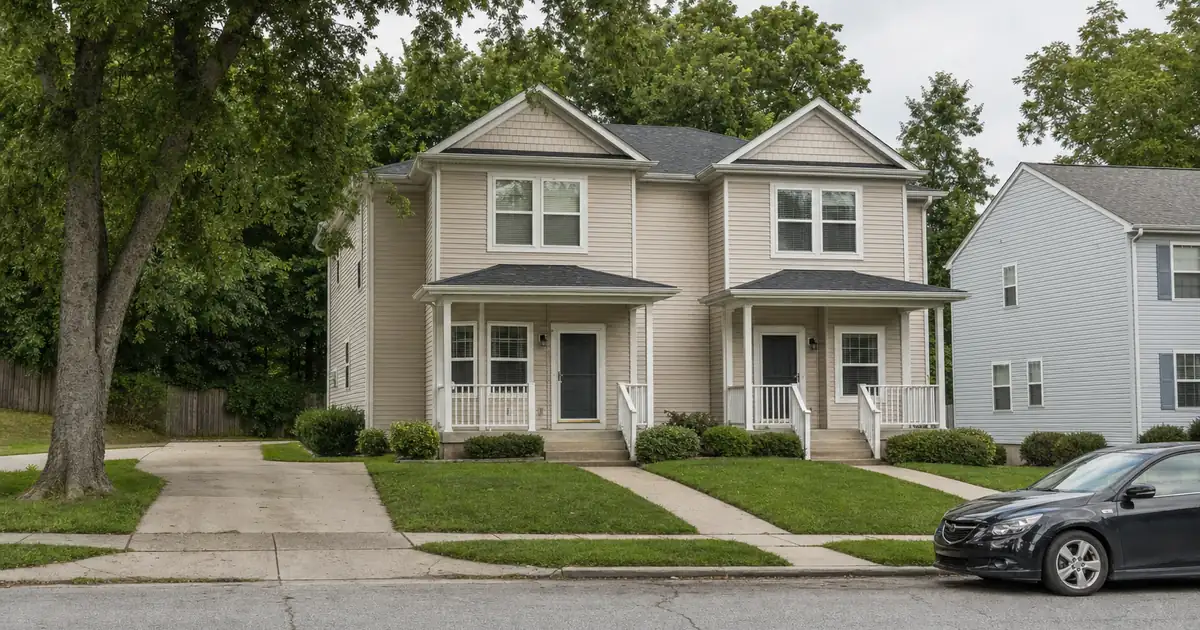
The Quick Read: A multifamily cash-out refinance replaces an existing loan with a larger one and sends the difference to the owner, typically capped around 75% LTV on 2-4 unit rental properties financed through DSCR programs. Qualification runs on the property’s rent-to-payment ratio rather than the owner’s personal income, seasoning of about six months of ownership is the common expectation, and how much cash actually comes out depends on the appraiser’s rent grid and the resulting coverage math — not just the appraised value.
What Counts as “Multifamily” Here?
For DSCR lending purposes, multifamily almost always means 2-4 unit residential-style properties — duplexes, triplexes, fourplexes. Once a building crosses into five or more units, it typically stops behaving like a residential-style loan file and starts routing through agency, HUD, or bank portfolio channels with entirely different underwriting mechanics. A fourplex and a twenty-unit apartment complex are not competing for the same product, even though both throw off rent.
This distinction matters more than most owners expect. An investor holding a fourplex and an investor holding a twenty-unit building both use the word “multifamily” to describe their asset, but the loan paths diverge completely once unit count crosses that threshold. This article covers the 2-4 unit DSCR lane — the lane most rental property investors actually operate in.
Cash-Out vs. Rate-and-Term: The First Fork
Every refinance request gets sorted at intake into one of two buckets, and that single call sets the leverage ceiling for the rest of the file. A rate-and-term refinance simply replaces the existing loan — no cash to the borrower beyond minor closing-cost adjustments. A cash-out refinance pulls equity out as liquid proceeds, and that distinction triggers stricter leverage, seasoning, and reserve rules than a simple rate reset.
Across select lenders in Lendmire’s wholesale network, cash-out leverage on multifamily rentals typically tops out around 75% LTV — a hard ceiling, not a soft target. That’s meaningfully tighter than purchase-side leverage on the same property type, where some programs reach 80% and select high-leverage programs push to 85% for stronger-credit borrowers. Treating purchase-side leverage as if it carries over to a refinance is one of the more common mistakes an investor can make going into a cash-out request. It doesn’t move up just because the purchase program did.
How Much Can Actually Come Out?
The mechanical answer: the appraised value sets the LTV ceiling, and the rent-comparison grid sets the income figure the coverage ratio gets calculated from — and these two conclusions are produced independently.
For 2-4 unit properties, appraisers typically document the file on Fannie Mae’s Form 1025, the Small Residential Income Property Appraisal Report — a form borrowed by non-QM underwriting as a documentation convention, not because the loan is agency-backed. That form does two jobs from one inspection: a sales-comparison opinion of market value, and a separate rent-comparison grid analyzing comparable rental properties to support the opinion of market rent. Inflating expectations about one has no bearing on the other. An owner convinced the property is worth more doesn’t move the rent grid, and a strong rent roll doesn’t move the appraised value.
Fannie Mae’s own Selling Guide confirms the same document logic non-QM underwriting mirrors — one of these forms, Form 1007 for a single unit or Form 1025 for two-to-four units, supports the income-earning potential of the property when rental income factors into qualifying. Worth flagging: the agency convention calculates qualifying rental income by multiplying gross monthly rent by 75%, absorbing the remaining quarter as a vacancy-and-maintenance haircut. Most DSCR programs don’t apply that same haircut — they typically divide full gross rents by the total PITIA. Same form, different math. That’s a real point of confusion for owners who’ve seen an agency rent schedule before and assume the same discount applies to a DSCR file.
Once the rent figure and the PITIA are both set, all unit rents on the building get aggregated and divided by the aggregate monthly obligation across the whole property. A ratio at 1.00 is the floor certain programs are built around — a baseline where the combined rent roll covers the full monthly obligation, not a universal industry standard. Clearing 1.00 is not the same thing as positive cash flow. The coverage calculation never touches repairs, vacancy, management fees, utilities, or capital reserves sitting outside the loan payment itself.
Run the numbers on a fourplex where combined rents clear the aggregate PITIA at roughly 1.20x. That coverage level, paired with a credit profile in the high-600s or above, is the kind of file that tends to land toward the top of the leverage range available on cash-out. A thinner file — coverage closer to 1.00 — usually gets to the deal a different way: with more equity left in the property instead of pulled out. The two tests, leverage and coverage, are graded independently, and the strongest cash-out files clear both at once.
For a fuller walkthrough of how the DSCR ratio gets built and applied, Lendmire’s complete DSCR loans guide breaks down the formula in more depth than fits here.
The Seasoning Rule Nobody Reads Correctly
Seasoning is the minimum time a lender wants between taking title to a property and pulling cash out against it — measured from the recorded deed forward, not from the loan application date. Across the DSCR/non-QM lane, roughly six months of ownership is the common expectation, though every lender in the network sets its own window.
This is where a lot of investors get tripped up by an agency rule that doesn’t even apply to them. Assuming the 12-month conventional seasoning rule governs a DSCR refinance too is a mistake — that’s a GSE-specific policy tied to Fannie Mae’s cash-out refinance guidelines, requiring payoff of an existing first mortgage that’s at least 12 months old, layered on a separate 6-month title-seasoning test. DSCR lenders aren’t bound by that structure at all. Most land closer to six months, and until seasoning clears, the new loan amount is generally capped near the original purchase cost rather than the current appraised value — a detail that surprises owners who bought below market and expected to refinance off a fast markup.
DSCR loans qualify primarily on property-level rental income covering the payment, subject to lender guidelines — the seasoning clock exists to confirm the ownership and rent history behind that number, not to gatekeep personal income documentation.
Where the General Rule Breaks
A handful of situations shift the seasoning and leverage math in predictable ways.
All-cash purchases. An owner who bought with cash rather than a purchase loan may not need to wait out seasoning at all. Delayed-financing treatment — a concept the agency world documents explicitly and the DSCR world mirrors in spirit — lets a lender waive the ownership test when the original purchase was documented as all-cash.
Inherited or legally-awarded property. Property acquired through inheritance, or awarded through divorce, separation, or dissolution of a domestic partnership, commonly carries no seasoning wait at all in DSCR underwriting, mirroring the shape of the agency exception.
LLC-held title before closing. This one matters for the DSCR audience specifically, since entity-held rental portfolios are the core client base here. When a property was owned by an LLC majority-owned or controlled by the borrower prior to closing, the time held inside that LLC can generally count toward the ownership-seasoning requirement — subject to lender program eligibility. Lendmire’s coverage of DSCR cash-out refinance on multifamily properties walks through how entity ownership factors into a multifamily file specifically.
Portfolio-size ceilings. Agency financing caps out at ten financed properties per investor. DSCR programs carry no such ceiling — a meaningful structural advantage for an investor scaling past that count.
Short-term rental units. If one or more units in the multifamily property run as short-term rentals rather than standard leases, the math shifts. Gross rents typically get reduced by a haircut before the coverage ratio gets calculated, purchase leverage runs up to around 75% LTV, refinance and cash-out both typically land closer to 70%, and lenders generally want a credit score in the 700s plus roughly 12 months of hosting history behind the units. Short-term rental rules can also vary by city, county, HOA, and property type, so confirming local rules before relying on projected rental income matters as much as the loan mechanics.
Coverage below 1.00. Sub-1.00 files are available through select lenders in the network, but leverage and terms adjust to compensate — it isn’t a like-for-like swap against a file that clears 1.00 cleanly. A no-ratio option is available for DSCR below 1.00 with stronger credit or higher down payment; qualification on that path rests on credit and equity rather than a rent-coverage calculation.
Property types that don’t fit at all. Manufactured homes — single- or double-wide — along with log homes and barndominiums fall outside DSCR programs across most of the non-QM shelf, regardless of unit count or coverage strength. If a multifamily building includes one of these structures, it’s simply not eligible here.
Reserves, Credit, and Loan Size in Practice
Reserve requirements scale with loan size, leverage, and transaction type rather than landing on one flat number. On most files, roughly six months of PITIA in reserve is the common expectation. Conservative rate-and-term refinances at modest leverage under $1,500,000 sometimes see reserves waived entirely; cash-out refinances above that size typically step up to around nine months. A large cash-out extraction on a high-balance loan and a small, conservative rate reset can land in very different places on reserves — treating it as a flat universal figure is a mistake.
Credit tiers follow a similar shape. A 620 floor exists in parts of the network, though most programs prefer something closer to 660, and a score in the 700s tends to unlock the strongest leverage tiers. Loan sizes on standard multifamily DSCR programs generally run up to around $3,000,000, with loans above roughly $2,500,000 typically landing on 30-year fixed structures rather than adjustable options.
Term structures across the network build off a 30-year fixed spine. Extended 40-year terms and interest-only periods are available through select lenders for investors prioritizing cash flow over amortization speed, and adjustable-rate structures exist for investors who prefer that shape.
Why Rent Trends Matter More on Cash-Out Than People Expect
DSCR files on small multifamily properties tend to come in cleaner on rate-and-term refinances than on cash-out, because pulling equity increases the monthly obligation right as the coverage ratio gets tested. Softening rent growth in a given market compresses how much can actually come out, since the appraiser’s rent grid — not an optimistic projection — is what drives the coverage-based portion of the calculation.
National context is instructive without being locally predictive. Vacancy fell to 8.9% nationally in the most recent quarter, down roughly 35 basis points quarter-over-quarter — the first meaningful decline after more than a year of stability. Rent growth itself has stayed muted, with the national average advertised asking rent at $1,763 and annual growth of just 0.2%. The National Apartment Association’s 2026 outlook projects real regional divergence — Sun Belt rent growth returning to a 1-2% range after a soft prior year, while Northeast markets with limited new supply are projected toward 4-5% growth. None of that is a stand-in for local numbers, but it explains why the same coverage math produces different cash-out results depending on where the rent grid lands.
Files that clear DSCR comfortably on a rate-and-term basis sometimes tighten meaningfully once cash-out is layered on. Sizing the cash request against current, documented rent — not aspirational rent — before submitting the file avoids a lot of pended review.
Using the Proceeds
Cash-out proceeds on a multifamily rental commonly fund a down payment on the next acquisition, cover renovation costs on the refinanced property or another one, consolidate higher-cost debt, or buy out a partner. Lendmire’s coverage of using a cash-out refinance to buy an investment property and whether cashing out to invest makes sense for a given situation go deeper on how investors typically deploy this capital.
Tax treatment can depend on how the funds are used and how the property is held; investors should keep clear records and speak with a qualified tax professional before relying on any deduction. Lendmire’s piece on the tax implications of a cash-out refinance on rental property covers the framework in more detail.
A quick note on cost: prepayment structures on non-QM loans aren’t bound by the shorter limits that apply to conventional QM loans, so DSCR cash-out refinances commonly carry a step-down prepayment schedule declining over several years — a real cost consideration if a sale or refinance might happen sooner than expected. A handful of states prohibit prepayment penalties on rental-property loans entirely.
DSCR loans are business-purpose, non-owner-occupied investor financing. Because they’re structured that way, they’re reviewed differently from a standard owner-occupied mortgage — qualification runs on the property’s income rather than traditional personal-income documentation and W-2s, subject to lender guidelines.
Lendmire (NMLS# 2371349) arranges DSCR multifamily cash-out refinances through select lenders in its wholesale network. Investors comparing structures — cash-out amount, leverage, credit tier, reserve level — can reach Lendmire at 828-256-2183 or request a quote directly to see how a specific file is likely to be reviewed.
Key Terms Defined
DSCR (Debt Service Coverage Ratio): the property’s monthly rent divided by its full monthly obligation (principal, interest, taxes, insurance, and any HOA dues), used to qualify the loan off the property’s income rather than the owner’s.
PITIA: principal, interest, taxes, insurance, and association dues combined — the full monthly obligation the rent gets measured against.
Seasoning: the minimum ownership period, measured from the recorded deed, that a lender wants before allowing a cash-out refinance.
Delayed financing: an exception that can waive the seasoning requirement for a property originally purchased with cash rather than a purchase loan.
LTV (Loan-to-Value): the new loan amount expressed as a percentage of the property’s appraised value — the metric that sets the leverage ceiling on a cash-out refinance.
A loan is never guaranteed, and nothing here is a commitment to lend. Every scenario described is subject to lender approval and to borrower, property, and program guidelines, which can change. This article is general information, not financial, legal, or tax advice.
Frequently Asked Questions
Does a multifamily cash-out refinance require personal income documentation?
No — DSCR programs qualify primarily on the property’s rental income covering the monthly obligation, rather than traditional personal-income documentation, subject to lender and program guidelines. Credit, reserves, and the LTV ceiling still factor into the review; it isn’t a bypass of underwriting altogether, just a different review basis.
Can a 20-unit apartment building get a DSCR cash-out refinance?
Generally not through the same residential-style DSCR lane covered here. Once a property crosses into five or more units, it typically routes to agency, HUD, or bank portfolio commercial multifamily channels with different underwriting mechanics entirely — a separate product from the 2-4 unit DSCR path.
How soon after buying a multifamily property can an investor cash out?
Roughly six months of ownership, measured from the recorded deed, is the common expectation across the DSCR/non-QM lane — though it varies by lender. Exceptions exist for all-cash purchases (delayed financing), inherited property, and property legally awarded through divorce or separation.
Does a 1.00 DSCR mean the property actually cash flows?
Not necessarily. A 1.00 ratio means rent covers principal, interest, taxes, insurance, and HOA — it says nothing about vacancy, repairs, management fees, utilities, or capital expenditures sitting outside that calculation.
Can an LLC-held multifamily property use time held in the entity toward seasoning?
Often yes, subject to lender program eligibility. When the property was owned by an LLC majority-owned or controlled by the borrower before closing, that holding period can generally count toward the ownership-seasoning requirement on the personal side.
For how equity extraction works on an investment property, see cash-out refinance on an investment property.
About Lendmire
Lendmire (NMLS# 2371349), a non-QM mortgage broker serving investors in 41 markets including Washington, D.C., helps structure DSCR scenarios commonly evaluated around a property’s rental income rather than personal income paperwork, subject to lender guidelines. A Scotsman Guide Top Mortgage Workplace in 2025 and 2026, Lendmire places loans through wholesale investor lenders and is not a direct lender.
Get Started
Ready to find the right loan for you?
In about 30 seconds you can review financing options available for your investment property. No commitment required.
Informational only. Not a Loan Estimate, approval, or commitment to lend. Program availability and eligibility are subject to lender guidelines, credit approval, property review, and underwriting.
DSCR Cash-Out Calculator
Run the cash-out numbers in your market
Rate source: Freddie Mac 30-yr average via FRED® — Federal Reserve Bank of St. Louis · effective Jul 30, 2026
Prefilled with starting assumptions — enter your property’s value, balance, taxes, and insurance for a more accurate picture.
Program parameters update from Lendmire’s centralized guideline source. Taxes and insurance are editable estimates.
As of Jul 30, 2026 · General Freddie Mac market benchmark, not a Lendmire loan offer. Property value, balance, taxes, and insurance are editable estimates. Maximum loan-to-value varies by lender, program, property type, and seasoning. Not a Loan Estimate, approval, or commitment to lend. Program availability and eligibility are subject to lender guidelines, credit approval, property review, and underwriting.
References
1. Fannie Mae – Form 1025, Small Residential Income Property Appraisal Report
2. Fannie Mae Selling Guide, B3-3.8-01, Rental Income
3. National Apartment Association – 2026 Apartment Housing Outlook
This article is part of Lendmire’s investment property cash-out refinance program — full qualification details, guidelines, and scenarios live on the program page.
Related reading: Multifamily Cash Out Refinance Lenders · DSCR Loan For Cash-out Refinance On Multifamily Properties · How To Finance A Luxury Fourplex Through A DSCR Portfolio Loan
Brandon Miller
Founder & CEO, Mortgage Loan Originator, Lendmire LLC
- Mortgage Loan Originator · NMLS# 1129696 · Verify on NMLS Consumer Access
- North Carolina Real Estate Broker · License# 343312 · Verify on NCREC
- North Carolina Insurance Producer · License# 19053198 · Property, Casualty, Life, Health · Verify on NAIC SBS
- Lendmire LLC · Firm NMLS# 2371349 · Verify firm licensure
Disclosure information. Lendmire is a state-licensed mortgage brokerage under NMLS# 2371349. Lendmire is not a depository institution, direct lender, or financial advisor — all loans referenced are placed through wholesale lender partners and are subject to each lender's underwriting standards. This article is provided for general informational purposes and is not a commitment to lend, nor does it constitute financial, legal, or tax advice. Loan programs, terms, rates, and qualification standards change without notice and depend on borrower profile, property type, and the state in which the subject property is located. Equal Housing Opportunity provider. NMLS Consumer Access: nmlsconsumeraccess.org.