
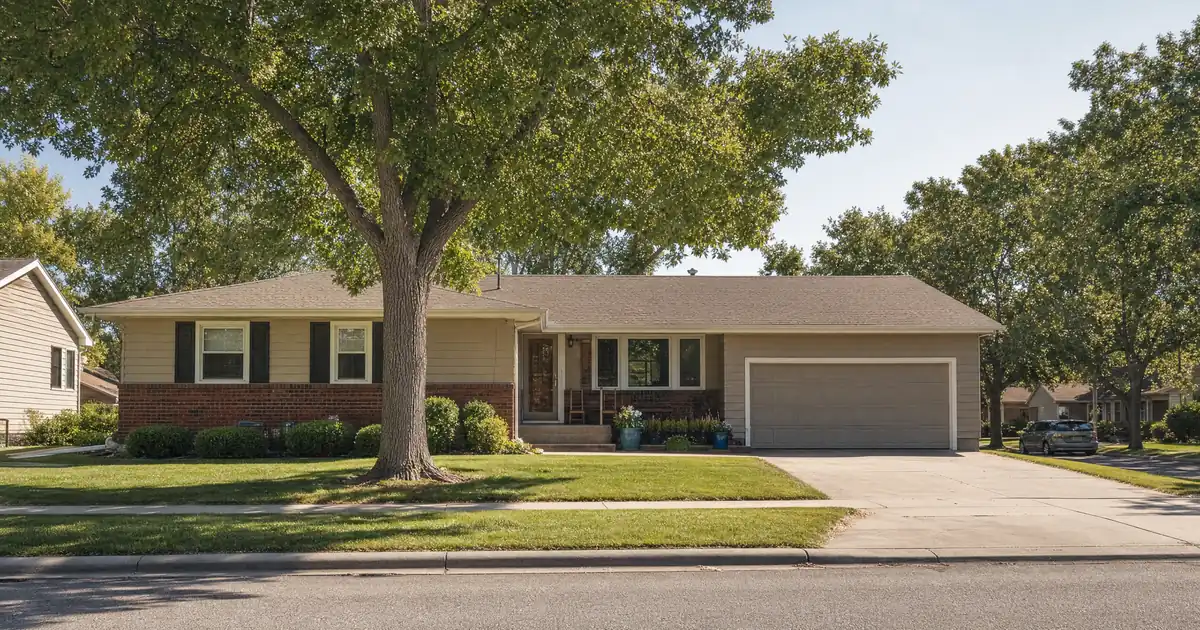
The Quick Read: A cash-out refinance pays off a property’s current mortgage with a new, bigger loan. The owner gets the difference in cash at closing. On a rental property, DSCR programs usually cap that new loan around 75% of the appraised value. How much cash actually comes back depends on three things: the payoff balance, the closing costs, and how the rent compares to the new payment. Qualification runs mainly on the property’s own rental income covering the payment. It does not run on the investor’s personal debt-to-income, subject to lender guidelines. The rest of this article walks through how that gets decided, step by step.
DSCR Cash-Out Calculator
Run the cash-out numbers in your market
Rate source: Freddie Mac 30-yr average via FRED® — Federal Reserve Bank of St. Louis · effective Jul 30, 2026
Prefilled with starting assumptions — enter your property’s value, balance, taxes, and insurance for a more accurate picture.
Program parameters update from Lendmire’s centralized guideline source. Taxes and insurance are editable estimates.
As of Jul 30, 2026 · General Freddie Mac market benchmark, not a Lendmire loan offer. Property value, balance, taxes, and insurance are editable estimates. Maximum loan-to-value varies by lender, program, property type, and seasoning. Not a Loan Estimate, approval, or commitment to lend. Program availability and eligibility are subject to lender guidelines, credit approval, property review, and underwriting.
Key Terms Defined
Cash-out refinance — a new loan that pays off the existing mortgage and gives the owner the leftover equity as cash. It does more than just adjust the old loan’s terms.
Rate-and-term refinance — a refinance that swaps the existing loan for a new one with similar or updated terms. It does not pull meaningful cash beyond the old payoff and closing costs.
LTV (loan-to-value) — the new loan amount shown as a percentage of the property’s appraised value. A lower LTV means more equity stays in the deal.
DSCR (debt-service coverage ratio) — a comparison of the property’s monthly rent against its monthly mortgage payment. Lenders use it to check whether rental income covers the payment.
PITIA — principal, interest, taxes, insurance, and association dues. This is the full monthly obligation DSCR measures against.
Seasoning — the length of time a lender wants an investor to hold title before a refinance counts as eligible for full cash-out terms.
Delayed financing — a separate underwriting path for investors who bought a property in cash. It lets them recover funds without waiting out a standard seasoning clock, capped at documented cost.
Non-QM / business-purpose loan — a loan made to an investor for a rental or business property. It gets underwritten outside conventional agency rules, and lenders review it under different standards than a primary-residence mortgage.
How a Cash-Out Refinance Actually Works
The mechanic is simple, even when the underwriting isn’t. A new mortgage pays off the old one. Whatever equity clears the lender’s LTV ceiling gets released to the owner as cash. On an owner-occupied home, that new loan can route through FHA, VA, or conventional agency channels. A rental property doesn’t qualify for those owner-occupancy programs. So the file routes into either conventional non-owner-occupied guidelines or a DSCR loan. See Lendmire’s complete DSCR loans guide for the full underwriting picture.
For agency loans, Fannie Mae’s Selling Guide sets a clear line. Existing first mortgages must be at least 12 months old before a cash-out payoff is eligible. DSCR lenders don’t follow that guide at all. Every LTV ceiling, seasoning window, and coverage floor discussed here is lender-set policy inside the non-QM wholesale channel. None of it is an agency mandate. That’s exactly why guidelines vary from one lender’s overlay to the next. It’s also why shopping the wholesale channel through a broker matters more here than on a conforming loan.
Step One: Classification Decides Everything Else
Every refinance file gets sorted at intake into one of two buckets: rate-and-term or cash-out. That single decision shapes the rest of the file. Pull cash beyond the existing payoff and closing costs, and the file gets treated as cash-out. That triggers the LTV ceiling and, on most programs across Lendmire’s network, a seasoning requirement before the loan proceeds. Rate-and-term files skip both hurdles because no meaningful equity leaves the deal.
Step Two: The Seasoning Clock
Most cash-out refinances on rental property want around six months of ownership before the file counts as fully eligible. Lenders measure that from the recorded date the investor took title, not from a prior loan’s closing date. That’s the general expectation across most lenders in Lendmire’s network, though it isn’t universal. A few programs will consider cash-out sooner. They usually compensate with a lower maximum LTV or a stronger credit requirement. A handful hold to longer windows on certain property types or loan sizes. There’s no single “the rule is X months” answer in non-QM lending. It’s a matrix that varies lender to lender. That’s the entire reason a broker who can shop multiple overlays adds value on this specific decision.
Step Three: The Delayed Financing Exception
Investors who bought a property outright in cash skip the standard seasoning clock entirely. Delayed financing is a separate exception, not a faster version of the seasoning test. Underwriters on this path confirm two things. First, they check title to make sure there are no mortgage liens on the property. Second, they confirm every source of the original purchase funds — cash on hand, a personal loan, or a loan secured by other real estate (Blueprint). Here’s the tradeoff: the new loan gets capped at the lower of two numbers. Either the appraised value at the applicable LTV, or the documented purchase price. If the property has appreciated well beyond what the investor paid, delayed financing won’t capture that extra equity. A standard cash-out refinance would, once seasoning is met.
Step Four: The Appraisal and the Rent Number
For a 1-unit rental, the appraiser fills out a Single-Family Comparable Rent Schedule alongside the standard appraisal. This form exists for one reason: “the lender uses this form to obtain the market rent for a conventional single-family investment property from the appraiser” (Fannie Mae Form 1007). DSCR lenders use the same form even though the loan never touches an agency delivery. That’s because appraiser panels and reporting software get shared across agency and non-agency channels.
Here’s the part investors with an above-market lease often miss. Underwriting generally uses the lower of two numbers — the appraiser’s market-rent opinion or the actual signed lease. It never uses whichever number is higher. A tenant paying above-market rent doesn’t automatically boost the DSCR number. The appraiser’s figure acts as a ceiling.
Short-term rentals get their own wrinkle. Appraisers can’t just multiply a nightly rate by 30 days. That approach skips over vacancy, personal-property costs, and business expenses. Instead, the analysis has to lean on comparable monthly lease data (Marketwise Valuation). For STR files specifically, most programs in Lendmire’s network want a track record. That means roughly 12 months of hosting history, a credit score around 640 or better, and coverage clearing a 1.00 floor before cash-out proceeds get released. Purchase leverage generally tops out near 75% LTV. Refinance and cash-out sit closer to 70%.
Step Five: The DSCR Calculation
DSCR on a residential rental loan uses a simpler formula than commercial investors are used to. Commercial deals compare net operating income against total debt service. Most lenders in Lendmire’s network instead calculate gross monthly rent divided by PITIA — principal, interest, taxes, insurance, and association dues. That’s the whole formula. Repairs, vacancy, property management, utilities, and capital expenses all sit outside the calculation. That means a ratio clearing 1.00 is not the same thing as positive cash flow once real operating costs get layered on top.
A 1.00 ratio is where select programs in the network start considering a file. It’s a floor for those specific programs, not a universal standard. Ratios that run meaningfully above 1.00 tend to open up stronger leverage and better pricing tiers. Ratios that land right around 1.00 sit in the tightest lane a lender offers.
How Much Cash Can You Actually Access?
The formula, stripped to its parts:
Maximum cash-out loan = appraised value × maximum LTV (typically up to 75% on most DSCR programs) − existing loan payoff − closing costs — reduced further by whatever reserves and coverage requirements the lender needs to see.
That 75% ceiling applies across most of Lendmire’s network for cash-out and refinance deals on rental property. It’s a different, tighter number than purchase leverage. Purchase leverage can reach 80% on standard files. On select high-leverage programs with a stronger credit profile, it can go up to 85%. Never assume the purchase number carries over to a refinance. It doesn’t.
Credit sits on its own ladder. A 620 floor exists in parts of the network. Most programs want something closer to 660. The strongest leverage tiers generally open up around 700 and above. Reserves commonly land around six months of PITIA. Conservative rate-and-term files at modest leverage under roughly $1.5 million can sometimes see that requirement waived. Loans above that size typically step up to about nine months of reserves. None of these figures are guaranteed. Every file gets underwritten on its own terms, and program details are subject to change. It’s worth confirming current guidelines with a broker before assuming a number applies.
Loan sizes across the network run from smaller balances at select lenders up to roughly $3 million on standard programs. Above about $2.5 million, most lenders hold to 30-year fixed structures rather than adjustable terms.
Where the General Rule Breaks
Above-market leases don’t lift the number. If the tenant pays more than the appraiser’s opinion of market rent, DSCR lender review generally uses the lower figure. That caps proceeds below what the actual lease might suggest is affordable.
Interest-only structuring is a real lever. Removing principal amortization for a set period drops the PITIA side of the equation directly. Some programs offer this specifically to push a marginal file over a lender’s coverage threshold.
Special assessments get treated differently than recurring dues. A one-time HOA capital assessment can become a closing condition requiring payoff or escrow. That’s separate from how ongoing association dues factor into PITIA.
Delayed financing is not a cash-out shortcut. It’s a distinct exception with its own cap and documentation trail — proof of an all-cash purchase, clear title, and sourced funds. It replaces the standard seasoning test rather than compressing it.
Sub-1.00 coverage exists, but it isn’t free. A narrower set of programs in Lendmire’s network will still consider a file where rent falls short of PITIA. They generally compensate with reduced leverage and a stronger credit requirement. A no-ratio option is available for DSCR below 1.00 with stronger credit or higher down payment; qualification on that path rests on credit and equity rather than a rent-coverage calculation.
Some property types simply aren’t eligible. Manufactured homes, both single- and double-wide, along with log homes and barndominiums, fall outside DSCR programs across the network. That’s a program limitation, not a reflection of the property’s actual rentability.
Why Investors Use Cash-Out to Scale
DSCR lender review runs on one question: does the property’s own rent cover PITIA? It does not run on the borrower’s personal-income documentation or traditional employment income. That single mechanism lets an investor keep borrowing past the point a personal debt-to-income ratio would otherwise block. It’s also the engine behind the BRRRR strategy — buy, rehab, rent, refinance, repeat. Here, an investor recovers capital from a rehabbed property and redeploys it into the next purchase (BiggerPockets). Seasoning policy decides how fast that capital comes back around. That’s why shopping lender overlays through a broker, rather than sticking with one retail lender, tends to matter more for active investors than for someone refinancing a single primary home.
A cash-out refinance on an apartment building or small multifamily follows the same coverage logic, just applied across multiple units. It’s worth a look at Lendmire’s guide on cash-out refinancing an apartment property to see how that scales. Investors closing in an entity rather than personal name should expect additional documentation too — entity formation papers, operating agreements, and authorized-signer verification. Lendmire covers that topic directly in its guide to LLC cash-out refinancing, subject to lender program eligibility. And for investors weighing this against a home equity line instead, the structural tradeoffs come down to a fixed payment versus a draw structure, and one lien versus two. Short-term rental owners looking to pull equity specifically off an Airbnb-style property should expect STR-specific mechanics on top of the standard cash-out process.
DSCR loans are built for non-owner-occupied investment properties. Because they’re business-purpose investor loans, lenders review them differently than a standard owner-occupied mortgage. They also fall outside TRID’s consumer-disclosure requirements. That means there’s no Loan Estimate or Closing Disclosure timing rule to navigate the way there is on an owner-occupied refinance.
Tax treatment can depend on how the funds get used and how the property is held. Investors should keep clear records and talk with a qualified tax professional before relying on any deduction.
Frequently Asked Questions
Is cash-out refinance proceeds taxable income?
No — the funds are debt, not earnings, since the investor is contractually obligated to repay them. Whether the interest on the new loan is deductible depends on documented use of the proceeds. That’s a separate question from whether the cash itself is taxed. Keep records of how the funds are used and talk to a tax professional before assuming any specific treatment applies.
How is cash-out refinance different from rate-and-term refinance on a rental property?
Classification happens at intake, based on how much cash actually leaves the deal. Pull meaningfully more than the existing payoff and closing costs, and the file gets treated as cash-out. That triggers a lower LTV ceiling and a seasoning requirement most rate-and-term refinances don’t face.
Do I need to have owned the property for a set period before doing a cash-out refinance?
Most programs in Lendmire’s network want around six months of ownership, measured from the recorded date of title, before treating a refinance as eligible for full cash-out terms. Some lenders consider shorter windows with compensating factors like lower leverage or stronger credit. Others hold to longer periods depending on the property and loan size.
What if I bought the property in cash — do I still have to wait?
Not necessarily. Delayed financing lets an all-cash buyer refinance without the standard seasoning clock. The tradeoff is that the loan amount gets capped at the lower of appraised value at the applicable LTV or the documented purchase price. It’s a different path with its own rules, not a faster version of a standard cash-out refinance.
Can I do a cash-out refinance on a short-term rental?
Yes, through select programs designed for STR properties. Expect purchase leverage generally topping out near 75% LTV, cash-out closer to 70%, a credit score around 640 or better, and roughly 12 months of hosting history. Coverage also needs to clear a 1.00 floor. All of this is subject to lender guidelines, since short-term rental rules can also vary by city, county, HOA, and property type.
For how equity extraction works on an investment property, see cash-out refinance on an investment property.
About Lendmire
Lendmire, NMLS# 2371349, is a mortgage broker. It arranges DSCR investor financing through select lenders across a 41-market footprint spanning 40 states and the District of Columbia. Investors weighing a cash-out refinance on a rental property can walk through the full mechanics in Lendmire’s step-by-step DSCR cash-out refinance guide. Or reach the team directly at 828-256-2183. Scotsman Guide named Lendmire a Top Mortgage Workplace in both 2025 and 2026.
No loan approval is ever guaranteed, and nothing here is a commitment to lend. Every scenario described here is subject to lender approval and to borrower, property, and program guidelines that can change without notice. Review details are subject to lender overlays, and this article is general information — not financial, legal, or tax advice.
Get Started
Ready to find the right loan for you?
In about 30 seconds you can review financing options available for your investment property. No commitment required.
Informational only. Not a Loan Estimate, approval, or commitment to lend. Program availability and eligibility are subject to lender guidelines, credit approval, property review, and underwriting.
References
1. Fannie Mae Selling Guide — Cash-Out Refinance Transactions (B2-1.3-03)
2. Blueprint — Delayed Financing Underwriting
3. Fannie Mae — Single-Family Comparable Rent Schedule (Form 1007)
4. Marketwise Valuation — Short-Term Rentals and Form 1007
5. BiggerPockets — The BRRRR Method Guide
This article is part of Lendmire’s investment property cash-out refinance program — full qualification details, guidelines, and scenarios live on the program page.
Related reading: Refinance Cash Out Investment Property · Can I Refinance And Take Money Out Of Rental Property? · Tapping Investment Property Equity With A Cash Out Refinance
Brandon Miller
Founder & CEO, Mortgage Loan Originator, Lendmire LLC
- Mortgage Loan Originator · NMLS# 1129696 · Verify on NMLS Consumer Access
- North Carolina Real Estate Broker · License# 343312 · Verify on NCREC
- North Carolina Insurance Producer · License# 19053198 · Property, Casualty, Life, Health · Verify on NAIC SBS
- Lendmire LLC · Firm NMLS# 2371349 · Verify firm licensure
Legal disclosures. Lendmire (NMLS# 2371349) is a state-licensed mortgage brokerage that arranges financing through wholesale lender relationships. Lendmire is not a direct lender, depository institution, or registered financial advisor. The discussion above is general informational content about real estate financing — it is not financial, legal, or tax advice, and readers should consult licensed professionals for guidance on their individual circumstances. Loan inquiries are subject to lender underwriting; this article does not represent a commitment to lend. Loan terms, rates, and qualification standards vary by borrower, property, and state, and are subject to change at any time. Equal Housing Opportunity. NMLS Consumer Access: nmlsconsumeraccess.org.