
The Quick Read: There’s no single national minimum — it depends entirely on which loan channel you’re using. Owner-occupied conventional and FHA loans set published floors (FHA allows scores as low as 580, though most lenders overlay higher), but those programs largely don’t apply to rental property. For investor cash-out refinancing through a DSCR loan, credit tiers commonly start in the low-to-mid 600s, with the strongest leverage opening up around 700 or better.
Cash-out refinance estimate
The starting figures are an example value with a balance and a cash request in proportion. Replace them with yours.
Editable benchmark: 7.40% as of October 15, 2026 · Freddie Mac 30-year average via FRED®. A conventional market reference, not a cash-out refinance quote.
Illustrative starting assumptions: a $350,000 home value, a $193,000 current balance, the agency cap on a one-unit principal residence, a thirty-year term at the current Freddie Mac benchmark, and property taxes and insurance estimated at typical national rates. Every field is editable.
Illustrative estimate only — not a Loan Estimate, approval, quote, or commitment to lend. The rate field carries the weekly Freddie Mac thirty-year conventional benchmark, a market reference and not a cash-out refinance quote; a cash-out loan is priced by the lender at lock. The cash available is the loan the program cap allows less the balances paid off, before closing costs, which are not included. The HELOC line is the program’s combined loan-to-value ceiling applied to the same value and balance. Taxes and insurance are editable estimates. Licensed in sixteen states for consumer mortgages.
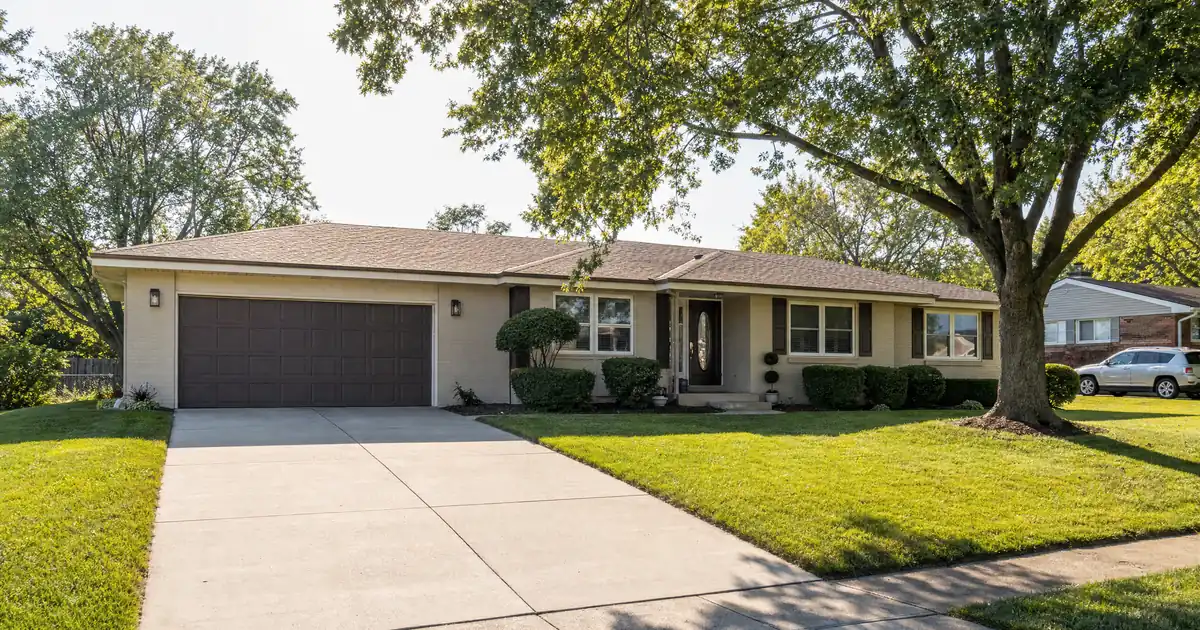
If you own a rental property and you’re asking this question, you’re probably not shopping for an owner-occupied refinance. You’re trying to pull equity out of an investment property, and that puts you in a completely different lane than the FHA and conventional programs most credit-score articles are written about.
That distinction matters more than the number itself. FHA cash-out refinancing is restricted to owner-occupied primary residences — it isn’t available on a rental property at all, regardless of how high your score is. VA cash-out works the same way: it’s a benefit tied to a veteran’s primary residence, not an investment tool. So for an investor pulling cash out of a rental, the real question isn’t “what’s the FHA minimum” or “what’s the VA minimum” — it’s what a DSCR lender wants to see, since DSCR loans are the product built specifically for non-owner-occupied cash-out refinancing.
Key Terms Defined
DSCR (debt-service coverage ratio): a measure comparing a property’s monthly rental income to its full monthly housing payment — principal, interest, taxes, insurance, and any HOA dues, often written as PITIA.
LTV (loan-to-value): the loan amount expressed as a percentage of the property’s appraised value; a lower LTV means more equity is left in the deal.
Seasoning: the minimum length of time a lender wants you to have owned the property before it will approve a cash-out refinance.
Business-purpose loan: a loan made to an investor for a rental or income-producing property rather than a personal residence — the category DSCR loans fall into.
Reserves: liquid funds a lender wants left over after closing, usually expressed as a number of months of PITIA.
Non-QM: short for “non-qualified mortgage” — a loan that isn’t underwritten to the Fannie Mae/Freddie Mac rulebook and instead follows an individual lender’s own guidelines. DSCR loans are a type of non-QM loan.
Why a Cash-Out Refinance Sets a Higher Bar Than a Rate-and-Term Refi
Pulling equity out of a property is a bigger ask than simply lowering a payment or shortening a term, and lenders price that difference into the credit-score conversation. A cash-out transaction increases the loan balance and sends cash to the borrower, which raises the lender’s exposure if the deal goes sideways. That’s why cash-out files across every loan channel — conventional, FHA, and DSCR alike — tend to carry stricter score expectations and lower maximum leverage than a straight rate-and-term refinance on the same property.
On the conventional owner-occupied side, this dynamic has actually been shifting. Fannie Mae’s automated underwriting engine, Desktop Underwriter, no longer applies a hard minimum credit score to determine loan eligibility — a change that took effect for files created after mid-November, according to HousingWire. Legal analysis of the same Selling Guide update confirms the prior 620 floor was replaced with an internal risk assessment rather than a fixed number, per Orrick’s InfoBytes. That doesn’t mean credit stopped mattering — a third-party score is still pulled, and borrowers remain subject to standard checks on down payment, reserves, debt-to-income, and employment. It’s a process change, not a loosening of risk standards. None of this touches investment-property DSCR loans, which were never underwritten through Desktop Underwriter in the first place.
On the FHA side, the published floor for a cash-out refinance can go as low as 580, though many individual lenders require a minimum of 600 or higher regardless of what FHA technically allows, according to Yahoo Finance. FHA’s own rulebook, the Single Family Housing Policy Handbook 4000.1, governs that program — but again, it’s an owner-occupied product, so it’s off the table for a straight rental property.
DSCR loans are business-purpose investor loans, reviewed differently from a standard owner-occupied mortgage — a fact that also explains why there’s no government-set score floor governing them at all.
What the Minimum Actually Looks Like by Loan Type
| Loan Type | Who Sets the Floor | Rental Property Eligible? | Typical Credit Pattern |
|---|---|---|---|
| Conventional (owner-occ) | Fannie Mae AUS + lender overlay | No, not for a primary-residence program | No fixed AUS floor now; lender overlays still apply |
| FHA | HUD Handbook 4000.1 | No — owner-occupied only | As low as 580 per program; many lenders require 600+ |
| VA | VA (no published numeric floor) | No — primary residence only | “Satisfactory credit,” lender overlays vary |
| DSCR / investor cash-out | Individual non-QM lender guidelines | Yes — this is the rental-property tool | Typically 620-660 floor; 700+ opens strongest leverage |
The takeaway from that table is simple: if the property is a rental, the first three rows don’t apply to you. The DSCR row is the one that matters, and it has no regulator-set number behind it — every lender in that space builds its own credit grid.
How Underwriting Actually Treats Your Score on a DSCR Cash-Out
Your credit score doesn’t function as a single pass/fail gate in DSCR underwriting. It works alongside two other numbers — loan-to-value and the property’s coverage ratio — and all three move together.
Step one: the credit pull. The lender orders a tri-merge report from all three bureaus and typically uses the middle score to place the file into a tier. That tier sets a ceiling on how much leverage the deal can carry.
Step two: the property’s income runs in parallel. DSCR loans qualify primarily on property-level rental income covering the payment, subject to lender guidelines — not personal income documentation. An appraiser establishes market rent, and that figure gets compared against the property’s full monthly obligation to produce the coverage ratio. Investors sometimes ask how a refinance can work without pay stubs or traditional personal-income documentation at all. Our guide on how to cash-out refinance a rental property without showing income walks through that mechanic in more depth.
Step three: seasoning gets checked. Across the wholesale network Lendmire arranges loans through, cash-out eligibility on a DSCR file commonly expects around six months of ownership before a refinance is considered — measured from the deed recording or note date.
Step four: leverage typically caps at 75%. On a DSCR cash-out refinance, loan-to-value typically tops out around 75% across most programs in the network, regardless of credit score. A 700+ borrower doesn’t get to push past that ceiling — a stronger score buys better pricing and easier approval within that cap, not a higher cap itself.
Step five: coverage and credit interact. A minimum DSCR around 1.00 — rent covering the full monthly payment — is where a number of programs in the network start, though this is a floor for specific programs, not a universal standard. A stronger credit score can sometimes soften how much coverage cushion a lender wants above that floor; a weaker score usually means the deal needs a stronger ratio to compensate.
Step six: reserves and loan size round out the file. Reserve requirements vary by lender, leverage, and loan size, but commonly land around six months of PITIA on most files. Above roughly $1.5 million, that expectation often steps up toward nine months. Loan amounts on standard DSCR programs run up to about $3 million; smaller balances route through select lenders within the network rather than the standard grid.
A marginal score, in this world, rarely kills a deal outright the way it might on an agency file with a hard floor. More often it pushes the file into a lower-leverage tier, asks for a stronger coverage ratio, or calls for a bit more in reserves. The complete DSCR loans guide breaks down how those three variables — credit, leverage, and coverage — interact across a full file.
The Score Tiers That Actually Matter
Instead of asking “what’s the minimum,” a sharper question is “what tier does my score land me in — and what does that mean for leverage and pricing.” Across the DSCR lending network, four tiers show up consistently: 620, 660, 680, and 700-plus. A score sitting right at 620 typically means access to the network’s baseline programs, at more conservative leverage, and often paired with a somewhat stronger required coverage ratio. Moving into the 660 range widens the field noticeably — more lenders in the network compete for the file, and standard leverage becomes more accessible. Crossing into 680 tends to soften reserve requirements slightly and improve pricing tiers. Hitting 700 or above is generally where the strongest leverage options open up — including select high-leverage purchase programs reaching 85% LTV, though that specific ceiling applies to purchases, not cash-out, which caps at 75% regardless of score.
None of these numbers are guarantees. They reflect general patterns across select wholesale-network guidelines, and the exact tier a given file lands in depends on the lender, the property, and the full credit profile — not the score in isolation.
What Else Underwriting Checks Besides the Score
Credit score is one input among several, and a strong number in one column doesn’t override a weak one in another. Loan-to-value determines how much equity has to stay in the deal after the cash-out closes — typically topping out around 75% on a standard cash-out. DSCR measures whether the rent supports the payment; clearing 1.00 is not the same as positive cash flow, since repairs, vacancy, management fees, utilities, and capital expenses all sit outside that ratio. Seasoning confirms enough ownership time has passed — typically around six months — before cash-out eligibility even opens up. Reserves confirm there’s a cushion after closing, generally landing around six months of PITIA and stepping up on larger loans. Appraisal sets both the property value for LTV purposes and the market rent used in the DSCR calculation. A file that’s strong on four of these five and weak on the fifth usually gets restructured — different leverage, different coverage requirement — rather than declined outright.
A larger down payment lowers the monthly obligation and can lift the DSCR calculation, which sometimes helps offset a softer credit score. But no amount of extra equity waives a credit floor, a reserve requirement, or a property-eligibility rule. The strongest files clear both tests at once: enough equity in the deal, and rent that genuinely covers the payment. Every figure here varies by lender and program — guidelines, property type, leverage, and credit profile all apply.
Where the General Rule Breaks
A handful of situations sit outside the standard credit-and-coverage conversation entirely, and they matter more than the score itself.
Owner-occupancy is a hard gate, not a credit issue. FHA and VA cash-out refinancing both require the property to be the borrower’s primary residence. No credit score, however strong, unlocks those programs for a straight rental property — it’s a categorical exclusion, which is exactly why investors default to DSCR structures instead.
Property type can rule a deal out before credit ever comes into play. Manufactured homes — single- or double-wide — along with log homes and barndominiums are not offered under the network’s DSCR programs. That’s a property-eligibility line, and it applies regardless of how strong the borrower’s file is.
Location doesn’t add a separate layer to the credit conversation. The program carries no state overlay. In Connecticut, Florida, Illinois, New Jersey and every other state, the standard limits apply: purchase leverage up to 80% LTV (above that only by exception) and loan amounts up to the standard $3 million ceiling.
Sub-1.00 coverage isn’t automatically a dead end, but it isn’t free either. A no-ratio option is available for DSCR below 1.00 with stronger credit or higher down payment; qualification on that path rests on credit and equity rather than a rent-coverage calculation. Investors weighing whether a property with thin or no rental history can still refinance often ask this exact question, and Lendmire’s guide to a no-credit cash-out refinance on rental property covers the related scenario of thin credit files in more detail.
Because DSCR loans are business-purpose, they fall outside standard consumer mortgage disclosure timing rules like TRID — a distinction worth knowing if you’re used to owner-occupied refinance paperwork, since the process and documentation look different.
If Your Score Doesn’t Clear the Bar Yet
A score sitting below a given tier isn’t necessarily the end of the road on a DSCR file — it usually just changes the shape of the deal. Stronger coverage on the property can sometimes offset a softer score. Bringing more equity into the deal can do the same. And because every lender in a broad wholesale network sets its own floor, a file that doesn’t fit one lender’s grid can still fit another’s — which is a large part of why working with a broker rather than a single lender matters on a marginal-credit file.
Investors also sometimes explore private or hard-money cash-out structures as a bridge while credit improves — Lendmire’s guide to hard money lender cash-out refinances explains how that alternative path compares.
Tax treatment can depend on how cash-out funds are used and how the property is held; investors should keep clear records and speak with a qualified tax professional before relying on any deduction.
Frequently Asked Questions
Does a lower credit score automatically disqualify a rental property from a cash-out refinance?
Not automatically. On most DSCR files, a softer score usually shifts the deal into a lower-leverage tier or asks for a stronger coverage ratio rather than causing an outright decline. Whether a specific file still works depends on the lender, the property’s rent-to-payment ratio, and the borrower’s full credit and reserve picture.
Can an investor use an FHA or VA cash-out refinance on a rental property?
No. Both programs are limited to owner-occupied primary residences, so a straight rental property doesn’t qualify regardless of credit score. That’s the main reason investors use DSCR loans for rental cash-out refinancing instead — it’s a business-purpose product built for non-owner-occupied property.
Does pulling cash out of a rental property hurt your credit score?
Applying triggers a hard credit inquiry, which can cause a small, temporary dip. Beyond that inquiry, the refinance itself doesn’t directly affect your score, though how you use the proceeds — paying down other debt, for example — can influence your credit profile over time.
How long do I need to own a rental property before a cash-out refinance is possible?
Most DSCR programs in the network expect around six months of ownership before considering a cash-out refinance, measured from the deed recording or note date. Some lenders may look for longer seasoning depending on the property and the borrower’s overall file.
What if my credit score qualifies but the rent doesn’t cover the payment?
That’s a separate hurdle from credit entirely.
For how equity extraction works on an investment property, see cash-out refinance on an investment property.
About Lendmire
Lendmire is a mortgage broker, NMLS# 2371349, arranging DSCR investor loans through a wholesale network spanning 40 states plus Washington, D.C. — 41 markets in total. If you’re weighing whether your credit profile fits a rental-property cash-out refinance, Lendmire can help compare options based on the property’s income, your credit tier, requested leverage, and overall investor goals — reach the team at 828-256-2183 or through a pricing quote request. Scotsman Guide named Lendmire a Top Mortgage Workplace in both 2025 and 2026.
Loan approval is never guaranteed, and nothing here is a commitment to lend. Every scenario described here is general information subject to lender approval and to individual borrower, property, and program guidelines, which can change. This article is for general informational purposes only and is not financial, legal, or tax advice.
Get Started
Ready to find the right loan for you?
In about 30 seconds you can review financing options available for your investment property. No commitment required.
Informational only. Not a Loan Estimate, approval, or commitment to lend. Program availability and eligibility are subject to lender guidelines, credit approval, property review, and underwriting.
References
1. HousingWire — Fannie Mae credit score update
2. Orrick InfoBytes — Fannie Mae Selling Guide update
3. Yahoo Finance — FHA cash-out refinance credit requirements
4. HUD — Single Family Housing Policy Handbook 4000.1
This article is part of Lendmire’s cash-out refinance program — full qualification details, guidelines, and scenarios live on the program page.
Related reading: No-Minimum DSCR Cash-Out Program Terms for Hard Money Exits · How Cash-Out Refinance on a Rental Property Works · Cash Out Refinance Minimum Credit Score on Investments
Brandon Miller
Founder & CEO, Mortgage Loan Originator, Lendmire LLC
- Mortgage Loan Originator · NMLS# 1129696 · Verify on NMLS Consumer Access
- North Carolina Real Estate Broker · License# 343312 · Verify on NCREC
- North Carolina Insurance Producer · License# 19053198 · Property, Casualty, Life, Health · Verify on NAIC SBS
- Lendmire LLC · Firm NMLS# 2371349 · Verify firm licensure
Legal disclosures. Lendmire (NMLS# 2371349) is a state-licensed mortgage brokerage that arranges financing through wholesale lender relationships. Lendmire is not a direct lender, depository institution, or registered financial advisor. The discussion above is general informational content about real estate financing — it is not financial, legal, or tax advice, and readers should consult licensed professionals for guidance on their individual circumstances. Loan inquiries are subject to lender underwriting; this article does not represent a commitment to lend. Loan terms, rates, and qualification standards vary by borrower, property, and state, and are subject to change at any time. Equal Housing Opportunity. NMLS Consumer Access: nmlsconsumeraccess.org.