
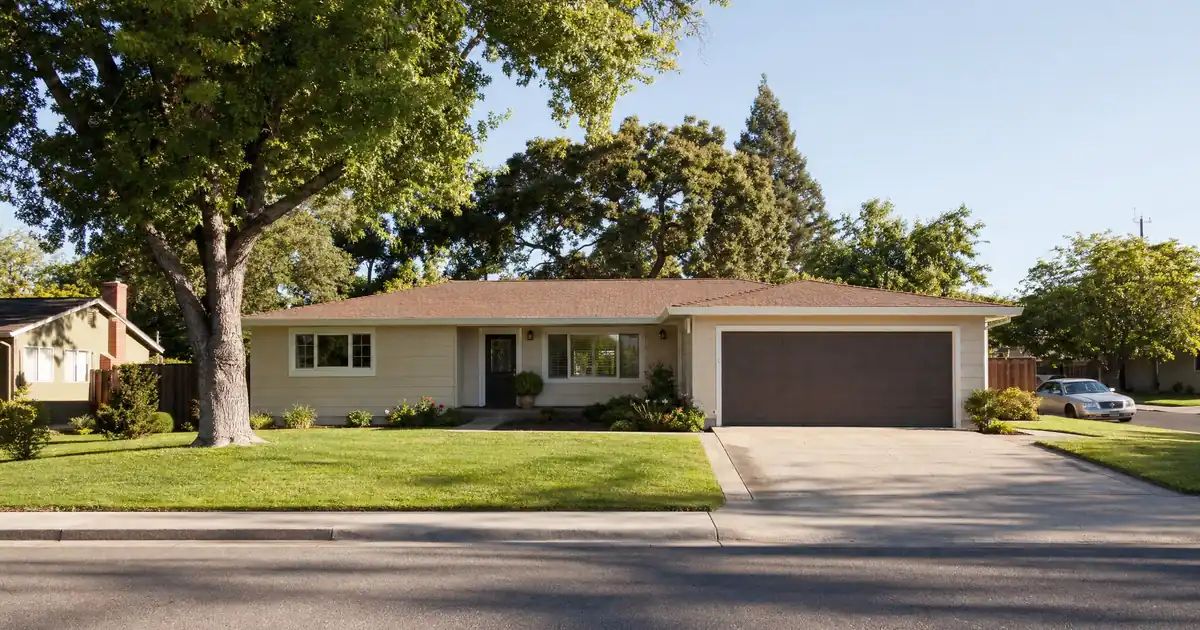
The Quick Read: A cash-out refinance on a rental property does not change tax basis. Basis is set by what you paid for the property, plus capital improvements, minus accumulated depreciation. Financing activity never enters that formula. But a cash-out refinance does change how the new interest gets treated for deductions. And if you spend the proceeds on a capital improvement, that improvement — not the loan — raises your basis.
The Direct Answer
Refinancing a rental property is a debt transaction. That holds true even when you pull cash out above the old loan balance. It is not a sale. It does not change the property’s cost. IRS Publication 551, Basis of Assets defines basis as generally the cost of the property. You adjust it upward for improvements and downward for depreciation. A new loan doesn’t touch either side of that math. IRS Topic No. 703 says the same thing: basis is the amount you paid, full stop.
DSCR Cash-Out Calculator
Run the cash-out numbers in your market
Rate source: Freddie Mac 30-yr average via FRED® — Federal Reserve Bank of St. Louis · effective Jul 30, 2026
Prefilled with starting assumptions — enter your property’s value, balance, taxes, and insurance for a more accurate picture.
Program parameters update from Lendmire’s centralized guideline source. Taxes and insurance are editable estimates.
As of Jul 30, 2026 · General Freddie Mac market benchmark, not a Lendmire loan offer. Property value, balance, taxes, and insurance are editable estimates. Maximum loan-to-value varies by lender, program, property type, and seasoning. Not a Loan Estimate, approval, or commitment to lend. Program availability and eligibility are subject to lender guidelines, credit approval, property review, and underwriting.
Investors get tripped up here for a predictable reason. A cash-out refinance almost always follows a new appraisal. That appraisal usually shows a higher value than the original purchase price. So it feels natural to assume the higher number becomes your new depreciable basis. It doesn’t. Depreciation stays anchored to the original cost basis, plus any capitalized improvements. That’s true no matter what the property appraises for on a refinance.
Key Terms Defined
Basis — generally what you paid for the property. This includes the purchase price and eligible closing costs like legal fees, recording fees, and title work.
Adjusted basis — the original basis, increased by capital improvements and decreased by depreciation deductions (taken or allowable) over the time you’ve held the property.
Depreciable basis — the part of adjusted basis tied to the structure, not the land. You write this off over 27.5 years under MACRS for residential rental property.
Stepped-up basis — the adjustment that happens when a property passes to an heir at death. This resets basis to fair market value as of that date. It’s a completely separate event from refinancing.
Cost basis vs. property tax assessment — two different “basis” ideas that investors often mix up. IRS cost basis drives depreciation and capital gains. Property tax assessed value is a county-level number tied to local tax law. It has no bearing on the federal basis calculation covered here.
Two Different Questions Investors Conflate
Investors asking about basis are usually asking two separate things. Mixing them up is where the confusion starts.
Question one: is the cash-out money taxable income?
No. Loan proceeds carry a repayment obligation. So they aren’t income, no matter how you use the funds.
Question two: does the refinance change my basis?
Also no. But this question actually determines your depreciation and capital gains exposure down the road. That’s why it gets the longer explanation below.
Primary Residence vs. Income Property — What Actually Differs
| Factor | Primary Residence | Rental/Income Property |
|---|---|---|
| Basis impact from refinance | None | None |
| Interest deduction test | Home acquisition/improvement debt rules | Use-of-proceeds tracing rule |
| Capital gains exclusion | $250K/$500K exclusion may apply at sale | No personal-use exclusion available |
| Depreciation | Not applicable | Runs on 27.5-year schedule regardless of financing |
| Refinance proceeds for personal use | Interest deductibility governed by acquisition-debt rules | Interest on that portion generally not deductible as a rental expense |
The basis mechanics are the same across property types. What changes is the deduction test applied to the new debt. For rental property, that test is stricter.
How Basis Actually Gets Built and Reduced
Basis isn’t a single fixed number that never moves. It moves for specific reasons — and refinancing isn’t one of them.
Step one: basis starts at acquisition. The purchase price plus qualifying closing costs sets your original basis. This includes settlement fees, legal fees, recording fees, and abstract fees. This follows the cost-basis framework in IRS Publication 551.
Step two: capital improvements raise basis — repairs don’t. IRS Publication 527 is clear on this. You add to basis the cost of an addition or improvement, including any amount you borrowed to fund it. So if cash-out proceeds pay for a new roof, an addition, or a system replacement, the improvement raises basis. The loan itself never does. Ordinary repairs — a patched roof section, a repainted unit — get deducted in the year you pay for them. They never touch basis. Madras Accountancy lays out this distinction clearly: repairs maintain current condition, while improvements add value or extend useful life and get depreciated instead.
Step three: depreciation reduces basis every year, on a fixed schedule. Residential rental buildings depreciate straight-line over 27.5 years under MACRS, per LegalClarity’s summary of IRS rental property rules. This runs off the depreciable basis set at acquisition, plus improvements. It doesn’t run off loan balance or appraised value. And it isn’t optional bookkeeping. As Reed CPA notes, the IRS reduces basis for depreciation “allowed or allowable.” That means even skipped depreciation still lowers basis at sale. A fresh appraisal from a refinance changes nothing about this schedule.
Step four: refinancing itself is governed by interest-tracing rules, not basis rules. The controlling regulation is 26 CFR § 1.163-8T, the Treasury’s interest allocation rule. It determines how much of the new interest you can deduct, based on how you used the borrowed funds — not which property secures the debt. ASL CPA walks through the practical effect: only the portion of interest tied to funds you actually used for the rental is deductible as a Schedule E expense.
Step five: points and financing costs get amortized, not expensed. Points on a rental refinance count as prepaid interest. You generally spread them over the life of the new loan, rather than deducting them in year one. This is a different line item entirely from basis.
Interest Tracing on Mixed-Use Proceeds
Here’s where the real planning question lives. Say an investor pulls cash out of a rental and splits the proceeds. Part goes into renovating that same rental. Part goes toward a personal expense unrelated to the property. Only the interest tied to the rental-use portion stays deductible as a Schedule E expense. The interest tied to the personal-use portion doesn’t. This is exactly the scenario ASL CPA’s worked example addresses. The split determines the deduction — not the fact that the rental property secures the loan.
The same tracing logic works in the investor’s favor when proceeds get redeployed into more rental property. Say cash pulled from one rental funds the down payment on a second and third rental. The corresponding interest on all three properties generally stays deductible, as long as the paper trail documents where the money went. This is the mechanism BRRRR-style investors lean on constantly. They refinance one property, fund the next acquisition, and keep full interest deductibility because the funds stayed in income-producing use.
Depreciation, Recapture, and Sale — Where the Loan Balance Never Appears
Loan balance — including whatever got pulled out via cash-out refinance — never enters the gain-on-sale calculation. Taxable gain equals net sales price minus adjusted cost basis. Adjusted basis equals purchase price plus capitalized improvements minus accumulated depreciation. Investor-forum discussions of this exact question get corrected the same way every time: depreciation is based on useful life and cost. Changing your financing doesn’t affect it.
That means two common assumptions both fail:
No depreciation “reset.” Refinancing at a higher appraised value doesn’t let an investor step up the depreciable basis to that new number. Depreciation keeps running off the original cost basis plus improvements, full stop.
No reduction in future capital gains tax. Pulling cash out before a sale doesn’t lower your taxable gain. Gain is computed from adjusted basis, not from what you still owe on the property. Say an investor refinances heavily right before listing a property. They’ll still owe tax on the same gain they’d have owed without the refinance. The mortgage balance is irrelevant to that number.
The One Real Exception: Converted Properties
Basis rules differ for a property that started as a personal residence and got converted to a rental. In that case, per IRS Publication 527, the basis for depreciation is the lesser of fair market value or adjusted basis on the date of conversion. It’s not the original purchase price alone. A later cash-out refinance doesn’t reopen or reset that converted-basis figure either. It’s a one-time calculation made at the moment of conversion. Financing activity afterward has no bearing on it.
What This Means for the Refinance Decision Itself
The basis question and the leverage question are separate. But they connect in how an investor should think about the file. Across the wholesale network Lendmire (NMLS# 2371349) works with, cash-out refinances on income property typically max out around 75% loan-to-value. Most lenders in the network expect roughly six months of seasoning from purchase, or from a prior refinance, before considering a cash-out request. None of that leverage math touches basis. It just determines how much equity you can pull.
Qualification on these files runs mainly on whether the property’s rental income covers the payment, subject to lender guidelines. A minimum debt-service coverage ratio (DSCR) around 1.00 is where several programs in the network start. Stronger coverage typically opens better leverage and pricing tiers. Clearing 1.00 isn’t the same as positive cash flow, since the ratio only weighs rent against principal, interest, taxes, and insurance. Vacancy, repairs, management fees, and capital expenditures sit outside that number entirely. Credit profile matters too. A 620 floor exists in parts of the network, but most programs want something closer to 660. A score of 700+ typically unlocks the strongest leverage available. Reserve requirements vary by lender, leverage, and loan size. They commonly land around six months of PITIA, sometimes get waived on conservative rate-term deals under $1,500,000, and often step up toward nine months on larger loans.
Here’s a useful way to think about it. An investor with a rental that appraises well above its original purchase price will find a healthy cash-out amount available at the leverage ceiling. But that same appraisal bump does nothing for the depreciation schedule. The two numbers move independently. One drives how much cash you can access today. The other drives the tax picture down the road.
One practical constraint worth flagging: manufactured homes (single- and double-wide), log homes, and barndominiums fall outside these DSCR programs entirely. They’re not harder to finance — they’re simply not offered through this channel, regardless of how the basis or refinance math would otherwise work.
For the fuller mechanics of how these loans qualify and price, Lendmire’s complete DSCR loans guide covers the qualification framework in more depth. Lendmire’s guide to cash-out refinance and tax reporting walks through how proceeds typically get reported. Investors weighing the improvement-vs-personal-use split discussed above may also find Lendmire’s guide to the tax implications of a cash-out refinance on rental property useful as a companion read, including if they plan to redeploy proceeds into additional acquisitions.
This is general information, not legal or tax advice. Tax treatment can depend on how you use funds and how you hold the property. Investors should keep clear records of purchase costs, improvements, and refinance proceeds, and should speak with a qualified CPA or attorney about their own situation before relying on any deduction or basis calculation. Loan approval is never guaranteed, and nothing here is a commitment to lend. Every cash-out scenario is subject to lender approval and to borrower, property, and program guidelines.
Frequently Asked Questions
Does refinancing reset my depreciation clock?
No. Depreciation runs on a fixed 27.5-year schedule tied to the original cost basis, plus any capitalized improvements. It’s not tied to the loan balance or a new appraisal. A cash-out refinance doesn’t restart or adjust that schedule.
If I use the cash-out proceeds to renovate the same rental, does that raise my basis?
Yes, but it’s the improvement that raises basis, not the loan. Money spent on a genuine capital improvement — a new roof, an addition, a major system replacement — gets added to basis and depreciated going forward. Money spent on repairs or personal expenses does not.
Is the interest on my rental cash-out refinance fully deductible?
It depends on how you use the proceeds, not on the fact that the rental secures the loan. Interest tied to funds used for the rental property or other income-producing use is generally deductible on Schedule E. Interest tied to funds diverted to personal use generally is not.
Does pulling cash out before I sell lower my capital gains tax?
No. Taxable gain is calculated from net sales price minus adjusted basis — purchase price plus improvements minus depreciation. The outstanding loan balance, including any amount pulled out via refinance, never enters that formula.
What if my rental was originally my personal residence before I converted it?
The depreciation basis for a converted property is the lesser of fair market value or adjusted basis on the date of conversion — a rule set once at conversion. A later cash-out refinance doesn’t reopen or change that number.
How much equity can I typically pull out on a rental with a DSCR cash-out refinance?
Across most lenders in Lendmire’s wholesale network, cash-out refinances on income property cap around 75% loan-to-value, generally after about six months of seasoning. Qualification runs mainly on whether the property’s rental income covers the payment, subject to lender guidelines and program overlays.
If you’re weighing a cash-out refinance on a rental and want to see how the leverage and coverage math work for your specific property, Lendmire can help compare DSCR loan options based on the property’s income, your credit profile, and your investment goals. Reach the team at 828-256-2183 or request a quote directly through Lendmire.
For how equity extraction works on an investment property, see cash-out refinance on an investment property.
About Lendmire
Lendmire — NMLS# 2371349 — is a mortgage brokerage that specializes in DSCR investor loans. It helps arrange financing across 41 markets, including Washington, D.C., through wholesale and investor-lending channels. The model centers on property-level rental income reviewed by the lender, rather than W-2 documentation, subject to lender guidelines. This suits entity-owned and multi-property investors. Lendmire holds Scotsman Guide Top Mortgage Workplace recognition for 2025 and 2026.
Get Started
Ready to find the right loan for you?
In about 30 seconds you can review financing options available for your investment property. No commitment required.
Informational only. Not a Loan Estimate, approval, or commitment to lend. Program availability and eligibility are subject to lender guidelines, credit approval, property review, and underwriting.
References
1. IRS Publication 551, Basis of Assets
2. IRS Topic No. 703, Basis of Assets
4. LegalClarity’s summary of IRS rental property rules
This article is part of Lendmire’s investment property cash-out refinance program — full qualification details, guidelines, and scenarios live on the program page.
Related reading: Tax Implications Cash Out Refinance Rental Property · Do I Have to Pay Taxes When I Refinance a Rental Property and Take Cash Out? · How A DSCR Lender Values The Cash Basis After A Luxury Rental Purchase?
Brandon Miller
Founder & CEO, Mortgage Loan Originator, Lendmire LLC
- Mortgage Loan Originator · NMLS# 1129696 · Verify on NMLS Consumer Access
- North Carolina Real Estate Broker · License# 343312 · Verify on NCREC
- North Carolina Insurance Producer · License# 19053198 · Property, Casualty, Life, Health · Verify on NAIC SBS
- Lendmire LLC · Firm NMLS# 2371349 · Verify firm licensure
Important disclosures. Lendmire (NMLS# 2371349) is a licensed mortgage brokerage. Lendmire is not a direct lender, depository institution, or financial advisor. All loan inquiries are subject to lender underwriting; this article does not constitute a commitment to lend. Rates, terms, and program guidelines are subject to change without notice and vary by borrower profile, property type, and state. Information in this article is general in nature and is not financial, legal, or tax advice. Equal Housing Opportunity. NMLS Consumer Access: nmlsconsumeraccess.org.