
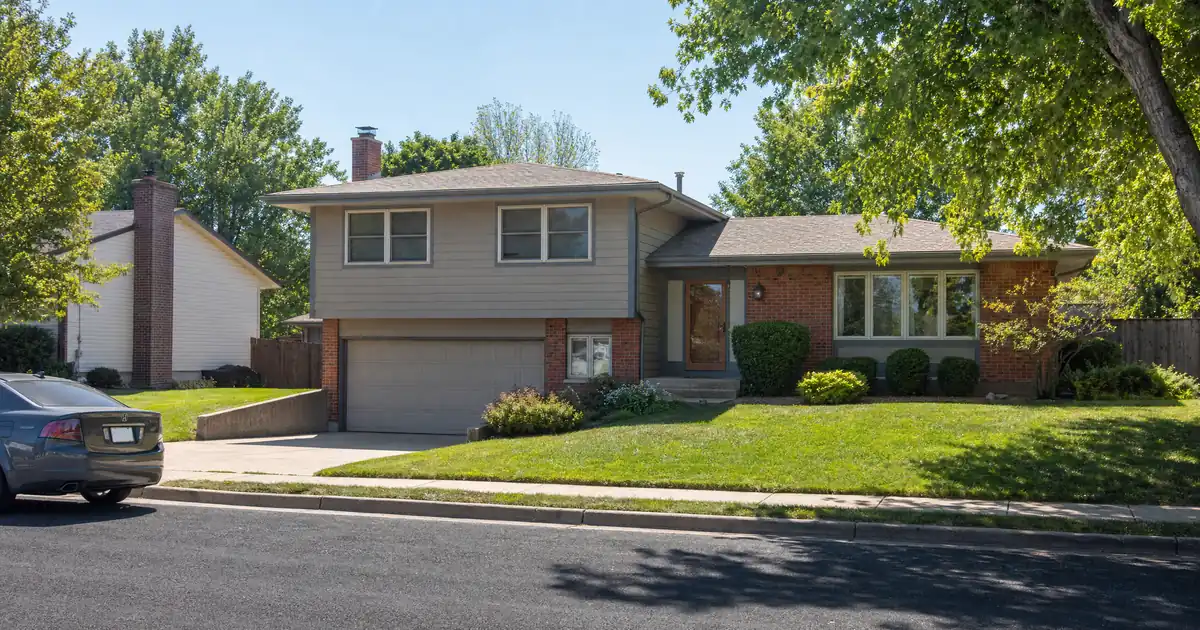
Is a cash out refinance smart for rental properties when rent covers the new payment and you have clear plans for the funds? The Quick Read: A cash-out refinance on a rental property is a good idea when the property’s rent still covers the new payment at a coverage ratio lenders will approve, when the investor has clear plans for the cash (another purchase, a rehab, debt payoff), and when enough equity remains after the draw to keep the loan under the 75% LTV ceiling most cash-out programs use. It’s a weaker idea when the pulled equity funds discretionary spending, when the rent barely limps past breakeven after the new loan amount, or when the property hasn’t seasoned long enough to use appraised value instead of the original purchase price. Terms vary by lender guidelines, property type, leverage, credit profile, and full file review.
That’s the whole decision tree. Everything below is the mechanics behind it — how the file actually gets underwritten, where the ratio can break, and where investors get tripped up.
DSCR Cash-Out Calculator
Run the cash-out numbers in your market
Rate source: Freddie Mac 30-yr average via FRED® — Federal Reserve Bank of St. Louis · effective Jul 30, 2026
Prefilled with starting assumptions — enter your property’s value, balance, taxes, and insurance for a more accurate picture.
Program parameters update from Lendmire’s centralized guideline source. Taxes and insurance are editable estimates.
As of Jul 30, 2026 · General Freddie Mac market benchmark, not a Lendmire loan offer. Property value, balance, taxes, and insurance are editable estimates. Maximum loan-to-value varies by lender, program, property type, and seasoning. Not a Loan Estimate, approval, or commitment to lend. Program availability and eligibility are subject to lender guidelines, credit approval, property review, and underwriting.
How Underwriting Actually Treats a Cash-Out File
Every refinance gets sorted into one of two buckets at intake: rate-and-term or cash-out. That single classification decision drives everything else — the leverage ceiling, whether a seasoning clock applies, and how the file gets priced for risk.
Cash-out refinances on investment property carry a lower loan-to-value ceiling than a purchase. Across most of the wholesale network Lendmire places files through, cash-out tops out around 75% LTV — a hard ceiling that doesn’t flex up to the 80-85% seen on some purchase transactions, no matter how strong the borrower’s credit profile is. That’s a structural fact about the product, not a pricing quirk. Exact terms depend on the lender’s guidelines, property type, leverage, and a full review of the borrower’s file.
Here’s the step-by-step:
1. Classification. The file is flagged cash-out the moment loan proceeds exceed the payoff of the existing mortgage plus normal closing costs.
2. Appraisal. An independent appraiser establishes current market value. On a DSCR file, that value — not the original purchase price — becomes the LTV denominator, but only once seasoning requirements are met.
3. Rent documentation. For property-income qualification, the appraiser or a separate rent schedule documents market rent. The industry borrows the same form conventions the agency world uses — a comparable rent schedule for single-family, an income property report for 2-4 units — even though DSCR loans are never sold to Fannie Mae or Freddie Mac.
4. Coverage calculation. Gross rent divided by the full monthly obligation — principal, interest, taxes, insurance, and any HOA dues — produces the DSCR ratio. Most standard cash-out programs in the network want that ratio at or above 1.00, though a few lenders will review sub-1.00 files at reduced leverage.
5. Seasoning check. This is where most cash-out files actually stall or get restructured. More on this below.
6. Credit and reserve underwriting. Credit tiers gate leverage. The floor across the network sits around 620 for select programs, but most lenders want something closer to 660, and the strongest cash-out leverage tiers open up around 700-plus. Reserve requirements typically land around six months of the full monthly obligation, stepping up toward nine months on loans above roughly $1,500,000; conservative rate-and-term files at modest leverage under that threshold sometimes see reserves waived entirely. None of this is universal — every lender in the network sets its own overlay.
DSCR loans are underwritten for non-owner-occupied investment property. Because they’re business-purpose loans rather than owner-occupied consumer mortgages, they’re reviewed on a different track — Lendmire’s complete DSCR loans guide walks through that qualification path in more depth.
Key Terms Defined
Cash-out refinance — a new loan that pays off the existing mortgage and returns the difference between the new loan amount and the old payoff to the borrower in cash.
DSCR (debt service coverage ratio) — gross monthly rent divided by the full monthly obligation (principal, interest, taxes, insurance, HOA); a ratio of 1.00 means rent exactly covers the payment.
Seasoning — the minimum length of time a property must be owned before a lender will use the appraised value, rather than the original purchase price, to calculate the new loan amount.
LTV (loan-to-value) — the new loan amount expressed as a percentage of the property’s appraised value; cash-out LTV ceilings run lower than purchase LTV ceilings across almost every DSCR program.
Delayed financing — an exception that lets an investor who bought a property with all cash refinance sooner than a standard seasoning clock would normally allow, though the loan amount is still capped by documented purchase cost rather than appraised value alone.
Where Seasoning Breaks the General Rule
Seasoning is a common reason a cash-out file doesn’t behave the way an investor expects. It isn’t one flat number — it’s a sliding scale that most first-time DSCR borrowers don’t see coming.
Across the wholesale network, roughly six months of ownership is the common expectation before a cash-out refinance uses full appraised value with no seasoning penalty. Below that window, several lenders will still work the file, just on tighter terms:
- Under roughly three months of ownership: some lenders in the network will still process a cash-out, but the loan amount gets calculated off the lower of the appraised value or the cost basis (purchase price plus documented, verifiable renovation costs) — not appraised value alone.
- Three to six months: leverage commonly steps down, often capped in the 70% range rather than the full 75% ceiling.
- Six months or more: the seasoning restriction generally clears, and appraised value drives the loan amount.
This is a fundamentally different structure than the conventional agency world, where Fannie Mae’s own Selling Guide requires six months of title seasoning before a cash-out is eligible at all, and separately requires any existing first mortgage being paid off to be at least twelve months old — a rule Fannie Mae confirmed in its own capital markets update, effective for cash-outs with note dates on or after April 1. DSCR loans are never sold to Fannie Mae or Freddie Mac, so that agency clock doesn’t govern non-QM cash-out files — it’s referenced here only as contrast, because investors sometimes assume the agency rule applies universally and it doesn’t.
Delayed financing is the other seasoning wrinkle worth knowing. An investor who buys a rental outright, in cash, isn’t automatically stuck waiting out a full seasoning period the way a mortgaged purchase would be. The loan amount is still capped by documented purchase cost rather than open-ended appraised value, but the timeline shortens considerably compared to a standard cash-out. That shape has been widely adopted, lender by lender, across the non-QM space for exactly this scenario.
The BRRRR Connection — Why This Matters for Active Investors
For an investor running the buy-rehab-rent-refinance-repeat model, the cash-out refinance isn’t a side option — it’s the engine. As BiggerPockets describes it, the method centers on buying a distressed property below market cost, rehabbing it, renting it out, then pulling equity back out through a cash-out refinance to fund the next acquisition. BiggerPockets flags seasoning as the make-or-break variable in that loop — the investor needs the refinance to lend against the appraised post-rehab value, not the original purchase price, or the whole capital-recycling math falls apart.
This is exactly where the six-month seasoning window and the lower-of-appraised-or-cost-basis rule under three months matter most. An investor who rehabs fast and tries to refinance at month two is going to get valued off cost basis, not the new appraised value — which can undercut the entire strategy if the rehab added significant equity. Waiting closer to the six-month mark, or structuring the initial purchase with delayed financing in mind, is often the difference between a BRRRR cycle that works and one that stalls out on the refinance leg.
Because DSCR programs qualify primarily on the property’s rental income covering the payment rather than the investor’s personal debt-to-income ratio, a cash-out refinance can fund the next deal without W-2s, traditional personal-income documentation, or personal DTI ever entering the file — subject to lender guidelines, credit approval, and property review. That’s a structural difference from the conventional world and one reason active investors gravitate toward this market for repeat deals. For a deeper look at how that qualification path holds up without traditional income docs, see how to cash-out refinance a rental property without showing income.
Good Idea vs. Bad Idea — The Practical Checklist
| Cash-out is usually a good idea when… | Cash-out is usually a weaker idea when… |
|---|---|
| Rent comfortably covers the new payment at a coverage ratio the lender approves | The property’s DSCR is right at the edge after the new loan amount |
| Proceeds fund another rental, a rehab, or debt payoff tied to the property | Proceeds fund discretionary spending unrelated to the rental |
| Enough equity remains under the 75% LTV ceiling after the draw | The draw pushes leverage right up against the cap with no cushion |
| The property has cleared roughly six months of seasoning | The file is under three months old and needs full appraised value to make sense |
| Reserves are in place to satisfy the lender’s post-closing requirement | Reserves would be wiped out by the cash-out itself |
Larger down payments and stronger equity positions lower the monthly obligation and can lift the DSCR ratio — but they never override the leverage cap, the credit floor, the reserve requirement, or property eligibility rules. The files that clear underwriting cleanly satisfy both tests at once: enough equity remaining after the draw, and enough rental coverage to support the new payment. A property that’s equity-rich but cash-flow-thin, or coverage-strong but overleveraged, is a file that needs restructuring before it goes to a lender. Every figure here varies by lender and program — guidelines, property type, leverage, and credit profile all apply.
One more distinction worth sitting with: clearing a 1.00 DSCR is not the same thing as positive cash flow. The ratio only measures rent against the full monthly obligation — principal, interest, taxes, insurance, HOA. Repairs, vacancy, property management, utilities, and capital expenditures all sit outside that calculation entirely. A property that clears 1.05x on paper can still run negative in practice once real operating costs are factored in.
Where Coverage Falls Short — What Actually Happens
If the numbers come in under 1.00 on long-term rent alone, the file isn’t automatically dead — but it isn’t a standard approval either. A few lenders in the network will review sub-1.00 scenarios, generally at reduced leverage relative to a file that clears the floor comfortably. Some investors restructure around an interest-only period to bring the ratio-covering payment down, or blend in documented short-term rental income where the property supports it. None of these paths are guaranteed outcomes — each is subject to lender guidelines, credit approval, property review, and program eligibility, and the terms available on a sub-1.00 file will look different from a file that clears the floor outright.
A no-ratio option is available for DSCR below 1.00 with stronger credit or higher down payment; qualification on that path rests on credit and equity rather than a rent-coverage calculation.
Short-Term Rentals and Property-Type Limits
Short-term rental income runs its own lane. Across the network, STR cash-out refinances generally cap around 70% LTV, want a credit score around 640 or better, expect roughly twelve months of hosting history, and still hold to a 1.00 DSCR floor. Short-term rental rules can also vary by city, county, HOA, and property type, so investors should confirm local rules before relying on projected rental income in the underwriting file.
Property type matters too, separate from rental strategy. Manufactured homes — single- and double-wide — along with log homes and barndominiums fall outside DSCR programs across the network. That’s not a “harder to finance” situation; it’s a flat program exclusion, and it’s worth checking before an investor gets attached to a cash-out plan on one of these property types.
An observation from working these files directly: the seasoning question trips up more BRRRR-style investors than the DSCR ratio itself does. Coverage math is usually visible from day one — rent and price are known quantities. Seasoning surprises show up later, when a rehab finishes faster than expected and the refinance still prices off cost basis instead of the new, higher appraised value. Building the seasoning timeline into the exit plan before the purchase, not after the rehab, is what separates a smooth BRRRR cycle from a stalled one.
The same limits apply in every state, so there is no state overlay to account for before assuming a number applies everywhere. Purchase transactions generally cap at 80% LTV, with leverage above 80% available only by exception, and loan amounts follow the same tiers in every state. Loan sizes across the network run roughly up to $3,000,000 on standard programs, with files above about $2,500,000 generally structured on 30-year fixed terms rather than shorter or adjustable options.
Tax treatment can depend on how the funds are used and how the property is held; investors should keep clear records and speak with a qualified tax professional before relying on any deduction.
Frequently Asked Questions
Does a cash-out refinance hurt your credit score?
The new credit inquiry and the higher loan balance can weigh on your score, but it isn’t a lasting hit for most borrowers. Federal data on cash-out refinance borrowers found an initial improvement in credit scores followed by a gradual softening over time — though scores generally stayed above where they started.
How soon can an investor do a cash-out refinance after buying?
Across most of the wholesale network, roughly six months of ownership is the common expectation before appraised value applies with no leverage penalty. Some lenders will still work a file earlier, but the loan amount gets calculated off the lower of appraised value or documented cost basis, and files between three and six months typically see leverage capped lower than the full ceiling.
Is the cash from a cash-out refinance taxable income?
No. It’s debt, not income — the loan proceeds aren’t treated as taxable income under federal tax rules. Deductibility of the interest paid is a separate question from taxability, and it depends on how the funds are used.
Does a cash-out refinance reset depreciation on a rental property?
No. Depreciation runs off the property’s original cost basis, minus land value, on its standard schedule regardless of how many times the property gets refinanced. Refinancing activity doesn’t touch the depreciation clock.
What’s the difference between a cash-out refinance and a rate-and-term refinance for an investor?
A rate-and-term refinance replaces the existing loan without pulling equity out and generally isn’t subject to the same seasoning restrictions. A cash-out refinance pulls equity out as cash, carries a lower LTV ceiling (around 75% across most of the network), and triggers the seasoning rules discussed above.
For how equity extraction works on an investment property, see cash-out refinance on an investment property.
About Lendmire
Lendmire (NMLS# 2371349) is a mortgage broker that arranges DSCR investor loans through select lenders in its wholesale network, spanning 40 states plus Washington, D.C. — 41 markets total. Lendmire doesn’t fund or underwrite loans directly; every file is reviewed and approved by the lender, subject to that lender’s guidelines, credit approval, and property review. Nothing here is a commitment to lend, and loan approval is never guaranteed — the scenarios described are general information, not financial, legal, or tax advice. Scotsman Guide named Lendmire a Top Mortgage Workplace in both 2025 and 2026.
Investors weighing a cash-out refinance against other structures — including whether a hard money lender will do a cash-out refinance or what minimum credit score a cash-out refinance actually requires — can compare those paths directly against a DSCR program’s terms before committing to one structure.
Get Started
Ready to find the right loan for you?
In about 30 seconds you can review financing options available for your investment property. No commitment required.
Informational only. Not a Loan Estimate, approval, or commitment to lend. Program availability and eligibility are subject to lender guidelines, credit approval, property review, and underwriting.
References
1. Fannie Mae Selling Guide — Cash-Out Refinance Transactions (B2-1.3-03)
2. Fannie Mae Capital Markets — Updates to Cash-Out Refinance Eligibility
3. BiggerPockets — BRRRR Method Guide
This article is part of Lendmire’s investment property cash-out refinance program — full qualification details, guidelines, and scenarios live on the program page.
Related reading: When Is a Cash Out Refinance a Good Idea? · Using Cash Out Refinance To Buy Investment Property · Cash Out Refinance BRRRR
Brandon Miller
Founder & CEO, Mortgage Loan Originator, Lendmire LLC
- Mortgage Loan Originator · NMLS# 1129696 · Verify on NMLS Consumer Access
- North Carolina Real Estate Broker · License# 343312 · Verify on NCREC
- North Carolina Insurance Producer · License# 19053198 · Property, Casualty, Life, Health · Verify on NAIC SBS
- Lendmire LLC · Firm NMLS# 2371349 · Verify firm licensure
Disclosure information. Lendmire is a state-licensed mortgage brokerage under NMLS# 2371349. Lendmire is not a depository institution, direct lender, or financial advisor — all loans referenced are placed through wholesale lender partners and are subject to each lender's underwriting standards. This article is provided for general informational purposes and is not a commitment to lend, nor does it constitute financial, legal, or tax advice. Loan programs, terms, rates, and qualification standards change without notice and depend on borrower profile, property type, and the state in which the subject property is located. Equal Housing Opportunity provider. NMLS Consumer Access: nmlsconsumeraccess.org.