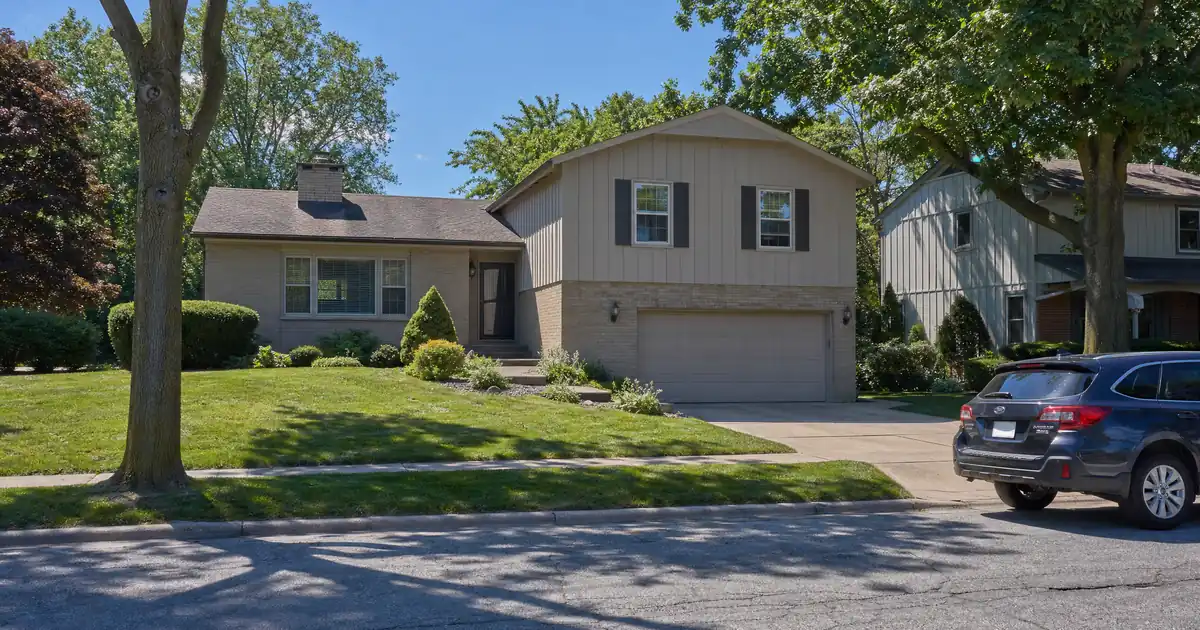
The Quick Read: Self-employed real estate investors hit the same wall on nearly every conventional refinance: solid cash flow, smart tax planning, and a debt-to-income ratio that looks weak on paper because deductions lowered the reported income. DSCR refinancing sidesteps that problem by qualifying the property’s rent against its own payment instead of the borrower’s traditional personal-income documentation. Across select lenders in Lendmire’s wholesale network, cash-out DSCR refinances typically run to a 75% loan-to-value ceiling with roughly six months of ownership seasoning, and coverage floors start near 1.00 on select programs. The mechanics, structures, and edge cases below walk through how that actually plays out file by file.
For current guidelines and terms, see Lendmire’s bank statement loan programs page.
What Changes When the Borrower Is Self-Employed
A self-employed investor’s tax return and a lender’s income statement are working from two different scorecards, and DSCR financing is built specifically to skip the scorecard that penalizes good tax planning.
DSCR Calculator
Run the numbers in your market
Rate source: Freddie Mac 30-yr average via FRED® — Federal Reserve Bank of St. Louis · effective Jul 30, 2026
Prefilled with local estimates — enter your own rent or nightly figures, taxes, insurance, and HOA for a more accurate picture.
Program parameters update from Lendmire’s centralized guideline source. Taxes and insurance are editable estimates.
As of Jul 30, 2026 · General Freddie Mac market benchmark, not a Lendmire loan offer. Rent, nightly rate, occupancy, taxes, and insurance are editable estimates. Short-term rental figures are estimates only and vary significantly by season, property type, management approach, and local short-term-rental rules — confirm local regulations before relying on them. Qualifying income for short-term rentals varies by program — some use appraisal market rent, others use documented STR history or projections — and is confirmed in underwriting. Not a Loan Estimate, approval, or commitment to lend. Program availability and eligibility are subject to lender guidelines, credit approval, property review, and underwriting.
- The property, not the person, generates the coverage figure — the rent has to cover the payment, not the borrower’s adjusted gross income
- Cash-out refinances typically cap near 75% LTV across the network, with roughly six months of ownership seasoning expected on most files
- A DSCR of 1.00 is a floor on select programs, never a universal standard — stronger coverage tends to open better leverage and pricing
- Title can vest in an LLC or S-corp, so an investor’s existing entity structure for tax and liability purposes can carry straight into the loan
- Coverage below 1.00 can be worked through select lenders in the network, but leverage and terms adjust downward to compensate
The rest of this piece breaks down exactly how a file gets underwritten this way, where the structure varies by program, and where the general rule stops applying cleanly.
How Underwriting Actually Treats a Self-Employed Refinance File
DSCR refinancing works because the loan is underwritten as business-purpose credit secured by a non-owner-occupied investment property, which routes the file around the personal income documentation that governs a standard owner-occupied refinance. That single classification decision — business purpose versus consumer purpose — is what determines everything that follows in the file.
1. Classification sets the path. DSCR loans are designed for non-owner-occupied investment properties. Because they are business-purpose investor loans, they are reviewed differently from a standard owner-occupied mortgage — the personal tax-return-driven income analysis that governs consumer mortgages simply doesn’t apply to the file.
2. The property produces the coverage figure. An appraiser estimates market rent for the subject property, and that rent estimate — not the borrower’s Schedule C or K-1 — becomes the top-line qualifying figure for the file.
3. The ratio is rent divided by the full payment. Debt Service Coverage Ratio compares gross rent against the complete monthly housing obligation — principal, interest, taxes, insurance, and any HOA dues, commonly abbreviated PITIA. Clearing 1.00 means the rent covers that payment; it says nothing about repairs, vacancy, management fees, utilities, or capital expenditures, all of which sit outside the calculation entirely.
4. Documentation swaps targets. Instead of two years of traditional personal-income documentation, a DSCR refinance file typically pulls together a current lease or appraiser rent estimate, a credit report, entity formation documents if title vests in an LLC, reserve verification, and a personal guarantee from the principal.
5. Seasoning runs on its own clock. Cash-out timing is governed by ownership seasoning, not by the borrower’s tax calendar. Most lenders in the network expect around six months of ownership before a cash-out refinance moves forward, separate entirely from any income-documentation question.
For investors weighing this against a standard refinance, Lendmire’s complete DSCR loans guide walks through the qualification framework in more depth, and the firm’s piece on how self-employed borrowers can refinance a mortgage covers the broader landscape of options beyond DSCR specifically.
Key Terms Defined
DSCR (Debt Service Coverage Ratio) — a ratio comparing a property’s gross rental income to its full monthly housing payment; above 1.00 means rent exceeds the payment, below 1.00 means it falls short.
PITIA — the complete monthly housing obligation used in the DSCR denominator: principal, interest, taxes, insurance, and association dues.
Business-purpose loan — a loan made for an investment or income-producing purpose rather than personal use, which is why DSCR loans are reviewed outside the consumer income-verification framework that governs owner-occupied mortgages.
Seasoning — the minimum length of time an investor must hold title (or, on a refinance, hold the existing note) before a lender will approve a cash-out transaction.
Entity vesting — closing and holding title to a property in the name of an LLC or corporation rather than an individual, which is standard practice on business-purpose loans.
Coverage ratio floor — the minimum DSCR a specific program requires before approving a file, which varies by lender and is never a single fixed number across the industry.
The Structures and Variations
DSCR refinancing isn’t one product — it’s a family of structures that flex around leverage, property type, and how much the coverage ratio needs propping up. The table below sketches the shape of what’s available across select lenders in the network, framed as typical ranges rather than guarantees.
| Structure | Typical LTV | Credit Floor | Key Notes |
|---|---|---|---|
| Standard DSCR purchase | 75%-80% | ~660 typical | 1.00 DSCR floor on select programs |
| High-leverage DSCR purchase | Up to 85% | ~700+ | Reserved for stronger credit tiers |
| DSCR cash-out refinance | Up to 75% | ~660 typical | ~6 months seasoning common |
| Short-term rental DSCR | 70%-75% | ~700+ | ~12 months hosting history, 1.00 floor |
| Bank-statement / 1099 (non-DSCR) | Varies by lender | Varies | For owner-occupied or non-rental files |
The bank-statement lane is worth naming because it’s easy to confuse with DSCR — both exist to route around tax-return-driven underwriting, but they work on opposite logic. Bank-statement and 1099 programs average personal deposits over 12 to 24 months to estimate income, according to Scotsman Guide’s coverage of non-QM lending trends. DSCR loans don’t average anything personal at all — they’re not qualifying the borrower’s income in the first place, they’re qualifying the property’s. That distinction matters for a self-employed investor deciding which lane fits: DSCR for a rental property, bank-statement for an owner-occupied refinance where personal income still needs to be shown.
Term structure matters too. The spine across the network is a 30-year fixed loan, with extended 40-year terms and interest-only periods available through select lenders, and adjustable-rate structures for investors who want them. Above roughly $2,500,000 in loan size, the network generally holds to 30-year fixed structures rather than offering the full menu of variations. For investors comparing this against a straight cash-out play, Lendmire’s guide to DSCR cash-out refinancing lays out how leverage and seasoning interact on a pull-equity transaction.
Where the General Rule Breaks
DSCR refinancing has a clean general rule — rent covers payment, property qualifies the file — and several named edge cases where that rule bends or stops applying outright.
Coverage below 1.00. Not every rental clears the standard floor, particularly on a refinance where the appraiser’s rent estimate lands lower than expected. Select lenders in the network will still work these files, but leverage and terms adjust to compensate for the cash-flow shortfall — a lower LTV, tighter pricing, or additional reserves in place of the coverage gap. This is never a no-ratio product; the loan is reviewed differently, not without a ratio at all.
Short-term rentals complicate the appraisal, not the math. The industry-standard rent form used on one-unit properties, Fannie Mae’s Form 1007 rent schedule, explicitly excludes furniture, fixtures, and equipment value and can’t be built from nightly platform rates multiplied out to a monthly figure. Appraisers instead anchor STR income estimates to comparable long-term lease data. That changes what number goes into the DSCR numerator on a short-term rental refinance — and it’s why STR files in the network carry their own leverage tier (70%-75%), a 700+ credit expectation, and roughly 12 months of hosting history before a refinance moves forward.
Entity formation and seasoning can interact in ways that aren’t uniform. Time held inside an LLC sometimes counts toward seasoning on a subsequent refinance, but that’s a lender-by-lender determination rather than a fixed rule. And when the LLC was formed in a different state than the property sits in, foreign-entity registration paperwork typically has to get cleared before closing — a documentation step that catches investors who assumed their home-state LLC would transfer cleanly.
State overlays cap leverage regardless of the file’s strength. Purchases in Connecticut, Florida, Illinois, and New Jersey generally cap near 75% LTV even when the borrower and property would otherwise support more, and overlay-state deals typically cap around $2,000,000 in loan size.
Some property types simply aren’t eligible. Manufactured homes — both single- and double-wide — along with log homes and barndominiums fall outside DSCR programs across the network. That’s a hard eligibility line, not a pricing adjustment.
The Investor Decision in Practice
Run the numbers on a self-employed investor holding a rental property valued around $420,000, three years past purchase, whose traditional personal-income documentation show minimal net income after depreciation and legitimate business deductions — a file that would struggle on a conventional refinance regardless of how strong the actual cash flow is. On the DSCR side, seasoning is well past the roughly six-month window most lenders expect, and if the appraiser’s rent estimate clears somewhere around 1.15x against the full payment, the file has both equity room (within the 75% cash-out ceiling) and coverage room to work with. Every figure here varies by lender and program — guidelines, property type, leverage, and credit profile all apply.
Drop that same rent estimate to something closer to 0.90x — maybe the market rent came in lower than hoped, or property taxes climbed — and the file doesn’t disappear. It moves into a different lane: a program built for below-1.00 coverage, priced and leveraged more conservatively to offset the shortfall. The investor’s tax return still never enters the conversation. What changes is the loan-to-value the file can support and the pricing tier it lands in.
Here’s the honest tension worth sizing before committing to either path: a bigger down payment lowers the monthly payment and can lift the DSCR, but it never overrides a leverage cap, a credit floor, a reserve requirement, or a property eligibility rule. The strongest files clear both tests — enough equity and enough rental coverage — not just one. An investor who assumes extra cash down fixes every problem on a marginal file is usually the one surprised at underwriting.
DSCR files that involve entity-title vesting or a recent LLC formation are the ones where documentation gaps show up most often — a missing operating agreement, an EIN letter that doesn’t match the borrower’s personal ID, or a formation state that doesn’t match the property’s state. None of these are underwriting judgment calls; they’re paperwork gaps that get caught early or get caught late, and catching them early is the difference between a clean file and a stalled one.
What Derails a Self-Employed DSCR Refinance File
The rent estimate mismatch is the most common friction point. An investor pulls a rent figure from a listing site or a management company’s projection, and the appraiser’s Form 1007 comes back lower — sometimes because the comparable rentals used don’t reflect a recent renovation, sometimes because the property was marketed as furnished short-term and the appraiser is required to strip that out. Either way, the DSCR the investor expected and the DSCR the file actually clears aren’t the same number until the appraisal lands.
Reserve seasoning is the second common gap. Reserves generally run around six months of PITIA on most files, stepping up toward nine months on loans above roughly $1,500,000 — but funds that moved into an account the week before application don’t always satisfy a lender’s sourcing requirement. Two statement cycles of stability is a common expectation, and an investor who transfers reserve funds right before applying is inviting a documentation request that slows the file down.
Entity paperwork is the third. A refinance closing in an LLC’s name needs the operating agreement, a certificate of good standing, and often an EIN verification letter — and if the entity was formed after the original purchase, or in a different state, that adds a step. None of this is DSCR-specific difficulty; it’s the same entity-documentation friction that shows up on any business-purpose loan, and it’s entirely avoidable with a file that’s assembled before it goes to underwriting rather than after a request comes back.
Frequently Asked Questions
Can a self-employed investor refinance a rental property without providing traditional personal-income documentation?
Yes, on a DSCR refinance — the file is reviewed on the property’s rental income covering the payment, subject to lender guidelines, rather than on the borrower’s traditional personal-income documentation or personal debt-to-income ratio. Traditional personal-income documentation still matter for owner-occupied refinances or bank-statement programs, but a DSCR loan on a non-owner-occupied rental doesn’t route through that documentation path.
What DSCR is needed to refinance an investment property?
There’s no single universal number, but 1.00 is a floor on select programs across the network — meaning rent covers the full monthly payment at that level. Stronger ratios, generally above that floor, tend to open better leverage and pricing tiers, while ratios below 1.00 can still be worked through select lenders with adjusted LTV and terms.
How long does an investor need to own a property before a DSCR cash-out refinance?
Roughly six months of ownership seasoning is the common expectation across most lenders in the network. This runs independently of any tax-return timing question, since DSCR eligibility isn’t tied to when a favorable tax return posts.
Can the refinance close in an LLC’s name?
Yes — business-purpose DSCR loans routinely close in an entity’s name, and self-employed investors whose tax structure is already built around an LLC or S-corp can carry that same structure into the loan. If the LLC was formed in a different state than the property, foreign-entity registration paperwork typically needs to be cleared first.
What happens if the property’s rent doesn’t cover the full payment?
The file doesn’t automatically fall out — select lenders in the network offer structures for coverage below 1.00, though leverage and terms adjust to compensate for the shortfall. This is different from a no-ratio product; it’s a program specifically built to review files where rent alone doesn’t clear the standard floor.
About Lendmire
Lendmire is a mortgage broker, not a lender — it arranges DSCR investor financing through select lenders across its wholesale network, spanning 39 states plus Washington, D.C. — 40 markets total — under NMLS# 2371349. Investors weighing whether their existing rental portfolio and entity structure fit a DSCR refinance can review Lendmire’s page on refinancing a mortgage while self-employed or its coverage built specifically for self-employed real estate investors using DSCR loans for more on how the pieces fit together. A conversation at 828-256-2183 or through Lendmire’s quote request form is a reasonable next step for an investor trying to figure out which structure their specific rental portfolio fits.
Tax treatment can depend on how refinance proceeds are used and how the property is held; investors should keep clear records and speak with a qualified tax professional before relying on any deduction.
No loan is guaranteed, and nothing here is a commitment to lend. Every scenario described here is subject to lender approval and to borrower, property, and program guidelines that vary by file. This article is general information, not financial, legal, or tax advice.
Get Started
Ready to find the right loan for you?
In about 30 seconds you can review financing options available for your home or investment property. No commitment required.
Informational only. Not a Loan Estimate, approval, or commitment to lend. Program availability and eligibility are subject to lender guidelines, credit approval, property review, and underwriting.
Lendmire is a two-time Scotsman Guide Top Mortgage Workplace (2025, 2026). This recognition is documented by Scotsman Guide 2025 Top Mortgage Workplace and Scotsman Guide 2026 Top Mortgage Workplace.
References
1. Scotsman Guide — Which Groups Are Driving Non-QM Lending?
2. Fannie Mae Selling Guide — B3-3.8-01, Rental Income
Brandon Miller
Founder & CEO, Mortgage Loan Originator, Lendmire LLC
- Mortgage Loan Originator · NMLS# 1129696 · Verify on NMLS Consumer Access
- North Carolina Real Estate Broker · License# 343312 · Verify on NCREC
- North Carolina Insurance Producer · License# 19053198 · Property, Casualty, Life, Health · Verify on NAIC SBS
- Lendmire LLC · Firm NMLS# 2371349 · Verify firm licensure
Compliance and disclosures. Lendmire (NMLS# 2371349) is a licensed mortgage broker and is not a direct lender, depository institution, financial advisor, or tax professional. Content in this article is general market analysis and educational information — not financial, legal, or tax advice for any specific situation. Lendmire does not guarantee loan approval; every transaction is subject to underwriting by the funding lender. Mortgage pricing and loan program guidelines are subject to change at any time without notice and vary by borrower characteristics, property type, and state regulations. Lendmire complies with Equal Housing Opportunity. Licensure verification: NMLS Consumer Access.